Table of Contents >> Show >> Hide
- Why Caulking Windows Matters
- Caulk vs. Weatherstripping: Do Not Start a Fight Between the Wrong Materials
- Tools and Materials You Will Need
- How To Choose the Right Caulk for Windows
- Where To Caulk Around Windows
- How To Caulk Windows Step by Step
- 1. Inspect the window first
- 2. Pick a dry day
- 3. Remove the old caulk
- 4. Clean the area thoroughly
- 5. Add backer rod if the gap is wide
- 6. Prep the caulk tube
- 7. Tape the edges if you want crisp lines
- 8. Apply the caulk in one steady pass
- 9. Smooth the bead immediately
- 10. Remove tape right away
- 11. Let it cure
- 12. Paint if needed
- Interior vs. Exterior Window Caulking
- Common Mistakes To Avoid
- How Long Does Window Caulk Last?
- When You Should Call a Professional
- Final Thoughts on How To Caulk Windows
- Real-World Experience and Practical Lessons From Caulking Windows
Note: This guide is for general home maintenance. Always follow the sealant manufacturer’s directions, and if your home was built before 1978 and paint may be disturbed, use lead-safe practices. If you are working on a large older building from the 1950s to 1970s, ask a professional before removing unusual old caulk.
If your windows whistle every time the wind shows up like an uninvited relative, it may be time to caulk them. Learning how to caulk windows is one of those gloriously unglamorous DIY jobs that pays you back in comfort, cleaner-looking trim, and fewer drafts sneaking across your floor like tiny ice ghosts. It is not fancy. It will not go viral. But it can make your house feel less like a weather experiment and more like a place where humans live on purpose.
The good news is that window caulking is beginner-friendly. The better news is that you do not need a contractor-sized ego or a truck full of tools to do it well. You need the right caulk, a little patience, and the willingness to remove the sad, crumbly bead that someone slapped on there during a previous century. In this guide, you will learn how to caulk around windows step by step, where to caulk, where not to caulk, and how to avoid the most common mistakes that turn a simple sealing job into a sticky little regret festival.
Why Caulking Windows Matters
Caulking windows helps seal small gaps around stationary parts of the frame and trim. That matters for three big reasons: air leaks, moisture control, and appearance. A properly sealed window can help reduce drafts, keep conditioned air where it belongs, and improve comfort during both hot summers and cold winters. It can also help keep wind-driven rain from sneaking into joints where it can cause rot, peeling paint, and mildew.
In plain English, good caulk works like a flexible gasket. Your house moves. Materials expand and contract. Seasons behave dramatically. Quality window caulk flexes with those changes instead of cracking at the first sign of weather with commitment issues.
Caulk vs. Weatherstripping: Do Not Start a Fight Between the Wrong Materials
Before you grab a tube and start squeezing, know this one important rule: caulk is for stationary joints. Weatherstripping is for moving parts. That means you usually caulk the gap between the window frame and siding, trim, or wall. You do not caulk operable sashes shut unless you are using a removable, temporary product for seasonal sealing.
If the part opens and closes, do not permanently glue it into a lifelong relationship with the frame. Use weatherstripping instead.
Tools and Materials You Will Need
- Exterior or interior/exterior window and door caulk
- Caulk gun
- Utility knife or scissors
- Putty knife or caulk removal tool
- Cleaning rag or paper towels
- Mild cleaner and water
- Painter’s tape, if you want cleaner lines
- Foam backer rod for larger gaps
- Gloves
- Ladder if needed for exterior windows
How To Choose the Right Caulk for Windows
The phrase “best caulk for windows” gets tossed around a lot, but the real answer depends on where you are using it and what finish you want.
Silicone or paintable silicone
This is a popular choice for exterior window caulking because it is highly weather resistant, flexible, and durable. Many modern window and door sealants are made specifically for exterior joints exposed to sun, rain, and temperature swings. Some newer silicone products are paintable, but not all are, so check the label before you assume your paintbrush will be welcomed.
Siliconized acrylic or acrylic latex with silicone
This is often easier for beginners to apply, tool, and clean up. It is commonly used for interior trim and some protected exterior applications. It is usually paintable, which is handy if you want the finished bead to disappear into the trim instead of announcing itself from across the street.
Polyurethane or high-performance exterior sealant
These are strong, flexible, and made for serious outdoor sealing. They can be excellent for exterior joints around windows, siding, and trim, especially where durability matters.
Temporary or removable caulk
If you want to seal a drafty window for winter but still remove the seal later, temporary caulk is the seasonal hero. It is especially useful for renters or anyone who would like springtime to remain an available option.
Pro tip: For gaps larger than about 1/4 inch, do not just pump in a heroic amount of caulk and hope for the best. Use backer rod first so the sealant has support and the bead lasts longer.
Where To Caulk Around Windows
In most homes, the main target areas are:
- The joint between the exterior window trim and siding
- The seam between the window frame and exterior casing
- Interior gaps between the wall and trim, when they are drafty or visibly open
- Small cracks in stationary frame joints
Just as important, here is where you should be careful:
- Do not block weep holes or drainage paths on the window
- Do not caulk moving sash components shut
- Do not caulk over rotten wood, loose paint, or wet surfaces
- Do not seal a joint that is supposed to drain water unless the window manufacturer specifically says to do so
How To Caulk Windows Step by Step
1. Inspect the window first
Look for cracked, shrunken, moldy, or missing caulk. Check both inside and outside. If you can see daylight, feel a draft, or notice a gap where trim meets siding, you have found your assignment. Also look for signs of rot or water damage. Caulk is not a magic cure for rotten wood. That is like putting lip gloss on a canoe hole.
2. Pick a dry day
Caulk adheres best to clean, dry surfaces. Exterior caulking goes better when rain is not due in the next several hours and temperatures are within the range listed on the tube. Read the label. It contains more wisdom than most internet arguments.
3. Remove the old caulk
Use a putty knife, caulk remover tool, or utility knife to cut away loose or failing material. Pull out as much of the old bead as possible. The new caulk needs a solid, clean surface to bond well. If you smear fresh caulk over a crusty old line, you are not repairing the seal. You are decorating its failure.
4. Clean the area thoroughly
Wipe away dust, dirt, loose paint chips, and residue. A mild cleaner and water are usually enough. Let the surface dry completely before applying anything. If mildew is present, clean it properly and dry the area well.
5. Add backer rod if the gap is wide
For larger gaps, press foam backer rod into the joint so the caulk can bridge the surface instead of sinking into a deep void. This gives you a neater bead, uses less product, and improves durability.
6. Prep the caulk tube
Load the tube into the caulk gun. Cut the nozzle at a 45-degree angle, starting with a small opening. Bigger is not better here. Bigger is how you accidentally lay down a bead the size of a breadstick. If the tube has an inner seal, puncture it.
7. Tape the edges if you want crisp lines
Painter’s tape is optional, but it helps if you are working on visible trim and want a cleaner finish. Place tape along both sides of the joint, leaving only the gap exposed.
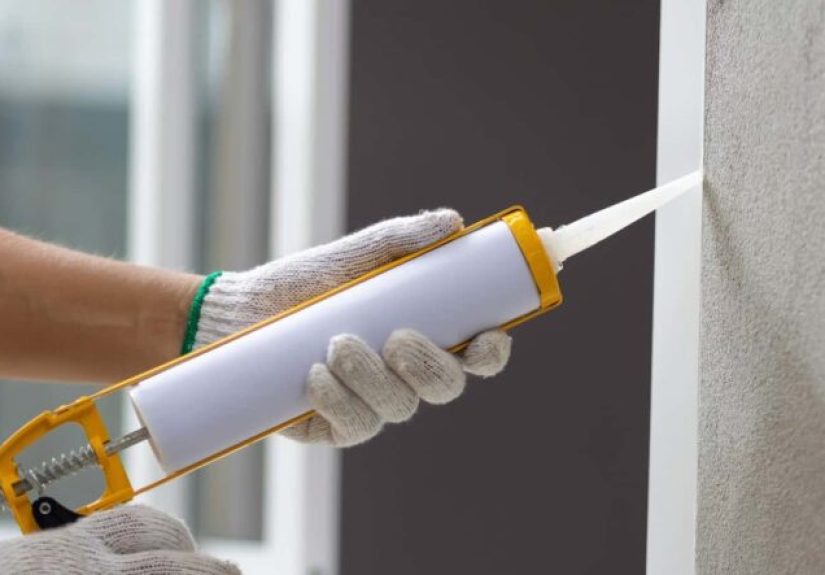
8. Apply the caulk in one steady pass
Hold the gun at about a 45-degree angle and move steadily along the seam. Use even pressure on the trigger. The goal is a continuous bead that touches both sides of the joint. It should fill the gap without becoming a dramatic sculpture project.
9. Smooth the bead immediately
Use a caulk finishing tool, a lightly dampened finger, or another appropriate tool to press the caulk into the joint and smooth the surface. This step improves both appearance and adhesion. Wipe off extra caulk before it skins over.
10. Remove tape right away
If you used painter’s tape, pull it off while the caulk is still fresh. Waiting too long can tear the edge and ruin your nice clean line, which is deeply annoying and entirely avoidable.
11. Let it cure
Dry time and full cure time vary by product. Some become paint-ready quickly, while others need much longer. Do not rush this part. Fresh caulk may look ready before it actually is.
12. Paint if needed
If you used a paintable caulk and want it to blend with the trim, paint after the manufacturer’s recommended wait time. If the product is not paintable, do not try to negotiate with chemistry.
Interior vs. Exterior Window Caulking
Exterior window caulking
This is your first line of defense against outdoor weather. Exterior products should be durable, flexible, and rated for outdoor use. Focus on the perimeter where the window assembly meets trim, siding, brick mold, or other adjacent stationary materials.
Interior window caulking
Inside, the job is often about sealing minor drafts and cleaning up trim gaps. Paintable acrylic-latex or siliconized acrylic products are often a good choice indoors because they are easier to tool and finish.
Common Mistakes To Avoid
- Using the wrong product: Bathroom caulk and general-purpose caulk are not always ideal for exterior windows.
- Skipping cleanup: Dirt, moisture, and old residue reduce adhesion.
- Cutting the nozzle too large: This creates messy, oversized beads.
- Caulking moving parts: Windows are supposed to open without a custody battle.
- Ignoring large gaps: Use backer rod or low-expansion foam where appropriate.
- Blocking weep holes: Water needs a way out.
- Working over rot: Damaged wood should be repaired first.
- Not checking cure times: Paint and rain do not care that you are impatient.
How Long Does Window Caulk Last?
That depends on the product, exposure, and installation quality. A well-chosen, properly applied exterior sealant can last for years, while cheap or poorly installed caulk can crack, shrink, or peel much sooner. Sun exposure, moisture, and joint movement all affect longevity. The simplest maintenance routine is to inspect your windows once or twice a year, especially before winter and after storm season.
When You Should Call a Professional
DIY window caulking is great for minor air leaks and routine maintenance. But call a pro if:
- The frame or surrounding trim is rotten
- You see signs of water infiltration inside the wall
- The window itself was installed incorrectly
- The gap is unusually large or structural
- You suspect lead paint issues in a pre-1978 home
- You are working on a large older multifamily or institutional building with unusual legacy materials
Final Thoughts on How To Caulk Windows
Caulking windows is one of the simplest ways to improve comfort, tidy up the look of your trim, and help reduce air leaks around your home. The trick is not speed. The trick is doing the boring parts well: removing bad caulk, cleaning carefully, choosing the right sealant, and applying a controlled bead instead of panicking and squeezing like you are icing a cake for an enemy.
Done right, window caulking is one of those small DIY jobs that makes your home feel quieter, tighter, and more cared for. Done badly, it becomes a visible reminder that chaos was allowed to hold a caulk gun. Choose wisely.
Real-World Experience and Practical Lessons From Caulking Windows
Ask anyone who has ever caulked windows for the first time and you will hear the same confession: it looked way easier in the video. In real life, the first bead usually comes out either too fat, too thin, or somehow both at once. The tube hisses, the gun jerks, and suddenly the window trim looks like it got decorated by a nervous pastry chef. That is normal. The secret most experienced DIYers learn is that good caulking is less about talent and more about rhythm.
One of the biggest lessons people discover is how much surface prep matters. The difference between a clean, dry seam and a dusty, flaky one is huge. On the clean surface, the bead settles in, smooths nicely, and cures into a professional-looking seal. On the dirty surface, it may look fine for a week and then start peeling like it never wanted the job in the first place. That is why experienced homeowners eventually stop trying to “save time” by skipping prep. They learn the hard way that shortcuts are just delayed chores wearing sunglasses.
Another common experience is underestimating how little caulk you actually need. Beginners often think more product equals a better seal. Then they lay down a bead thick enough to have its own ZIP code. Pros and seasoned DIYers know that a smaller, controlled line usually performs better and looks far cleaner. It is easier to add a little more than to scrape away a gummy avalanche from the side of your house.
Weather also teaches lessons quickly. People often start caulking because a draft is obvious on a cold day, but exterior application does not always go well when surfaces are damp, freezing, or about to be rained on. Many homeowners learn to wait for a dry, mild day and treat that timing like part of the project, not a suggestion. Good conditions make the caulk easier to apply, easier to smooth, and more likely to cure properly.
There is also the emotional side of the job, which no tube label really discusses. Caulking windows can be strangely satisfying. You start with ugly gaps, cracked joints, and suspicious little openings where air clearly has opinions. You end with clean lines and a tighter house. The room feels less drafty. The trim looks sharper. The window no longer seems like it is quietly betraying your HVAC system. For a humble maintenance task, the payoff can feel surprisingly dramatic.
Experienced homeowners also learn that not every drafty window problem is a caulk problem. Sometimes the leak is really failing weatherstripping, an unlatched sash, a bad installation, or rotten trim hiding behind paint. Smart DIYers figure out when caulk is the answer and when it is just decorative optimism. That judgment is what separates a useful repair from a sticky temporary illusion.
In the end, the real experience of learning how to caulk windows is this: your first attempt may be messy, your second will be better, and by the third window you will start acting like you knew what you were doing all along. That is the true DIY cycle. A little confusion, a little cleanup, a little pride, and eventually a house that feels more sealed, more comfortable, and more under control.