Table of Contents >> Show >> Hide
- What a protective cup does (and what it doesn’t)
- Who should wear one? Start with risk, not vibes
- Protective cup vs. pelvic protector: what’s the difference?
- Types of protective cups
- How to choose the right size (and avoid the #1 mistake)
- Pick the right “holder”: jockstrap vs. compression shorts vs. impact shorts
- How to wear a protective cup correctly (step-by-step)
- Common mistakes (and how to fix them fast)
- Comfort hacks so you’ll actually keep wearing it
- Cleaning and care: yes, you should clean it (regularly)
- When to get medical help
- Quick FAQ
- Real-World Experiences: What Athletes Learn After Actually Wearing a Cup (500+ Words)
- Experience #1: The first practice feels weird… and then it doesn’t
- Experience #2: The “cup pocket” matters more than the cup
- Experience #3: Catchers, goalies, and “high exposure” roles become believers fast
- Experience #4: Confidence is performance
- Experience #5: The best system is the one you’ll actually maintain
- Conclusion
A protective cup is one of those pieces of gear that nobody wants to talk about… right up until the moment
they really wish they had. If you’ve ever seen a baseball take a bad hop, a hockey puck find the one
gap in your padding, or a lacrosse stick get a little too friendly in a scrumyeah. This is the quiet hero of
the equipment bag.
This guide breaks down how to pick the right protective cup (or pelvic protector), how to wear it so it actually
protects you, and how to make it comfortable enough that you don’t “forget” it on game day. No awkward mystery.
No weird old myths. Just practical, athlete-tested logic.
What a protective cup does (and what it doesn’t)
A protective cup is designed to reduce injury risk from blunt impact to the groin by spreading out force and
shielding sensitive tissue. The goal is simple: if something hits you, the cup takes the hit and redirects the
impact away from the most vulnerable area.
But it’s not magic armor. A cup can’t prevent every injury in every scenarioespecially if it’s the wrong size,
worn incorrectly, or sliding around like a loose phone in a hoodie pocket. The best protection comes from the
combo of (1) correct size and shape, (2) a secure “holder” (supporter/compression shorts with a pocket), and
(3) correct positioning.
Who should wear one? Start with risk, not vibes
If your sport involves fast-moving balls, pucks, sticks, kicks, collisions, or falls, groin protection deserves a
serious look. Protective cups are common in sports like baseball/softball, hockey, football, lacrosse, boxing,
martial arts, rugby, wrestling, and more. Some athletes also choose them for basketball or soccerespecially if
play is physical or you’ve had a close call before.
High-risk positions and situations
- Baseball/softball: catchers, infielders, pitchers (especially at younger ages with less predictable throws).
- Hockey: basically everyone who shares ice with a puck traveling at “blink-and-regret” speed.
- Lacrosse: field players taking checks, contested ground balls, and close-range shots.
- Combat sports: sparring, competition, or drills with real contact.
- Training: contact drills, scrimmages, and any “we’re going 80% today” practice that becomes 110% by accident.
Protective cup vs. pelvic protector: what’s the difference?
“Protective cup” often refers to groin protection shaped for male anatomy. “Pelvic protector” (sometimes called a
pelvic guard) is designed to protect the pelvic area for athletes who prefer that style of protection. Different
shapes exist because bodies and comfort needs differand the best option is the one you’ll actually wear
consistently.
The important part: both should sit snugly, cover the area they’re meant to protect, and stay put during running,
cutting, lunging, and squatting. If it shifts during movement, it can’t reliably do its job.
Types of protective cups
Walk into a sporting goods store and you’ll see cups that range from “basic plastic shield” to “space-age
ventilation with gel edges.” Here’s how to choose without needing a PhD in Protective Equipment Studies.
1) Standard hard-shell cups
The classic: a rigid shell (often molded polymer) built to handle impact. Many include ventilation holes and a
cushioned rim to reduce chafing.
2) Soft/foam-style cups (often for beginners)
These can feel less intimidating for young athletes or first-time wearers, especially in sports where the primary
concern is incidental contact rather than hard, direct impact. If your sport includes high-speed projectiles or
heavy contact, a sturdier option is usually the safer bet.
3) Sport-specific groin guards
Some gear is built with a specific sport in mindlike integrated “impact shorts” used in football or hockey setups.
The advantage is stability: the cup has a dedicated pocket and the garment is designed to keep it in place.
4) Pelvic protectors
These are designed for pelvic coverage and may be preferred depending on comfort, anatomy, and sport.
The rule of thumb is still the same: stable fit + correct coverage + stays put under movement.
How to choose the right size (and avoid the #1 mistake)
The #1 mistake is buying a cup based on age alone. Brands often use waist size as the starting point, but your
best fit comes from testing movement. A cup should fit snugly against the groin area without painful pressure,
pinching, or gapping.
A quick sizing checklist
- Coverage: It should cover the area it’s meant to protectno obvious gaps.
- Contact: Snug against the body, not floating, not crushing.
- Mobility: You can run, cut, squat, and lunge without the cup shifting or jabbing.
- Comfort: No sharp edges, pinching at the thighs, or pressure points.
If it shifts when you sprint or change direction, it’s too big, worn incorrectly, or held by the wrong garment.
If it pinches or chafes, you may need a different size, different rim padding, or a different holder style.
Pick the right “holder”: jockstrap vs. compression shorts vs. impact shorts
A cup is only as good as the system holding it in place. The holder is what keeps the cup aligned and stable.
You have three main routes:
Option A: Compression shorts with a cup pocket
Popular for a reason: they’re snug, reduce chafing, and keep everything from bouncing around. Look for a
built-in cup pouch that positions the cup correctly and holds it securely.
Option B: Athletic supporter (jockstrap) with a cup pocket
The old-school classic. It can hold a cup very securely when sized correctly. Many athletes wear underwear or
compression shorts over it for comfort and coverage.
Option C: Impact shorts / integrated systems
Often used in football/hockey setups: these can include pockets for hip/thigh pads plus a cup pocket. If you want
stability and “one system that does it all,” this can be a solid choice.
Whatever you choose, make sure it’s made to hold a cup. Trying to improvise with loose underwear is like trying
to secure a helmet with a shoelace. Creative? Sure. Recommended? Not even a little.
How to wear a protective cup correctly (step-by-step)
Step 1: Put on the garment that has the cup pocket
Start with the jockstrap, compression shorts, or impact shorts that contain a cup pouch. This should be snug and
secureno sagging, no rolling waistband.
Step 2: Insert the cup the right way
Most cups are designed to be worn with the narrow end pointing down toward your feet and the wider area toward
your waist. This helps leg movement and keeps the cup aligned when you run or squat.
Step 3: Center and “seat” the cup
Position it so it’s centered and flush to the body. You want stable contact without painful pressure. If the rim
is digging in, adjust the pouch or try a different cup/size.
Step 4: Movement test (the “real life” fit check)
Do this before you ever step onto the field:
- Jog in place for 20 seconds
- Do 5 squats
- Do 5 lunges per side
- Do 3 quick side shuffles each direction
If the cup shifts, you need a tighter holder, a different size, or a better pocket design. If it hurts, don’t
“tough it out.” That’s how gear ends up living permanently in the bottom of a duffel bag.
Step 5: Add your uniform layer
Put on your outer layer (shorts/pants). Re-check that everything still feels stable. Some athletes prefer wearing
compression shorts over a jockstrap for extra stabilityespecially in high-movement sports.
Common mistakes (and how to fix them fast)
- Mistake: Wearing a cup over loose boxers.
Fix: Use a snug cup pocket garment. Stability matters. - Mistake: Cup shifts when you run.
Fix: Size down the holder or choose a better pocketed compression short. - Mistake: Pinching or chafing at the thighs.
Fix: Try a cup with a softer rim, adjust placement, or change holder style. - Mistake: Only wearing it in games.
Fix: Break it in during practice so your body adapts and you can tweak fit. - Mistake: “It’s uncomfortable, so I skip it.”
Fix: That’s usually a sizing/holder problemnot a “cups don’t work” problem.
Comfort hacks so you’ll actually keep wearing it
Dial in the fabric
Moisture-wicking compression shorts can reduce sweat-related rubbing. If you’re prone to chafing, consider a small
amount of anti-chafe balm where the rim contacts your skin (and keep it off areas where it could cause slipping).
Own two setups if you practice a lot
Rotating gear helps with hygiene and comfort. A second cup or second pocketed short can make it easier to keep
everything clean and dry (and your teammates will thank you from a distance).
Match the cup to the sport
If you’re doing a high-impact sport (hockey, lacrosse, football, baseball catcher), sturdier shells and stable
holders usually make sense. For lower-contact training days, you might be comfortable with a lighter systembut
don’t compromise protection when the risk is real.
Cleaning and care: yes, you should clean it (regularly)
A protective cup and its holder live in the same sweaty universe as socks, gloves, and “that one jersey that can
stand up on its own.” Clean it regularly:
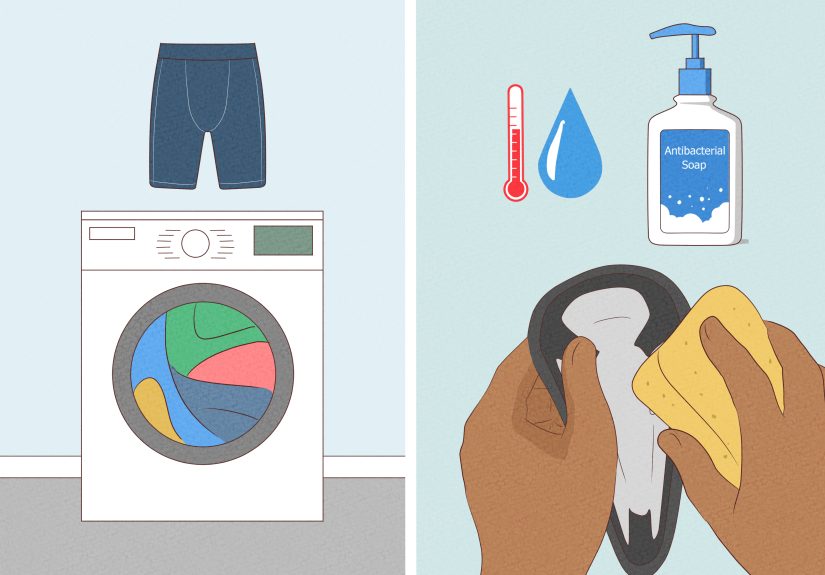
- After use: remove the cup from the pocket, rinse/wash as directed, and let it air dry completely.
- Wash the garment: follow the clothing label instructions (mild detergent is usually your friend).
- Don’t store damp gear: dry it out fully before it goes back into the bag.
When to replace a cup
- Cracks, sharp edges, warping, or a rim that’s peeling
- It no longer fits securely (especially after a growth spurt)
- After a major impact that visibly damaged the shell
When to get medical help
If you take a hard hit and have severe or worsening pain, noticeable swelling, nausea/vomiting, dizziness, or
blood in urine, don’t “walk it off.” Tell a coach/parent/trainer and get checked. Prompt evaluation matters with
certain injuries.
Quick FAQ
Do I need a cup for soccer or basketball?
Not everyone wears one in these sports, but some athletes choose groin protection for aggressive play, travel
ball, physical leagues, or peace of mind. If you’ve taken a hit before, that’s your data point right there.
Is a cup supposed to feel noticeable?
You’ll be aware of it at first, but it shouldn’t limit movement. If it makes you run “like a robot who just
learned knees exist,” your fit or holder is off.
Should younger athletes wear a cup?
Many clinicians and sports safety resources recommend starting as soon as a child participates in contact or
projectile sportsoften surprisingly early. The bigger issue is getting the right size and making it a normal part
of the routine, like a helmet or mouthguard.
Real-World Experiences: What Athletes Learn After Actually Wearing a Cup (500+ Words)
Most people don’t become “protective cup enthusiasts.” They become “protective cup realists.” And the difference
usually comes from one of three experiences: a close call, a teammate’s close call, or the sudden realization that
physics doesn’t care if you feel awkward at the sporting goods store.
Experience #1: The first practice feels weird… and then it doesn’t
A lot of athletes report the same arc: Day one feels awkward, Day two feels less awkward, and by Day five the cup
is basically background noiseif it fits right. The mistake is assuming discomfort is “normal” and sticking with a
bad setup. In reality, most of the discomfort comes from either (1) the cup being too big and shifting, or (2) the
holder being too loose (or too tight) in the wrong places. Once the holder fits like real compression gear and the
cup sits snugly with the narrow end down, athletes usually stop noticing it during play.
Experience #2: The “cup pocket” matters more than the cup
Athletes who struggle the most often have the same gear story: they bought a decent cup but tried to wear it with
the wrong underwear. When the pocket is shallow, loose, or positioned oddly, the cup rotates, rides up, or drifts
sideways during sprints. That’s not just annoyingit’s a protection problem. Athletes who switch to compression
shorts designed with a dedicated cup pouch often describe it as an immediate upgrade: fewer adjustments, less
shifting, and a better sense of stability during cutting and quick direction changes.
Experience #3: Catchers, goalies, and “high exposure” roles become believers fast
In baseball, catchers and infielders often become the strongest advocates simply because the ball finds them. A
foul tip or bad hop doesn’t have to be a highlight-reel disaster to be memorable. Many players say the moment they
truly appreciated the cup wasn’t even a direct hitit was a glancing blow where they realized, “Wow, without that,
I’d be done for the day.” The same is true for lacrosse players who battle for ground balls and hockey players who
block shots or get pinned along the boards. The cup becomes less of a “maybe” and more of a “why would I risk it?”
Experience #4: Confidence is performance
This part doesn’t get talked about enough: athletes often play more confidently when they’re properly protected.
If you’re worried about taking an impact, you might hesitatepull out of a block, flinch during a catch, or turn
your hips away at the wrong moment. Confidence matters in sports, and protective gear is part of earning it.
Athletes who wear a cup consistently often describe a subtle mental shift: they stop thinking about the risk and
focus on the play.
Experience #5: The best system is the one you’ll actually maintain
In the real world, the “best” gear isn’t the most expensiveit’s the setup you can keep clean, dry, and ready.
Athletes who build a simple routine (remove cup, wash/rinse, air dry, rotate gear) are more consistent and more
comfortable. The athletes who don’t… well, they often end up with the dreaded “bag funk,” and suddenly the cup
becomes the most avoided object in the locker room. Two pocketed shorts or an extra cup can be the difference
between consistent protection and “I forgot it… again.”
Bottom line: most “cup problems” are really fit and system problems. Get the right size, use the right holder,
wear it correctly, and it becomes a normal piece of sports equipmentquietly doing its job while you do yours.
Conclusion
Choosing and wearing a protective cup for sports doesn’t have to be complicatedor uncomfortable. Focus on three
things: proper size, a secure holder (jockstrap or compression shorts with a real cup pocket), and
correct positioning so it stays put during real movement. Once you dial in the setup, the cup becomes like any
other protective gear: not exciting, but extremely valuable when it matters most.