Table of Contents >> Show >> Hide
- Table of Contents
- Brisket 101: Pick the Right Cut
- The Low-and-Slow Rules That Always Win
- Method 1: Smoked Brisket (Classic BBQ)
- Method 2: Oven-Braised Brisket (Fork-Tender Slices)
- Method 3: Slow Cooker Brisket (Set It & Forget It)
- Method 4: Sous Vide Brisket (Precision Tenderness)
- Troubleshooting: Fix the Usual Brisket Problems
- Serving, Storing, and Food Safety
- Extra : Real-World Brisket Experiences & Lessons
- Conclusion
Brisket is the lovable “problem child” of the beef world: tough at first, magical later, and absolutely unwilling to be rushed.
Treat it rightlow heat, plenty of time, and a tiny bit of patience you pretend you haveand it turns into slices of beefy greatness
that make people hover around your cutting board like it’s a campfire.
In this guide, you’ll learn the universal rules that make brisket tender, plus four proven low-and-slow methods:
smoked, oven-braised, slow cooker, and sous vide + finish.
Pick the vibe that matches your schedule (and your available appliances), then cook like you meant it.
Table of Contents
- Brisket 101: Pick the Right Cut
- The Low-and-Slow Rules That Always Win
- Method 1: Smoked Brisket (Classic BBQ)
- Method 2: Oven-Braised Brisket (Fork-Tender Slices)
- Method 3: Slow Cooker Brisket (Set It & Forget It)
- Method 4: Sous Vide Brisket (Precision Tenderness)
- Troubleshooting: Fix the Usual Brisket Problems
- Serving, Storing, and Food Safety
- Extra : Real-World Brisket Experiences & Lessons
Brisket 101: Pick the Right Cut
Brisket comes from the breast area of the cow, which means it works hard for a living. Translation: lots of connective tissue.
That’s not a warning signit’s the whole point. With enough time at gentle heat, collagen melts into gelatin and the meat becomes tender.
Flat vs. Point vs. Whole Packer
- Flat (first cut): leaner, neat slices, easier to handle. Great for oven brisket and “I want tidy sandwich slices.”
- Point (second cut/deckle): fattier and more marbled, richer flavor. Great for burnt ends and “I like my brisket to forgive mistakes.”
- Whole packer: flat + point together. Best for smoking, best for bragging rights, also the size of a small golden retriever.
How Much Brisket to Buy
Brisket shrinks. A lot. Expect noticeable moisture and fat loss during cooking. If brisket is the main event, plan roughly
1/2 pound raw per adult as a starting point, and bump up if you’re feeding hungry brisket fans (or teenagers).
Trimming (Yes, You Should)
Trimming isn’t about being fancy. It’s about even cooking. For smoked brisket, many pitmasters trim the fat cap down so it’s not
thick enough to act like a winter coat. If you’re nervous, trim lightly: remove hard chunks of fat and any weird dangling edges that will burn.
The Low-and-Slow Rules That Always Win
Rule 1: Tenderness Is a Feeling, Not a Number
Temperatures help, but brisket is done when it’s tender. In BBQ circles, you’ll hear “probe tender”:
a thermometer or skewer slides in with very little resistancelike room-temperature butter, not like a gym membership.
Rule 2: Salt Early (Dry Brine if You Can)
If you have time, salt the brisket in advance. Even a few hours helps. Overnight is better.
Salt seasons deeper and improves how the meat holds onto moisture during the long cook.
Rule 3: Manage the Surface
Bark (that dark, flavorful crust on smoked brisket) comes from time, smoke, seasoning, and controlled drying.
Braises and slow cookers are wetter environments, so instead of bark, you aim for deep flavor in the cooking liquid and a nice sliceable texture.
Rule 4: Rest Is Not Optional
Resting helps juices redistribute and gives the meat a chance to relax. For braised brisket, resting also makes slicing cleaner.
For smoked brisket, a longer warm hold can be the difference between “pretty good” and “why am I tearing up right now?”
Rule 5: Slice Against the Grain (Your Teeth Will Thank You)
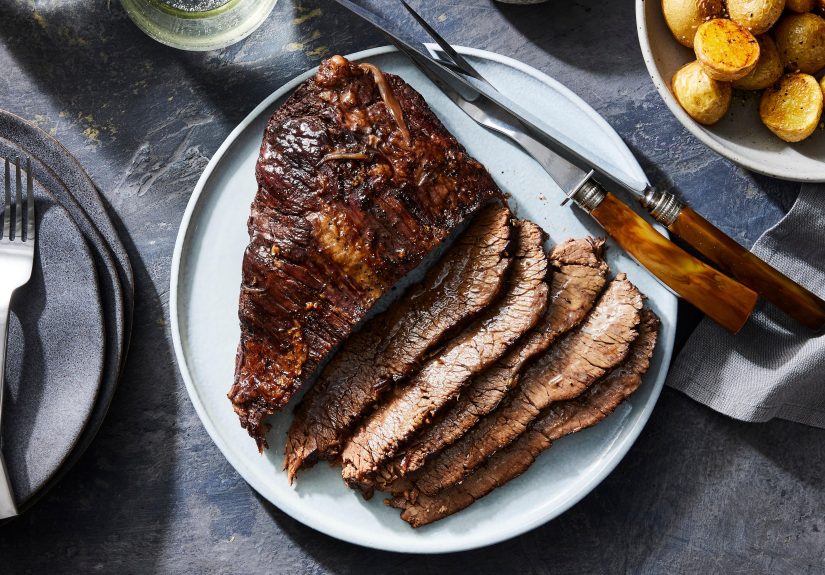
Brisket has a strong grain. Slice across it, not along it. If you slice with the grain, you’ll get long chewy strands that feel like beef floss.
Thin slices across the grain = tender bites.
Method 1: Smoked Brisket (Classic BBQ)
This is the legendary route: smoke + time + patience. It’s also the method most likely to make you stare at a thermometer
like it owes you money.
What You Need
- Smoker or grill set up for indirect cooking
- Fuel: wood, charcoal, or pellets
- Reliable thermometer (bonus points for a probe you can monitor)
- Butcher paper or foil (optional, for wrapping)
Step-by-Step Smoked Brisket Flow
- Trim (optional but helpful): remove hard fat and tidy edges. Leave a modest fat cap if you like.
- Season: keep it simple (salt + coarse black pepper) or add garlic/onion powder and paprika. Let it sit while the smoker heats.
- Preheat: aim for a steady low temperature (often in the 225–275°F neighborhood). Stability beats perfection.
- Smoke unwrapped: place brisket fat side up (or based on your heat source) and let it ride until the bark looks set.
- Wrap (optional): if the brisket stalls or the bark is where you want it, wrap in butcher paper or foil. Many wrap somewhere around the mid-temps range once bark is set.
- Finish: cook until it’s probe tender. Temperature guides are common, but tenderness is the real finish line.
- Rest/hold: rest at least 30–60 minutes; longer warm holds can improve texture if done safely.
- Slice: separate point/flat if needed, slice across the grain, and serve immediately (before people “taste test” half of it).
Example Timeline (12–14 lb Whole Packer)
A typical large brisket can take many hours. Plan for a long cook plus a real rest. If you’re serving for dinner,
starting the night before isn’t dramaticit’s smart. Brisket doesn’t care about your dinner reservation energy.
Pro Moves for Better Smoked Brisket
- Don’t chase every degree: opening the lid repeatedly is how you turn “slow and steady” into “why is it taking forever?”
- Wrap for speed, don’t wrap for fear: wrapping can push through the stall and protect the bark once it’s set.
- Long warm hold: when done safely, holding brisket warm for hours can improve tenderness and slice quality.
Method 2: Oven-Braised Brisket (Fork-Tender Slices)
Oven brisket is the underrated superhero method: predictable heat, great results, and you don’t have to explain to your family
why you “need” a second thermometer “for science.”
Best For
- Flat cut brisket
- Feeding a crowd with consistent slices
- Make-ahead meals (brisket is famously good the next day)
Flavor Formula (Pick One)
- Classic savory: onions + garlic + beef broth + tomato paste + bay + black pepper
- BBQ-ish: onions + garlic + broth + a little vinegar + a little brown sugar + a good BBQ sauce (added later)
- Herby: onions + garlic + broth + thyme/rosemary + a touch of mustard
Step-by-Step Oven-Braised Brisket
- Season: salt and pepper heavily. Brisket is thick; it can take it.
- Sear (optional but recommended): brown the brisket on the stovetop or under a hot broiler for deeper flavor.
- Build the braise: add onions and aromatics to the pan, then liquid (broth, plus your flavor boosters).
- Cover tightly: use a lid or foil. You want gentle, steady heat and moisture.
- Cook low and slow: a common approach is around 300°F until fork-tender. Timing varies, but “slow” is the point.
- Rest, then slice: rest at least 20–30 minutes; slice against the grain. For extra tenderness, chill overnight and slice cold, then rewarm in the sauce.
Make-It-Better Tip: Chill Overnight
If you can cook brisket a day ahead, do it. Cooling lets you remove solidified fat easily, and reheating in the braising liquid
makes slices incredibly tender without falling apart.
Method 3: Slow Cooker Brisket (Set It & Forget It)
Slow cooker brisket is for busy days when you still want the house to smell like you have your life together.
It won’t create true BBQ bark, but it will create tender beef and a rich, savory pot liquor you’ll want to spoon over everything.
Best For
- Flat cut brisket (or smaller pieces that fit your cooker)
- Weeknight-friendly brisket sandwiches
- Shred-style brisket for tacos, rice bowls, or loaded baked potatoes
Step-by-Step Slow Cooker Brisket
- Sear first (strongly recommended): brown the brisket in a hot pan. This adds flavor you can’t “slow cook” into existence.
- Layer the base: onions on the bottom act like a rack and add sweetness.
- Add liquid: broth + a splash of vinegar or Worcestershire + optional BBQ sauce. Don’t drown it; slow cookers don’t reduce much.
- Cook low: low setting for a long time is the classic path to tenderness.
- Rest and slice/shred: rest 15–20 minutes. Slice against the grain or shred with forks.
- Optional finish: brush with sauce and broil 3–5 minutes for caramelized edges.
Slow Cooker Success Tips
- Don’t rush on “High”: low-and-slow gives connective tissue time to break down.
- Go easy on sweet sauces early: sugar can burn on the edges; add more sauce at the end if needed.
- Thicken the juices: reduce on the stovetop or whisk in a cornstarch slurry for a glossy gravy.
Method 4: Sous Vide Brisket (Precision Tenderness)
Sous vide brisket is the “I want brisket, but I also want control” method. You cook at an exact temperature for a long time,
then finish with high heat or smoke to build flavor on the outside.
Best For
- People who love repeatable results
- Apartment cooks who can’t smoke for 14 hours (or at all)
- Meal prep (because sous vide brisket reheats like a champ)
Time + Temp Options
- Traditional “BBQ-ish” texture: about 155°F for roughly 24–36 hours
- Steak-like sliceable texture: around 135°F for a longer cook (often 36–72 hours)
Step-by-Step Sous Vide Brisket
- Season: salt/pepper plus your favorite rub. Add a small amount of liquid only if your recipe calls for it.
- Bag it: vacuum seal or use a high-quality zip bag with the water-displacement method.
- Cook: set the bath and let time do the work.
- Chill (smart step): cool the brisket so the surface can dry and you won’t overcook the interior during finishing.
- Finish: smoke briefly, grill over indirect heat, or roast hot to build color and flavor.
- Slice: across the grain. Always across the grain. Brisket remembers.
Flavor Tip: Add “Outside Flavor” After
Sous vide is incredible for texture, but the “smokehouse vibe” comes from the finish. Don’t skip it.
Even a hot oven blast or quick charcoal kiss can transform the final result.
Troubleshooting: Fix the Usual Brisket Problems
“My brisket is tough.”
It’s probably undercooked. That sounds backwards, but brisket is stubborn: the collagen needs time to break down.
Keep cooking at a gentle temp until it turns tender. Tough brisket usually means “not done yet,” not “ruined.”
“My brisket is dry.”
- Flat cut is lean: protect it with a braise, a sauce, or careful slicing.
- Sliced too thick: thinner slices across the grain feel juicier.
- Overcooked: especially in the flat. Next time, check tenderness earlier and rest properly.
“My smoked brisket stalled and I panicked.”
Congratulations, you cooked brisket. The stall is common: evaporative cooling slows the rise in internal temp.
You can ride it out or wrap once the bark is where you want it.
“My braised brisket tastes flat.”
- Brown the meat (and onions) more deeply before braising.
- Use enough salt and a touch of acidity (vinegar, tomatoes, mustard) to brighten the sauce.
- Reduce the cooking liquid at the end for concentration.
Serving, Storing, and Food Safety
Safe Temps (The Practical Version)
For food safety, beef roasts/steaks are commonly referenced as safe at 145°F with a 3-minute rest.
Many brisket methods go far beyond that for tenderness, but it’s still helpful to know the safety baseline.
Hot Holding and the “Danger Zone”
Bacteria grow fastest between 40°F and 140°F. Keep hot foods hot and cold foods cold. If you’re holding brisket warm for hours,
use equipment that can reliably keep it hot enough for food safety.
Storing Leftovers
- Cool quickly: slice large pieces if needed so they chill faster.
- Store with juices: brisket stays moister when it hangs out with its cooking liquid.
- Reheat gently: low oven, covered, with a splash of broth or sauce to prevent drying.
Leftover Ideas That Don’t Feel Like “Leftovers”
- Brisket grilled cheese with pickles
- Brisket tacos with onions + cilantro + lime
- Brisket hash with potatoes and eggs
- Brisket fried rice with scallions and sesame
Extra : Real-World Brisket Experiences & Lessons
Here’s the part nobody tells you until you’ve cooked brisket a few times: brisket is less like a recipe and more like a relationship.
You can do everything “right” and it still has moods. The good news is that the patterns repeat, and once you recognize them,
brisket becomes predictablein a lovable, slightly dramatic way.
The first big “aha” moment most cooks have is realizing that brisket tenderness doesn’t show up on schedule. You can plan a timeline,
but the meat decides when it’s ready. That’s why experienced brisket people talk about rest windows like they’re flight delays:
“We should land around 4 p.m., but honestly, who knows.” If you build a long rest or warm hold into your plan, you stop stressing.
Suddenly you’re not racing the clockyou’re letting the brisket get good in peace.
Another common lesson: the flat and point behave like siblings raised in the same house but with totally different personalities.
The point is forgivingfatter, richer, and happier to be cooked a little longer. The flat is the high-achieving one:
it makes beautiful slices, but it can dry out if you treat it like the point. So people who cook brisket often learn to protect the flat:
slice thinner, rest properly, and don’t be afraid to serve it with a little sauce or jus. (That’s not cheating. That’s smart.)
If you smoke brisket, you’ll eventually experience the “stall,” and the stall will test your character. You’ll stare at a thermometer
that refuses to move and start bargaining with the universe. This is where a lot of cooks learn patience, or at least learn how to stop
opening the smoker every 10 minutes “just to check.” The secret is simple: steady heat and time. Wrap if your bark is set and you need
to push through. Or don’t wrap and let it ride. Both can work. But constantly fiddling with the setup? That’s how brisket turns your
confidence into a snack for the wind.
Oven and slow cooker briskets teach a different lesson: flavor needs intention. Because these methods are moist, you won’t get the same
bark-driven intensity as smoking. So the “experience move” is building flavor in layers: sear the meat, brown the onions, add a touch of
acidity, and reduce the sauce at the end. People who cook brisket regularly also learn that brisket is often better the next day.
Chilling lets flavors meld, and reheating in sauce can make slices even more tender. It’s one of the rare foods where leftovers feel like
an upgrade instead of a compromise.
Finally, brisket teaches humility about slicing. Even a perfect cook can feel disappointing if you slice with the grain.
Most brisket veterans develop a little ritual: they find the grain direction before cooking, then mark it (even mentally) so they remember
where to cut later. Because when you slice across the grain and the meat folds gently instead of fighting back, that’s when brisket goes
from “good dinner” to “you made this?!”. And yes, people will ask you to cook it again. Consider yourself warned.
Conclusion
Brisket rewards the same things every time: gentle heat, enough time for collagen to melt, smart seasoning, and a real rest.
Whether you smoke it for that classic BBQ bark, braise it in the oven for rich slices, slow-cook it for easy tenderness, or sous vide it
for precision results, the goal is the same: let the brisket transform. Low and slow isn’t just a methodit’s brisket’s love language.