Table of Contents >> Show >> Hide
- Why the Oven Works So Well for Steak
- Start Strong: Pick the Right Steak
- Tools That Make Oven Steak 10x Easier
- Steak Doneness Temperatures (The “Don’t Guess” Chart)
- Method 1: Sear-Then-Bake (The Classic Steakhouse Move)
- Method 2: Reverse Sear (The “Chef Brain” Method for Thick Steaks)
- Method 3: Broiled Steak (Your Oven’s Built-In Upside-Down Grill)
- Easy Sides That Pair Perfectly with Oven Steak
- Troubleshooting: Fix the Most Common Oven-Steak Problems
- FAQ: Quick Answers Before You Cook
- Final Thoughts: The “Best” Oven Method Depends on Your Steak
- Real-Life Experiences Cooking Steak in the Oven (500+ Words of Lessons Learned)
Cooking steak in the oven is basically the culinary equivalent of showing up to a party in sneakers and still looking cool: it’s low drama, high payoff. Whether it’s snowing, your grill is “resting” (aka broken), or you just want a steak that tastes like you know what you’re doing, the oven can absolutely deliver.
In this guide, you’ll learn three oven-friendly methods (sear-then-bake, reverse sear, and broiling), exactly which temperatures to aim for, and the small details that separate “pretty good steak” from “why am I chewing a leather wallet?”
Why the Oven Works So Well for Steak
Steak has two main goals in life: (1) a browned, flavorful crust, and (2) a juicy interior cooked to your preferred doneness. The oven helps you control the inside with steady heat, while a quick sear (or broiler blast) handles the outside. When you separate “crust building” from “gentle cooking,” you get better consistency and fewer tragic overcooked edges.
Start Strong: Pick the Right Steak
Thickness matters more than the steak’s “vibe”
If you’re cooking in the oven, thickness is your best friend. Thin steaks (under 1 inch) cook so fast that the inside can leap past medium-rare before you’ve even achieved a real crust. Aim for 1 to 1.5 inches for sear-then-bake, and 1.5 inches or thicker for reverse sear.
Choose a cut that matches your patience level
- Ribeye: Rich, forgiving, and happily tolerant of medium doneness because the fat stays luscious.
- New York strip: Beefy, reliable, great for both sear-then-bake and reverse sear.
- Filet mignon: Lean and tender, but can dry out if you push it too farthermometer required.
- Sirloin: Budget-friendly, best kept around rare to medium-rare for tenderness.
- Flank/skirt: Usually best broiled and sliced thin against the grain.
Salt like you mean it (and optionally dry brine)
For the best flavor, season generously with kosher salt and black pepper. If you have time, salt the steak and refrigerate it uncovered for 1 to 24 hours. This “dry brine” improves seasoning throughout and helps the surface dry out for better browning. No time? Salt right before cooking and keep movingyour steak won’t file a complaint.
Tools That Make Oven Steak 10x Easier
- Instant-read thermometer: The single best way to nail doneness without guessing.
- Oven-safe skillet (cast iron is the MVP): Holds heat like it’s hoarding it for winter.
- Sheet pan + wire rack: Especially helpful for reverse sear and broiling.
- Tongs: Flip and handle safely without stabbing juices out of your dinner.
Steak Doneness Temperatures (The “Don’t Guess” Chart)
Use temperaturesnot timeas your main guide. Time depends on thickness, starting temperature, and your oven’s personality. Pull the steak a little early to account for carryover cooking (it keeps rising a few degrees while resting).
| Doneness | Pull From Heat | Final Target | Center Looks Like |
|---|---|---|---|
| Rare | 120–125°F | 125–130°F | Cool red center |
| Medium-rare | 125–130°F | 130–135°F | Warm red center |
| Medium | 135–140°F | 140–145°F | Warm pink center |
| Medium-well | 145–150°F | 150–155°F | Slight pink |
| Well-done | 155–160°F | 160°F+ | Little/no pink |
Food safety note: Official guidance for whole steaks is typically 145°F with a rest time. If your steak is labeled mechanically tenderized (needle-tenderized), it’s especially important to cook thoroughly because the process can move bacteria from the surface into the interior. When in doubt, follow the label and use your thermometer.
Method 1: Sear-Then-Bake (The Classic Steakhouse Move)
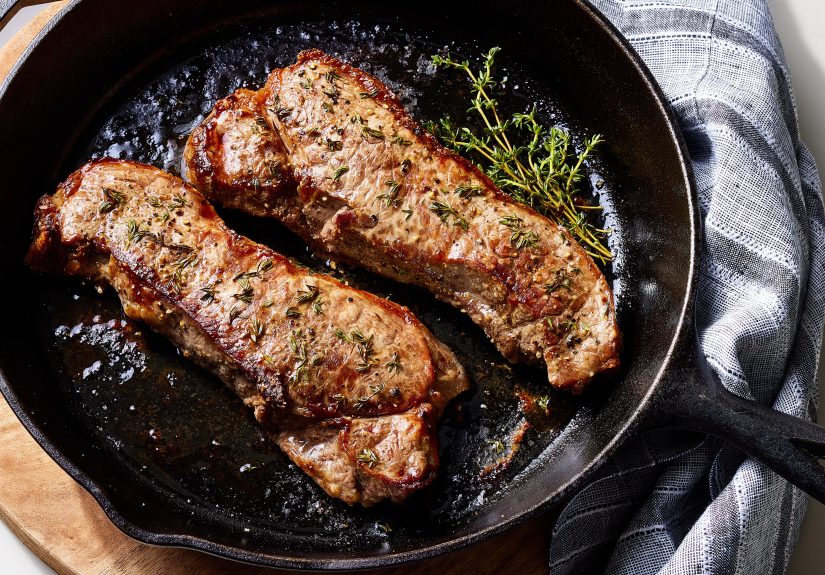
This is the go-to method when you want a fast, dramatic crust and a tender interior. You sear hard on the stovetop, then finish in the oven so the middle cooks evenly without burning the outside.
Best for
- Steaks about 1 to 1.5 inches thick
- Ribeye, strip, filet, sirloin
- When you want dinner now (but still want it to taste expensive)
Step-by-step
- Let it warm slightly: Take steak out of the fridge for 20–30 minutes if you can. This helps it cook more evenly.
- Preheat oven: Set oven to 425°F. (If your steak is thinner, you can go a little hotter; thicker, a little lower is fine.)
- Dry it like it owes you money: Pat steak dry with paper towels. Moisture is the enemy of browning.
- Season: Salt and pepper both sides. Optional: garlic powder or smoked paprika for extra flavor.
- Heat the skillet: Place an oven-safe skillet (ideally cast iron) over high heat until it’s very hot. Add a high-heat oil (avocado, canola).
- Sear: Sear steak 1–2 minutes per side until you get a deep brown crust. Sear the edges for 10–20 seconds if you’re feeling fancy.
- Finish in the oven: Transfer skillet to the oven and cook until it hits your target temperature:
- 1-inch steak: often ~4–7 minutes
- 1.5-inch steak: often ~7–12 minutes
Use the thermometer. Time is a suggestion; temperature is the truth.
- Rest: Move steak to a plate and rest 5–10 minutes. This gives juices time to redistribute and finishes carryover cooking.
- Optional: butter baste (flavor cheat code): After searing, add a tablespoon of butter, crushed garlic, and a sprig of rosemary or thyme, tilt the pan, and spoon butter over the steak for 20–30 seconds before the oven step.
Quick pan sauce (because you deserve it)
While the steak rests, pour off excess fat (leave the browned bits). Add a splash of beef broth or wine, scrape, simmer 1–2 minutes, and swirl in a little butter. Taste. Pretend you’re on a cooking show. Pour over steak.
Method 2: Reverse Sear (The “Chef Brain” Method for Thick Steaks)
Reverse searing starts the steak in a low oven to gently bring the interior to temp, then finishes with a screaming-hot sear for the crust. The result: a more evenly cooked interior and a gorgeous brown exteriorespecially for thick cuts.
Best for
- Steaks 1.5 inches thick or more (tomahawk, thick ribeye, porterhouse)
- People who love precision and hate overcooked bands of gray meat
Step-by-step
- Preheat oven: Set to 225–275°F. Lower is more gentle; higher is faster.
- Set up a rack: Place steak on a wire rack over a sheet pan (airflow = more even cooking).
- Cook low and slow: Bake until the steak is about 10–15°F below your final target:
- Want medium-rare (final 130–135°F)? Pull around 120–125°F.
- Want medium (final 140–145°F)? Pull around 130–135°F.
Depending on thickness, this can take 20 to 60+ minutes. Thermometer = sanity.
- Heat skillet: Put a cast iron skillet on high heat until very hot. Add a small amount of high-heat oil.
- Sear fast: Sear 45–60 seconds per side (and quick edge sear), just to build crustnot to cook the inside further.
- Rest briefly: Because the steak cooked gently, you can rest it 3–5 minutes. (Longer is fine; just don’t let it go cold.)
Why reverse sear is so reliable
Low oven heat reduces the “overcooked ring” problem. You get a wider zone of perfectly cooked steak, then the final sear adds the crust and aroma that makes everyone in the house wander into the kitchen like suspiciously hungry ghosts.
Method 3: Broiled Steak (Your Oven’s Built-In Upside-Down Grill)
Broiling uses intense heat from above, which makes it great for thinner steaks and quick cooking. It’s also the method most likely to set off a smoke alarm, so consider it both dinner and a home-security test.
Best for
- Steaks about 1/2 to 1 inch thick
- Flank steak (then slice thin against the grain)
- Anyone without an oven-safe skillet
Step-by-step
- Position the rack: Place oven rack about 4–6 inches from the broiler.
- Preheat broiler: Preheat for about 5 minutes (use High if you have options).
- Use the right pan: Use a metal sheet pan or broiler pan. Avoid glass and most nonstick pans under the broiler.
- Prep steak: Pat dry, oil lightly, season well.
- Broil: Broil 4–7 minutes per side depending on thickness and your broiler’s power. Start checking temperature early. Keep the oven door closed unless your broiler instructions say otherwise.
- Rest: Rest 5–10 minutes, then slice.
Easy Sides That Pair Perfectly with Oven Steak
- Sheet-pan veggies: Asparagus, broccoli, or Brussels sprouts at 425°F with olive oil, salt, pepper.
- Crispy potatoes: Roast baby potatoes while you reverse searsame oven, two victories.
- Simple salad: Arugula + lemon + olive oil + shaved parmesan = steakhouse energy.
- Garlic bread: Not traditional, but neither is scrolling memes during dinner. Live your truth.
Troubleshooting: Fix the Most Common Oven-Steak Problems
“My steak didn’t brown.”
Your surface was wet or your pan wasn’t hot enough. Pat dry aggressively, preheat the skillet longer, and don’t overcrowd the pan.
“It’s cooked unevenly.”
Thickness varies, or you skipped resting/thermometer. For thick steaks, switch to reverse sear. For thinner steaks, consider broiling.
“It’s tough.”
Could be the cut, slicing direction, or doneness. Slice against the grain (especially flank/skirt). Avoid pushing lean steaks beyond medium.
“It’s dry.”
Most often: overcooked. Pull earlier, rely on carryover cooking, and rest properly. Also, choose cuts with marbling (ribeye/strip) for more forgiveness.
“My kitchen is smoky.”
Welcome to the sear club. Use an oil with a higher smoke point, ensure ventilation, and keep searing time short. Broiling can also smokewatch closely.
FAQ: Quick Answers Before You Cook
Should I use butter or oil?
Use oil for the initial sear because it tolerates higher heat. Add butter at the end for flavor (butter can burn at searing temperatures).
Do I really need to rest the steak?
If you want the juices to stay in the steak instead of sprinting onto your plate, yes. Resting also helps carryover cooking finish gently.
What if I don’t have a cast iron skillet?
Use any heavy, oven-safe pan (stainless steel works well). For broiling, a metal sheet pan and rack is excellent.
Final Thoughts: The “Best” Oven Method Depends on Your Steak
If your steak is around 1 inch thick and you want speed: sear-then-bake. If it’s thick and you want precision: reverse sear. If you want simplicity and fast cooking: broil. The real secret is not magicit’s a thermometer, a dry surface, and pulling the steak early.
Real-Life Experiences Cooking Steak in the Oven (500+ Words of Lessons Learned)
I used to believe oven steak was a compromiselike eating salad at a burger place. Then I learned the oven doesn’t “ruin” steak; people ruin steak. Specifically: people who eyeball doneness, skip drying the surface, and treat a lukewarm pan like it’s doing its best. (It’s not.)
My first truly successful oven steak happened the day I stopped chasing a cook time and started chasing a temperature. I had a 1.25-inch strip steak and a big opinion about how “five minutes in the oven” should work. It didn’t. My oven was running hot, my steak was colder than I thought, and I ended up with a medium-well interior and a deeply offended mood. The next try, I used an instant-read thermometer andshockinglyreality improved.
Another lesson: dryness begins with wetness. If you put a damp steak into a pan, the surface steams before it browns. That means less crust, less flavor, and more time in heat while you wait for colortranslation: a higher chance of drying out the interior. Now I pat steaks dry like I’m trying to remove evidence from a crime scene. Is it dramatic? Yes. Is the crust better? Also yes.
Reverse searing taught me patience in a way that adult life never did. The first time I tried it, I worried the low oven temperature would somehow “miss the moment” and leave me with a gray, sad steak. Instead, the inside cooked evenly, and the final sear was so fast that the exterior got beautifully browned without turning the center into a well-done surprise. The best part is the consistency: once you know your target pull temperature, it’s repeatableeven if you’re cooking thick steaks that usually feel like a gamble.
Broiling, meanwhile, is the method that made me respect my smoke detector. Broilers are intense. The first time I broiled a steak, I used the wrong pan (nonstick) and learned that “broiler-safe” is not a vibe, it’s a requirement. Now I use a metal sheet pan or a broiler pan, preheat the broiler, and keep the rack 4–6 inches from the heat. And I do not walk away. Not “for a second,” not “just to check something,” not “to see what that sound was.” Broiling is like a toddler with a marker: you supervise it constantly.
My biggest “aha” is that oven steak becomes easy when you decide you’re in charge. You control the surface (dry it), the heat (preheat properly), and the doneness (thermometer). Once those are handled, the rest is just style: a butter baste here, a quick pan sauce there, maybe a sprinkle of flaky salt at the end if you’re feeling like the main character. And when it workswhen you slice into a medium-rare steak with a deep brown crustyou’ll wonder why you ever believed steak required a backyard, a grill, and a dramatic apron.
So yes: you can absolutely cook steak in the oven and feel proud about it. The oven is not the backup plan. It’s the planespecially when it’s raining, your grill is out of commission, or you simply want repeatable results without negotiating with charcoal.