Table of Contents >> Show >> Hide
- Step 1: Identify Your Lawn’s “Personality” (Before You Schedule Anything)
- Step 2: Build Your Schedule Around the “Big Three”
- Step 3: Add “Seasonal Tasks” That Prevent Big Problems
- Step 4: Use a Lawn Maintenance Schedule Template (Then Customize It)
- Cool-Season Lawn Maintenance Schedule (Typical Northern & Transition Areas)
- Warm-Season Lawn Maintenance Schedule (Typical Southern Areas)
- Step 5: Customize Your Schedule With These “If This, Then That” Triggers
- Step 6: Put Your Lawn Schedule on Autopilot (Without Losing Your Mind)
- Common Mistakes That Wreck Schedules (So You Can Avoid Them)
- Conclusion: A Lawn Maintenance Schedule Is Just a Promise You Keep to Future You
- Extra: Real-World Experiences & Lessons That Make Schedules Actually Work (Bonus Section)
- 1) The schedule is a guide, not a courtroom summons
- 2) Most “lawn problems” are secretly mowing problems
- 3) Watering becomes easier when you measure it once
- 4) Soil tests are the most boring thing that delivers the most relief
- 5) Fall is where cool-season lawns are made (and spring is where they show off)
- 6) “Five-minute lawn walks” prevent hour-long lawn emergencies
- 7) The best schedule matches your lifestyle
A great lawn doesn’t happen because you “mowed it that one time” and then whispered encouraging words at it. It happens because you do the right things at the right timesoften in small, repeatable steps. In other words: you need a lawn maintenance schedule.
The good news? You don’t need a color-coded binder or a personal assistant named “Chad” who only wears polos. You just need a plan that matches your grass type, your climate, and your tolerance for weekend chores. This guide will help you build a realistic lawn care calendar you can actually followwithout turning your backyard into a chemistry lab.
Step 1: Identify Your Lawn’s “Personality” (Before You Schedule Anything)
The biggest mistake people make is copying a neighbor’s routine like lawns are interchangeable. They’re not. Your schedule should be built around a few key factors:
- Grass type: Cool-season (common in the North) or warm-season (common in the South).
- Region & weather: Your local temperatures, rainfall patterns, and summer stress level.
- Sun vs. shade: Shady lawns grow slower, stay wetter longer, and hate being scalped.
- Soil condition: Compacted? Sandy? Clay? Your soil decides how water and nutrients behave.
- Your goals: “Pretty nice” lawn vs. “golf course” lawn are two different hobbies.
Quick shortcut: Cool-season vs. warm-season
If your lawn stays green in spring and fall and struggles in peak summer heat, you’re probably dealing with cool-season grasses (like Kentucky bluegrass, tall fescue, fine fescue, or perennial ryegrass). If your lawn loves summer and turns tan/brown when it’s chilly, it’s likely warm-season (like bermudagrass, zoysiagrass, centipedegrass, or St. Augustinegrass).
Step 2: Build Your Schedule Around the “Big Three”
Most lawn schedules succeed or fail based on three recurring habits: mowing, watering, and feeding. Everything else (aeration, overseeding, weed prevention) supports these basics.
1) Mowing: Your lawn’s weekly haircut (don’t give it bangs)
Mowing is the most frequent task, so small improvements here pay off fast. Use these principles:
- Follow the one-third rule: Avoid removing more than one-third of the grass blade in a single mowing.
- Keep blades sharp: Dull blades tear grass, which looks ragged and can increase stress.
- Mow higher during heat or shade: Taller grass shades soil, helps roots, and reduces weeds.
Common mowing height ranges (typical home-lawn guidance):
- Tall fescue: about 3–4 inches (higher in summer)
- Kentucky bluegrass: about 2–3.5 inches
- Perennial ryegrass: about 2–3 inches
- Bermudagrass: about 1–2 inches (often needs more frequent mowing)
- Zoysiagrass: about 1.5–2.5 inches
- St. Augustinegrass: about 3.5–4 inches
2) Watering: Deep, smart, and (ideally) not at midnight
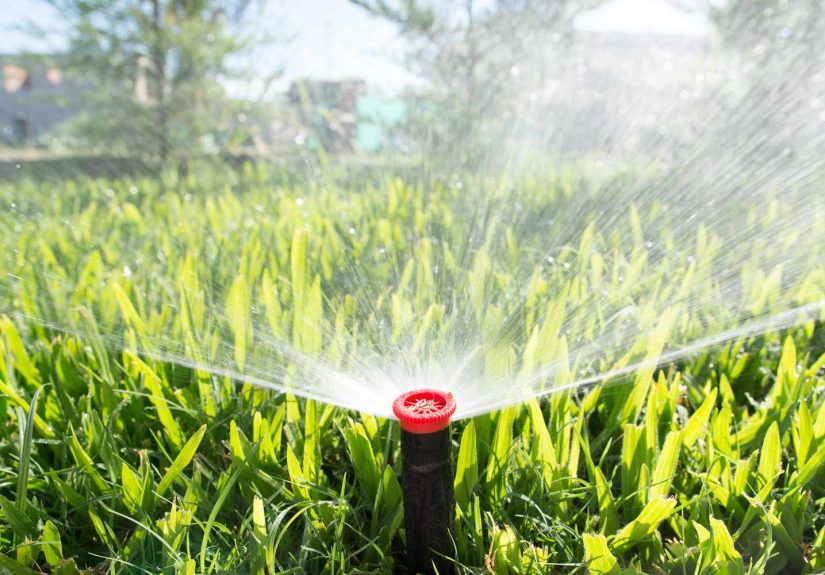
A schedule beats guessing. Most established lawns do best with deep, infrequent watering rather than daily sprinkles. A common target is roughly about 1 inch of water per week from irrigation, rainfall, or bothadjusted for your soil and weather.
- Best time: Early morning (less evaporation, fewer disease issues).
- How to measure: Put a few straight-sided cups (or empty tuna cans) in the yard and time how long it takes to collect 1/2 inch.
- Adjust for soil: Sandy soils need shorter, more frequent cycles. Clay needs slower watering to prevent runoff.
3) Fertilizing: Feed based on grass type, not vibes
Fertilizer timing is where lawns get either amazing… or mysteriously patchy. The big rule:
- Cool-season lawns: Benefit most when most nitrogen feeding happens in late summer through fall.
- Warm-season lawns: Typically get fed during active growth, often late spring through summer (after green-up).
Your best move is to use a soil test to guide what nutrients you actually need. Most people don’t need to test yearly; every few years is common unless you’re making big changes or chasing a specific problem.
Step 3: Add “Seasonal Tasks” That Prevent Big Problems
These are the once-or-twice-a-year jobs that keep your lawn from slowly turning into a weed-themed art installation:
- Soil test: Helps you avoid guessing at pH and nutrients. Repeat every few years or after major changes.
- Aeration: Relieves compaction so water and oxygen can reach roots.
- Overseeding (cool-season): Thickens the lawn and crowds out weeds.
- Thatch check: A little thatch is normal; too much can block water and air movement.
- Weed prevention: Timing matters, especially for annual weeds like crabgrass.
A note on weed prevention timing (keep it simple and safe)
Many lawn weeds are easier to prevent than to fight later. For example, crabgrass prevention is often timed for early spring when soil temperatures approach the low-to-mid 50s °F. The point isn’t memorizing a magic dateit’s scheduling a reminder to check local conditions so you’re not late.
If you choose to use any weed control product, follow the label exactly and keep people and pets away as directed. If you’d rather skip chemicals, your schedule can still do a lot: mow at the right height, avoid scalping, and keep turf dense through proper feeding and overseeding.
Step 4: Use a Lawn Maintenance Schedule Template (Then Customize It)
Below are two practical, season-based schedules. Think of them as “starter plans.” Your exact dates will shift based on your climate and weather patterns. The goal is to know what to do and roughly whenthen adjust.
Cool-Season Lawn Maintenance Schedule (Typical Northern & Transition Areas)
Cool-season grasses grow best in spring and fall. The schedule focuses on building roots and density in fall, then maintaining healthy growth in spring without pushing the lawn too hard in summer.
| Season | What to Do | Why It Matters |
|---|---|---|
| Late Winter / Early Spring |
|
Prepares the lawn for spring growth without stressing it. |
| Mid-Spring |
|
Encourages steady growth and prevents weeds from gaining a foothold. |
| Summer |
|
Summer is survival season. Your schedule should focus on stress reduction. |
| Late Summer / Early Fall (The Power Season) |
|
Fall work sets up thicker turf, fewer weeds, and better spring green-up. |
| Late Fall |
|
Reduces winter disease risk and prevents dead patches come spring. |
Example: A simple weekly rhythm for cool-season lawns (in active growth)
- Weekly: Mow as needed (growth rate decides), quick walk-through for weeds and bare spots.
- Weekly or biweekly: Water deeply if rainfall is short, adjusting for heat waves.
- Monthly: Check mower blade sharpness, sprinkler coverage, and compacted areas.
Warm-Season Lawn Maintenance Schedule (Typical Southern Areas)
Warm-season grasses love heat. The schedule centers on feeding and mowing during peak growth, then easing off as the lawn slows down toward fall and dormancy.
| Season | What to Do | Why It Matters |
|---|---|---|
| Late Winter / Early Spring |
|
Sets you up for a smooth green-up without damaging dormant grass. |
| Spring Green-Up |
|
Feeding too early can push weak growth; waiting supports healthier turf. |
| Summer (Peak Growth) |
|
Consistent mowing and smart watering keep turf dense and more weed-resistant. |
| Late Summer / Early Fall |
|
Prepares the lawn for cooler weather and reduces fall/winter weed pressure. |
| Late Fall / Winter |
|
Dormant turf is tougher than it looksbut it still appreciates being left alone. |
Step 5: Customize Your Schedule With These “If This, Then That” Triggers
A lawn maintenance schedule works best when it reacts to conditionsnot just dates. Add these checks to your calendar:
If your lawn is thin…
- Cool-season: Schedule overseeding for late summer/early fall, often paired with aeration.
- Warm-season: Focus on mowing consistency, proper feeding during active growth, and fixing irrigation coverage.
If weeds keep winning…
- Raise mowing height (many weeds love short, stressed turf).
- Improve density with correct fertilizing timing and, for cool-season lawns, fall overseeding.
- Schedule prevention reminders based on local conditions (especially for annual weeds).
If the soil is rock-hard…
- Do the “screwdriver test”: if it’s hard to push a screwdriver several inches into moist soil, compaction is likely.
- Schedule core aeration during your grass’s best recovery window (often fall for cool-season, late spring/early summer for warm-season).
If brown patches show up every summer…
- Put “mow higher” reminders on your summer calendar.
- Shift watering to early morning, deep cycles.
- Reduce high-stress extras (like heavy fertilizing) during heat waves.
Step 6: Put Your Lawn Schedule on Autopilot (Without Losing Your Mind)
The best schedule is one you’ll actually use. Make yours effortless:
- Create repeating reminders: Weekly mowing check, weekly rainfall check, monthly equipment check.
- Keep a quick lawn log: Note mowing height, fertilizer dates, and any bare spots. Next year, you’ll feel like a wizard.
- Use weather as a boss fight timer: Heat waves = mow higher and ease off extras. Cool spells = growth may jump.
- Bundle tasks: Example: “Saturday morning = mow + edge + 5-minute weed walk.” Done.
Common Mistakes That Wreck Schedules (So You Can Avoid Them)
- Scalping: Cutting too short stresses grass and invites weeds.
- Daily sprinkling: Encourages shallow roots and sometimes disease.
- Over-fertilizing in the wrong season: Especially pushing cool-season lawns hard in summer heat.
- Skipping fall work on cool-season lawns: Fall is where the magic happens.
- Ignoring compaction: You can’t “fertilize your way” out of rock-hard soil.
Conclusion: A Lawn Maintenance Schedule Is Just a Promise You Keep to Future You
Creating a lawn maintenance schedule isn’t about doing moreit’s about doing smarter. When you match tasks to your grass type and seasons, you spend less time reacting to problems (weeds, bare spots, crispy summer sadness) and more time enjoying a lawn that looks intentional.
Start with the basics: mow correctly, water wisely, feed at the right time. Then add your seasonal tasks like aeration and (for cool-season lawns) overseeding. Put it on a calendar. Keep it realistic. And remember: your lawn doesn’t need perfection. It needs consistency.
Extra: Real-World Experiences & Lessons That Make Schedules Actually Work (Bonus Section)
Here’s what many homeowners discover after trying to follow a lawn maintenance schedule for a full yearespecially the folks who start out motivated in April and then mysteriously “get busy” sometime around June. These lessons can save you time, money, and a whole lot of squinting at suspicious brown spots.
1) The schedule is a guide, not a courtroom summons
Weather doesn’t care about your calendar invite. A rainy spring can delay mowing and make early weed work tricky. A surprise heat wave can turn “fertilize this weekend” into “maybe don’t stress the lawn right now.” The best schedules include “check conditions” reminders rather than hard deadlines.
2) Most “lawn problems” are secretly mowing problems
People often blame fertilizer, bugs, or “bad soil” when the real culprit is mowing too short or too infrequently. When grass gets scalped, it loses leaf surface area and struggles to feed itself. That stress opens the door for weeds, shallow roots, and patchy growth. Homeowners who raise mowing height even by one notch often notice fewer weeds and better color within a few weeksno dramatic intervention required.
3) Watering becomes easier when you measure it once
Many lawns are either overwatered (hello, soggy spots) or underwatered (hello, crunchy footprints). A simple “cup test” once per season changes everything. People who measure sprinkler output can adjust run times by zone, so shady areas aren’t drowning while sunny spots are thirsty. Once you know the baseline, your schedule turns into a quick weekly check: “Did we get enough rain? If not, run the deep cycle.”
4) Soil tests are the most boring thing that delivers the most relief
This is the least exciting lawn task, which is exactly why it’s powerful. Homeowners often guess at what the lawn needs and end up applying the wrong thing (or too much of something). A soil test can clarify pH issues and nutrient gaps, so your schedule becomes more targeted. People who test every few years tend to use fewer “random” products and get more consistent results.
5) Fall is where cool-season lawns are made (and spring is where they show off)
One of the most common real-world stories goes like this: someone pours effort into spring, gets a decent lawn by June, then watches it struggle through summer and thin out by the next spring. When they finally commit to fall aeration and overseeding (plus the most important feeding window), the lawn gets noticeably thicker the following year. The schedule starts feeling less like chores and more like a system that pays you back.
6) “Five-minute lawn walks” prevent hour-long lawn emergencies
A simple habitwalking the lawn once a weekhelps catch problems early. You spot the sprinkler head that’s not popping up, the corner that’s staying soggy, the dog spot that needs a little attention, or the weeds that are just starting to show. Homeowners who do quick checks often avoid the big weekend spirals where everything suddenly feels wrong at once.
7) The best schedule matches your lifestyle
A perfect lawn schedule on paper is useless if it’s unrealistic. Many people get better results by choosing a “minimum effective plan”: consistent mowing, smart watering, one key feeding window, and one seasonal improvement (like aeration or overseeding). If you have more time, you can add detail. If not, keep it simpleyour lawn will still improve because you’re being consistent.
The bottom line: a lawn maintenance schedule works when it’s practical, adaptable, and built around the big wins. Make it easy to follow, and your future self will step outside, look at the lawn, and feel like they have their life togethereven if the laundry situation says otherwise.