Table of Contents >> Show >> Hide
- What Is a Substitution Cipher?
- Why Create a Substitution Cipher?
- How to Create Substitution Ciphers: 9 Steps
- Step 1: Decide What Alphabet You Will Encrypt
- Step 2: Choose the Type of Substitution Cipher
- Step 3: Create a One-to-One Mapping
- Step 4: Write Down the Key Clearly
- Step 5: Test the Cipher on a Short Message
- Step 6: Decide How to Handle Spaces, Punctuation, and Numbers
- Step 7: Make It More Personal with a Keyword
- Step 8: Try Encrypting a Full Sentence
- Step 9: Evaluate How Easy It Would Be to Crack
- Tips for Making a Better Puzzle Cipher
- Common Mistakes to Avoid
- Are Substitution Ciphers Secure?
- Conclusion
- Experience: What It Feels Like to Create and Use a Substitution Cipher
If you have ever wanted to make a message look mysterious, dramatic, and just a little bit like it belongs in an old detective novel, a substitution cipher is a great place to start. It is one of the simplest ways to turn ordinary text into something that looks secret. You swap each plaintext letter for a different letter, symbol, or character set, and suddenly your grocery list looks like it belongs to a spy. Very low stakes. Very high flair.
Before we dive in, here is the important truth: a simple substitution cipher is fun, educational, and perfect for puzzles, games, journals, treasure hunts, and classroom activities. It is not strong modern security. If your goal is real digital privacy, use modern encryption tools. If your goal is to feel clever while turning “MEET AT NOON” into something that looks suspiciously dramatic, welcome aboard.
What Is a Substitution Cipher?
A substitution cipher works by replacing each letter in a message with another letter or symbol according to a fixed rule. If A becomes Q, then every A in the message becomes Q. If T becomes M, every T becomes M. The pattern stays consistent all the way through the message.
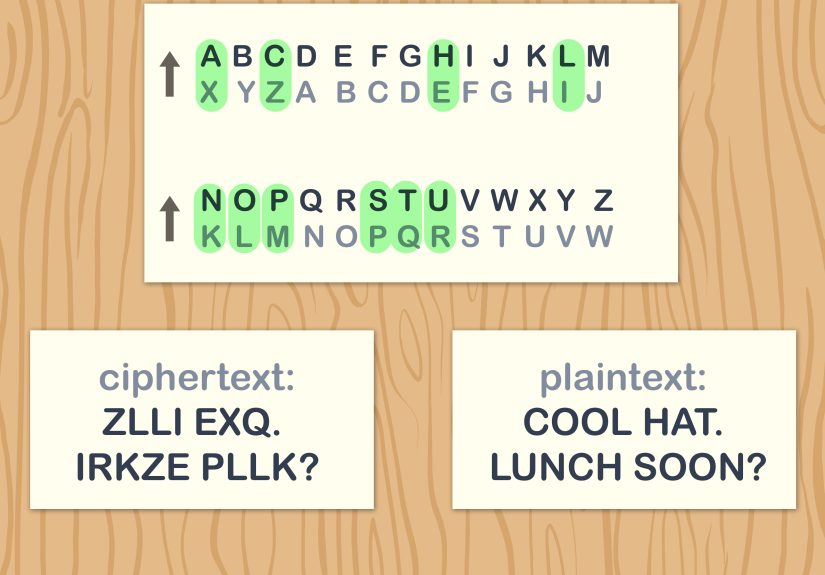
The most common version is a monoalphabetic substitution cipher, which means you use one cipher alphabet for the entire message. That sounds fancy, but it really just means you make one substitution key and stick with it. For example, if your cipher alphabet says:
Plain: ABCDEFGHIJKLMNOPQRSTUVWXYZ
Cipher: QWERTYUIOPASDFGHJKLZXCVBNM
Then the word HELLO becomes ITSSG. Same idea, every time. No chaos. No improvisational jazz. Just orderly sneaky behavior.
Why Create a Substitution Cipher?
There are plenty of reasons to make one:
- To create puzzle games or scavenger hunts
- To teach basic cryptography concepts
- To make coded notes for fun
- To understand how historical ciphers worked
- To appreciate why modern encryption had to become much more sophisticated
In other words, a substitution cipher is the training wheels of classical cryptography. It is simple enough to build by hand but rich enough to teach you about keys, patterns, ciphertext, decryption, and one very rude guest called frequency analysis.
How to Create Substitution Ciphers: 9 Steps
Step 1: Decide What Alphabet You Will Encrypt
Start by choosing the characters your cipher will cover. Most beginners use the 26 English letters, A through Z. That keeps things manageable and easy to decode later. You can ignore spaces and punctuation, or you can leave them unchanged. Leaving them visible makes the message easier to read once decrypted, but it also gives away more structure to anyone trying to crack it.
If you want a beginner-friendly cipher, encrypt only letters and keep spaces, punctuation, and numbers unchanged. If you want a slightly trickier puzzle, remove spaces or substitute them with a special symbol. Just remember: the more complicated you make your system, the more likely you are to become its first victim.
Step 2: Choose the Type of Substitution Cipher
You have options, and each one changes the flavor of the cipher.
- Random letter substitution: Each plaintext letter maps to a different random letter.
- Keyword cipher: You build the cipher alphabet using a keyword, then fill in the remaining letters.
- Symbol substitution: Letters are replaced with symbols, shapes, or numbers instead of letters.
- Caesar-style shift: Every letter moves the same number of positions. This is technically a substitution cipher, just a very predictable one.
If you are creating a cipher for fun and want it to feel custom, a keyword cipher is a great middle ground. It is easier to remember than a random alphabet and still feels delightfully code-like.
Step 3: Create a One-to-One Mapping
This is the heart of the whole operation. Every plaintext letter must map to exactly one ciphertext letter, and no ciphertext letter should be used twice. In plain English, if A becomes M, then no other letter can also become M. Otherwise, decoding becomes a swamp.
Here is a simple example of a valid mapping:
Plain: ABCDEFGHIJKLMNOPQRSTUVWXYZ
Cipher: MNBVCXZLKJHGFDSAPOIUYTREWQ
This mapping is valid because each plaintext letter points to a unique ciphertext letter. Think of it as assigning seats at a dinner party where nobody is allowed to share a chair.
Step 4: Write Down the Key Clearly
Do not trust your memory. That is how you end up staring at your own secret note like it was sent by an enemy from another galaxy.
Write the key in a neat chart, either on paper or in a digital note. Label one row “Plaintext” and the other “Ciphertext.” You can also create a decoding chart that reverses the mapping, which will save time later.
Example:
Encryption key:
A → M
B → N
C → B
D → V
E → C
Decryption key:
M → A
N → B
B → C
V → D
C → E
Yes, writing both feels extra. It is. It is also smart.
Step 5: Test the Cipher on a Short Message
Before using your masterpiece for a full paragraph, test it on a short phrase. Something like:
Plaintext: SECRET NOTE
Ciphertext: ICBOCM DASC
Use your key letter by letter. This is where you catch mistakes like duplicated letters, skipped letters, and the classic “Why did I map H twice?” problem.
Testing early prevents later drama. A short test message lets you verify that your encryption and decryption both work. If you can encrypt the message and then reverse it correctly, your cipher is functioning. Congratulations. You have built a tiny historical headache.
Step 6: Decide How to Handle Spaces, Punctuation, and Numbers
This step matters more than people think. If you leave spaces and punctuation untouched, the ciphertext will preserve word lengths and sentence structure. That makes it easier for your intended reader to decode, but it also makes life easier for anyone attacking the cipher.
You have a few choices:
- Leave spaces and punctuation unchanged for readability
- Remove spaces entirely to make words harder to spot
- Replace spaces with a fixed symbol such as / or *
- Substitute digits with a separate number key
For a classroom or puzzle setting, I recommend keeping punctuation and either keeping spaces or replacing them with one simple marker. You want mystery, not mutiny.
Step 7: Make It More Personal with a Keyword
If a random alphabet feels too chaotic, build your cipher alphabet from a keyword. Let’s say your keyword is MYSTERY. Write it first, remove repeated letters, then add the remaining unused letters of the alphabet.
Keyword: MYSTER
Remaining letters: ABCDFGHIJKLNOPQUVWXZ
Your cipher alphabet becomes:
Cipher: MYSTERABCDFGHIJKLNOPQUVWXZ
Now line it up against the regular alphabet:
Plain: ABCDEFGHIJKLMNOPQRSTUVWXYZ
Cipher: MYSTERABCDFGHIJKLNOPQUVWXZ
Keyword substitution ciphers are easier to reconstruct if you know the keyword, which is handy if you are making a themed puzzle or sending a coded note to someone who already knows the secret word.
Step 8: Try Encrypting a Full Sentence
Once your key is stable, encrypt something longer. Use a sentence with repeated letters so you can see the consistency of your system.
Example plaintext:
MEET ME BY THE LIBRARY AT NINE
As you encrypt it, every repeated letter should turn into the same repeated ciphertext symbol. That consistency is exactly what makes substitution ciphers manageable for the creator and vulnerable to analysis by a codebreaker.
When you do this step, you start noticing patterns immediately. Short words keep recurring. Common letters appear more often. Double letters remain double letters, just in disguise. This is where you begin to understand both the beauty and the weakness of the system. A substitution cipher hides the alphabet, but it often keeps the skeleton of the language standing upright in broad daylight.
Step 9: Evaluate How Easy It Would Be to Crack
This is the step that turns a fun craft project into a lesson in cryptography. Once your message is encrypted, look at it like an outsider would. Are there one-letter words? Common three-letter patterns? Repeated doubles? Visible punctuation? Very short words that are probably “a,” “I,” “the,” or “and”?
Simple substitution ciphers are vulnerable to frequency analysis, which means someone can count how often symbols appear and compare them to common letter frequencies in English. If one symbol shows up constantly, it may represent E. A repeated three-letter word might be THE. Once a few guesses land, the whole system can unravel faster than a cheap sweater.
That does not mean your cipher failed. It means it behaved exactly like a classical substitution cipher is expected to behave. If your goal is fun, learning, or puzzle design, that is perfectly fine.
Tips for Making a Better Puzzle Cipher
- Use longer messages if you want solvers to have enough clues to decode it
- Use shorter messages if you want the answer to depend more on guessing context
- Pick a memorable keyword if you want the sender and receiver to reconstruct the key easily
- Avoid obvious themes if you do not want the first guessed word to unlock everything
- Include a hint if the cipher is part of a game, lesson, or classroom activity
A good substitution cipher puzzle is not just “hard.” It is fair. There should be enough pattern, context, or clueing for a thoughtful person to solve it without needing divine intervention.
Common Mistakes to Avoid
- Using the same ciphertext letter for multiple plaintext letters
- Forgetting to save the key
- Changing the mapping halfway through the message
- Accidentally skipping letters in the alphabet
- Making the cipher so complicated that even the creator cannot decode it later
The best secret message is one that your intended reader can actually read. Revolutionary concept, I know.
Are Substitution Ciphers Secure?
For modern standards, no. For history, education, and recreational cryptography, absolutely they still matter. They teach the foundational idea of using a key to transform plaintext into ciphertext. They also show why pattern leakage is a serious weakness and why modern encryption had to move far beyond simple letter swapping.
So if you are hiding a clue for a birthday scavenger hunt, go wild. If you are protecting sensitive information, step away from the hand-drawn cipher alphabet and use real modern security tools instead.
Conclusion
Creating a substitution cipher is one of the easiest ways to explore the logic of secret writing. You choose an alphabet, build a one-to-one mapping, create a key, test it, and then use it to transform ordinary text into coded text. Along the way, you learn how encryption works at a basic level, why classical ciphers were historically important, and how codebreakers use patterns to crack them.
The magic of a substitution cipher is not that it is unbeatable. It is that it lets you hold the mechanics of cryptography in your hands. You can make one in minutes, customize it for a puzzle or story, and see exactly how a message changes under a rule-based system. That combination of simplicity, logic, and mystery is why substitution ciphers still charm people centuries after stronger methods took over.
Experience: What It Feels Like to Create and Use a Substitution Cipher
The first time most people create a substitution cipher, the experience is half triumph and half accidental self-sabotage. At first, it feels wonderfully simple. You draw two alphabets, connect the letters, and think, “Excellent. I am now operating at the level of a stylish literary mastermind.” Then you try encrypting an actual sentence and discover that the human brain is incredibly talented at losing track of its own rules after about eleven letters.
That learning curve is part of the fun. You start out thinking the hard part is inventing the code, but the real challenge is consistency. Every repeated letter has to stay repeated in the same way. Every choice you made in the key has to be honored. Suddenly, neat handwriting becomes a security feature. You begin to appreciate charts, checklists, and careful testing in a way that would make an organized math teacher beam with pride.
There is also a strange thrill in watching plain language transform into something that looks unfamiliar. Even when you know exactly how the cipher works, the encrypted message still creates a tiny sense of distance. It no longer looks like ordinary writing. It looks protected, disguised, theatrical. That effect is probably one reason substitution ciphers remain popular in games, novels, escape rooms, and educational activities. They make language feel mechanical and mysterious at the same time.
Another memorable part of the experience is trying to decode your own message a day later. This is the moment when many beginner cryptographers learn humility. If the key is messy, missing, or “definitely easy to remember,” you may find yourself staring at your ciphertext with the expression of someone who has hidden their own house keys in an extremely clever place. Creating the cipher teaches one lesson; trying to recover the message teaches another. A good system is not just clever. It is usable.
Then comes the most interesting stage: noticing patterns. Once you create a few substitution ciphers, you start seeing how the same word shapes survive in disguise. Double letters stand out. Tiny words repeat. Common structures keep peeking through the curtain. This is where the topic becomes more than a hobby. You begin to understand why classical codebreakers cared so much about letter frequencies, repeated patterns, and likely word guesses. You stop seeing ciphertext as random noise and start seeing it as language wearing a costume.
That shift in perspective is the real reward. Making a substitution cipher is fun because it feels secretive, but understanding its weaknesses is what makes the exercise valuable. You learn that encryption is not just about hiding symbols. It is about hiding patterns, structure, and predictability. And once you understand that, you have taken your first real step into the larger world of cryptography. Not bad for an activity that can start with a pencil, a scrap of paper, and the dangerous confidence of someone who has just decided that Q now means A.