Table of Contents >> Show >> Hide
- Step 1: Understand Where Diamonds Spawn Now
- Step 2: Prepare the Right Gear Before You Dig
- Step 3: Reach the Correct Y-Level Safely
- Step 4: Use Branch Mining for Consistent Results
- Step 5: Use Caves Carefully, Especially Flooded Ones
- Step 6: Deal With Lava Like a Calm Professional
- Step 7: Mine Diamonds With Fortune or Silk Touch
- Step 8: Turn Your Diamonds Into Smart Upgrades
- Fast Diamond Mining Strategy: A Practical Example
- Common Mistakes That Slow Down Diamond Mining
- Extra Experience: What Actually Works When Mining Diamonds Fast
- Conclusion
- SEO Tags
Diamonds in Minecraft are the shiny blue “please don’t fall into lava now” treasure every survival player wants. They unlock stronger tools, powerful armor, enchanting tables, jukeboxes, smithing template duplication, and the road toward Netherite gear. But if you are still wandering through random caves hoping the blocky universe hands you a miracle, your diamond hunt may feel less like mining and more like unpaid overtime.
The good news is that finding diamonds fast in Minecraft is not about luck alone. It is about mining at the right Y-level, bringing the correct tools, using efficient tunnel patterns, avoiding lava drama, and knowing when to use Fortune, Silk Touch, or structure loot. This guide breaks the process into 8 practical steps so you can stop digging like a confused mole and start mining like a pro.
Step 1: Understand Where Diamonds Spawn Now
Modern Minecraft diamond mining is very different from the old “mine at Y 11” advice many players remember. Since the Caves & Cliffs world-generation changes, diamonds are found much deeper in the Overworld. In current 1.18+ style generation, diamond ore appears below Y 16 and becomes more common as you go deeper, especially in deepslate layers.
For fast diamond mining, the best practical range is usually between Y -53 and Y -59. If you want the highest diamond density, Y -58 or Y -59 is often recommended. If you want a safer experience with fewer lava interruptions, Y -53 is a smart choice because it keeps you above many deep lava pools. Think of it as the difference between “maximum diamonds per block” and “maximum diamonds without screaming.”
Best Diamond Levels at a Glance
- Y -53: Safer for branch mining because it reduces lava problems.
- Y -58 or Y -59: Excellent for higher diamond density, but riskier because lava is more common.
- Y -64: Too close to bedrock, which slows mining and makes tunnels messy.
- Above Y -50: Still possible, but less efficient for serious diamond hunting.
Step 2: Prepare the Right Gear Before You Dig
Never go diamond hunting with half a wooden pickaxe, three potatoes, and optimism. Minecraft rewards preparation. Before heading underground, gather tools and supplies that let you mine longer, survive surprises, and return home with your inventory intact.
To mine diamond ore, you need an iron pickaxe or better. A wooden, stone, gold, or weaker tool will not give you diamonds from diamond ore. If you break diamond ore with the wrong pickaxe, the block disappears and drops nothing, which is the Minecraft equivalent of stepping on your own birthday cake.
Recommended Diamond Mining Kit
- At least 2 iron pickaxes, or 1 diamond/netherite pickaxe if you already have one.
- A Fortune III pickaxe if available.
- A Silk Touch pickaxe if you want to carry ore blocks home and mine them later.
- A water bucket for lava control.
- Torches or another light source.
- Food, preferably enough for a long session.
- Blocks for bridging, sealing lava, or blocking mobs.
- A shield, armor, and a sword or axe.
- A crafting table and furnace or blast furnace for emergency repairs and smelting.
If you are early in the game, your goal should be simple: get iron, craft an iron pickaxe, bring food, and mine carefully at the right level. If you already have enchanted gear, your goal changes from “find diamonds” to “multiply diamonds like a tiny blue economy.”
Step 3: Reach the Correct Y-Level Safely
There are two common ways to reach diamond depth: stair-stepping down or using a vertical shaft. The safer method is a staircase. Digging straight down may be famous, but so is falling into lava, caves, or a dramatic regret hole.
Create a staircase that descends toward Y -53, Y -58, or Y -59. In Java Edition, press F3 to check your coordinates and watch the Y value. In Bedrock Edition, enable “Show Coordinates” in world settings. Once you reach your chosen level, carve out a small base room with chests, a crafting table, a furnace, and a safe return route.
Why a Small Mining Base Helps
A base room at diamond level saves time. Instead of running back to the surface every time your inventory fills with deepslate, you can store blocks, repair tools, smelt iron, and reset your mining route. Add doors, trapdoors, or blocks at entrances if mobs are nearby. Place torches generously; darkness underground is basically an invitation letter for zombies.
Step 4: Use Branch Mining for Consistent Results
Branch mining is one of the most reliable methods for finding diamonds fast. The idea is simple: dig a main tunnel, then create side tunnels that expose lots of blocks while wasting as little effort as possible. Since diamonds are rare, the more blocks you expose per minute, the better your odds.
Start with a 2-block-high main tunnel. Then dig side branches every 2 or 3 blocks. Each branch can be 20 to 50 blocks long, depending on how organized you want to be. A spacing of 2 blocks exposes plenty of nearby blocks, while 3-block spacing saves effort and still covers ground efficiently.
Simple Branch Mining Layout
- Dig a main tunnel at Y -53 for safer mining or Y -58/Y -59 for higher yield.
- Make side tunnels 2 blocks high and 1 block wide.
- Space side tunnels 2 or 3 blocks apart.
- Light every tunnel to prevent hostile mobs.
- Block off lava quickly with stone, deepslate, or water.
Branch mining may not look exciting, but it works. It is the Minecraft version of brushing your teeth: not glamorous, but extremely effective if you do it correctly.
Step 5: Use Caves Carefully, Especially Flooded Ones
Caves can be excellent for finding exposed ore, but they are not always the fastest way to get diamonds. In newer Minecraft world generation, diamond ore exposed to open air is less common than hidden ore inside solid blocks. That means giant caves may look promising but can sometimes disappoint you like a chest full of rotten flesh.
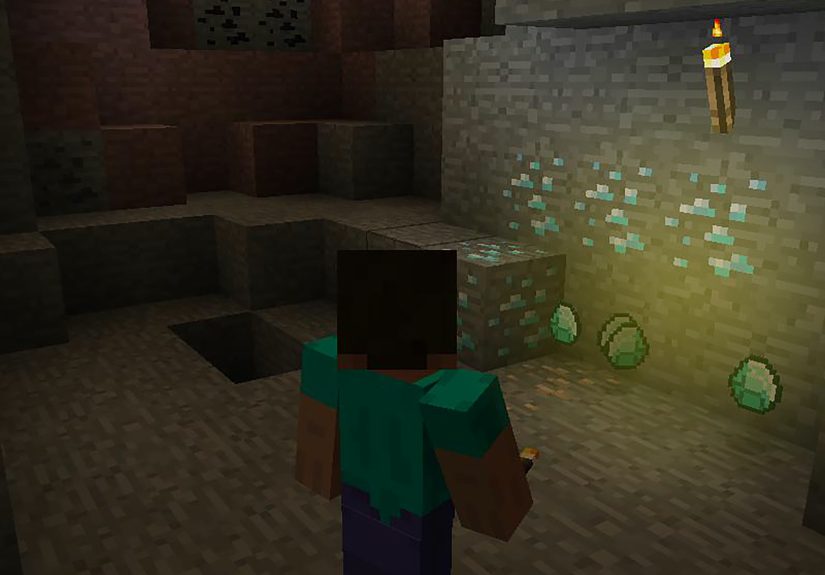
However, caves are still worth checking when they are deep enough. If you find a cave around Y -50 or lower, scan walls, floors, and ceilings. Flooded caves and aquifers can be especially useful because water does not behave the same as open air for ore exposure. Bring doors, magma blocks, respiration gear, or water-breathing potions if you plan to search underwater.
When Caving Is Worth It
- The cave is deep, around Y -50 or lower.
- You have good armor and food.
- You can handle mobs safely.
- You see large deepslate surfaces to scan quickly.
- The cave has water-covered walls where diamonds may be visible.
For pure efficiency, branch mining is usually more consistent. For adventure, caves are more exciting. For panic, caves with skeletons near lava are undefeated.
Step 6: Deal With Lava Like a Calm Professional
Lava is the main reason many players prefer Y -53 over Y -59. Deep lava pools can interrupt your tunnels, burn dropped items, and turn a successful mining trip into a dramatic “respawn screen speedrun.” The solution is not to fear lava; it is to manage it.
Always carry a water bucket. If lava appears in front of you, step back, place water safely, and turn the lava surface into obsidian or cobblestone. Do not mine directly above your head or directly below your feet unless you are prepared for falling gravel, lava pockets, or other unpleasant surprises.
Lava Safety Tips
- Keep your hotbar organized with water, blocks, food, and a weapon.
- Mine forward from a safe distance when you suspect lava nearby.
- Place blocks to seal lava flows before continuing.
- Crouch near dangerous edges.
- Never chase a diamond vein into lava without securing the area first.
When you finally uncover diamond ore near lava, do not rush. Clear the surrounding blocks carefully. Check behind, below, and around the ore before mining it. Diamonds love hiding next to danger because apparently even minerals enjoy suspense.
Step 7: Mine Diamonds With Fortune or Silk Touch
Once you find diamond ore, stop for a second. This is not the time to wildly swing your pickaxe like a player who just drank three potions of excitement. The tool you use matters.
A regular iron, diamond, or netherite pickaxe will drop diamonds from diamond ore. But a pickaxe enchanted with Fortune can increase the number of diamonds you receive. Fortune III is the best version and can turn a small vein into a much better reward. If you do not have Fortune yet, you can use Silk Touch to collect the ore blocks and save them until you get a Fortune III pickaxe.
Best Pickaxe Enchantments for Diamond Mining
- Fortune III: Increases diamond drops from ore.
- Efficiency IV or V: Mines deepslate faster.
- Unbreaking III: Makes your pickaxe last longer.
- Mending: Repairs your pickaxe using experience.
- Silk Touch: Lets you collect ore blocks instead of immediate diamond drops.
Do not combine Fortune and Silk Touch on the same pickaxe because they are incompatible. Most players eventually keep two pickaxes: one Fortune pickaxe for valuable ores and one Silk Touch pickaxe for collecting special blocks.
Step 8: Turn Your Diamonds Into Smart Upgrades
Finding diamonds fast is only half the job. Spending them wisely is the other half. Early diamonds should usually go toward progression, not decoration. Yes, a diamond block floor looks fancy, but it also screams, “I have made questionable financial decisions.”
Your first priorities should be tools and an enchanting table. A diamond pickaxe lets you mine obsidian, which is needed for a Nether portal and enchanting table. An enchanting table requires diamonds and opens the door to Fortune, Efficiency, Protection, and other powerful upgrades. After that, diamond armor becomes valuable for surviving the Nether, raids, trial chambers, and deep cave exploration.
Best Uses for Your First Diamonds
- Diamond pickaxe: Great first investment for obsidian and stronger mining.
- Enchanting table: Essential for long-term gear improvement.
- Diamond armor: Useful once you have enough diamonds for protection.
- Smithing template duplication: Important if you are upgrading or customizing gear.
- Jukebox: Fun, but not usually a first priority unless your base needs vibes immediately.
If you want diamonds without mining, also check loot chests in structures such as villages, shipwrecks, buried treasure, mineshafts, desert temples, jungle temples, bastions, strongholds, end cities, and trial chambers. Mining is the most consistent method, but structure loot can give you an early boost before you build a serious branch mine.
Fast Diamond Mining Strategy: A Practical Example
Here is a simple routine for survival players who want diamonds quickly. First, collect enough iron for several pickaxes, a bucket, a shield, and armor if possible. Next, dig a staircase down to Y -53 if you want safety, or Y -58 if you are comfortable managing lava. Build a small underground base, then dig one main tunnel with side branches every 3 blocks.
Mine for 20 to 30 minutes, placing torches as you go. When you hit lava, block it off or use water. When you find diamonds, clear the area around the ore before mining. If you have Fortune III, mine the ore immediately. If not, consider Silk Touch or mark the location and return later. Store diamonds in a chest or return to base before doing anything risky. Nothing teaches humility faster than carrying 19 diamonds and picking a fight with a creeper in a hallway.
Common Mistakes That Slow Down Diamond Mining
Many players waste time because they mine randomly, use the wrong level, or keep changing strategies every five minutes. Diamond mining rewards consistency. Choose your level, create a pattern, and stick with it long enough for probability to do its job.
Avoid These Diamond Mining Errors
- Mining at outdated levels like Y 11 in modern worlds.
- Using a stone or gold pickaxe on diamond ore.
- Digging straight down without checking for danger.
- Ignoring lava safety and losing items.
- Mining diamonds before getting Fortune when Silk Touch is available.
- Exploring huge caves without enough food, armor, or torches.
- Forgetting to check coordinates before starting a mine.
The fastest miners are not always the luckiest. They are the players who remove bad habits from the process. Every efficient tunnel, every safe lava block, and every enchanted pickaxe improves your diamond-per-hour rate.
Extra Experience: What Actually Works When Mining Diamonds Fast
After many survival worlds, one lesson becomes obvious: the “best” diamond method depends on your stage of the game. In a brand-new world, the fastest path is not always digging to Y -59 immediately. You first need enough iron, food, and basic protection. A player who rushes into deepslate with one iron pickaxe and no armor may technically reach the best level, but they will spend more time running away from mobs, crafting replacement tools, or climbing back from spawn after a disaster.
For early-game survival, Y -53 is often the most comfortable level. It may produce slightly fewer diamonds than the deepest layers, but it saves time by reducing lava interruptions. In real gameplay, fewer interruptions can mean more diamonds per hour. Mining speed is not just about ore density; it is also about how often you must stop, panic, patch holes, eat food, or rebuild your tunnel.
Once you have better gear, Y -58 or Y -59 becomes more attractive. With enchanted diamond or netherite tools, strong armor, and a water bucket, lava becomes less scary. At that point, deeper mining can be worth the extra risk. Efficiency V helps a lot because deepslate takes longer to break than regular stone. Without Efficiency, deep branch mining can feel slow, especially if you are clearing long tunnels by hand.
Another useful habit is to mine with a clear inventory plan. Deepslate fills your inventory quickly. Before starting a long session, empty unnecessary items. Bring a few stacks of torches, but do not bring your entire life savings underground. If you have shulker boxes, use one for ores and one for building blocks. If you are earlier in the game, place chests in your underground base and dump extra cobbled deepslate there. You can use it later for building, paths, walls, or dramatic castle projects you may or may not finish.
When you find a diamond vein, always expose the blocks around it. Diamonds often generate in small groups, and a visible block may be connected to more ore hidden behind deepslate. Carefully mine around the vein before breaking the ore. This also protects you from lava underneath. Few things feel worse than mining a diamond and watching it drop directly into lava like it had somewhere better to be.
Fortune III changes everything. If you do not have it yet, prioritize enchanting. A single diamond vein mined with Fortune III can produce far more diamonds than the same vein mined with a normal pickaxe. That means your long-term strategy should be: find enough diamonds for an enchanting table and pickaxe, build your enchantment setup, get Fortune, then return to serious diamond mining. This turns diamond hunting from a slow grind into a much more rewarding system.
Finally, do not ignore structure loot. Mining is reliable, but villages, buried treasure, shipwrecks, mineshafts, and trial chambers can speed up your first diamond finds. If you spawn near an ocean or desert, exploring may beat mining for your first few diamonds. Once you need large quantities, however, a proper branch mine at the right Y-level is still one of the most consistent methods in the game.
Conclusion
Finding and mining diamonds fast in Minecraft is not about blindly digging until the game feels sorry for you. It is about using the right depth, bringing the right pickaxe, mining in an efficient pattern, managing lava, and saving valuable ore for Fortune when possible. For most players, Y -53 offers the best balance of safety and speed, while Y -58 or Y -59 is ideal for those who want maximum diamond density and can handle lava confidently.
Start with a safe staircase, build a small mining base, branch mine with organized tunnels, and treat every diamond vein carefully. With preparation and patience, you will collect diamonds faster, lose fewer items, and finally stop wondering whether your world secretly forgot to generate them. Spoiler: it did not. You were probably just mining in the wrong place.
Note: This HTML body is written for web publishing, with no source links inserted inside the article, no unnecessary citation placeholders, and SEO tags included at the end in JSON format.