Table of Contents >> Show >> Hide
- Before You Start: What “Spin Faster” Really Means
- Step 1: Choose the Right Cycle and Spin Setting (Yes, This Matters)
- Step 2: Fix Load Balance Like a Laundry Tetris Champion
- Step 3: Don’t Overload (Your Washer Has Feelings… and Sensors)
- Step 4: Use the Right Detergent Amount (Suds Can Slow Spin)
- Step 5: Improve Drainage (A Washer Won’t Spin Fast While It’s Still “Holding Water”)
- Step 6: Clean the Pump Filter and Check for Drain Pump Blockages (Front-Loaders, Especially)
- Step 7: Level the Washer and Stabilize the Floor
- Step 8: Check Key “Spin-Blockers” (Door Lock, Lid Switch, Belt, Suspension)
- Bonus: A 60-Second “Full Spin” Checklist
- Conclusion: Faster Spin, Drier Clothes, Less Dryer Drama
- Extra: Real-World Experiences People Run Into (and What Usually Works)
- 1) “My towels are still drenched, but the cycle finished normally.”
- 2) “It starts spinning, then slows down like it got bored.”
- 3) “My washer shakes like it’s trying to break free.”
- 4) “It won’t go into high spin when the load is waterproof or very bulky.”
- 5) “There’s standing water at the bottom after the cycle.”
- 6) “Everything was fine until I used more detergent ‘for extra clean.’”
- 7) “It spins sometimes… and sometimes it just refuses.”
Let’s clear something up right away: your washing machine is not secretly training for the Daytona 500. It can’t spin faster than its design limitsno matter how much you stare at it like a disappointed coach. But if your clothes come out soggy (or your washer “sort of” spins like it’s doing you a favor), you can usually get it back to full, proper spin speed with a handful of smart tweaks.
This guide walks you through 8 practical steps to help your washer reach its intended high-speed spin, extract more water, and shorten dry timewithout unsafe hacks, warranty-risky mods, or keyword-stuffed nonsense. We’ll cover front-load and top-load washers, common causes like imbalance and drainage problems, and when it’s time to call in a pro.
Before You Start: What “Spin Faster” Really Means
Most modern washers automatically adjust spin speed based on safety sensors and conditions. Translation: if your washer senses troublelike a lopsided load, too much suds, or poor drainageit may refuse to ramp up to high spin. So “spin faster” usually means removing the reasons it’s holding back, not forcing it to become a DIY centrifuge.
Quick reality check: If your washer already reaches high spin but you want even drier clothes, your best move is usually choosing a higher spin option (when available) and improving load balancenot trying to “upgrade” the motor like it’s a gaming PC.
Step 1: Choose the Right Cycle and Spin Setting (Yes, This Matters)
Why it works
Many washers default to moderate spin speeds on “Normal,” and they often intentionally keep spin low on “Delicate,” “Hand Wash,” or “Bulky.” If you’re washing towels on Delicate, your washer is basically whispering, “I’m being gentle,” while your dryer screams, “WHY.”
What to do
- For everyday loads: use Normal or Eco (then manually bump spin speed higher if your machine allows it).
- For towels/jeans/sheets: try Heavy Duty or Towels with High spin.
- For “clothes are still wet” situations: run Drain & Spin (or Rinse & Spin) and select High spin.
Example
If your athletic wear comes out dripping, you might be using a low-spin “Activewear” or “Delicate” mode. Switch to a cycle that permits high spin, then reserve Delicate for things that truly deserve itlike lace, silk, or your favorite shirt that shrunk once and still judges you.
Step 2: Fix Load Balance Like a Laundry Tetris Champion
Why it works
Unbalanced loads are the #1 reason washers won’t hit full spin speed. Modern machines will slow down, stop, redistribute, and sometimes give up entirely if the drum is wobbling like a shopping cart with one evil wheel.
What to do
- Don’t wash one bulky item alone. Add a few smaller items to balance weight (e.g., comforter + 3–5 towels).
- Mix sizes. All small items can clump; all large items can slap the drum like a drumline audition.
- Pause and redistribute. If it starts banging during spin, stop the cycle, open the lid/door, and spread items evenly.
Pro tip for top-load washers
Place items in a loose ring around the basket rather than piling everything in the center. Your washer wants balance, not a laundry mountain.
Step 3: Don’t Overload (Your Washer Has Feelings… and Sensors)
Why it works
Overloading increases friction, reduces tumbling space, and makes the load more likely to go off-balance. Result: the washer either slows the spin or keeps “rebalancing” forever like it’s trapped in a motivational seminar.
What to do
- Follow your manual’s guidance, but a good rule is: leave enough room for your hand to fit at the top of the load.
- For HE washers, don’t pack items down. “Packed tight” is great for moving boxes, not for spin performance.
- If you regularly wash bulky loads, split them. Your dryer (and electricity bill) will thank you.
Example
That “one last hoodie” decision often turns a stable spin into a wobble-fest. If your washer walks across the room during spin, it’s not adventurous. It’s overloaded.
Step 4: Use the Right Detergent Amount (Suds Can Slow Spin)
Why it works
Too many suds can cause poor rinsing and sometimes trigger extra drain/rinse behaviorespecially in HE machines. Some washers will reduce spin to manage suds or prevent overflow-like conditions.
What to do
- Use HE detergent in HE washers.
- Measure it. Detergent caps are not measuring tools; they’re optimistic suggestions.
- If you see lots of foam late in the cycle, run an extra rinse and reduce detergent next time.
Quick test
Run a rinse-only cycle with no detergent. If your washer spins better afterward, oversudsing might be part of the problem.
Step 5: Improve Drainage (A Washer Won’t Spin Fast While It’s Still “Holding Water”)
Why it works
Many washers won’t ramp to high spin if they can’t drain properly. Think of it like trying to spin a bucket of water fast without spillingmachines play it safe and slow down.
What to do
- Check the drain hose for kinks, clogs, or crushing behind the washer.
- Make sure the hose isn’t shoved too far down the standpipe (it can siphon or restrict flow).
- Confirm the drain height matches your manual’s requirements.
Example
If your washer drains slowly and your clothes come out wet, you may have a partial blockage. Even a small sock can cause big “why are my towels still soaked?” energy.
Step 6: Clean the Pump Filter and Check for Drain Pump Blockages (Front-Loaders, Especially)
Why it works
Front-load washers often have a pump filter trap that catches lint, coins, buttons, and the occasional mystery item that defies physics. If it’s clogged, drainage suffersand so does your spin speed.
What to do
- Locate your pump filter access door (usually at the lower front).
- Put down towels and a shallow panwater is coming whether you’re emotionally ready or not.
- Open slowly, drain water, remove debris, rinse the filter, reinstall securely.
Safety note
Unplug the washer before opening access panels beyond a basic filter door. If you’re unsure, your owner’s manual is your best friend who never judges your laundry pile.
Step 7: Level the Washer and Stabilize the Floor
Why it works
If your washer isn’t level, it’s more likely to shake, sense imbalance, and reduce spin speed. Even if the load is perfectly balanced, an unlevel machine can act like it’s auditioning for a percussion concert during spin.
What to do
- Use a bubble level front-to-back and side-to-side.
- Adjust the leveling feet until stable.
- Tighten the lock nuts on the feet so they don’t drift out of place.
- If your floor is springy or sloped, consider anti-vibration pads (and/or moving the washer to a sturdier location).
Quick test
Push down on opposite corners of the washer. If it rocks, it’s not stable enough for full-speed spin.
Step 8: Check Key “Spin-Blockers” (Door Lock, Lid Switch, Belt, Suspension)
Why it works
If your washer still won’t hit high spin after Steps 1–7, a component may be limiting performance. Common culprits include safety locks, worn drive parts, or suspension components that can’t control drum movement at speed.
What to look for
- Door lock / lid switch issues: Washer won’t spin or spins inconsistently, may stop mid-cycle.
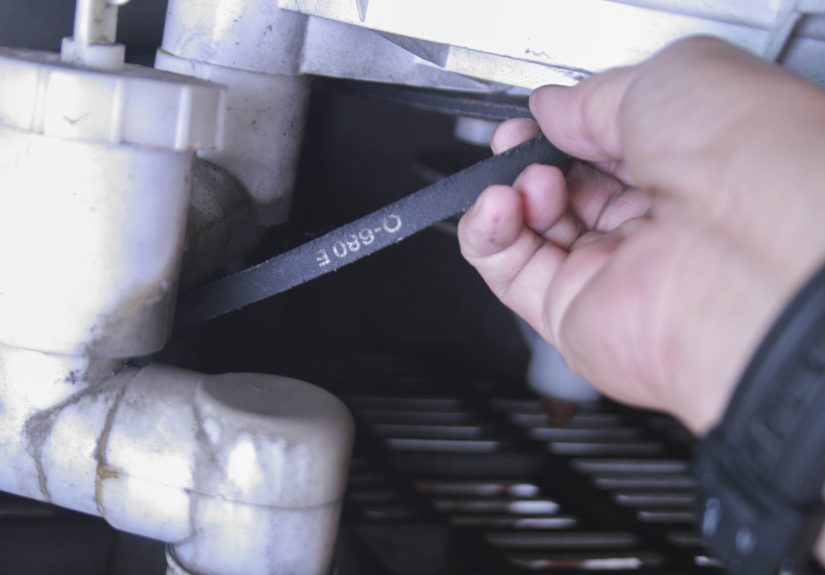
- Drive belt problems: Drum turns weakly, slips, or can’t maintain speed (more common on belt-driven units).
- Suspension/shocks/springs worn: Excessive banging, constant “rebalancing,” or refusal to enter fast spin.
- Drain pump weakening: Slow drain can prevent full-speed spin even if hose looks fine.
When to call a pro
If your washer is under warranty, start there. If it’s out of warranty and you’re seeing error codes, burning smells, or repeated failure to spin even with small balanced loads, a technician can confirm whether a part replacement is worth it.
Bonus: A 60-Second “Full Spin” Checklist
- Select a cycle that allows High spin.
- Load loosely, mix sizes, and avoid single bulky items alone.
- Use less detergent than you think you need (especially HE).
- Check drain hose for kinks and verify proper placement.
- Clean pump filter (front-loaders) and remove debris.
- Level the washer and stabilize the floor.
- Run Drain & Spin to test improvement.
Conclusion: Faster Spin, Drier Clothes, Less Dryer Drama
Getting a washing machine to spin faster usually isn’t about forcing itit’s about removing the obstacles that make it play it safe. In most homes, the big wins come from choosing the right cycle, balancing the load, improving drainage, and making sure the washer is level. If you’ve tried the basics and your washer still won’t ramp up, it may be time to check spin-blocking parts like the lid switch, door lock, belt, or suspension.
Do the simple stuff first. Your future selffolding warm, dry towels instead of wrestling damp oneswill be deeply grateful.
Extra: Real-World Experiences People Run Into (and What Usually Works)
Below are common “spin speed” situations homeowners report (and repair pros see again and again). Consider these mini case studiesbecause sometimes the fastest way to fix “slow spin” is recognizing your exact scenario and skipping the guesswork.
1) “My towels are still drenched, but the cycle finished normally.”
This often comes down to either low spin selection or imbalance protection. Towels are heavy, and they love clumping into one side of the drum. A washer may complete the cycle but quietly reduce spin speed to avoid shaking. The usual fix: wash towels with a few smaller items for balance, use a Towels/Heavy cycle, and manually select High spin if your washer allows it.
2) “It starts spinning, then slows down like it got bored.”
That pattern screams imbalance detection. Many machines do a ramp-up, sense wobble, then back off and try again. You’ll see longer cycle times and wetter clothes. The fix is surprisingly low-tech: pause, redistribute, remove a couple items if overloaded, then run Drain & Spin. If this happens with every loadeven small onesleveling and suspension wear become suspects.
3) “My washer shakes like it’s trying to break free.”
First, check leveling and floor stability. Even a well-built washer can’t defy a bouncy second-floor laundry room. Anti-vibration pads can help, but they’re not magic if the machine is severely unlevel. Also confirm you’re not washing a single heavy item (like a bath mat) alone. If the washer is level and loads are balanced but shaking persists, worn shocks/springs may be letting the tub swing too much to reach high spin safely.
4) “It won’t go into high spin when the load is waterproof or very bulky.”
This is a classic. Waterproof items can trap water and turn into a lopsided “water balloon,” which triggers imbalance systems. Many manuals advise special handling for these loads. The fix: wash waterproof items only as recommended, avoid mixing them with light pieces, and stop the cycle if it gets violent during spin.
5) “There’s standing water at the bottom after the cycle.”
If water remains, full-speed spin may be blocked by drainage issues. The most common culprits are a kinked drain hose, a clogged pump filter (front-load), or debris caught in the drain pump. Many people find coins, hairpins, and tiny socks living rent-free in the filter. Cleaning the pump filter and ensuring the hose isn’t kinked solves this more often than you’d think.
6) “Everything was fine until I used more detergent ‘for extra clean.’”
Ah, the classic “more soap = more clean” mythlaundry’s greatest prank. Excess suds can cause poor draining/rinsing behavior, and in some machines it can interfere with how aggressively the washer spins. If you see foam late in the cycle, reduce detergent, make sure it’s HE (if needed), and run an extra rinse to reset the situation.
7) “It spins sometimes… and sometimes it just refuses.”
Intermittent spin can be a sign of a failing lid switch/door lock or a sensor/actuator issueespecially if you see error codes or the washer stops mid-spin. It can also be a belt slipping only under heavier loads. If simple load/balance/drain steps don’t help, this is the point where an inspection (DIY if you’re comfortable, or professional if not) can save you from weeks of wet-laundry roulette.
The big takeaway from all these experiences: washers usually “spin slow” for a reasonand that reason is often fixable without replacing the whole machine. Start with settings, balance, and drainage. Then move to leveling. Only after that should you suspect parts.