Table of Contents >> Show >> Hide
- What Is a Sewer or Plumbing Cleanout?
- Why Finding It Matters
- What a Cleanout Usually Looks Like
- Where to Look First: The Most Common Cleanout Locations
- Step-by-Step: How to Locate Your Sewer Cleanout
- Step 1: Start where the plumbing exits the house
- Step 2: Look near exterior bathroom or kitchen walls
- Step 3: Scan for caps, boxes, and covers
- Step 4: Check for a line from the house to the street
- Step 5: Do a gentle search, not an excavation saga
- Step 6: Check old paperwork and local records
- Step 7: Call 811 before deeper digging
- Why You Might Not Find a Cleanout Right Away
- Indoor vs. Outdoor Cleanouts
- Safety Tips Before Opening a Cleanout
- When to Call a Plumber
- Common Mistakes Homeowners Make
- Real-World Experiences Homeowners Commonly Have When Hunting for a Cleanout
- Conclusion
There are few homeowner adventures less glamorous than trying to find a sewer cleanout. It is not as fun as picking paint colors, not as satisfying as buying new light fixtures, and definitely not the sort of thing people brag about at dinner parties. But when a main drain slows down, a toilet starts gurgling like it is auditioning for a horror movie, or a plumber asks, “Where’s your cleanout?” this humble little access point suddenly becomes the star of the house.
If you have never looked for one before, do not worry. Many people live in a home for years without knowing where the sewer or plumbing cleanout is. Some are easy to spot. Others are hidden by grass, mulch, bushes, concrete, or the sort of mystery landscaping choices made by previous owners. The good news is that there is a logical way to find it.
In this guide, you will learn what a sewer cleanout is, what it looks like, where it is usually located, how to search for it step by step, and when it is smarter to call a pro instead of turning your backyard into an archaeological dig.
What Is a Sewer or Plumbing Cleanout?
A sewer cleanout is an access point to your home’s drain or sewer line. Plumbers use it to inspect the line, clear clogs, run a sewer camera, remove roots, or service the pipe without taking apart fixtures inside the house. In plain English, it is the plumbing system’s emergency side door.
Most cleanouts are capped pipes. The cap may be plastic, metal, threaded, square-headed, or round-topped. In many homes, the pipe is about 3 to 4 inches wide, though some municipal or property-line cleanouts may be larger. Depending on the house, the cleanout may be indoors, outdoors, above grade, flush with the ground, or hidden under a small box or cover.
Why Finding It Matters
Knowing your cleanout location can save time, money, and stress. If your main sewer line backs up, a plumber can often diagnose the problem faster from the cleanout than from a sink or toilet. In some situations, an accessible outdoor cleanout can also help relieve pressure from a backup before sewage spills farther into the house.
It also helps you understand the path of your sewer lateral, which matters if you are planning landscaping, patio work, fence posts, or any digging project. That is especially important because hitting buried utility lines or sewer piping with a shovel, trenching tool, or mini excavator is a terrible way to spend a Saturday.
What a Cleanout Usually Looks Like
Common visual clues
Most residential cleanouts look like one of these:
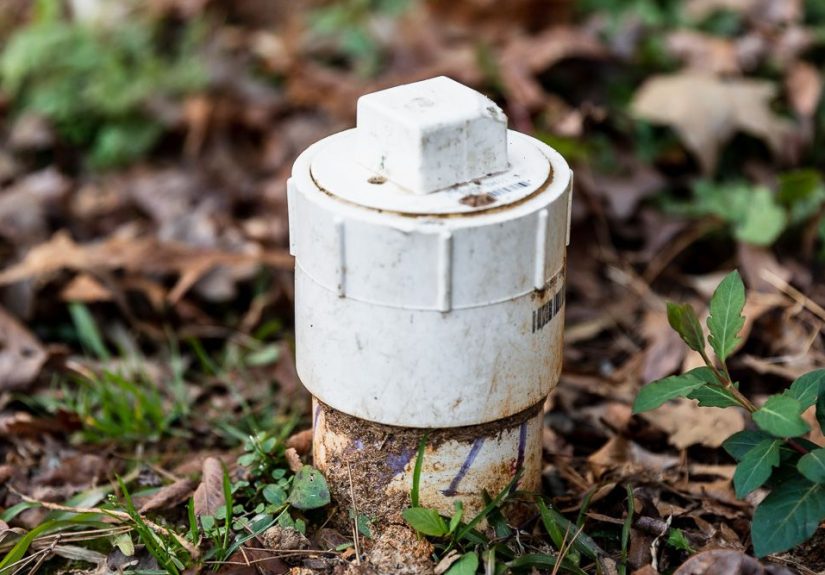
- A white, gray, or black PVC pipe sticking a few inches above the ground with a threaded cap
- A metal or brass cap set into a basement floor
- A capped pipe near an exterior wall
- A small round or rectangular utility box in the yard marked for sewer access
- A circular cap with a raised square in the center
If your house is older, the cleanout may be cast iron or brass instead of PVC. If your home has been remodeled, it may be hidden under a removable panel, in a utility area, or near where the building drain exits the structure.
What it does not usually look like
A cleanout is not the same as a roof vent, downspout, irrigation valve box, or random pipe stub that leads nowhere. The key detail is access to the drain system. If it looks like a capped line connected to the main waste piping, you are in the right neighborhood.
Where to Look First: The Most Common Cleanout Locations
1. Near the foundation outside the house
This is one of the most common locations, especially in warmer climates. Walk the perimeter of your house and focus on the side closest to a bathroom, kitchen, or laundry area. Many cleanouts are installed just outside an exterior bathroom wall or along the line where the main drain exits the home.
2. In the front yard between the house and the street
If your home is connected to a municipal sewer, the cleanout is often somewhere between the house and the street. In some cities, there may be one near the house and another closer to the property line or sidewalk. Look for a capped pipe, a box cover, or a slight depression in the yard that hints at the pipe’s path.
3. In the basement
Homes with basements often have an indoor cleanout where the main drain leaves the house. Check unfinished areas first. Look near the base of vertical drain stacks, utility rooms, floor drains, or the wall facing the street or sewer connection. Basement cleanouts may be installed in the floor or low on a wall.
4. In a crawl space or garage
If there is no basement, the cleanout may be in a crawl space or garage. In garages, look near a floor drain or along the wall where the plumbing exits the slab. In crawl spaces, follow the main drain line until you find a capped opening.
5. Near the curb, sidewalk, or property line
Some properties have a cleanout near the curb, planting strip, sidewalk edge, or property line. Cities sometimes use these locations because they make inspection and service easier. If you see a concrete or metal cover marked “sewer,” do not ignore it. That is not decorative. No one decorates a lawn with sewer covers on purpose.
Step-by-Step: How to Locate Your Sewer Cleanout
Step 1: Start where the plumbing exits the house
Begin inside. Find the lowest large drain pipe in the basement, crawl space, or utility area. Toilets, tubs, sinks, and other fixtures eventually feed into the main drain. Follow that line visually toward the exterior wall. Once you figure out where it leaves the house, go outside and search the corresponding area.
Step 2: Look near exterior bathroom or kitchen walls
If your bathroom or kitchen sits on an exterior wall, check outside along that same wall. Many cleanouts are placed there because it keeps them aligned with the main drainage path. Move slowly and look through ground cover, mulch, rocks, and plantings.
Step 3: Scan for caps, boxes, and covers
Look for anything that seems intentionally installed: a pipe cap, a round lid, a small utility box, or a metal cover. Some cleanouts sit slightly above the soil. Others are flush with grade and easy to miss until you are standing right over them.
Step 4: Check for a line from the house to the street
Imagine a straight path from your bathrooms and kitchen to the street sewer main. In some neighborhoods, a curb marking or utility notation may hint at the sewer line location. A slight dip or narrow line in the lawn can also suggest where the trench was backfilled years ago.
Step 5: Do a gentle search, not an excavation saga
If you suspect the cleanout is buried, use a careful hand search in soft mulch or shallow soil near the foundation. Do not start aggressive digging in the yard unless you have checked utility marking requirements first. If the cleanout is under hardscape, concrete, heavy roots, or deep fill, it is time to stop playing detective and bring in a professional.
Step 6: Check old paperwork and local records
Home inspection reports, sewer scope reports, as-built plans, and old plumbing permits may show where the line exits the house. Your local city hall, wastewater department, or public works office may also have sewer service maps or property records that point you in the right direction.
Step 7: Call 811 before deeper digging
If you plan to dig more than a very shallow surface search, contact 811 first so buried utilities can be marked. Sewer lines are not the only things hiding underground, and electricity or gas lines are much less forgiving than your lawn.
Why You Might Not Find a Cleanout Right Away
Sometimes the cleanout is not visible because it is:
- Covered by grass, weeds, bushes, or mulch
- Buried under dirt after years of landscaping
- Hidden by carpet, flooring, or a basement remodel
- Set inside a box or under a cover plate
- Installed in a crawl space or other awkward access area
- Missing, damaged, or replaced during older plumbing work
In some older homes, there may not be an easily usable exterior cleanout at all. In those cases, a plumber may recommend adding one, especially if the house has frequent drain issues or if access to the main line is poor.
Indoor vs. Outdoor Cleanouts
Indoor cleanouts
Indoor cleanouts are more common in colder climates, basements, and some slab homes. They are protected from freezing conditions and often located near utility spaces. The downside is obvious: if there is a severe backup and that cap comes off under pressure, things can get ugly fast.
Outdoor cleanouts
Outdoor cleanouts are common near foundations, along private laterals, and near property lines. They are usually easier for plumbers to access and are often the preferred service point for sewer cameras and main line clearing.
Safety Tips Before Opening a Cleanout
Opening a cleanout is not automatically a DIY task. If the line is backed up, the cap can release wastewater under pressure. That is not a surprise anyone enjoys.
- Wear gloves, eye protection, and sturdy shoes
- Only open an outdoor cleanout if it is safe and accessible
- Loosen the cap slowly and stand to the side, not directly in front of it
- Never force a stuck cap with reckless enthusiasm and a six-foot cheater bar
- Do not attempt deep digging without utility marking
- Call a plumber if sewage is already backing up indoors
If you are dealing with active sewage contamination, protect yourself and keep people away from the affected area until the system is safe to inspect and clean.
When to Call a Plumber
You should bring in a licensed plumber if:
- You cannot find the cleanout after a careful search
- The cap is buried, damaged, rusted, or inaccessible
- You suspect the line runs under concrete, a deck, or major landscaping
- You are experiencing repeated backups, slow drains, or sewer odors
- You want a camera inspection to confirm the line path
- Your older home may need a new or better-positioned cleanout
A plumber can trace the line, use a camera, review sewer maps, and identify whether the issue is in the house drain, private lateral, or public connection area. That is much better than spending four hours staring at shrubbery and questioning your life choices.
Common Mistakes Homeowners Make
- Looking only in the backyard when the cleanout is actually in the front yard
- Ignoring the basement or crawl space
- Assuming a buried cap means the line no longer exists
- Confusing the cleanout with another utility component
- Digging too aggressively without calling 811
- Waiting until a sewer emergency to learn where the cleanout is
Real-World Experiences Homeowners Commonly Have When Hunting for a Cleanout
One of the most common homeowner experiences is discovering that the cleanout was “visible” the whole time, just not visible in any useful way. Maybe it was buried under three inches of mulch, hidden behind ornamental grass, or tucked beneath an overenthusiastic rosemary bush that had clearly been promoted to yard security. People often say they walked past the spot dozens of times before noticing a cap sitting almost flush with the ground near the foundation.
Another familiar story happens in older homes with basements. A homeowner starts by searching outside, gets nowhere, then eventually heads downstairs and finds a brass or cast-iron cleanout in the floor near the main stack. In some finished basements, it may be concealed by storage shelves, carpet cutouts, removable panels, or that one corner everyone politely ignores. This is why tracing the building drain from the fixtures outward is so useful. The line usually tells the truth even when the yard does not.
Homes on slabs bring their own style of confusion. Many owners expect a tall pipe in the yard, but instead the cleanout may sit low in a flower bed, close to an exterior bathroom wall, or near the garage. If the house was landscaped after construction, the pipe may be partially buried or boxed in with edging. People often assume it is irrigation equipment until a plumber points out the cap and says, “Nope, that’s your sewer access.” That is the moment when ordinary gardening suddenly feels far more dramatic.
Then there is the front-yard surprise. Plenty of homeowners assume all major plumbing access points must be behind the house for aesthetic reasons, only to learn the cleanout is actually between the front wall and the sidewalk, roughly in line with the main bathrooms. In some areas, a curb marking, utility cover, or property-line access point gives the location away. In others, the clue is a slight trench depression running from the foundation toward the street. Once you know to look for a line instead of a random pipe, the search becomes much easier.
Some experiences are less fun but extremely common: the homeowner cannot find a cleanout because there really is no practical exterior access. Older properties, remodeled homes, and houses with unusual sewer layouts may have limited service points or outdated plumbing configurations. In those cases, plumbers often recommend installing a modern accessible cleanout. It is not the most exciting home improvement project, but it can make future service faster, cleaner, and cheaper.
The biggest lesson from all these experiences is simple: the cleanout is usually in a logical place, even when it feels hidden. Start with the plumbing layout, follow the line toward the street or septic connection, check both indoor and outdoor locations, and keep expectations realistic. Finding a cleanout is less about luck and more about reading your house like a map. Once you do, the mystery tends to disappear.
Conclusion
Locating your sewer or plumbing cleanout is one of those home-maintenance tasks that seems obscure until it becomes extremely important. The cleanout is usually somewhere logical: near the foundation, in the basement, along the path to the street, or close to the property line. Look for a capped pipe, utility box, or access cover, and trace the main drain path from your fixtures to the outside. If the cleanout is buried, hidden, or missing, local records and a licensed plumber can save you a lot of guesswork.
Find it before you need it, keep it accessible, and future-you will be grateful when plumbing trouble tries to turn your day into a disaster movie.