Table of Contents >> Show >> Hide
- Step 1: Make Sure You Actually Want to Kiss Them
- Step 2: Pick the Right Person, Not the “Right Time”
- Step 3: Don’t GuessLook for Real Signs
- Step 4: Get Consent (Yes, It Can Be Smooth)
- Step 5: Choose a Comfortable Setting (Privacy Beats Pressure)
- Step 6: Do the “Fresh Mouth Basics” (Brush, Floss, Tongue)
- Step 7: Take Care of Your Lips (No One Wants Sandpaper Romance)
- Step 8: Eat Smart and Plan Your Breath Like a Friendly Human
- Step 9: Calm Your Nervous System (Because Your Face Shouldn’t Be in Fight-or-Flight)
- Step 10: Start Simple (The First Kiss Is Not the Olympics)
- Step 11: Figure Out Hands Without Turning Into a Windmill
- Step 12: Adjust, Don’t Attack (Angle, Pressure, Pace)
- Step 13: Watch for Practical Stuff (Glasses, Braces, Height Differences)
- Step 14: After the Kiss, Be Kind (and Maybe a Little Funny)
- Quick FAQ: First Kiss Questions Everyone Googles at 1 A.M.
- Conclusion
- Extra: Real-Life First Kiss Experiences (The Unfiltered Edition)
- SEO Tags
Your first kiss is a weirdly famous moment for something that lasts about three seconds and involves… lips.
Not fireworks. Not a cinematic soundtrack. Just two humans trying to line up faces without bonking noses like
confused baby turtles.
The good news: you don’t need to be “good at kissing” to have a great first kiss. You need comfort, consent,
basic mouth maintenance, and the ability to not treat someone’s face like a panic button. The even better news:
you can totally prepare without turning it into a high-stakes performance. Here are 14 practical, confidence-boosting
first kiss tips to help you feel readywhile staying yourself (the only person you actually have to be).
Step 1: Make Sure You Actually Want to Kiss Them
Let’s start with the most underrated prep step: desire. Do you want this, or do you feel like you “should”
because your friends, your age, your relationship status, or the entire internet is acting like it’s a required badge?
A first kiss is supposed to be a choice, not homework.
A quick self-check: when you imagine kissing them, do you feel curious/excited/nervous-in-a-good-wayor mainly
anxious, pressured, or “meh”? Nervous is normal. Not wanting it is also normal. You’re allowed to wait.
Step 2: Pick the Right Person, Not the “Right Time”
People obsess over the perfect moment and forget the most important part: the person. A good first kiss partner is
someone who respects your boundaries, doesn’t rush you, and won’t turn your personal moment into group chat content.
If you’re worried they’ll tease you, push you, or guilt you, that’s not romancethat’s a warning label.
The “right person” doesn’t have to be your forever person. They just need to be a safe person.
Step 3: Don’t GuessLook for Real Signs
Movies teach people to dramatically lean in and “let fate decide.” Real life works better when you pay attention.
Signs someone might be open to a kiss include: lingering eye contact, smiling, staying close, mirroring your body language,
and not backing away when you move slightly nearer.
Signs to slow down: they keep turning away, getting distracted, stepping back, going stiff, or not engaging. If you’re not sure,
that’s your cue to check in (which leads us to the step that makes everything easier).
Step 4: Get Consent (Yes, It Can Be Smooth)
Consent is not a legal document. It’s a vibe check with words. Asking doesn’t “ruin the moment”it creates a safer,
sweeter moment because both people know what’s happening and want it.
Try something simple:
“Can I kiss you?” / “I really want to kiss youdo you want that?” / “Would it be okay if I kissed you?”
If they say yes (enthusiastically), great. If they hesitate, say maybe, change the subject, or look uncomfortablepause.
A confident “not now” is still a win because you respected them (and yourself).
Step 5: Choose a Comfortable Setting (Privacy Beats Pressure)
Your first kiss doesn’t need a sunset, but it does need comfort. Pick a moment where you can be present without an audience.
Being watched can make people tense, self-conscious, or feel pushed to “perform.”
Think: after a good date, a quiet walk, sitting in the car before you say goodbye, a calm corner at a partynot center stage
under fluorescent lighting while someone yells “KISS! KISS! KISS!”
Step 6: Do the “Fresh Mouth Basics” (Brush, Floss, Tongue)
You don’t need to taste like peppermint immortality. But a clean mouth helps you feel confidentand it’s considerate.
Before you see them (or earlier that day), brush your teeth, floss, and gently clean your tongue. Tongue cleaning matters because
odor-causing bacteria love hanging out there like it’s a rent-controlled apartment.
Bonus: drink water. Dry mouth can make breath worse and kissing less comfortable. Hydration is the least glamorous first kiss prep
and also one of the most effective.
Step 7: Take Care of Your Lips (No One Wants Sandpaper Romance)
Lips don’t need to be perfect. They do need to be reasonably smooth. If your lips get dry, use a simple lip balm.
Avoid picking at flaky skin right before the momentyour lips will not magically become softer when attacked.
If you’re wearing lipstick or gloss, consider something comfortable and not overly sticky. You want “kissable,” not “industrial adhesive.”
Step 8: Eat Smart and Plan Your Breath Like a Friendly Human
Garlic bread is delicious. Garlic breath is… a bold choice for a first kiss. If you think kissing might happen,
you don’t have to avoid all food (please eat like a person), but try to skip the strongest breath offenders right beforehand:
garlic, onions, super-spicy meals, and anything that clings to your soul.
Sugar-free gum or mints can help in the short term. The key detail: ditch the gum before you kiss.
“Wait, are we sharing gum?” is not the plot twist you want.
Step 9: Calm Your Nervous System (Because Your Face Shouldn’t Be in Fight-or-Flight)
If your heart is doing parkour, take a breath. Literally. Slow inhale through your nose, slow exhale through your mouth.
Drop your shoulders. Unclench your jaw. Unclench the other jaw you didn’t know you were clenching.
A helpful reframe: you’re not “delivering a perfect kiss.” You’re sharing a moment with someone you like. Moments can be sweet
even when they’re slightly awkward.
Step 10: Start Simple (The First Kiss Is Not the Olympics)
The most common first-kiss mistake is coming in too intensetoo fast, too hard, too much tongue, too soon.
Start with a gentle closed-mouth kiss or a soft peck, then pause. See how they respond. If they lean in again, you can continue.
If they smile and stay close, that’s a green light.
Slow is confident. Rushing is usually nerves in a trench coat.
Step 11: Figure Out Hands Without Turning Into a Windmill
“What do I do with my hands?” is the unofficial national anthem of first kisses. Good options:
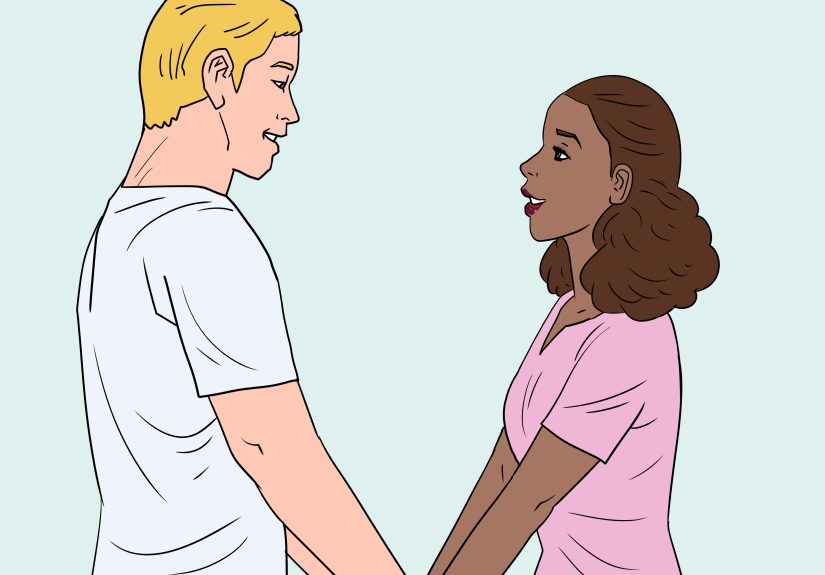
a light touch on their arm, hand, shoulder, waist, or gently holding their hand. If it’s a closer moment,
a soft touch to the side of their face can be sweetif it feels natural and they seem comfortable.
Avoid grabbing suddenly or escalating fast. When in doubt, keep it simple and respectful.
Step 12: Adjust, Don’t Attack (Angle, Pressure, Pace)
Kissing is mostly micro-adjustments. Tilt your head slightly (so your noses don’t collide like bumper cars).
Keep pressure light. Match their pace. If they kiss softly, don’t respond like you’re trying to open a jar of pickles.
Tiny pauses are your friend. A short pause to smile, breathe, or say “that was nice” can be ridiculously charming.
Step 13: Watch for Practical Stuff (Glasses, Braces, Height Differences)
Glasses: you can keep them on, but you might tilt your head more or gently adjust so frames don’t clack.
Braces: plenty of people kiss with braces. The secret is slowing down and keeping it gentleno aggressive face mashing.
Height difference: step closer, lean in, or angle your head; don’t strain like you’re reaching for a top-shelf cereal box.
Also: if you’re sick or have a cold sore, it’s okay to hit pause. A first kiss is specialsharing a virus is less romantic.
Step 14: After the Kiss, Be Kind (and Maybe a Little Funny)
After you kiss, you don’t have to deliver a speech. You can smile, stay close, or say something simple:
“I’ve been wanting to do that.” / “That was really nice.” / “Hi, I’m still alive.” (Okay, maybe not the last oneunless it’s your brand.)
If they look unsure, check in gently: “Are you okay?” or “Was that alright?” Consent is ongoing. If the moment was awkward,
you can laugh softly and reset. Awkward doesn’t mean bad. It means you’re human.
Quick FAQ: First Kiss Questions Everyone Googles at 1 A.M.
How long should a first kiss last?
Shorter than you think. A few seconds is plenty. You can always kiss again. In fact, leaving them wanting more is a classic move
(and by “classic,” I mean “works on most mammals”).
Do I have to use tongue?
Nope. Tongue is optional, not mandatory. If you do use it, keep it minimal and follow their lead. Your tongue should not arrive
first like it’s scouting the territory.
What if I miss their lips or bump noses?
Congratulations, you’ve unlocked the “real life” version of romance. Smile, adjust, and try againslowly. Most people find it endearing
if you don’t panic.
What if they say no?
You say, “No worries,” and you mean it. Nobody owes anyone a kiss. Handling rejection respectfully is attractive. Pushing is not.
If they’re the right person, they’ll appreciate your maturity.
Can you get sick from kissing?
Kissing can spread some infections (like cold sores) through close contact, especially when someone has symptoms. If you notice a cold sore
or you’re not feeling well, it’s smart to wait. There’s nothing unromantic about protecting each other.
Conclusion
Preparing for your first kiss isn’t about memorizing “how to kiss perfectly.” It’s about creating the conditions where a kiss can feel
natural: mutual interest, clear consent, good hygiene, and a calm moment. Start gentle, pay attention, and treat the other person like a person,
not a level you’re trying to beat.
And if your first kiss is sweet but slightly awkward? That’s not a failure. That’s a story. Preferably one you’ll remember fondly and not
one that begins with, “So I tripped into their mouth.”
Extra: Real-Life First Kiss Experiences (The Unfiltered Edition)
If you asked a hundred people what their first kiss was like, you’d get a hundred different answersand at least thirty of them would start
with nervous laughter. A lot of first kisses are not “perfect.” They’re real. And honestly, that’s kind of the point.
One common experience: the build-up is scarier than the kiss itself. People describe spending days (or weeks) obsessingmint strategy,
lip-balm strategy, “should I lean in at a 37-degree angle?” strategyonly to realize the actual kiss is quick and surprisingly simple.
The lesson: your brain will always try to turn romance into a math test. You can ignore it.
Another super common experience is the “too much too soon” moment. Someone goes in with big energyfast pace, heavy pressure, tongue making
an early cameoand immediately regrets it. Not because they’re a bad kisser, but because nerves can look like intensity. When people slow down
on the second try, it often becomes sweet and comfortable. If you take one practical takeaway from other people’s stories, let it be this:
gentle is brave.
Then there’s the classic “what do I do with my hands?” confusion. Lots of first-kiss stories include hands that freeze at the sides like
a malfunctioning robot, or hands that suddenly become overly ambitious and then retreat in panic. Most people eventually discover that
one light touchholding hands, a hand on the arm, a gentle hugcan make the moment feel connected without being overwhelming.
When someone says, “I wish I’d known what to do,” what they usually mean is, “I wish I’d felt less pressure to do a lot.”
Practical mishaps are also basically a rite of passage. Nose bumps. Glasses clacking. Someone laughing mid-kiss because they’re nervous.
Even the occasional “oops, wrong angle” moment that turns into a second attempt. The best stories don’t end with embarrassment; they end with
two people being kind about it. If you can smile and reset, you’re already doing great.
People also talk about the emotional part more than the technical part. A first kiss can feel like relief (“Finally!”), surprise (“Ohthis is
what it’s like”), or warmth (“That felt safe”). Sometimes it’s underwhelmingand that’s normal too. Many people report that kissing gets better
when you feel more comfortable with the person, when you learn each other’s pace, and when you stop grading the moment like a talent show.
And finally: a lot of people wish they’d worried less about “being behind.” Some had their first kiss early; some later; many right in the
middle of that messy timeline where everyone is pretending they’re chill while absolutely not being chill. The shared wisdom is consistent:
the best first kiss is the one you choose when you feel ready, with someone who makes you feel respected. That’s not cheesy. That’s practical.
Also, it’s way more romantic than panic-kissing someone just to meet an imaginary deadline.