Table of Contents >> Show >> Hide
- What Is a Corn on the Toe?
- How to Remove Corns from Your Toes: 12 Steps
- Step 1: Confirm That It Looks Like a Corn
- Step 2: Stop the Pressure That Created It
- Step 3: Use Protective Padding
- Step 4: Soak the Toe in Warm Water
- Step 5: Gently File with a Pumice Stone or Emery Board
- Step 6: Moisturize the Thick Skin
- Step 7: Repeat Slowly, Not Aggressively
- Step 8: Be Careful with Medicated Corn Removers
- Step 9: Keep Toenails Trimmed Properly
- Step 10: Choose Socks That Reduce Rubbing
- Step 11: Track What Makes the Corn Better or Worse
- Step 12: See a Podiatrist When Needed
- What Not to Do When Removing Corns
- How to Prevent Corns from Coming Back
- When a Corn Is More Than a Cosmetic Problem
- Personal Experience: What Toe Corn Care Feels Like in Real Life
- Conclusion
- SEO Tags
Corns on your toes are tiny overachievers. They are small, stubborn patches of thickened skin that show up when your feet are dealing with too much pressure or friction. In other words, your toe is not trying to ruin sandal season; it is trying to protect itself. The problem is that this protective skin can become hard, tender, and surprisingly dramatic every time it rubs against a shoe.
If you are searching for how to remove corns from your toes safely, the first rule is simple: do not attack them like a weekend DIY project involving scissors, razors, or heroic bathroom surgery. Most mild corns can improve with gentle home care, better footwear, padding, soaking, moisturizing, and patience. But some corns need professional care, especially if you have diabetes, poor circulation, nerve problems, signs of infection, or pain that keeps coming back.
This guide breaks down corn removal into 12 practical steps. The goal is not just to smooth the hard spot today, but to reduce the pressure that caused it in the first place. Because if your shoes keep bullying your toes, the corn will file a formal complaint and return.
What Is a Corn on the Toe?
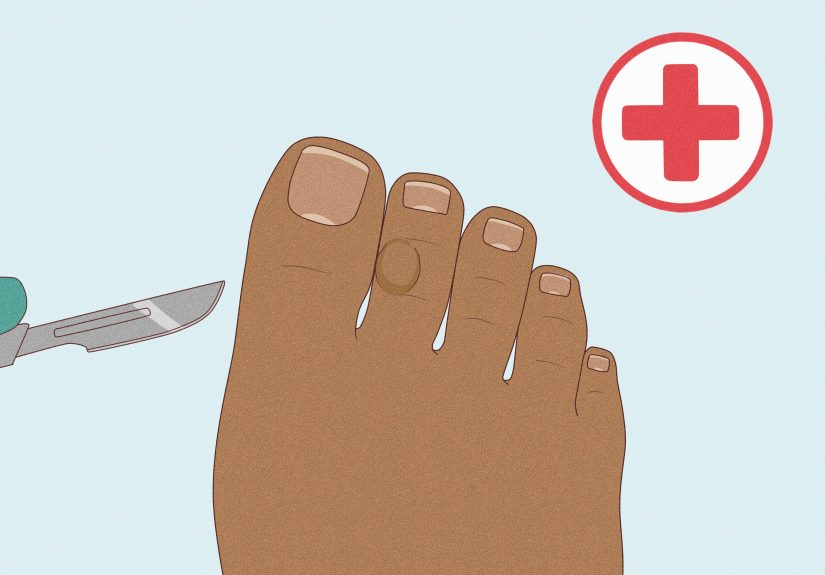
A corn is a concentrated area of thick, hardened skin that usually forms on or between the toes. It develops when the skin responds to repeated rubbing, squeezing, or pressure. Corns are often smaller and more focused than calluses, and they may feel tender when pressed.
Common Types of Toe Corns
Hard corns often appear on the tops, tips, or outer sides of toes, especially where a shoe presses against a bony area. Soft corns usually develop between toes, where moisture keeps the skin rubbery and tender. Seed corns are smaller, plug-like spots that may appear on weight-bearing areas of the foot, although people often use the word “corn” loosely for several kinds of thickened foot skin.
Corns can be confused with plantar warts, blisters, bunions, or other foot problems. If the spot has black dots, spreads, bleeds, opens, becomes red or warm, or hurts sharply, it is time to let a podiatrist or health care professional take a look.
How to Remove Corns from Your Toes: 12 Steps
Step 1: Confirm That It Looks Like a Corn
Before treating anything, examine the area. A corn usually looks like a round or cone-shaped patch of thick skin with a firm center. It may hurt when pressed directly, especially if it sits over a toe joint or rubs against a shoe.
Do not treat the spot as a corn if it looks infected, has drainage, has an open wound, changes color quickly, or appears after an injury. Also, do not self-treat if you have diabetes, poor blood flow, neuropathy, immune system problems, or a history of foot ulcers. In those cases, even a small toe problem deserves professional attention.
Step 2: Stop the Pressure That Created It
The most important part of corn removal is pressure relief. You can soak, file, and moisturize all day, but if your toe is still being squeezed in a narrow shoe, the corn will keep coming back like an unwanted sequel.
Check your shoes. Are the toe boxes too narrow? Do your toes rub the top of the shoe? Are high heels pushing weight forward? Are stiff seams pressing against one toe? Choose shoes with a wider toe box, soft uppers, low to moderate heels, and enough room for your toes to wiggle without starting a neighborhood dispute.
Step 3: Use Protective Padding
Non-medicated corn pads, gel toe sleeves, foam cushions, or moleskin can reduce friction while the area heals. The key word is non-medicated. A simple cushion can protect the corn from shoe pressure without applying chemicals to the skin.
For corns between toes, a toe separator or a small piece of clean lambswool may help reduce rubbing. Avoid stuffing cotton between toes for long periods, because it can hold moisture and make soft corns more irritated. Your toes need peace talks, not a damp pillow fight.
Step 4: Soak the Toe in Warm Water
Soaking helps soften the thickened skin so it can be gently reduced. Use warm, not hot, water for about 5 to 10 minutes. You can add mild soap if you like, but skip harsh mixtures, strong acids, bleach, or mystery internet potions. Your foot is not a science fair volcano.
After soaking, pat the area dry carefully. If the corn is between your toes, dry the spaces thoroughly. Moisture trapped between toes can worsen irritation and increase the chance of skin breakdown.
Step 5: Gently File with a Pumice Stone or Emery Board
Once the skin is soft, use a clean pumice stone, nail file, emery board, or washcloth to lightly smooth the top layer of dead skin. Move gently in one direction or with small circular motions. The goal is to thin the corn slowly, not scrape it down to brand-new skin.
Stop immediately if you feel pain, see pink skin, notice bleeding, or create tenderness. Removing too much skin can lead to infection. Never use a razor, knife, scissors, grater, or blade at home. That shortcut can turn a small corn into a large medical bill.
Step 6: Moisturize the Thick Skin
After drying your foot, apply a moisturizer to the thickened skin. Creams containing urea, lactic acid, or ammonium lactate may help soften rough skin, but they should be used carefully and according to the label. Plain moisturizing cream can also help reduce dryness and cracking.
Avoid putting heavy moisturizer between your toes, especially if you are treating a soft corn. The skin between toes is already prone to moisture buildup. Keep that area dry unless a clinician tells you otherwise.
Step 7: Repeat Slowly, Not Aggressively
Removing a corn safely is usually a gradual process. You may need to soak, gently file, moisturize, and protect the area several times over days or weeks. Small improvements count. The corn may feel less tender before it looks dramatically different.
Do not file every hour, peel skin, or keep applying products just because the corn is still visible. Overdoing treatment can irritate healthy skin around the corn. Think of this as polite negotiation with your toe, not a demolition job.
Step 8: Be Careful with Medicated Corn Removers
Many over-the-counter corn removers contain salicylic acid, a keratolytic ingredient that helps break down thickened skin. These products can work for some healthy adults when used exactly as directed, but they can also burn or irritate normal skin around the corn.
Do not use medicated corn removers if you have diabetes, poor circulation, neuropathy, irritated skin, broken skin, redness, or infection. If you are unsure whether the product is safe for you, ask a pharmacist, podiatrist, or doctor first. Stronger is not always smarter when toes are involved.
Step 9: Keep Toenails Trimmed Properly
Long or poorly trimmed toenails can change how toes sit inside shoes, which can add pressure and friction. Trim toenails straight across and smooth sharp edges carefully. Do not cut too short or dig into the corners, because that can invite ingrown toenails.
If your nails are thick, curved, painful, or hard to trim, a podiatrist can help. Foot care is not a contest of flexibility, especially if reaching your toes requires yoga credentials you do not currently possess.
Step 10: Choose Socks That Reduce Rubbing
Socks matter more than people think. Thick seams, tight elastic, damp fabric, or bunching material can increase friction around the toes. Choose socks that fit smoothly and keep your feet dry. Moisture-wicking socks can be helpful if your feet sweat often.
If one pair of shoes always triggers toe pain, try wearing them with different socks and walk around indoors before committing to a full day outside. Your feet will usually give an honest review within ten minutes.
Step 11: Track What Makes the Corn Better or Worse
Keep a simple mental note of when the corn hurts. Does it flare after wearing certain shoes? After long walks? During workouts? When your toes are squeezed together? This information helps you identify the real cause.
If the corn improves when you switch shoes and use padding, you are probably on the right track. If it returns quickly, grows, becomes more painful, or appears with a toe deformity such as a hammertoe or bunion, you may need professional help to correct the pressure pattern.
Step 12: See a Podiatrist When Needed
A podiatrist can safely trim thickened skin, recommend custom or over-the-counter orthotics, evaluate toe alignment, treat painful soft corns, and identify whether the spot is actually something else. Professional care is especially important for recurring corns, severe pain, bleeding, signs of infection, or medical conditions that affect healing.
In some cases, corns are caused by bone structure, hammertoes, bunions, or abnormal walking mechanics. When conservative care does not work, a specialist may discuss additional treatment options. The best treatment is the one that removes pressure safely, not just the one that makes the corn temporarily disappear.
What Not to Do When Removing Corns
Do not cut corns with sharp tools. Do not pull off skin. Do not use strong chemicals from non-medical sources. Do not apply medicated pads over broken or irritated skin. Do not ignore pain if it gets worse. And please, for the love of comfortable walking, do not let a social media “hack” talk you into doing something your future self will regret.
Home care should feel gentle. If your treatment causes burning, bleeding, swelling, drainage, or increasing pain, stop and contact a health care professional.
How to Prevent Corns from Coming Back
Prevention is mostly about removing friction and pressure. Wear shoes that match the shape of your feet, not the fantasy shape invented by a stylish but unforgiving designer. Use protective pads when breaking in shoes. Rotate footwear instead of wearing the same tight pair every day. Keep your feet clean and dry. Moisturize dry thick skin. Replace worn-out shoes that tilt your weight unevenly.
If your toes overlap, curl, or press against each other, ask a podiatrist about toe spacers, orthotics, or other options. Corns are often a symptom of pressure, so long-term success depends on solving the pressure problem.
When a Corn Is More Than a Cosmetic Problem
A corn may look small, but it can affect how you walk. Painful toe corns may cause you to shift your weight, which can lead to discomfort in the ball of the foot, ankle, knee, hip, or lower back. That is a lot of drama from one tiny patch of skin.
Get medical help if the corn is painful enough to change your walking, if it keeps returning, if you see redness or drainage, or if you have diabetes or circulation problems. Early care can prevent complications and help you get back to walking normally.
Personal Experience: What Toe Corn Care Feels Like in Real Life
Anyone who has dealt with a toe corn knows the experience is oddly humbling. One day you are a perfectly capable adult with errands, plans, and confidence. The next day, a tiny hard spot on your toe has turned every step into a negotiation. You start walking strangely, avoiding certain shoes, and calculating whether the distance from the parking lot to the store entrance is emotionally reasonable.
The most common mistake people make is trying to remove the corn too fast. It is understandable. A corn feels like something that should be scraped off and finished. But real progress usually comes from a slower routine. The first noticeable improvement often happens after changing shoes or adding padding, not after the most aggressive filing session. Pressure relief is the quiet hero of corn care.
A practical routine might look like this: wear roomy shoes during the day, use a non-medicated pad to reduce rubbing, soak the foot in warm water at night, gently smooth the corn with a pumice stone for a short time, dry the foot well, and apply moisturizer to the thickened skin. The next morning, check whether the toe feels less tender. If it does, keep going gently. If it feels raw or sore, take a break from filing.
Soft corns between toes can be especially annoying because they often feel tender and damp rather than dry and hard. In that case, drying between the toes becomes just as important as cushioning. A toe separator or lambswool can help reduce toe-on-toe rubbing, but it should feel comfortable, not cramped. If the area turns white, soggy, cracked, or irritated, it needs professional attention.
Another real-life lesson: shoes that “almost fit” do not fit. A slightly narrow toe box can be enough to trigger a corn, especially during long walks, work shifts, travel days, or workouts. Feet also change over time. Weight changes, pregnancy, aging, injuries, and activity level can all affect shoe size and foot shape. Getting measured again can feel unnecessary until you discover that your toes have been living in a tiny apartment with no windows.
It also helps to treat corn care as maintenance, not a one-time rescue mission. Some people are prone to corns because of toe shape, hammertoes, bunions, high arches, or the way their feet absorb pressure. For them, prevention may involve regular moisturizing, periodic gentle smoothing, better shoes, orthotics, or podiatry visits. That is not failure; it is foot ownership.
The biggest takeaway from lived experience is this: a corn is not just “dead skin.” It is a signal. It tells you where pressure is too high, where shoes are rubbing, or where your toes need support. Listen early, respond gently, and do not turn a small problem into a bigger one by cutting or burning the skin. Your toes do not ask for much. Mostly, they want space, dryness, cushioning, and a little respect.
Conclusion
Learning how to remove corns from your toes safely starts with understanding why they formed. Corns are usually caused by friction or pressure, so the best treatment combines pressure relief, protective padding, gentle soaking, careful filing, moisturizing, and better footwear. For healthy adults with mild corns, home care can often reduce discomfort and improve the skin over time.
However, safety matters. Do not cut corns at home. Be cautious with medicated corn removers. Avoid self-treatment if you have diabetes, poor circulation, neuropathy, broken skin, infection signs, or severe pain. When a corn keeps returning, a podiatrist can identify the underlying cause and provide safer, longer-lasting relief.
Your feet carry you through every grocery run, workday, vacation, and heroic trip from the couch to the refrigerator. Treat them kindly, give your toes room to breathe, and your corns may finally stop acting like they pay rent.