Table of Contents >> Show >> Hide
- Why Sticker Residue Is So Stubborn
- Start Here: The Safe First Steps
- The Best Household Items for Removing Sticker Residue
- How to Remove Sticker Residue by Surface
- Common Mistakes That Make Sticker Residue Worse
- A Simple Formula That Usually Works
- The Best Way to Prevent Sticker Residue Next Time
- Real-Life Experience: What Actually Happens When You Try These Methods at Home
- Conclusion
Sticker residue has a special talent for overstaying its welcome. You peel off the label, admire your newly purchased jar, frame, toy, or storage bin for exactly two seconds, and thenboomthere it is: a gummy gray patch that looks like it pays rent. The good news is that you usually do not need a fancy adhesive remover to fix it. In many cases, the best sticker residue removal methods involve simple household items you probably already own.
This guide breaks down how to remove sticker residue safely from common surfaces using hot water, dish soap, cooking oil, white vinegar, rubbing alcohol, baking soda, and a few other everyday helpers. You will also learn which methods work best on glass, plastic, metal, wood, and fabricbecause what saves a mason jar can absolutely ruin a painted table. Sticky labels are annoying, but they are not invincible.
Why Sticker Residue Is So Stubborn
Before you attack the goo like it insulted your family, it helps to know what you are dealing with. Most sticker residue comes from pressure-sensitive adhesives. These adhesives are designed to cling when pressed and stay put through shipping, handling, shelf life, and the occasional overenthusiastic cashier with a pricing gun.
That is why plain peeling often leaves behind a tacky film. The paper layer may come off, but the adhesive itself is still gripping the surface. To remove it, you usually need one of three things:
1. Heat
Heat softens the adhesive so it releases more easily.
2. Oil
Oil helps break down sticky residue and loosen its grip.
3. Solvents
Rubbing alcohol or acetone can dissolve the glue more quickly on suitable surfaces.
The trick is choosing the right weapon for the right material. Sticker residue on glass is pretty forgiving. Sticker residue on unfinished wood or a delicate fabric item? That is where you need a little strategy and a lot less swagger.
Start Here: The Safe First Steps
Before reaching for oils and solvents, start with the gentlest option. This simple sequence prevents damage and often solves the problem faster than going full chemistry-lab mode.
Peel Away What You Can
Lift as much of the sticker as possible using your fingers, a plastic scraper, or an old gift card. Avoid metal tools unless you are extremely confident with the surface, because scratches are not a cute look.
Wash With Hot, Soapy Water
If the item can get wet, soak or wash it in warm to hot water with dish soap. This works especially well for glass jars, plastic containers, and other sturdy household items. Sometimes the residue softens enough that it rubs off with a cloth or the edge of a credit card.
Test Before You Commit
No matter how viral a cleaning hack is, always test it in a hidden spot first. Painted finishes, varnished wood, stone, low-quality plastics, and specialty coatings can react badly to even common ingredients.
The Best Household Items for Removing Sticker Residue
Dish Soap and Hot Water
This is the best starting point for removable sticker residue on glass, ceramic, and durable plastic. The warm water softens the adhesive while the soap helps lift greasy buildup and paper fibers. If you are dealing with a jar or food container, soaking it for 15 to 60 minutes can make a dramatic difference.
Best for: glass jars, dishes, ceramic mugs, sturdy plastic containers
Watch out for: electronics, untreated wood, anything that should not be soaked
Hair Dryer Heat
A hair dryer is one of the easiest ways to loosen adhesive without adding moisture. Aim warm air at the sticker for 30 to 60 seconds, then lift the edge and rub or scrape away the residue. This is particularly helpful for labels on glass, metal, and some hard plastics.
Best for: glass, metal, hard plastic, frames, storage bins
Watch out for: thin plastic that may warp, heat-sensitive finishes
Rubbing Alcohol
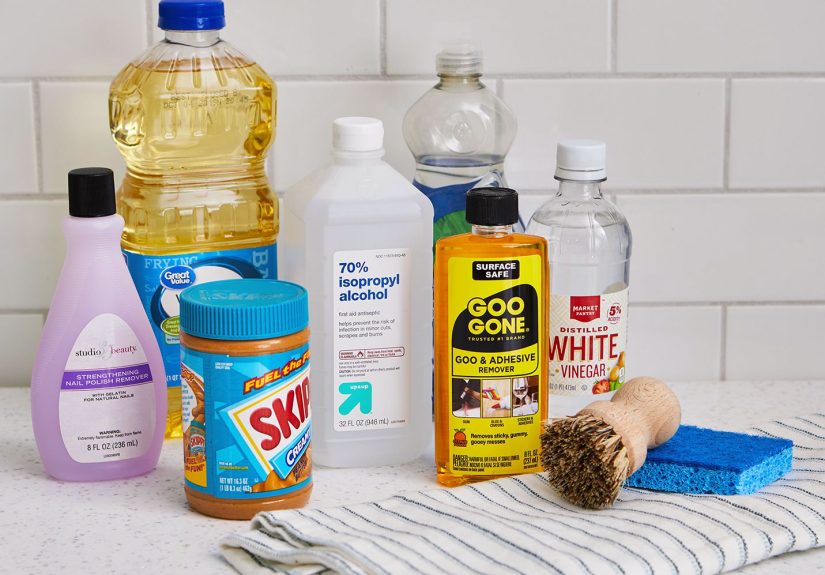
If hot water and heat do not finish the job, rubbing alcohol is one of the most effective ways to remove adhesive residue. Apply it to a cloth or paper towel, let it sit on the sticky area for a few minutes, and then wipe or scrape gently. Alcohol can cut through glue fast and usually dries without leaving its own mess behind.
Best for: glass, some plastics, metal, sealed surfaces
Watch out for: painted surfaces, varnished wood, delicate finishes, some plastics
Cooking Oil
Olive oil, vegetable oil, canola oil, or coconut oil can all help remove sticker residue because oil loosens the adhesive. Dab a little onto the sticky patch, let it sit for 10 to 15 minutes, and rub with a microfiber cloth or paper towel. This method is excellent for non-porous surfaces, but it is not ideal where oil can soak in and stain.
Best for: glass, metal, sealed plastic
Watch out for: unfinished wood, porous materials, fabric
White Vinegar
White vinegar is a classic household cleaner for a reason. It can soften adhesive and help remove labels from glassware, jars, and some hard surfaces. Warm vinegar often works even better. Soak a cloth or paper towel, press it against the residue, and let it sit before wiping clean.
Best for: glass, some metal, washable hard surfaces
Watch out for: natural stone like marble, granite, and limestone; use caution on quartz and delicate finishes
Baking Soda and Oil Paste
If you want a DIY adhesive remover made from pantry basics, mix baking soda with a small amount of oil into a loose paste. The oil helps break down the residue while the baking soda adds gentle scrubbing power. It is one of the most practical ways to remove sticky labels from mugs, bottles, and household containers.
Best for: glass, ceramic, metal, some sealed surfaces
Watch out for: glossy finishes that scratch easily, porous materials, fabric
Peanut Butter or Mayonnaise
Yes, really. These work because they contain oils that can loosen adhesive. Spread on a small amount, let it sit, then wipe clean and wash the area with dish soap. It is weird, but weird and effective is still effective.
Best for: glass, ceramic, metal in a pinch
Watch out for: porous surfaces, fabric, anything you do not want smelling like lunch
Nail Polish Remover
Acetone-based nail polish remover is the strong stuff. It can dissolve stubborn adhesive residue on glass and metal quickly. But it can also damage plastic, paint, varnish, and some laminates, so use it sparingly and only when gentler methods fail.
Best for: glass, metal
Watch out for: plastic, painted furniture, finished wood, many synthetic surfaces
How to Remove Sticker Residue by Surface
Glass
Glass is the easiest customer in the room. Start with hot, soapy water or a hair dryer. If residue remains, use rubbing alcohol, vinegar, or cooking oil. Finish by washing the surface with dish soap so it does not stay slick. This is a great approach for candle jars, mason jars, vases, windows, and drinkware.
Plastic
Plastic needs a lighter touch. Start with warm water and dish soap, then try a hair dryer on low or medium heat. Rubbing alcohol may work, but always test first. Avoid acetone unless you are trying to audition for a role called “Person Who Accidentally Melted the Storage Bin.” Oil can help, but clean it off thoroughly afterward.
Metal
Metal can usually handle heat, vinegar, alcohol, and baking soda paste well. That makes it one of the more flexible surfaces for sticker residue removal. Just avoid overly abrasive scrubbing on brushed or polished finishes if you want to keep them looking sharp.
Wood
Wood is where you stop improvising and start behaving responsibly. For sealed wood, try a hair dryer first, then a tiny amount of oil or alcohol only after spot-testing. For unfinished or porous wood, too much liquid can stain or raise the grain. Work slowly, use minimal product, and wipe dry right away.
Fabric and Clothing
Sticker residue on clothing is annoying because glue can bond with fibers and then trap lint like it is building a tiny sweater. Scrape off what you can gently. If the fabric can handle it, try rubbing alcohol on a hidden area first. For oily methods, remember that you now have two problems: glue and grease. Treat the area with dish soap or laundry detergent before washing, and do not put the item in the dryer until the stain is fully gone.
Common Mistakes That Make Sticker Residue Worse
Going Straight to Scraping
Dry scraping a stubborn label is a fast route to scratches, especially on plastic, metal, and glossy finishes. Soften first, scrape second.
Using the Wrong Product on the Wrong Surface
Acetone can damage plastic. Vinegar can harm natural stone. Oils can stain porous materials. The internet loves one-size-fits-all hacks, but your furniture would like a second opinion.
Skipping the Final Wash
Even after the adhesive is gone, the remover itself may leave residue behind. Wash with mild dish soap and water, then dry thoroughly.
Putting Fabric in the Dryer Too Soon
If adhesive or oil remains on clothing, dryer heat can set the stain and make the situation much worse. Check the item carefully before drying.
A Simple Formula That Usually Works
If you want one practical game plan for most household sticker residue, use this order:
- Peel and scrape gently with a plastic card.
- Try hot, soapy water.
- Use hair dryer heat.
- Move to rubbing alcohol or oil depending on the surface.
- Use vinegar or baking soda paste if needed.
- Reserve acetone for truly stubborn messes on glass or metal only.
That sequence keeps the process safe, logical, and much less dramatic than attacking a price tag with your fingernails for twenty straight minutes.
The Best Way to Prevent Sticker Residue Next Time
The easiest sticker residue to remove is the kind that never gets a chance to become permanent. If possible, peel labels while the item is still new, before heat, time, and pressure help the adhesive settle in. Warm the sticker first, peel slowly, and clean any leftover tackiness right away with dish soap or alcohol. Delay is what turns a tiny patch of glue into a long-term relationship.
Real-Life Experience: What Actually Happens When You Try These Methods at Home
In real life, sticker residue rarely appears on a perfect test surface under perfect lighting while cheerful music plays in the background. It shows up on a brand-new picture frame five minutes before guests arrive, on a glass jar you want to reuse for pantry storage, or on a toy that your child would like returned immediately and with zero sticky spots. That is why experience matters just as much as the method.
One of the most common situations is the glass jar problem. You buy pasta sauce, save the jar because it looks charming and useful, peel off the label, and then discover a sticky patch that seems emotionally attached to the glass. In that case, hot water and dish soap usually do most of the heavy lifting. If the label still clings like it signed a lease, a little oil or rubbing alcohol usually ends the argument. Glass is forgiving, so it is often the best place to test your confidence.
Plastic, on the other hand, has a personality. Some containers handle warm water and alcohol beautifully, while others react like you just insulted their finish. People often make the mistake of going too hot, too harsh, or too fast. A hair dryer on moderate heat tends to be more successful than boiling water, and a plastic card is almost always smarter than a metal edge. If there is one life lesson hidden in sticker residue, it is this: patience beats aggression.
Wood surfaces create the most hesitation, and honestly, that hesitation is healthy. A sealed tray or finished table may survive a tiny bit of oil or alcohol after a spot test, but unfinished wood can absorb both the adhesive and the remover. In everyday experience, the safest approach is to use the least liquid possible and work slowly. Many people overdo it, then spend the rest of the afternoon trying to remove the remover. That is not a sentence anyone wants to live through.
Then there is the fabric situation, which is less of a cleaning task and more of a trust exercise. If sticker glue lands on a shirt, tote bag, or table linen, you cannot just smear oil on it and declare victory. Even when the adhesive loosens, you still need to remove the oily aftermath before washing. This is where dish soap earns its paycheck. In practical home cleaning, that follow-up step matters as much as the original residue removal. Skip it, and the dryer may preserve your mistake like a museum exhibit.
What surprises most people is that the simplest methods often work best. Heat, soap, oil, and alcohol solve the majority of sticker residue problems without requiring a shopping trip, a specialized spray, or a minor emotional breakdown. The key is matching the method to the material and resisting the urge to go nuclear too early. Home cleaning is full of glamorous moments like this one: standing over a sticky jar with a bottle of vinegar, wondering how your life got here. The good news is that it usually ends well.
Conclusion
If you need to remove sticker residue using items you have at home, you are not short on options. Start gently with hot water, dish soap, and a plastic scraper. Add heat with a hair dryer if needed. For tougher adhesive residue, try rubbing alcohol, cooking oil, vinegar, or a baking soda paste based on the surface you are cleaning. Keep stronger products like acetone as a last resort, and always spot-test first.
The smartest sticker residue removal method is not the strongest one. It is the one that removes the glue without damaging the object underneath. Once you understand that, sticky labels stop being a household nightmare and become just another tiny mess with a simple plan.