Table of Contents >> Show >> Hide
- Why Your “Thank You” Reply Matters More Than You Think
- The 5 Golden Rules for Responding to “Thank You”
- 20 Polite & Personal Replies (With When to Use Them)
- 1) “You’re welcome.”
- 2) “You’re very welcome.”
- 3) “My pleasure.”
- 4) “Happy to help.”
- 5) “Of course!”
- 6) “Anytime.”
- 7) “No problem.”
- 8) “No worries.”
- 9) “Glad I could help.”
- 10) “I’m glad it worked out.”
- 11) “That means a lotthank you.”
- 12) “You’d do the same for me.”
- 13) “I’ve got you.”
- 14) “All good!”
- 15) “Don’t mention it.”
- 16) “It was the least I could do.”
- 17) “Thanks for noticing.”
- 18) “I’m honoredthank you.”
- 19) “Absolutelyanytime you need me.”
- 20) “You’re welcome… and I accept payment in snacks.”
- Situation Playbook: What to Say in Common Scenarios
- What Not to Say (Unless You’re Trying to Be Accidentally Weird)
- FAQ: Quick Answers to Common “Thank You” Dilemmas
- Three Copy-and-Use Examples (Short, Not Stuffy)
- From Real Life: of “This Is What Actually Works”
- Conclusion
Someone says, “Thank you,” and your brain immediately starts buffering like it’s on airport Wi-Fi. Do you go with the classic “You’re welcome”? The breezy “No problem”? The ultra-formal “It was my pleasure” that makes you sound like you’re wearing a blazer in your own kitchen?
Here’s the good news: knowing how to respond to thank you isn’t about memorizing a script. It’s about choosing a reply that matches the momentwarm, appropriate, and not weird. Below you’ll get 20 polite, personal replies (with examples), plus a simple playbook for texts, emails, work chats, and those delightfully awkward situations where gratitude shows up uninvited.
Why Your “Thank You” Reply Matters More Than You Think
A “thank you” is a tiny handshake for the relationship. When you respond well, you’re doing three things at once: you’re accepting the gratitude, confirming the exchange (“Yep, I did that for you”), and keeping the vibe friendly.
A good response can make you seem more confident, more kind, and more trustworthywithout adding a single extra task to your to-do list. A clumsy response can accidentally dismiss the other person (“It was nothing!”) or feel sharp (“Yep.”) even when you meant “All love.”
The goal isn’t perfection. The goal is simple: acknowledge, connect, and move on.
The 5 Golden Rules for Responding to “Thank You”
1) Match the moment (and the medium)
Texts can be shorter and more casual. Emails usually want a slightly more complete sentence. In person, your tone and facial expression do half the workso a simple “You’re welcome” can feel genuinely warm.
2) Don’t swat away their gratitude
Some phrases (like “It was nothing” or “Forget it”) can unintentionally minimize what they appreciated. Even if it was easy for you, it mattered to them.
3) Add a tiny bit of personalization
If you can spare three extra words, you can level up the reply: “You’re welcomeglad it helped.” That’s the difference between a receipt and a human moment.
4) Use a “next-step” line when it makes sense
For work, clients, or ongoing projects, a gentle forward-looking line builds trust: “Happy to helplet me know what you need next.”
5) Know when not to respond
If someone sends a written thank-you note or a quick “Thanks!” that clearly ends the exchange, replying isn’t always necessary. But if it’s professional, time-sensitive, relationship-building, or includes a gift/effort, a short reply is usually a smart move.
20 Polite & Personal Replies (With When to Use Them)
Think of these as a menu. You don’t need to order the same thing every timeunless you love the house special.
-
1) “You’re welcome.”
Best for: Any situation, especially professional or formal.
Example: “You’re welcome! I’m glad we got it sorted.”
-
2) “You’re very welcome.”
Best for: When you want extra warmth without getting mushy.
Example: “You’re very welcomehappy to do it.”
-
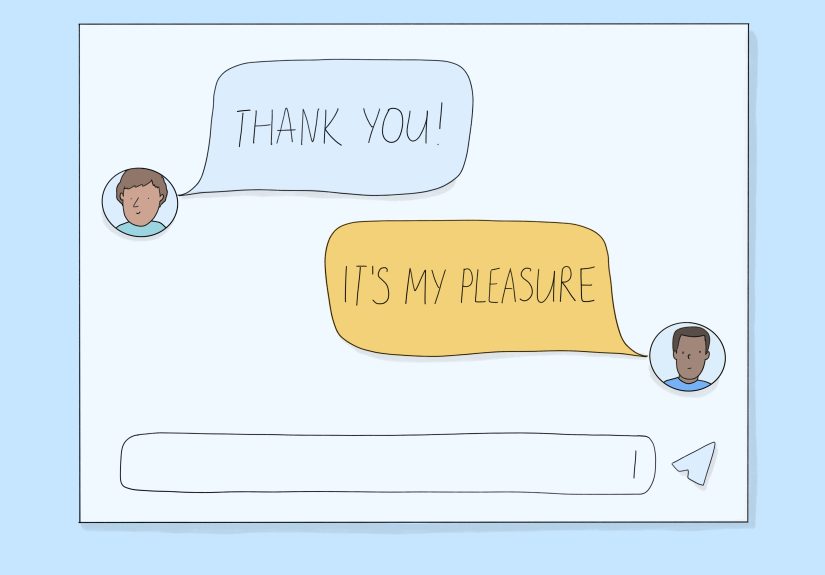
3) “My pleasure.”
Best for: Work, customer service, and any “polished” moment.
Example: “My pleasure. Let me know if you need anything else.”
-
4) “Happy to help.”
Best for: Colleagues, neighbors, friendsbasically everyone.
Example: “Happy to help! Want me to send the notes too?”
-
5) “Of course!”
Best for: Friendly settings where the favor felt natural.
Example: “Of course! Text me when you’re on the way.”
-
6) “Anytime.”
Best for: Casual situations when you truly mean it.
Example: “Anytimegood luck with the move this weekend!”
-
7) “No problem.”
Best for: Casual favors; quick, friendly energy.
Use with care: Some people hear it as “That could’ve been a problem, but I allowed it.” (Language is funny.)
Example: “No problemglad you asked.”
-
8) “No worries.”
Best for: Informal chats, especially when the other person felt like they inconvenienced you.
Example: “No worries at all. Seriously.”
-
9) “Glad I could help.”
Best for: When you want to sound kind and slightly more formal than “no problem.”
Example: “Glad I could helphope the appointment goes smoothly.”
-
10) “I’m glad it worked out.”
Best for: When the “thank you” is about an outcome, not just the favor.
Example: “I’m glad it worked out! That deadline was sneaky.”
-
11) “That means a lotthank you.”
Best for: Praise and appreciation (not favors). Flip it into mutual respect.
Example: “That means a lotthank you for saying that.”
-
12) “You’d do the same for me.”
Best for: Close relationships where reciprocity is real.
Example: “You’d do the same for me. (And I will absolutely collect someday.)”
-
13) “I’ve got you.”
Best for: Friends, family, teammatessupportive and modern.
Example: “I’ve got you. Always.”
-
14) “All good!”
Best for: Quick reassurance, especially after small inconveniences.
Example: “All good! Traffic happens.”
-
15) “Don’t mention it.”
Best for: Casual favors where you want to keep it light.
Tip: Pair with warmth so it doesn’t sound like “Please never speak of this again.”
Example: “Don’t mention itseriously, I was already heading that way.”
-
16) “It was the least I could do.”
Best for: When you helped in a meaningful moment and want to show care.
Example: “It was the least I could do. I’m here if you need anything.”
-
17) “Thanks for noticing.”
Best for: When someone thanks you for effort that often goes unseen.
Example: “Thanks for noticing. I really appreciate that.”
-
18) “I’m honoredthank you.”
Best for: Big gratitude (mentorship, introductions, meaningful support).
Example: “I’m honoredthank you. I’m glad I could be part of it.”
-
19) “Absolutelyanytime you need me.”
Best for: Close relationships or supportive leadership moments.
Example: “Absolutelyanytime you need me, just ping me.”
-
20) “You’re welcome… and I accept payment in snacks.”
Best for: Friends who enjoy harmless jokes. (Know your audience.)
Example: “You’re welcomeand I accept payment in cookies. Warm cookies.”
Situation Playbook: What to Say in Common Scenarios
Responding to “Thank you” in a text or DM
Keep it short, friendly, and human. Emojis are fine if they match your normal style.
- “Of course! 😊”
- “Anytimehope it helps!”
- “You got it.”
Responding to a thank-you email at work
In professional settings, clarity beats creativity. One warm line is enoughespecially if the project is ongoing.
- “You’re welcomehappy to help. Let me know if you need anything else.”
- “My pleasure. I’m glad we could move this forward.”
- “Glad I could helpthanks for the thoughtful note.”
After an interview: when the hiring manager thanks you
Keep it concise and confident. This is not the moment for “No worries!” unless the company culture is extremely casual.
- “Thank youI appreciated your time as well. I’m excited about the role.”
- “My pleasure. I enjoyed our conversation and look forward to next steps.”
When a client or customer thanks you
A service-forward line feels reassuring and professional. Bonus points if you set expectations.
- “You’re very welcome. I’m here if anything else comes up.”
- “Happy to helpI’ll keep an eye on this and follow up by end of day.”
When someone thanks you for emotional support
This isn’t a “transaction.” Keep it gentle and validating.
- “Of course. I’m really glad you told me.”
- “Anytime. You don’t have to carry this alone.”
- “I’m here. Always.”
When the “thank you” is actually praise (“Thanks, you were amazing!”)
In praise situations, “You’re welcome” can sound off. A better move is to accept the compliment.
- “Thank youthat’s kind of you to say.”
- “I really appreciate that.”
- “That means a lot coming from you.”
What Not to Say (Unless You’re Trying to Be Accidentally Weird)
Most “bad” replies aren’t rudethey’re just unclear. Here are a few common pitfalls and easy fixes.
- “It was nothing.”
Why it can miss: It dismisses their gratitude.
Try instead: “I’m glad it helped.” - “Yep.” / “Uh-huh.”
Why it can miss: Can sound annoyed or dismissive in text.
Try instead: “You got it!” - “No worries” (in very formal emails)
Why it can miss: Feels too casual for some workplaces.
Try instead: “Happy to help.” - “Anytime” (when you’re actually not available)
Why it can miss: Sets unrealistic expectations.
Try instead: “Glad to helpreach out if you need more.”
FAQ: Quick Answers to Common “Thank You” Dilemmas
Is “You’re welcome” too formal?
Not at all. “You’re welcome” is timeless. If it feels stiff, soften it: “You’re welcomeglad it helped.”
Is it okay to say “No problem”?
In casual American English, yesit’s extremely common. For formal emails or high-stakes contexts, “Happy to help” or “My pleasure” is a safer bet.
Do I need to reply to every thank-you email?
Not always. If it’s a quick courtesy note and the interaction is clearly complete, you can let it stand. If it’s a client, a manager, a mentor, or someone you’re building a relationship with, a brief reply is often worth it.
What if I’m the one who should be thanking them?
Greatflip it into mutual appreciation: “You’re welcomeand thank you for making this easy to coordinate.”
Three Copy-and-Use Examples (Short, Not Stuffy)
Example 1: Colleague thanks you for covering a meeting
“You’re welcomehappy to help. I sent you the action items and flagged the two decisions we need from your side.”
Example 2: Client thanks you after you fix an issue
“My pleasure. I’m glad we got it resolved. If anything else pops up, reply here and I’ll jump on it.”
Example 3: Friend thanks you for listening
“Of course. I’m really glad you reached out. I’m here whenever you need me.”
From Real Life: of “This Is What Actually Works”
The best way to get good at responding to “thank you” is to notice what happens next. In everyday life, a reply doesn’t just end the exchangeit shapes it. Here are a few realistic moments (and what you can steal from them).
1) The hallway door-hold. Someone thanks you for holding the door, and you say, “No problem.” Most of the time, it’s totally fine. But if the person looks a little formal (or older, or just serious), “You’re welcome” tends to land better because it respects the small ritual. It’s not about age; it’s about vibe. Your goal is to make the other person feel comfortablenot to win the Olympics of casualness.
2) The coworker rescue. You covered a shift, fixed a spreadsheet, or untangled a calendar situation that looked like modern art. If you reply with “It was nothing,” you may accidentally train people to think your time is free. A better response is: “Happy to helpglad we got it done.” It acknowledges the effort without demanding applause. Over time, that tiny wording choice helps you look competent and keeps your boundaries intact.
3) The compliment disguised as gratitude. “Thanks, you were amazing in that presentation.” If you answer “You’re welcome,” it can sound like you’re taking credit for their enjoyment (oddly transactional). Accept it instead: “Thank youthat means a lot.” People usually smile because you received the praise like a grown adult, which is weirdly rare and deeply refreshing.
4) The client thank-you that’s really a trust test. Clients often say “Thank you” as a way of checking: “Are you still with me? Are we good?” Replies like “My pleasureI’ll follow up by 3 PM with the updated draft” feel reassuring because you pair warmth with a concrete next step. It’s the communication version of putting the package gently on the porch instead of hurling it from the driveway.
5) The emotional moment. Someone says, “Thank you for being there,” and your instinct might be to joke. Humor can help, but only if it doesn’t dodge the feeling. A grounded reply like “Of course. I’m here” lands because it confirms safety. In many friendships, that’s the whole point of the thank-you.
6) The group chat spiral. Someone thanks you in a group chat and if you respond too formally, it can feel like a press release. If you respond too casually (“k”), it can look cold. The sweet spot is short + warm: “You got it!” or “Happy to help!” Bonus: add one specific detail if it’s work-related (“Sent the file to your inbox.”).
7) The secret weapon: gratitude boomerang. When someone thanks you, sometimes the best reply is to thank them backspecifically. “You’re welcome, and thanks for the clear instructions.” Or: “My pleasurethanks for being so patient while we fixed it.” That move turns a one-way compliment into shared respect. People remember how you made them feel, and mutual gratitude makes everyone feel like they’re on the same team.
The common thread across all these moments is simple: the best responses don’t over-explain. They acknowledge the gratitude, match the tone, andwhen usefulpoint forward. If you do that, you’ll never be stuck in “thank-you limbo” again.