Table of Contents >> Show >> Hide
- Understand the Role of the Attorney General Before You Write
- 15 Steps to Writing a Strong Letter to the Attorney General
- 1. Confirm You’re Contacting the Right Attorney General
- 2. Check Whether There’s an Official Complaint Form
- 3. Gather Your Facts and Documents
- 4. Identify Your Main Goal
- 5. Use a Professional Letter Format
- 6. Open with a Short, Direct Purpose Statement
- 7. Provide a Concise Background in Chronological Order
- 8. Explain How You Tried to Resolve the Problem Yourself
- 9. Clearly Describe the Harm or Impact
- 10. State What You Are Requesting from the Attorney General
- 11. Mention Relevant Laws or Rights Only if You’re Sure
- 12. List and Attach Supporting Documents
- 13. Use a Respectful Closing and Provide Contact Information
- 14. Proofread Carefully Before Sending
- 15. Send the Letter and Keep Copies
- Common Mistakes to Avoid When Writing to the Attorney General
- Simple Outline for a Letter to the Attorney General
- of Real-World Experience and Practical Tips
Writing a letter to the Attorney General sounds intense, like something that should come with
dramatic background music and a stack of law books. In reality, it’s mostly about being clear,
organized, and respectful. Whether you’re reporting a scam, raising a consumer complaint, or
flagging a possible legal violation, a well-written letter can help the Attorney General’s office
understand what happened and decide what to do next.
This guide walks you through 15 practical steps to write a professional letter to a state Attorney
General or the U.S. Attorney General. You’ll learn how to organize your facts, what details to
include, how to avoid common mistakes, and what to expect after you send your letter.
Understand the Role of the Attorney General Before You Write
Before you start typing, it helps to understand what an Attorney General actually does. At the
federal level, the U.S. Attorney General leads the Department of Justice and is responsible for
enforcing federal law and overseeing many law enforcement agencies. At the state level, each
Attorney General typically enforces state laws, handles consumer protection issues, and may bring
lawsuits on behalf of the public.
Here’s the key thing: the Attorney General’s office usually cannot act as your personal
lawyer or give you individualized legal advice. Many state AG websites specifically explain that
they can’t represent private individuals in court or give case-specific legal opinions. Their
focus is on broader public interests, systemic problems, and legal violations that affect many
people, not just one person.
That doesn’t mean your letter doesn’t matter. A clear, well-documented complaint can:
- Help the office spot patterns and repeat offenders.
- Support larger investigations into fraud, scams, or deceptive practices.
- Trigger referrals to other agencies that may be better positioned to help.
Think of your letter as a factual, professional report, not a courtroom drama monologue.
15 Steps to Writing a Strong Letter to the Attorney General
-
1. Confirm You’re Contacting the Right Attorney General
Start by figuring out whether your issue belongs with the state Attorney General, the U.S.
Attorney General, or possibly another agency altogether. For most everyday issueslike
consumer fraud, scams, deceptive advertising, or certain housing and employment issuesyou’ll
usually contact your state Attorney General’s office. Their official website
will explain the kinds of complaints they handle and may provide dedicated forms for each
type.If the issue involves federal agencies or nationwide concerns, you may instead contact the
U.S. Department of Justice or a specific division within it. Always start on official
government sites that end with.gov. -
2. Check Whether There’s an Official Complaint Form
Many Attorneys General now prefer that you submit complaints online through their official
portals. These forms often ask for:- Your contact information.
- Details about the business, person, or agency you’re complaining about.
- Dates, amounts, and supporting documents.
Even if you’re using the online form, you can still write a “letter-style” statement in a
document beforehand and paste it into the form. If you decide to send a physical letter
instead, look for the specific mailing address for public inquiries or consumer complaints
on the AG’s website, and follow any formatting directions they give. -
3. Gather Your Facts and Documents
A strong letter to the Attorney General is built on clear facts, not just frustration. Before
you write, collect:- Contracts, receipts, invoices, or bills.
- Emails, texts, and letters related to the issue.
- Screenshots of websites or advertisements that misled you.
- Notes on phone calls, including dates, times, and names of people you spoke with.
You don’t need to attach every scrap of paper you own, but you should be ready to provide
copies of anything that clearly supports your story. -
4. Identify Your Main Goal
Ask yourself: What do I want to happen as a result of this letter?
Common goals include:
- Reporting a scam or fraud for investigation.
- Seeking help resolving a consumer dispute (refund, repair, or contract issue).
- Alerting the office to a pattern of behavior that could harm others.
- Requesting that the office review the practices of a business or organization.
You’re not writing a legal brief; you’re telling the AG’s office what went wrong and what
you hope they can do. Being specific about your goal helps the reader quickly understand why
your letter matters. -
5. Use a Professional Letter Format
Treat this like a formal business letter. Your letter should include:
- Your full name, mailing address, phone number, and email at the top.
- The date you’re writing.
- The correct name and address of the Attorney General’s office.
- A clear subject line (for example: Re: Consumer Complaint Against XYZ Corporation).
If you’re not sure of the exact mailing address or unit name (like “Consumer Protection
Division” or “Public Inquiry Unit”), look it up on the AG’s official website instead of
guessing. -
6. Open with a Short, Direct Purpose Statement
The first paragraph should make your purpose crystal clear. One or two sentences is enough:
“I am writing to file a consumer complaint against XYZ Corporation regarding an online
purchase and to request your office’s assistance in resolving this matter.”
This lets the reader immediately understand what type of letter this is and what they should
pay attention to. -
7. Provide a Concise Background in Chronological Order
After your opening, explain what happened in the order it occurred. Stick to:
- Key dates (purchase date, service date, when the problem started).
- Who was involved (names, titles, departments if relevant).
- What you were promised versus what actually happened.
- Any specific statements or advertisements that misled you.
Keep your tone factual. This isn’t the place for insults or sarcasm, no matter how tempting
it is. Think “professional narrator,” not “angry social media rant.” -
8. Explain How You Tried to Resolve the Problem Yourself
Most AG offices want to know that you first attempted to settle the issue with the business
or organization directly. Include:- Who you contacted (names and positions, if available).
- How you contacted them (phone, email, letter, online chat).
- What they said or did in response.
For example:
“On May 2, 2025, I called XYZ’s customer service line and spoke with John Smith, who stated
that my refund would be processed within 10 business days. As of June 1, 2025, I have not
received the refund or any update.”
-
9. Clearly Describe the Harm or Impact
Attorneys General handle a large volume of complaints, so it helps to highlight why your
situation matters. Briefly describe:- Financial loss (money paid, fees charged, or unpaid refunds).
- Any safety concerns or health risks.
- Any impact on your credit, housing, employment, or essential services.
The goal is not to dramatize, but to help the office understand the seriousness and urgency
of your situation. -
10. State What You Are Requesting from the Attorney General
Be straightforward about what you want, while recognizing that the AG cannot act as your
private attorney. You might say:-
You are requesting that the office investigate the business’s practices or review the
situation. -
You would appreciate assistance in obtaining a refund, repair, or contract enforcement if
that falls within their role. - You want the office to be aware of a pattern that could affect other consumers.
Example language:
“I respectfully request that your office review this matter and, if appropriate, take
action to ensure that XYZ Corporation complies with applicable consumer protection laws.”
-
You are requesting that the office investigate the business’s practices or review the
-
11. Mention Relevant Laws or Rights Only if You’re Sure
If you know the name of a specific consumer protection statute or rule that applies, you can
mention it briefly. However, you don’t need to sound like a lawyer, and you definitely don’t
need to guess.Safe approach: focus on the behaviormisleading advertising, failure to honor a
warranty, unauthorized charges, or abusive debt collectionrather than trying to label the
exact law violated. The Attorney General’s staff can interpret which laws may apply. -
12. List and Attach Supporting Documents
Near the end of your letter, clearly identify any documents you’re including. For example:
- Copy of receipt dated March 15, 2025.
- Email from XYZ dated April 2, 2025, denying the refund.
- Screenshot of the promotional advertisement promising a “full refund if not satisfied.”
Never send original documents unless the AG’s office specifically requests them. Use copies,
and keep your own set neatly organized in case you’re contacted for more information later. -
13. Use a Respectful Closing and Provide Contact Information
End your letter with a polite, professional closing, such as:
“Thank you for your attention to this matter. I am available at the phone number or email
listed above if you need any additional information.”
Sign the letter (if mailed) and print your name clearly. If you’re submitting online, you may
type your name as your signature. -
14. Proofread Carefully Before Sending
A clear letter is easier to take seriously. Before you send:
- Remove emotional outbursts and personal insults.
- Check spelling of names, addresses, and dates.
- Make sure your timeline is consistent.
- Confirm that your contact information is accurate.
Reading your letter out loud can help you catch confusing sentences or missing details. If a
friend can review it for clarity, even better. -
15. Send the Letter and Keep Copies
If you’re mailing a physical letter, consider using certified mail with a return receipt so
you have proof that it was delivered. For online forms, save a copy of what you submitted or
take screenshots of the confirmation page.Store your letter and attachments in a safe place. If the Attorney General’s office contacts
you, you’ll be glad you can quickly refer back to exactly what you sent.
Common Mistakes to Avoid When Writing to the Attorney General
Even well-intentioned letters can lose their impact because of a few avoidable errors. Try to
steer clear of:
-
Over-emotional language only. It’s understandable to be upset, but the AG’s
staff needs facts, not just feelings. You can describe how the situation affected you without
turning the letter into a personal attack. -
Leaving out key details. Forgetting dates, amounts, or names can make your
complaint harder to act on. -
Sending originals instead of copies. If something is irreplaceable, keep it
safe. Send a legible copy instead. -
Assuming the AG will represent you personally. The office is there to enforce
the law and protect the public, not to be your private lawyer or guarantee a specific outcome. -
Threatening or abusive language. It doesn’t help your case and can make it
harder for staff to work with you constructively.
Simple Outline for a Letter to the Attorney General
If you like checklists, here’s a quick outline you can adapt:
- Your name and contact information.
- Date.
- Attorney General’s name and office mailing address.
- Subject line: brief description of your complaint.
- Opening paragraph: why you’re writing.
- Background: what happened and when.
- Steps you’ve already taken to resolve the issue.
- How the issue has harmed you or others.
- What you are requesting from the Attorney General’s office.
- List of attached documents.
- Respectful closing and your signature.
of Real-World Experience and Practical Tips
People who’ve written to Attorneys General often share the same piece of wisdom: your letter is
more likely to be helpful if you treat it as part of a larger process, not a magic wand. The AG’s
office might not email you the next day with a dramatic “Case closed!” updatebut your complaint
can still matter more than you realize.
One common experience is that the AG’s office acknowledges receipt of the complaint first. This
might come as a form letter, an email, or an online confirmation number. At this stage, staff
members are typically reviewing your letter to decide which unit (for example, consumer
protection, civil rights, or public integrity) should handle it, or whether another agency is a
better fit. It’s normal if that initial response feels generic; behind the scenes, your letter is
being sorted and evaluated.
Many people also learn that the AG’s office often acts as a mediator or facilitator, especially in
consumer disputes. Sometimes they forward your complaint to the business and ask for a response.
In some states, companies are encouragedor strongly expectedto reply. This can nudge a reluctant
business into taking your complaint more seriously. It’s not the same as a private lawsuit, but it
can lead to refunds, repairs, or policy changes when businesses want to stay on the good side of
the Attorney General’s office.
Another repeated lesson: details matter more than volume. A short, focused letter with clear
dates, copies of key documents, and a calm tone tends to get better traction than a 20-page rant
full of all-caps and exclamation marks. Staff members are often juggling large caseloads. When you
make it easy for them to see what happened and what you want, you’re not just being politeyou’re
being strategic.
People are sometimes surprised that their individual complaint feeds into something larger. A
single letter might not trigger a full-scale investigation, but dozens or hundreds of similar
complaints can support broader enforcement actions. That’s why including specific information
about the business, the product or service, the dates, and the dollar amounts is so important.
It’s like providing puzzle pieces: the clearer they are, the easier it is for enforcement
agencies to see the full picture.
It’s also common to learn that the Attorney General’s office may refer you elsewhere, and that’s
not necessarily a bad sign. Depending on your issue, you may be directed to federal agencies,
local consumer protection offices, licensing boards, or private legal resources. That doesn’t mean
they’re ignoring you; it usually means another organization has more direct authority over your
specific situation. Your well-written letter helps you get routed to the right place faster.
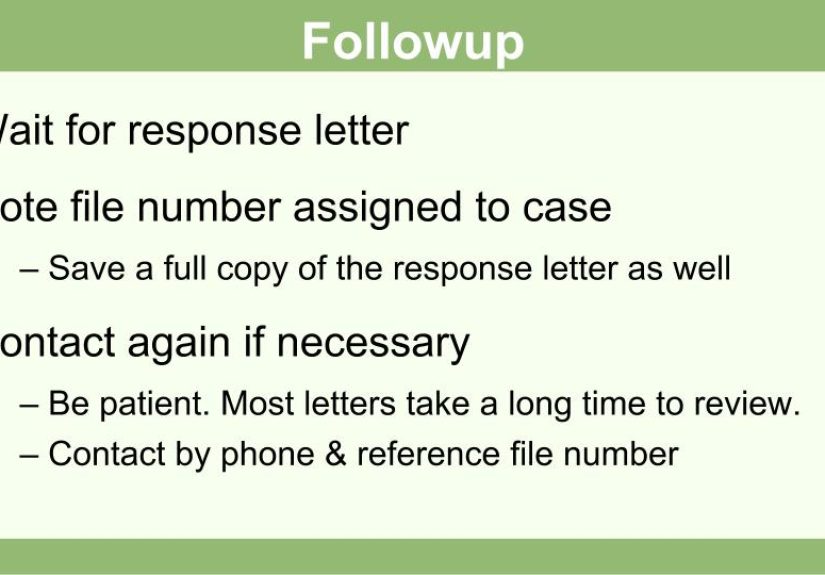
Finally, people who have gone through this process often recommend balancing patience with
persistence. Investigations and reviews take time, especially when government offices are
handling thousands of complaints a year. Following up politelyusing your original case or
complaint number, if providedcan be helpful. What doesn’t help is calling every day, demanding
instant updates, or assuming nothing is happening just because you don’t see it.
The bottom line: when you write a letter to the Attorney General in a clear, structured, and
respectful way, you’re not just asking for helpyou’re contributing to the broader effort to keep
markets fair, protect consumers, and uphold the law. And that’s a pretty powerful outcome for a
few pages of carefully chosen words.