Table of Contents >> Show >> Hide
- Who Is Ray Lux, and Why Do His Comics Feel So Instantly Readable?
- 20 Reasons Ray Lux’s Funny Comics Work So Well
- 1. They carry classic newspaper-comic energy
- 2. The four-panel format is perfect for online reading
- 3. The setups are relatable before they get weird
- 4. The humor is surprising, not random
- 5. He understands comic timing
- 6. The jokes feel visual, not just verbal
- 7. There is a quiet love of human foolishness
- 8. The comics reward fast readers and slow readers
- 9. The absurdity is grounded in emotion
- 10. The humor fits the age of scrolling fatigue
- 11. He uses simplicity to his advantage
- 12. His influences make sense
- 13. The jokes are social-media smart without feeling cynical
- 14. He balances surreal humor with everyday logic
- 15. The comics are easy to share because the premise is instantly clear
- 16. They offer a break from loud internet comedy
- 17. They understand that comedy is also about recognition
- 18. His background in design likely sharpens clarity
- 19. Funny comics feel better when they are built for connection
- 20. At the end of the day, they actually deliver the chuckle
- Why Funny Comics Like Ray Lux’s Matter More Than They Seem
- A Longer Reflection on the Experience of Reading Ray Lux’s Comics Online
- Final Thoughts
Some comics try to change the world. Some try to break your heart. And some walk in, loosen their tie, point at human nonsense, and politely ask, “Can I interest you in a laugh?” Ray Lux’s comics live in that last category, and that is exactly why they work. They are sharp without being mean, surreal without becoming a puzzle, and weird in the way life is weird when you stare at it for five extra seconds.
Lux’s background helps explain the appeal. Public profiles and interviews present him as a New York-based freelance motion designer and animator with a love for classic newspaper comics, especially Calvin & Hobbes and The Far Side. That mix matters. You can feel the old-school comic-strip DNA in his setups, but you can also see that he understands how people read jokes now: fast, on phones, mid-scroll, half-distracted, one thumb hovering over the next dopamine pellet. His preferred four-panel structure fits that reality beautifully.
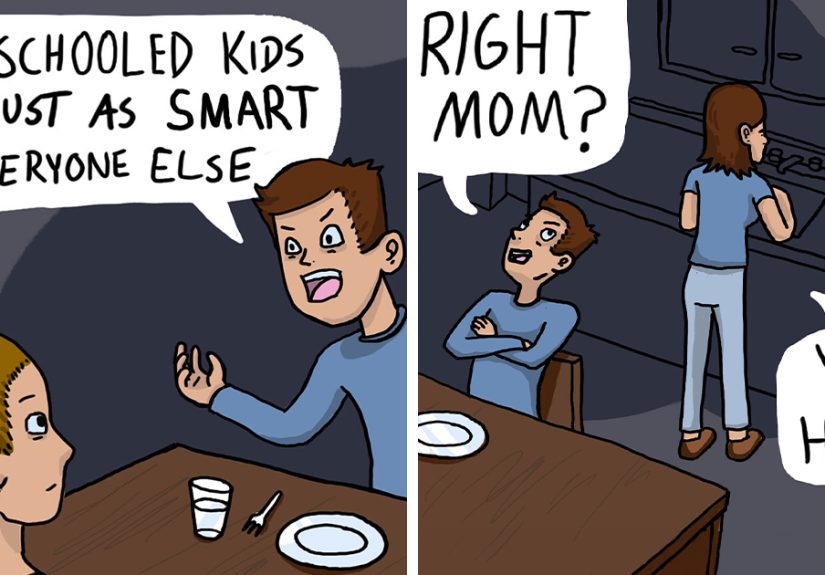
That is what makes a feature like “20 Funny Comics By Ray Lux” more than a quick gallery of jokes. It is a case study in how funny comics survive and thrive online. These are not dusty funnies-page relics wearing skinny jeans and pretending to be modern. They are genuinely modern webcomics with the bones of classic cartooning: setup, rhythm, surprise, and a final beat that lands before your attention wanders off to a recipe video or a cat wearing a raincoat.
So what makes Ray Lux’s funny comics stick? Why do they feel light without being disposable? And why do readers keep sharing comics like these when the internet already offers approximately eleven billion other ways to procrastinate? Let’s dig in.
Who Is Ray Lux, and Why Do His Comics Feel So Instantly Readable?
Ray Lux is best known online as a creator whose comics pull everyday situations into slightly crooked territory. One moment you are looking at a normal interaction, and the next moment the logic has been bent just enough to make you laugh. Not because the joke is loud, but because it is precise. That precision likely comes from his visual background. Motion designers and animators spend their lives thinking about timing, rhythm, and what the eye notices first. Funny enough, that is also the secret sauce of cartooning.
Lux has also explained that the four-panel format suits social media because readers are less likely to swipe through long carousels. That choice sounds practical, but it is also artistic. Four panels force discipline. There is no room for wandering. A comic has to set the stage, build the tension, tilt the premise, and land the punchline before the reader disappears into the digital abyss. In other words: no pressure, just comedy on hard mode.
20 Reasons Ray Lux’s Funny Comics Work So Well
1. They carry classic newspaper-comic energy
Lux’s work feels modern, but it also has the snap of classic comic strips. That matters because readers still respond to the same fundamentals that made newspaper comics beloved for generations: clean setup, readable characters, and a payoff that arrives right on time. It is comfort food for the brain, just with slightly stranger seasoning.
2. The four-panel format is perfect for online reading
There is a reason four-panel comics keep thriving on phones. They are easy to scan, easy to share, and easy to remember. Lux seems to understand that a joke reads differently on a glowing screen than it does on a broadsheet page. His comics meet readers where they are: hunched over a phone, probably pretending to work.
3. The setups are relatable before they get weird
A joke lands harder when the first beat feels familiar. Ray Lux often starts with a recognizable emotion or situation: social awkwardness, relationship confusion, daily annoyance, or a small human ritual. Then he nudges the premise off the rails. The result is absurd humor with traction. You laugh because you recognize the world before it slips sideways.
4. The humor is surprising, not random
There is a big difference between a clever twist and a joke that just throws a banana peel at the reader. Lux’s comics generally feel earned. Even when the final panel veers into nonsense, it still feels connected to what came before. That gives the comic a satisfying click instead of a desperate “please laugh” shrug.
5. He understands comic timing
Great cartoonists know that humor is not just about words. It is about pauses, spacing, and what is withheld until the right second. Lux benefits from the same truth that critics often identify in great comic strips: timing is everything. In a short comic, panel order is basically invisible music, and he seems to hear the beat.
6. The jokes feel visual, not just verbal
Some comics are basically mini essays with drawings attached. That is not the vibe here. Lux’s work often depends on what the reader sees as much as what the characters say. That makes the jokes feel lighter on their feet. The comic does not lecture. It shows you the situation, then lets the visual absurdity do some of the heavy lifting.
7. There is a quiet love of human foolishness
Good humor can be cruel, but it does not have to be. One appealing thing about Ray Lux’s comics is that they often laugh at people in a recognizably human way rather than a savage one. The tone says, “We are all ridiculous,” not, “Look at these idiots.” That difference makes readers feel included instead of attacked.
8. The comics reward fast readers and slow readers
On first read, a Lux comic may get a quick laugh from the twist. On second read, the little details start to pop. That is a strength. The best funny comics do not merely survive rereading; they improve with it. A background expression, an awkward silence, or a visual callback can make the joke echo after the first punchline.
9. The absurdity is grounded in emotion
Even when a comic gets bizarre, the emotional core tends to stay simple: insecurity, vanity, confusion, longing, frustration, pride. Those emotions are the bridge between the reader and the joke. Without that bridge, absurdity can feel cold. With it, the weirdness feels personal and oddly warm.
10. The humor fits the age of scrolling fatigue
Modern readers are tired. Not just sleepy tired, but information tired. Funny comics work in part because they offer relief without demanding a huge commitment. Ray Lux’s work fits that mood perfectly. A comic can deliver a full comedic experience in seconds, which is a pretty good bargain compared with doomscrolling yourself into a headache.
11. He uses simplicity to his advantage
Not every joke needs a splash page and a cinematic explosion. Short-form comics often win by staying lean. Lux appears to understand that simplicity can sharpen humor. The fewer distractions on the page, the more clearly the joke lands. It is the comedic version of cleaning off the kitchen counter before making a sandwich.
12. His influences make sense
When a creator cites classics like Calvin & Hobbes and The Far Side, readers expect wit, structure, and a willingness to tilt reality. Those influences do not make Ray Lux derivative; they help explain why his comics feel so legible. He is working in a tradition of compact, idea-driven humor that still plays incredibly well online.
13. The jokes are social-media smart without feeling cynical
Many online creators design work to win the algorithm first and the audience second. Lux’s comics feel smarter than that. Yes, the format is social-media friendly. But the jokes do not feel engineered by spreadsheet. They still read like actual comic ideas, not engagement bait wearing glasses and pretending to be art.
14. He balances surreal humor with everyday logic
One of the trickiest things in funny comics is deciding how weird to get. Too normal, and the strip feels forgettable. Too strange, and the audience disconnects. Ray Lux tends to live in the sweet spot. His comics often start from everyday life and then bend the logic just enough to feel delightfully off.
15. The comics are easy to share because the premise is instantly clear
Shareable humor usually has one key quality: you can explain why it is funny in one sentence, but you do not have to. Lux’s comics often have that quality. You can send one to a friend and trust that they will get the premise quickly. In the crowded ecosystem of online humor, that kind of clarity is gold.
16. They offer a break from loud internet comedy
So much online humor is built around maximum volume: extreme reactions, giant text, chaos piled on chaos. Ray Lux’s funny comics feel more controlled. They are not trying to scream you into laughter. They rely on structure and observation. That quieter approach can be even funnier because it gives the reader room to meet the joke halfway.
17. They understand that comedy is also about recognition
Readers do not only laugh because something is shocking. They also laugh because something feels true. A good comic can capture a tiny social dynamic, a petty thought, or a familiar insecurity with unnerving accuracy. Lux’s humor often works because it catches people recognizing themselves right before the punchline arrives.
18. His background in design likely sharpens clarity
Creators with motion and design experience often have a strong instinct for composition, flow, and visual hierarchy. That matters in comics more than people realize. A reader should know where to look, how to move through the panels, and when the punchline has arrived. Clarity is not boring; in comedy, clarity is oxygen.
19. Funny comics feel better when they are built for connection
Humor is not just a solo reaction; it is social glue. People send comics because they want someone else to feel the same tiny spark of recognition. Ray Lux’s work suits that habit well. These are the kinds of comics that make you think, “This is exactly your kind of nonsense,” right before you hit share.
20. At the end of the day, they actually deliver the chuckle
This may sound obvious, but it is surprisingly rare. Plenty of comics are clever without being funny, stylish without being memorable, or quirky without landing a real laugh. Ray Lux’s appeal is that his strips do what the title promises: they give people a chuckle. Not a lecture. Not a dissertation. A chuckle. Honestly, that is harder than it looks.
Why Funny Comics Like Ray Lux’s Matter More Than They Seem
It is easy to treat a funny comic as a tiny disposable pleasure, the digital equivalent of stealing one fry off someone else’s plate. Quick, pleasant, gone. But humor does real work. Researchers and health experts have long argued that laughter can help ease stress, strengthen social connection, and improve mood. That does not mean a four-panel comic is a substitute for therapy, sleep, hydration, or not texting your ex. It does mean small moments of humor matter more than we sometimes admit.
That is part of the hidden strength of funny webcomics. They are fast, yes, but they are not empty. A well-made comic can shift your mood, help you feel less alone, and remind you that somebody else has also noticed how strange people can be. In a culture saturated with noise, outrage, and “content” that feels designed by caffeinated robots, a concise, well-built joke can feel wonderfully human.
Ray Lux’s comics sit in that useful space between art and relief. They are polished enough to admire, but accessible enough to enjoy without homework. They do not ask for a giant emotional investment. They simply ask for a few seconds and a functioning sense of humor. On the internet, that may be one of the fairest deals left.
A Longer Reflection on the Experience of Reading Ray Lux’s Comics Online
There is a very specific experience that comes with discovering a creator like Ray Lux online, and it usually begins in the least glamorous way possible. You are tired. Your tabs are multiplying like rabbits. Your attention span is hanging on by a paper clip. Maybe you opened your phone for one practical reason and, as always, ended up somewhere else entirely. Then a comic appears. Four panels. Clean. Calm. No dramatic buildup, no twelve-minute explanation, no demand that you study lore from three previous seasons. Just a setup and a joke waiting patiently for your brain to arrive.
That first laugh is small, but it matters. It is not the kind of laugh that knocks over furniture. It is the kind that makes your shoulders drop half an inch. A little internal reset. The nice thing about comics like Lux’s is that they do not pretend to be more complicated than they are. They trust that a clear premise, a sharp turn, and a well-timed last panel are enough. In a media environment that constantly overexplains itself, that kind of confidence is refreshing.
There is also something deeply satisfying about the pace. A good four-panel comic respects the reader’s time. It says, “I know you are busy, distracted, and maybe slightly feral from being online all day, so let’s do this efficiently.” You scan the first panel. The second one clarifies the pattern. The third quietly tightens the screw. The fourth opens the trapdoor. That rhythm is elegant. It is almost musical. And when it works, it feels less like consuming content and more like sharing a private joke with someone who understands timing.
Another part of the experience is recognition. The best funny comics do not just surprise you; they catch you. They grab a thought you have had but never phrased, or an absurdity you have noticed but never articulated. Suddenly it is there in front of you, drawn cleanly, with the joke exposed. That can feel weirdly intimate. Not in a grand, cinematic way. More in a “wow, somebody else noticed this nonsense too” way. That kind of recognition is a huge part of why readers come back to artists like Ray Lux.
And then comes the sharing instinct. You know the one. You do not always share because a comic is the funniest thing you have ever seen. Sometimes you share because it feels accurate. Because it fits a friend’s sense of humor. Because it captures the emotional weather of the day. Funny comics move through the internet partly as entertainment, but also as social shorthand. Sending one can mean, “This is us.” Or, “This is your brain in a meeting.” Or, “I saw this and immediately thought of your chaotic energy.” That is not a side effect of the format; it is one of its strengths.
So the experience of reading Ray Lux’s comics is not just about consuming a punchline. It is about finding a tiny, well-made pause in the middle of a noisy feed. It is about the pleasure of clean comic construction. It is about seeing ordinary life bent into a stranger shape and feeling, for a moment, that the absurdity of the world is not crushing but hilarious. And honestly, in modern life, that kind of chuckle is doing heroic work.
Final Thoughts
Ray Lux’s funny comics succeed for a simple reason: they understand both comics and people. They borrow the discipline of classic strips, the readability of modern webcomics, and the emotional truth of everyday life. They know that readers want surprise, but not confusion; weirdness, but not nonsense; wit, but not homework.
That is why a title like “I’m Just Trying To Give People A Chuckle” feels more revealing than modest. The line sounds casual, but there is real craft hiding inside it. Getting a genuine laugh out of strangers on the internet is not easy. Getting a steady, repeatable chuckle with clean visual storytelling is even harder. Ray Lux makes it look natural, which is the sneaky superpower of creators who really know what they are doing.
If you love funny comics, four-panel webcomics, or smart little slices of absurd humor, Ray Lux is easy to appreciate. His work proves that in a very crowded online world, there is still enormous value in a simple, beautifully timed joke. Not every comic needs to be epic. Sometimes the best thing a comic can do is walk into your day, make you laugh, and leave you feeling slightly more human than you did five seconds earlier.