Table of Contents >> Show >> Hide
- The ISS Was Never Built to Be Forever (It Just Aged Really Well)
- The Biggest Reason: Structure Has a Shelf Life
- Risk Grows With Age: Leaks, Parts, and the Unsexy Reality of Maintenance
- The Money Reality: The ISS Is Expensive to OperateEven When Everything Works
- NASA’s Strategy: Replace the ISS Without Losing Low Earth Orbit
- So What Are the ISS Replacements? A Tour of the Commercial Station Lineup
- Why NASA Prefers “Commercial Stations” Instead of Building ISS 2.0 Itself
- The Endgame Matters: NASA Is Planning a Controlled Deorbit
- The Biggest Worry: A “LEO Gap” (and Why NASA Keeps Tuning the Plan)
- What ISS Replacements Mean for Science (and Regular Life on Earth)
- Conclusion: NASA Is Planning Ahead Because “Hope” Is Not a Safety Strategy
- Experiences: What the ISS-to-Replacement Transition Feels Like (500+ Words)
The International Space Station (ISS) is the most impressive “we built this together” project in human history. It’s alsopolitelyan aging masterpiece that’s been living on maintenance, ingenuity, and the occasional “well, that’s not supposed to do that” for a long time.
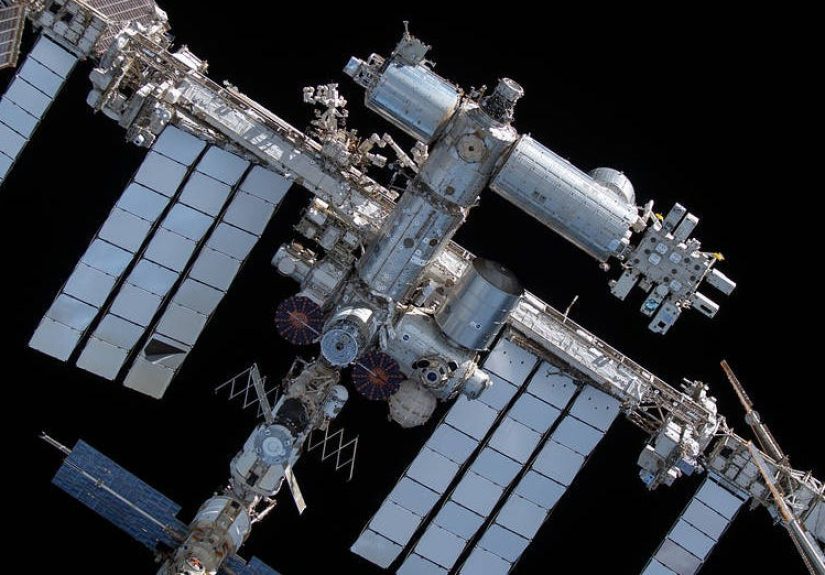
NASA’s current plan is to operate the ISS through 2030 and then safely deorbit it. That’s not NASA being dramatic. That’s NASA being responsible: the ISS wasn’t designed to be immortal, and “forever” isn’t a real engineering requirementno matter how much we’d like it to be. So NASA is actively working on what comes next: ISS replacements, most likely commercially owned stations in low Earth orbit (LEO), where NASA becomes a customer instead of the landlord who also has to fix the plumbing at 2 a.m.
The ISS Was Never Built to Be Forever (It Just Aged Really Well)
The ISS began assembly in 1998 and has hosted continuous human presence since 2000. In space-years, that’s basically a century. And the station has done its job: supporting microgravity research, advancing life-support systems, enabling Earth observation, and helping train crews for deeper exploration.
But the station’s age is not just a trivia fact. It’s a pressure multiplier. Space is harsh: temperature swings, radiation, vibrations from dockings and thruster firings, and a constant background risk from micrometeoroids and orbital debris. Over time, those forces add uplike driving the same car for decades, except the car is the size of a football field and the mechanic is floating.
The Biggest Reason: Structure Has a Shelf Life
A key driver behind NASA’s replacement planning is the ISS’s primary structure. You can replace pumps, computers, and many internal systems, but you can’t easily “swap out” the station’s core truss and long-lived structural elements. NASA has been clear that the ISS technical lifetime is limited by its primary structure.
In NASA’s deorbit planning materials, the agency notes that by 2030 some primary structure elements will be around 32 years old. That doesn’t automatically mean “unsafe today.” It does mean the margin for surprises shrinks, and the cost of managing risk climbs. At some point, you’re no longer doing routine operationsyou’re doing long-term life extension on a structure that was never meant to be a permanent condo complex.
Risk Grows With Age: Leaks, Parts, and the Unsexy Reality of Maintenance
NASA and its partners continuously monitor station health, and many ISS systems have performed better than expected. Still, multiple risk categories get harder with time:
1) Air leaks and structural concerns (especially where “mystery leaks” are involved)
A well-publicized concern has been cracks and air leaks in a Russian segment transfer tunnel area. NASA has treated these as serious issues, with ongoing analysis and reporting. Even when a problem is managed, it consumes time, attention, and engineering bandwidth. And in human spaceflight, bandwidth is safety.
2) Supply chain and spare parts: the “good luck finding that” problem
The ISS is full of specialized hardwaresome of it designed decades ago. Parts availability can become a challenge as suppliers change, production lines close, and long-lead items require planning years ahead. NASA’s oversight discussions highlight how spare-part planning, supplier networks, and shifting end-of-life timelines create real-world friction.
3) Transportation dependence: if the rides slip, everything feels it
The ISS relies on consistent crew and cargo transportation. When new vehicles are delayed or fleets have constraints, station operations and research schedules can be affected. Even a small disruption can ripple into maintenance timelines, research utilization, and inventory planning.
The Money Reality: The ISS Is Expensive to OperateEven When Everything Works
NASA’s independent oversight has put a big, blunt number on the table: roughly $3 billion per year for ISS operations, maintenance, research, and transportation-related costs (with additional agency costs that support ISS and other space operations missions). Keeping the station flying is not just a technical challengeit’s a budget commitment.
This is where NASA’s strategy starts sounding like a very Earth-based cost model: instead of owning the entire facility forever, NASA wants to purchase services on commercially owned stationssimilar to how NASA now buys commercial crew and cargo services to reach the ISS.
NASA’s transition planning also notes that shifting from ISS operations to commercial stations could save NASA on the order of $1.3–$1.8 billion per year (depending on the scenario and assumptions). That’s money NASA would love to redirect to Artemis, lunar infrastructure, Mars prep, and the kind of deep-space technology that does not fit neatly in a low Earth orbit “keep the lights on” budget line.
NASA’s Strategy: Replace the ISS Without Losing Low Earth Orbit
NASA isn’t trying to abandon LEO. NASA is trying to change how it stays there. The goal is an “uninterrupted U.S. presence” in LEO by transitioning from the ISS to new platformsideally with an overlap period, so research and crewed microgravity capability don’t fall into a gap.
That overlap is the tricky part. Building a space station is hard. Certifying it for human use is harder. Funding profiles shift. Schedules slip. Hardware surprises happen. (Space hardware has never once read a project plan and said, “Sure, that seems reasonable.”)
So What Are the ISS Replacements? A Tour of the Commercial Station Lineup
NASA’s replacement vision centers on commercially owned and operated destinations in low Earth orbit, often discussed under the umbrella of Commercial LEO Destinations (CLD) and related initiatives. The basic idea: multiple stations compete, multiple customers buy services, and NASA becomes one (important) customer instead of the only customer keeping the lights on.
Axiom Station: “Start attached, then go independent”
Axiom’s approach includes modules intended to attach to the ISS and later separate to form a free-flying station. It’s a practical strategy: use the ISS as a bridge, gain operational experience, and then transition to a standalone platform before the ISS retires.
Orbital Reef: the “mixed-use business park” concept
Orbital Reefdeveloped by a team led by Blue Origin and Sierra Spacehas been framed as a multi-user destination: research, commercial activity, and potentially more than one type of customer. Think “industrial park,” but the commute is… complicated.
Starlab: a leaner research-focused station concept
Starlab (associated with Voyager Space/Nanoracks and partners) has been positioned as a research and commercial platform with a design that aims to be smaller than the ISS but still capable and continuously crewed.
Other commercial efforts and partnerships
NASA has also supported a broader ecosystem through technical collaborations and unfunded agreements with additional companies. The point isn’t to crown a single winner early. The point is to keep multiple credible pathways alive long enough for at least one to become real, safe, and operational before 2030.
Why NASA Prefers “Commercial Stations” Instead of Building ISS 2.0 Itself
NASA learned something important over the last two decades: government-owned infrastructure can deliver incredible capability, but it can also become a budget gravity well. Commercializing LEO is NASA’s attempt to shift the economic model:
- NASA focuses on exploration (Moon, Mars, deep space tech) while still having access to LEO.
- Private companies own/operate the station and sell services to multiple customers (NASA, other governments, universities, industry).
- Competition pressures cost and innovation, at least in theoryassuming there are multiple viable stations.
- NASA buys what it needs (crew time, payload space, research services) instead of funding the entire facility indefinitely.
This is essentially the “commercial crew/cargo playbook,” applied to destinations instead of transportation. It’s ambitiousand it’s also why NASA is spending so much effort now: because the transition must be real before the ISS clock runs out.
The Endgame Matters: NASA Is Planning a Controlled Deorbit
Planning a replacement is only half the responsibility. The other half is ending the ISS safely. NASA has described a controlled reentry plan designed to avoid risk to populated areas. In 2024, NASA selected SpaceX to develop and deliver the U.S. Deorbit Vehicle, which NASA plans to own and operate for the end-of-life mission.
If this feels unusually “final,” that’s because it is. A station this large cannot be left to drift. A controlled deorbit is part engineering, part international coordination, and part environmental and public-safety planning. It’s also a reminder that space infrastructure has life cyclesjust like bridges, ships, and aircraft.
The Biggest Worry: A “LEO Gap” (and Why NASA Keeps Tuning the Plan)
The nightmare scenario is simple: the ISS retires before a replacement is ready, leaving the U.S. without a continuously crewed microgravity lab in low Earth orbit. That would mean:
- Interrupted research pipelines (biology, materials, combustion, human physiology).
- Fewer flight opportunities for technology demonstrations needed for deep-space missions.
- Lost operational experience for astronaut training and mission control teams.
- A strategic vacuum other nations or new platforms might fill.
NASA’s oversight community has repeatedly emphasized schedule risk. And NASA itself has adjusted its acquisition strategies and communications as policy, budgets, and program structures evolve. For example, NASA’s procurement messaging around commercial destination contracts has included pauses and realignments while the agency works to align timelines with broader national objectives.
Meanwhile, Congress continues to show strong interest in the ISS endgame and what alternatives existsometimes even floating ideas like boosting the ISS to a higher orbit instead of deorbiting it (at least as an engineering analysis topic). Whether those proposals become law or remain “interesting homework” depends on politics, cost, feasibility, and risk.
What ISS Replacements Mean for Science (and Regular Life on Earth)
For most people, “space station replacement” sounds like sci-fi infrastructure drama. But the downstream effects can be very real:
Microgravity research with practical spinoffs
Microgravity enables experiments that are hard or impossible on Earthespecially in protein crystallization, fluid behavior, combustion, and materials science. Commercial stations could increase access and flight cadence for research and manufacturing.
A training ground for Artemis and Mars
NASA also uses LEO as a proving ground for long-duration human spaceflight: life support, human health, radiation mitigation strategies, and operational procedures. Even if the big goals are lunar bases and Mars missions, you still practice the hard stuff closer to home first.
A new marketplace (if the business case actually holds)
The commercial vision depends on non-NASA customers: biotech, universities, other governments, media, tourism, and manufacturing. NASA’s challenge is helping enough capability exist to create a real marketwithout NASA being the market.
Conclusion: NASA Is Planning Ahead Because “Hope” Is Not a Safety Strategy
NASA is considering ISS replacements because the station is approaching the end of its safe, cost-effective operational life and because ending the ISS responsibly requires years of preparation. The replacement strategy is not “build another ISS.” It’s “enable commercially owned stations so NASA can buy services, keep microgravity research alive, and focus on deep-space exploration.”
If everything goes well, the next decade will look less like one giant government station and more like an ecosystem: multiple destinations, multiple customers, more frequent use of microgravity for science and industry, and NASA using LEO as a launchpad for what it really wants to do nextgo farther.
Experiences: What the ISS-to-Replacement Transition Feels Like (500+ Words)
If you’ve ever watched a live ISS docking stream, you know the vibe: a mix of calm professionalism and “please don’t bonk the space station.” That experiencequiet, deliberate, intensely choreographedis a good metaphor for the entire replacement conversation. NASA isn’t sprinting away from the ISS. NASA is trying to back out of the driveway without hitting the mailbox, while keeping the engine running.
For researchers, the transition can feel like living with two clocks at once. One clock is scientific: experiments take years to plan, win funding, build hardware, fly, troubleshoot, repeat, publish. The other clock is operational: the ISS has a retirement date and a finite life. When those clocks don’t line up, you get a new flavor of stress: “Will my payload fly in time?” becomes a real question, not a philosophical one. Labs that depend on microgravity may find themselves designing experiments that can move between platformsISS now, commercial station laterlike packing for a trip where the hotel is still under construction.
For flight controllers and engineers, the experience is part nostalgia, part realism. The ISS isn’t just hardware; it’s a living system with an enormous institutional memory. Entire careers have been built around its quirks, its procedures, and its rhythm. Replacing it means preserving what workschecklists, safety culture, failure responsewhile accepting that a new station will have different interfaces, different logistics, and different “this is how we do it here” norms. It’s like moving a restaurant kitchen: you can take the recipes, but the new stove behaves differently, and the crew has to learn it without burning dinner.
For space fans, the experience is honestly emotionalbecause the ISS is the most visible symbol of everyday spaceflight. It’s not a one-time heroic mission. It’s the steady drumbeat: crews rotate, cargo arrives, experiments run, Earth spins beneath. The idea of deorbiting it can feel like tearing down a cathedral. But there’s a flip side to that feeling: cathedrals get renovated, expanded, and sometimes replaced because time wins. The goal isn’t to “lose” the ISS; the goal is to inherit what it taught us and build the next version with better economics, better sustainability, and (hopefully) fewer late-night repair marathons.
And if you’re imagining what it would feel like to step onto a brand-new station for the first time, it’s probably a weird mix of thrilling and ordinary. The first time a hatch opens on a new commercial destination, the moment will be historic. Ten minutes later, somebody will be unpacking cargo, checking air filters, and asking where the labels are. That’s the real continuity NASA is protecting: not just “a station,” but the ability for humans to live and work in orbit as a normal part of science and exploration. The future isn’t just the first footsteps onto new hardware. It’s the 10,000th routine task performed safelybecause routine in space is hard-earned.
So when NASA talks about ISS replacements, it’s not just a procurement story. It’s a human story about maintaining momentum. The ISS taught us how to stay. The replacements are about learning how to keep stayingwithout depending on a single aging outpost forever.