Table of Contents >> Show >> Hide
- What Actually Happened
- Why the Internet Roasted Him So Hard
- The Bianca Censori Factor
- Kanye West and the Economy of Offense
- Why Michelle Obama’s Public Image Made the Backlash Bigger
- This Was Also About Celebrity Fatigue
- Was This Really About Humor, or About Power?
- Did the Backlash Actually Hurt Kanye West?
- The Audience Experience: What It Feels Like to Watch This Kind of Celebrity Train Wreck
- Final Thoughts
Some celebrity controversies arrive like a thunderclap. Others stroll in wearing clown shoes, honking loudly, and asking to be ratioed. This one was definitely the second kind.
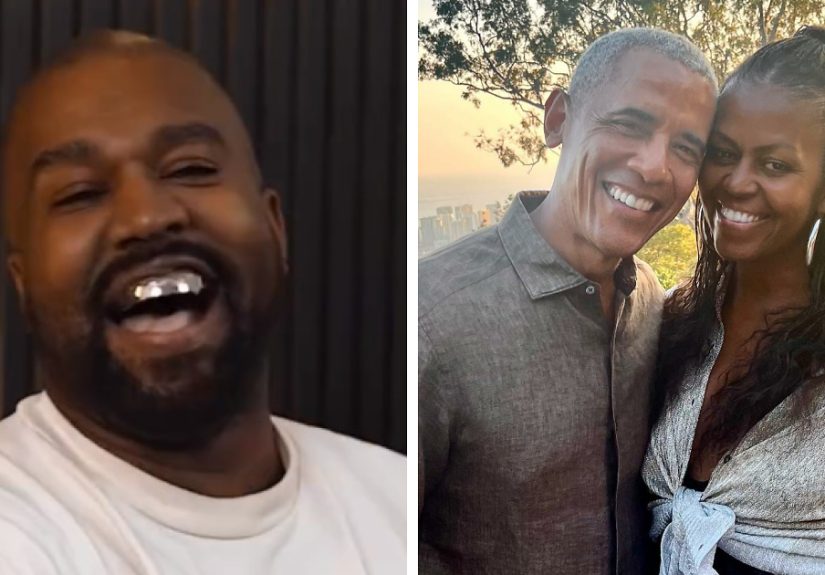
When Kanye West, now legally known as Ye, revealed during a podcast appearance that Michelle Obama would be his fantasy pick for a sexual scenario involving himself and wife Bianca Censori, the internet reacted with the digital equivalent of a collective eye roll, a spit take, and a thousand “absolutely not” comments. The backlash was fast, loud, and brutally funny. And honestly, it was never going to go any other way.
This wasn’t just another celebrity saying something weird for attention. It was a perfect storm: a former First Lady with one of the most polished public images in modern America, a star who has built a second career out of controversy, and a social media culture that can smell a cringe-worthy overshare from three apps away. The result was a viral pile-on that said less about shock value and more about exhaustion. People weren’t surprised. They were tired.
Here’s a deeper look at what happened, why Kanye West was roasted so hard, and what the entire mess says about celebrity culture, internet backlash, and the increasingly flimsy line between “provocative” and “please log off.”
What Actually Happened
The controversy began when Ye appeared on Justin Laboy’s podcast and was asked a hypothetical sex question involving him and Bianca Censori. Instead of dodging it, joking around with some harmless celebrity answer, or doing literally anything that would have shown restraint, he named Michelle Obama.
The moment spread quickly across entertainment sites and social media, partly because the answer was so unexpected and partly because it was wildly inappropriate. Michelle Obama is not some random celebrity tabloid fixture who trades in public provocation. She is a former First Lady, bestselling author, media producer, and one of the most broadly respected public figures in the country. Dragging her into a crude fantasy wasn’t edgy. It came off as juvenile, intrusive, and deeply disrespectful.
And the internet noticed. Fast.
Why the Internet Roasted Him So Hard
Michelle Obama Is Not an Easy Name to Throw Around
If Kanye had named a reality star known for courting scandal, the response still might have been negative, but it probably would not have detonated in the same way. Michelle Obama occupies a very different lane in American culture. She is associated with discipline, poise, intelligence, and an almost suspicious level of composure. She gives off “drink water, read books, stretch regularly” energy. She does not give off “insert me into your vulgar podcast fantasy” energy.
That contrast is exactly why the backlash hit so hard. The remark felt less like a joke and more like a cheap attempt to provoke by pulling a respected public figure into a mess she had nothing to do with. That rarely goes over well. People are protective of certain cultural icons, and Michelle Obama is squarely on that list.
Shock Value Is Starting to Look Cheap
There was a time when Kanye West’s unpredictability felt tied to artistic ambition. He was provocative, sure, but the provocation often arrived next to groundbreaking music, bold fashion ideas, or some bigger cultural thesis. In recent years, though, a lot of his headline-making moments have felt less like genius breaking the frame and more like a man repeatedly smacking the frame with a folding chair.
That matters. Public reaction is shaped by context, and Ye’s context is no longer “brilliant but volatile artist.” For a lot of people, it is “man who says outrageous things because he knows outrage still generates traffic.” Once audiences start seeing the trick, the trick stops feeling rebellious. It starts feeling lazy.
The Joke Wasn’t Clever Enough to Survive the Backlash
Here’s the brutal truth: offensive humor sometimes survives if people think it is actually funny, sharp, or weirdly insightful. This wasn’t. It felt like a middle-school answer from a man with a microphone and no internal editor. That’s why so much of the reaction online took the form of mockery rather than moral outrage. People weren’t just offended. They were embarrassed for him.
There is no mercy on the internet for a joke that is both inappropriate and corny. If you are going to swing for shock, you had better not miss and land in “uncle who says too much at a barbecue” territory.
The Bianca Censori Factor
The comment also landed in the middle of the public’s fascination with Ye’s marriage to Bianca Censori, a relationship that has already been treated like a nonstop visual performance piece. Their every appearance gets analyzed, from outfits to body language to whatever fresh batch of internet discourse rolls in that week.
So when Ye made Michelle Obama part of a sexual hypothetical involving Bianca, it didn’t exist in a vacuum. It reinforced an existing public narrative that his private life is increasingly performed as spectacle. To critics, the moment felt like yet another example of Ye turning intimacy into branding and women into props inside his personal chaos machine.
That reading may sound harsh, but it explains why the backlash kept growing. This wasn’t treated as a one-off weird quote. It was absorbed into a much larger conversation about how he talks about women, how he stages controversy, and how often his public behavior seems designed to dare the audience to look away.
Kanye West and the Economy of Offense
One reason this story hit such a nerve is that it arrived in the middle of Ye’s long-running reputation crisis. Over the past several years, he has cycled through public feuds, offensive remarks, business fallout, and repeated attempts to claw back control of the narrative. By the time the Michelle Obama remark landed, many people were already operating with a low tolerance for anything that smelled like another attention stunt.
And that is really the heart of the issue. Kanye West still understands how to dominate a news cycle. He knows how to say the thing that will get clipped, reposted, memed, and debated. But domination is not the same thing as admiration. Virality is not affection. Attention is not trust.
In fact, one of the most interesting things about this backlash is how little genuine shock it contained. The tone online was not “I cannot believe he said this.” It was closer to “Here we go again.” That kind of reaction is dangerous for any public figure because it means the controversy no longer feels disruptive. It feels routine.
Once your scandals start sounding like reruns, the public doesn’t lean in with curiosity. It leans back with boredom and sarcasm.
Why Michelle Obama’s Public Image Made the Backlash Bigger
Michelle Obama’s image is not just polished. It is durable. She has spent years building a post-White House public life rooted in advocacy, media, books, and a disciplined kind of relatability that is almost impossible to fake. Whether she is speaking about education, family, health, style, or public service, she tends to project control without stiffness and warmth without oversharing.
That makes her an especially volatile name to drag into anything tawdry. People do not merely know Michelle Obama; they feel like they understand what she represents. She represents competence, restraint, and class in a media environment that often rewards the opposite. So when Ye brought her into a vulgar fantasy, many people read it as not only disrespectful, but also intentionally degrading.
In other words, he did not just say something offensive. He picked a target whose public image made the offensiveness louder.
This Was Also About Celebrity Fatigue
Another reason the story blew up is that audiences are increasingly exhausted by celebrity behavior that feels engineered for reaction. People can tell when someone is being candid, even if messy. They can also tell when someone is tossing lit matches into dry grass and pretending to be surprised by the fire.
Ye’s remark landed in a cultural moment where audiences are less willing to reward that kind of performance. Social media still amplifies nonsense, of course, but users have become much faster at recognizing the formula: say something outrageous, dominate trending topics, watch everyone argue, then move on to the next spectacle. It is a business model now. And people are getting sick of subscriptions they never asked for.
That is why so many reactions were funny rather than solemn. Humor is often how the internet expresses contempt. People roast what they think is ridiculous. And this, to a lot of users, looked ridiculous.
Was This Really About Humor, or About Power?
One of the sharper criticisms of the moment is that public men often get to frame invasive comments about women as jokes, even when the women involved did not volunteer to be part of the bit. That dynamic feels especially ugly when the woman in question is famous enough to be instantly recognizable, yet absent from the conversation itself.
Michelle Obama did not ask to be drafted into Ye’s fantasy league. She was simply there, available as a famous name, and therefore treated like public property. That is part of why the reaction was so fierce. Plenty of people are tired of watching influential men use women’s names, bodies, or status as material for casual spectacle and then hide behind humor when the backlash arrives.
The internet, for all its chaos, can be pretty good at identifying that move. And when it does, the roasting begins.
Did the Backlash Actually Hurt Kanye West?
In the short term, controversies like this usually do what controversies always do: they drive clicks, generate clips, and keep the celebrity in circulation. That is the frustrating part. Outrage often feeds the machine it claims to reject.
But in the long term, repeated incidents chip away at something more important than visibility. They erode seriousness. Every new stunt makes it harder for the public to separate the artist from the outrage factory. Every lazy controversy makes even the legitimate work feel harder to evaluate cleanly.
That may be the real cost here. Not that Kanye West was mocked online for a few days, but that moments like this keep shrinking the distance between his public persona and pure spectacle. Eventually, the audience stops asking, “What did he mean?” and starts asking, “Why is he still doing this?”
The Audience Experience: What It Feels Like to Watch This Kind of Celebrity Train Wreck
There is a very specific modern experience attached to stories like this, and if you spend any time online, you know it by heart.
First, someone posts a clip or a headline that sounds too ridiculous to be real. Then the group chats light up. One friend sends a screenshot with no caption because none is needed. Another replies with eleven crying-laughing emojis and one “bro.” Someone else asks whether the internet has finally run out of normal things to do. You open the app for two minutes and, forty-five minutes later, you have consumed fifteen jokes, six mini think pieces, three fake reaction memes, and one suspiciously polished edit set to dramatic music.
That is part of what happened here. The reaction was not just moral. It was experiential. People have lived through enough celebrity oversharing cycles to recognize the pattern instantly. They know the beats. Wild quote. Viral clip. Outrage. Punch lines. Defenders claiming everyone is too sensitive. Critics saying society is melting. Then the next headline arrives before the previous one has even cooled off.
The strange thing is that this cycle produces two opposite feelings at once: fascination and fatigue. On one hand, the public cannot look away because the spectacle is absurd. On the other, people are exhausted because the absurdity is becoming routine. That tension is what powers so much internet commentary now. The audience is entertained and annoyed at the same time.
Stories like this also reveal how much celebrity culture has shifted from admiration to surveillance. Fans do not just follow stars anymore. They monitor them. They track the outfits, the soundbites, the soft launches, the deletions, the breakdowns, the clapbacks, the walk-backs, and the inevitable “misunderstood genius” defense package that shows up right on schedule. It is not old-school fame. It is live-feed fame, where every public remark becomes instant material for commentary, judgment, parody, and debate.
And maybe that is why Ye got roasted so brutally. It was not only that the comment was inappropriate. It was that millions of people have become experts in spotting when a celebrity moment feels fake-deep, performative, or desperate for traction. Audiences are more media-literate than stars sometimes realize. They can tell when a moment feels authentic, and they can definitely tell when it feels like someone shaking the vending machine because attention got stuck on the wrong shelf.
For everyday people, the experience of watching all this can be weirdly clarifying. You see a respected public figure like Michelle Obama get dragged into a crude headline, you watch the backlash roll in, and you realize how little patience remains for fame without discipline. Talent still matters. Cultural impact still matters. But the public increasingly wants some evidence of boundaries, self-awareness, and basic respect. Without those, the audience does not just disagree. It jokes, dunks, and moves on.
In that sense, this whole episode felt like more than just another celebrity scandal. It felt like a reminder that public attention is not endless goodwill. You can command the timeline and still lose the room.
Final Thoughts
Kanye West was brutally roasted for revealing a sexual fantasy involving Michelle Obama because the remark landed at the intersection of bad judgment, exhausted public patience, and one of the most respected names in American public life. It was crude, unnecessary, and transparently engineered to provoke.
More importantly, it revealed how much the culture has changed. Celebrity shock tactics still generate attention, but they no longer guarantee awe. Increasingly, they just invite ridicule. And when the target is Michelle Obama, a figure whose public image is built on discipline and dignity, the backlash gets even louder.
Ye knows how to make the internet stop scrolling. What he seems less interested in asking is whether people are stopping because they are impressed, or because they cannot believe he said something that embarrassing out loud.