Table of Contents >> Show >> Hide
- The Short Answer
- What Is Kosher Salt?
- What Is Sea Salt?
- Kosher Salt vs. Sea Salt: The Biggest Differences
- Which Salt Should You Use for Cooking?
- Is Sea Salt Healthier Than Kosher Salt?
- Can You Substitute Kosher Salt for Sea Salt?
- Kosher Salt vs. Sea Salt in Real Kitchen Scenarios
- So, Which One Is Better?
- Final Takeaway
- Kitchen Experiences: What Using Both Salts Actually Feels Like
If salt were a movie cast, kosher salt would be the reliable lead who shows up on time, hits the mark, and makes everyone else look better. Sea salt would be the stylish supporting character who arrives in a dramatic coat, says one memorable line, and steals the scene. Both are useful. Both are delicious. And both can absolutely confuse the life out of home cooks when a recipe casually says, “Add 1 teaspoon salt,” as if all salt behaves like identical tiny white robots.
Here’s the truth: kosher salt and sea salt are not the same in the kitchen, even though they often taste similar once dissolved. The biggest difference is not some magical health halo. It’s how the crystals are made, how they feel in your fingers, how much fits in a spoon, and when each one shines. Once you understand that, choosing the right salt gets a whole lot easier.
The Short Answer
Kosher salt is usually the better all-purpose cooking salt because it has coarse, easy-to-control crystals and seasons food evenly. Sea salt is a broader category made from evaporated seawater, and it can range from fine and practical to flaky and fancy. In many kitchens, kosher salt is best for everyday seasoning, while sea salt often works best as a finishing salt that adds texture and a quick pop of flavor right before serving.
What Is Kosher Salt?
Kosher salt is a coarse-grained salt commonly used in American cooking. Despite the name, it is not automatically “kosher-certified,” and it is not called kosher salt because it got a religious blessing from a salt wizard. The name comes from its historical use in the koshering process, where coarse salt was used to draw blood from meat.
What cooks love about kosher salt has less to do with theology and more to do with physics. The crystals are larger and easier to grab, which means you can pinch, sprinkle, and control them with much more precision than fine table salt. That matters when you’re seasoning chicken breasts, sautéed vegetables, pasta water, soups, or a steak that you would rather not turn into a salt lick.
Kosher salt is also fairly consistent within a brand, which is why so many chefs stick with one favorite and never look back. That said, brand differences matter. A spoonful of one kosher salt brand may be noticeably saltier than the same spoonful of another because crystal shape and density vary.
What Is Sea Salt?
Sea salt is salt produced by evaporating seawater. That sounds simple, but “sea salt” is actually a very wide category. It can be fine, coarse, flaky, damp, dry, delicate, crunchy, or dramatic enough to make a tomato slice feel like it has entered a luxury spa.
Some sea salts are minimally processed and retain trace minerals that can affect color and give a subtle mineral note. Others are more refined and taste much closer to regular salt. This is why one sea salt may be perfect for baking, while another is best sprinkled over grilled asparagus, chocolate chip cookies, or a soft-boiled egg you want to treat like royalty.
In other words, sea salt is not one thing. It is a category. That is why blanket statements such as “sea salt is better” are about as helpful as saying “fruit is sweet.” Sometimes true. Also wildly incomplete.
Kosher Salt vs. Sea Salt: The Biggest Differences
1. Crystal Size and Shape
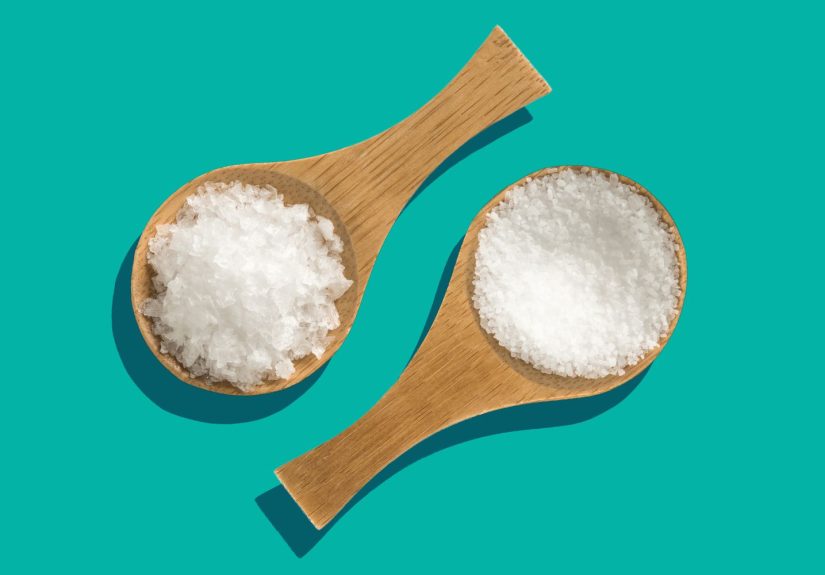
This is the difference that matters most in actual cooking. Kosher salt usually has larger, coarser crystals that are easy to pinch and scatter evenly. Sea salt can be fine like table salt, coarse like pebbles, or flaky like tiny edible snowdrifts.
Why does that matter? Because crystal size affects how salt lands on food, how fast it dissolves, and how salty a teaspoon tastes. Large crystals take up more space with more air between them, so less salt may fit in a measuring spoon. Fine crystals pack tightly, which means more salt can fit in the same volume.
2. Measurement and Saltiness by Volume
This is where many recipes go from helpful to mildly chaotic. If you measure salt by volume, kosher salt and sea salt are not always interchangeable. Even two kosher salts can behave differently. A fluffy kosher salt may season gently, while a denser kosher salt can hit much harder. Fine sea salt can be much saltier per teaspoon than flaky sea salt.
The solution is gloriously boring: when accuracy matters, measure salt by weight. In baking especially, grams are your best friend. They don’t care whether your salt is flaky, fine, fancy, or harvested by moonlight.
3. Flavor
Once dissolved into a soup, braise, or sauce, kosher salt and many sea salts taste very similar because both are mostly sodium chloride. But texture changes perception, and some sea salts carry trace minerals that can add subtle complexity. That is why flaky sea salt can taste brighter or more dramatic on top of finished food, even if the chemistry is not wildly different.
Kosher salt usually delivers a clean, straightforward saltiness. Sea salt may bring a slightly briny or mineral edge, especially when used as a finishing touch rather than stirred into a pot.
4. Processing
Kosher salt is typically a refined salt made for consistency and ease of use. Sea salt comes from evaporated seawater and may be less processed, though the degree of processing varies widely. Some sea salts are artisanal and mineral-rich. Others are commercial workhorses sold in grinders and canisters.
This is one reason sea salt often costs more. It may involve slower harvesting, more specialized production, or premium packaging designed to make you feel emotionally attached to a salt tin.
5. Texture
Kosher salt is great during cooking because it clings well enough to food and distributes evenly. Flaky sea salt is great at the end because it adds crunch and a little burst of salinity. That crunch is not a small detail. It changes the eating experience. A sprinkle of flaky sea salt on roasted vegetables, brownies, or grilled fish can make a dish taste more intentional and a little more restaurant-like.
Which Salt Should You Use for Cooking?
Use Kosher Salt for Everyday Cooking
If you want one reliable salt for your salt cellar, choose kosher salt. It is ideal for seasoning meat, vegetables, pasta water, soups, sauces, scrambled eggs, and roasted potatoes. Its larger crystals are easy to handle, and that makes it easier to season gradually and taste as you go.
Kosher salt is especially useful when you are seasoning with your fingers instead of a spoon. That tactile control is a huge reason professional cooks love it. You can feel how much you’re adding, which is helpful when the difference between “perfectly seasoned” and “why is this chili yelling at me?” is about thirty seconds and one distracted pinch.
Use Sea Salt for Finishing and Specific Applications
Sea salt earns its keep when texture matters. Flaky sea salt is excellent on steak, salad, roasted vegetables, focaccia, caramel, dark chocolate desserts, avocado toast, and even fruit. It gives you little pops of crunch and saltiness that stand out because the crystals do not dissolve right away.
Fine sea salt can also be useful in baking, brines, rubs, and other situations where you want a cleaner texture than coarse kosher salt. The key is to understand which kind of sea salt you have. “Sea salt” on a label tells you less than you might think.
Is Sea Salt Healthier Than Kosher Salt?
Not in the magical, wellness-influencer way people sometimes hope. Sea salt may contain trace minerals, but that does not transform it into a nutritional superhero. In practical terms, both kosher salt and sea salt are still mostly sodium chloride, and both contribute sodium to your diet.
The “healthier” reputation of sea salt often comes from marketing, not a major nutritional difference. What can differ is sodium per teaspoon, because bigger crystals mean fewer grains fit into the measuring spoon. That does not mean the salt itself is low-sodium. It means the measurement is less dense.
So no, switching from kosher salt to sea salt does not automatically make your fries a wellness retreat. If you need to watch sodium, the bigger issue is usually total intake, especially from packaged and restaurant foods.
Can You Substitute Kosher Salt for Sea Salt?
Yes, but with common sense. If a recipe calls for coarse kosher salt and you use a coarse sea salt with a similar crystal size, the swap is usually straightforward. If the recipe calls for flaky sea salt as a finishing salt, kosher salt will not create the same texture. And if the recipe calls for fine sea salt, using kosher salt without adjusting could throw off the seasoning, especially in baking.
Here is the practical rule: match the salt’s job, not just its name. If the salt is there to dissolve into the dish, similarity in weight matters most. If the salt is there to sit on top and sparkle, texture matters more.
Kosher Salt vs. Sea Salt in Real Kitchen Scenarios
Steak
Kosher salt is excellent for seasoning before cooking because it distributes evenly and is easy to control. Flaky sea salt is excellent after cooking if you want a crisp, delicate finish.
Pasta Water
Kosher salt is usually the practical choice because it is affordable and easy to use in larger amounts. Using expensive finishing sea salt here is a bit like wearing a tuxedo to clean the garage.
Baking
Use the salt the recipe developer intended whenever possible, and measure by weight for the best accuracy. Fine sea salt and kosher salt can produce different results by volume.
Chocolate Chip Cookies or Brownies
Flaky sea salt is the superstar. A tiny sprinkle on top adds contrast, crunch, and that sweet-salty balance that makes people suspiciously hover near the cooling rack.
Vegetables and Salads
Kosher salt works beautifully during cooking. Flaky sea salt is wonderful at the finish, especially when you want a last-minute texture boost on tomatoes, cucumbers, roasted carrots, or grilled corn.
So, Which One Is Better?
Neither is universally better. They are better at different jobs.
If you want one dependable all-purpose salt, choose kosher salt. It is easier to handle, easier to season with, and usually more affordable. If you want a second salt that adds texture and flair at the table, choose a flaky sea salt. That one-two combination covers most home kitchens beautifully.
Think of kosher salt as your everyday sneakers and sea salt as your nice shoes. You can walk in either, but one is better for running errands and the other is better for making an entrance.
Final Takeaway
When comparing kosher salt vs. sea salt, the real difference is not that one is “real” and the other is “fancy.” The real difference is function. Kosher salt is the workhorse for daily seasoning because of its coarse, easy-to-control crystals. Sea salt is the broader, more varied category that can range from practical to luxurious, with certain types shining as finishing salts.
If you cook often, keep kosher salt near the stove and sea salt near the finish line. Your food will taste better, your seasoning will feel more consistent, and you’ll spend a lot less time staring at salt labels like they are written in ancient code.
Kitchen Experiences: What Using Both Salts Actually Feels Like
In real-life cooking, the difference between kosher salt and sea salt becomes obvious fast. The first thing most home cooks notice is control. Kosher salt feels comfortable in your fingers. You can grab a pinch, sprinkle it evenly over a tray of vegetables, and actually see where it lands. That little bit of physical feedback matters more than people think. It turns seasoning into something intentional instead of random. You are not just dumping sodium into a pan and hoping for the best; you are building flavor in layers.
Sea salt creates a different kind of experience. If you use a fine sea salt, it can seem stronger because the crystals are smaller and pack more tightly. A small spoonful can do more than expected, which is why some cooks accidentally oversalt when they swap without thinking. But flaky sea salt is almost the opposite. It feels delicate, crisp, and dramatic. When you sprinkle it over a finished dish, you are not just adding saltiness. You are adding little moments. One bite gets a gentle crunch. The next gets a bright pop of flavor. It wakes food up.
This is especially noticeable on simple dishes. Put flaky sea salt on sliced tomatoes, warm buttered bread, a chocolate cookie, or a fried egg, and suddenly the food tastes sharper and more alive. Not fancier in a silly way, just more complete. Kosher salt can season those foods well too, but it usually blends in. Sea salt, especially the flaky kind, announces itself.
Another practical experience is consistency. Cooks who use kosher salt every day often develop a kind of seasoning muscle memory. After a while, your hand learns what “enough” looks like. That is harder to do if you keep changing salts. One week you use dense crystals, the next week you use fluffy ones, and now your roast chicken is perfect on Tuesday and suspiciously aggressive on Thursday. Sticking with one main cooking salt makes a surprising difference.
There is also the cost factor, which becomes very real the moment you start salting pasta water or dry-brining a big roast. Kosher salt makes sense for those jobs because it is effective and affordable. Using premium flaky sea salt for that kind of task feels slightly heartbreaking, like shredding money into your stockpot. Save the good flakes for the final touch, where they can actually be tasted and appreciated.
Over time, many cooks end up with a practical routine: kosher salt for cooking, sea salt for finishing. It is not culinary snobbery. It is just efficient. One salt helps you build the dish; the other helps you polish it. Once you get used to that rhythm, the whole “kosher salt vs. sea salt” debate feels less like a showdown and more like a division of labor. They are both useful. They just do their best work in different moments.