Table of Contents >> Show >> Hide
- Why Last Celebrity Photos Capture So Much Attention
- Queen Elizabeth II: A Final Official Image of Duty
- David Bowie: Turning the Final Image Into Art
- John Lennon: A Chilling Image Outside the Dakota
- Marilyn Monroe: Beauty, Vulnerability, and a Beach Session
- Princess Diana: Final Public Moments in Paris
- Tupac Shakur: A Snapshot Before a Hip-Hop Tragedy
- Paul Walker: A Final Day Connected to Charity
- Chester Bennington: A Smiling Photo and a Serious Lesson
- Amy Winehouse: The Weight of a Final Performance
- Kobe Bryant: Final Posts, Final Memories, and Public Grief
- Robin Williams: The Limits of What a Final Photo Can Tell Us
- Why Context Matters More Than the Caption
- The Ethics of Looking at Last Photos
- What These Final Images Reveal About Legacy
- Experience Section: How to Approach Last Celebrity Photos With Respect
- Conclusion
- SEO Tags
The phrase “last photos of celebrities taken just before they died” sounds like something whispered in a dim museum hallway, or typed into a search bar at 1:17 a.m. with a mug of coffee that has gone from “warm” to “archaeological evidence.” But behind the curiosity is something deeply human. We look at final celebrity photos because they freeze a person at the edge of a story we already know the ending to. The image does not know it is historic. The smile does not know it is being remembered. The camera simply catches a second, and time does the rest.
Some final celebrity pictures are official portraits. Some are candid public appearances. Some are stage shots, security images, social media posts, or photographs taken by fans. Not every “last photo” online is verified, and many viral images are miscaptioned, altered, or shared without context. So the most responsible way to discuss this topic is with care: these are widely known final public images, late-life appearances, or last official photo sessions connected to famous figures whose deaths shocked fans around the world.
This article explores the stories behind several famous last photos, why they fascinate us, and what they reveal about fame, memory, media, and mortality. No ghoulish treasure hunt here. We are not poking around tragedy with a flashlight. We are looking at the cultural meaning of final imagesand trying to remember the people in them as more than headlines.
Why Last Celebrity Photos Capture So Much Attention
Final photos carry an emotional charge because they create a strange double vision. On one level, we see an ordinary moment: a handshake, a concert, a smile, a walk to a car, a promotional portrait. On another level, we see it through the knowledge of what happened next. That contrast is powerful. It can make even a casual image feel cinematic, almost unfairly meaningful.
There is also a psychological reason people search for last celebrity pictures. Fame makes public figures feel familiar. We hear their voices, watch their movies, sing their songs, follow their games, and sometimes grow up with them. When they die, the final photo becomes a symbolic goodbye, even for people who never met them. It is a last page in a book fans did not want to finish.
Queen Elizabeth II: A Final Official Image of Duty
One of the most historically significant final public photos of a famous person is the image of Queen Elizabeth II at Balmoral Castle on September 6, 2022. In the photograph, the Queen stands with a walking stick, smiling as she receives Liz Truss and formally invites her to become prime minister. Two days later, the monarch died at age 96.
The image became powerful not because it was dramatic, but because it was so consistent with the Queen’s public identity. She appeared frail yet composed, dressed in soft tones, surrounded by the familiar order of royal interiors. It was a picture of duty, continuity, and a lifetime of public service compressed into one quiet room. For many viewers, the photo felt like a final act of constitutional responsibility.
David Bowie: Turning the Final Image Into Art
David Bowie’s late photographs are among the most discussed celebrity final images because they blur the line between portrait, performance, and farewell. In photos connected to his final album, Blackstar, Bowie appears sharply dressed, stylish, and strangely luminous. He died of cancer on January 10, 2016, just two days after the album’s release.
What makes Bowie’s final imagery so compelling is that it seems intentional without becoming obvious. Bowie had spent his career building personas, bending genre, and making reinvention look easier than ordering lunch. His final visuals, including the “Lazarus” video and Blackstar-era photos, are often interpreted as part of a carefully controlled goodbye. The photographs do not simply document the end of a life; they extend the artistic conversation he had been having with the world for decades.
John Lennon: A Chilling Image Outside the Dakota
Few last celebrity photos are as haunting as the image of John Lennon signing an album for Mark David Chapman outside the Dakota apartment building in New York on December 8, 1980. Photographer Paul Goresh captured Lennon with the man who would later kill him that same day. The photograph is difficult to look at because it contains, in one frame, an ordinary fan encounter and a future tragedy.
Its emotional weight comes from hindsight. Lennon appears calm, focused, and generous with his time. The setting is not glamorous. It is a sidewalk moment, the kind famous people experience constantly. Yet because we know what happened hours later, the image has become one of the most unsettling final photographs in pop culture history.
Marilyn Monroe: Beauty, Vulnerability, and a Beach Session
Marilyn Monroe’s final photo sessions have been studied, collected, auctioned, and romanticized for decades. One of the best-known late sessions was shot by photographer George Barris in 1962, shortly before Monroe’s death. The beach photographs are striking because they show Monroe with a softer, more reflective presence than the polished studio images that defined her star persona.
People often project sadness into Monroe’s last images, but that should be done carefully. A photograph captures light, expression, pose, and atmosphere; it does not automatically reveal a person’s full inner world. Still, Monroe’s final portraits continue to fascinate because they show a woman caught between public mythology and private complexity. They remind us that celebrity beauty can become a kind of maskand sometimes the mask gets mistaken for the person wearing it.
Princess Diana: Final Public Moments in Paris
Princess Diana’s final public images are closely tied to the tragic events in Paris on August 31, 1997. Photographs and video from her final evening at the Ritz and the public attention surrounding her relationship with Dodi Fayed became part of the larger story of her death. Diana was only 36, and the intensity of media pursuit became a central part of the public conversation afterward.
Her final images are uncomfortable because they raise questions about the relationship between celebrity, privacy, and the camera. Diana understood better than almost anyone how a photograph could help a cause, shape a narrative, or invade a life. Her final hours remain a sobering reminder that public fascination can have a cost when it becomes relentless.
Tupac Shakur: A Snapshot Before a Hip-Hop Tragedy
One of the most widely discussed final images of Tupac Shakur shows him in a car with Suge Knight in Las Vegas on September 7, 1996, shortly before the shooting that led to his death six days later. The photo has become iconic in hip-hop history because it captures the rapper at a moment when his career, fame, conflicts, and cultural influence were all burning intensely.
Tupac’s final image does not explain his life or his death, but it symbolizes the volatile atmosphere around him at the time. He was a poet, actor, provocateur, and one of the most influential rap artists ever. The photograph’s power comes from its ordinariness: a man in a car, moving through a city night, unaware that the next few minutes would become part of music history.
Paul Walker: A Final Day Connected to Charity
Paul Walker’s final widely circulated images are linked to a charity event for Reach Out Worldwide on November 30, 2013. Later that day, the Fast & Furious actor died in a car crash in Santa Clarita, California. He was 40. The photos from that day show him smiling, relaxed, and involved in a cause he cared about.
For fans, those images are especially emotional because they contrast so sharply with the franchise that made him famous. Walker became associated with fast cars on screen, but his final day was also connected to disaster relief and service. That detail matters. It prevents the story from being reduced to a grim coincidence and reminds readers that a person’s last public image may show only one layer of a much larger life.
Chester Bennington: A Smiling Photo and a Serious Lesson
After Chester Bennington’s death in 2017, his widow shared a family photo taken just days before he died. In it, the Linkin Park singer appears smiling with loved ones. The image became widely discussed because it challenged a common misconception: that people in deep emotional pain always look visibly broken.
This is one of the most important examples to handle with compassion. A smiling photo is not proof that someone is fine. It is not evidence that loved ones “should have known.” Mental health struggles can be invisible, even to those nearby. Bennington’s final family image has become a painful but valuable reminder to check in on people, listen without judgment, and avoid assuming that a cheerful face tells the whole story.
Amy Winehouse: The Weight of a Final Performance
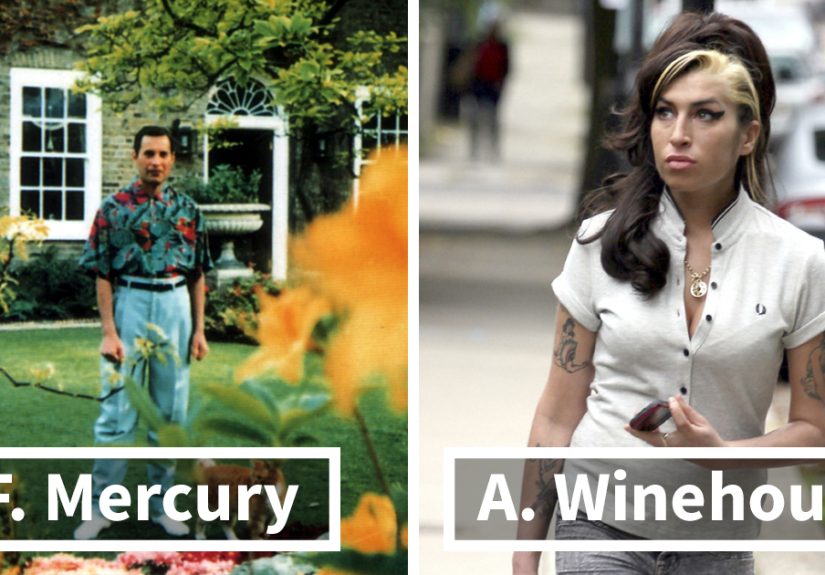
Amy Winehouse’s final public performance in Belgrade in June 2011 is often discussed as one of the saddest late-career moments in modern music. Photos and video from the concert show an artist struggling in front of a crowd that did not always respond with kindness. Winehouse died the following month at age 27.
The images from that period are difficult because they became symbols of public decline. Yet focusing only on the chaos would be unfair. Winehouse was a brilliant vocalist, songwriter, and interpreter of jazz and soul whose best work still sounds startlingly alive. Her final public images should not erase her talent. They should remind us how cruel fame can be when the audience demands performance from someone who may need protection more than applause.
Kobe Bryant: Final Posts, Final Memories, and Public Grief
Kobe Bryant’s death in a helicopter crash on January 26, 2020, shocked sports fans around the world. He died alongside his daughter Gianna and seven others. Unlike some historical cases, there is no single universally accepted “last photo” that defines Bryant’s final hours for the public. Instead, fans often point to late public appearances, family images, and his final social media activity, including a message congratulating LeBron James.
That distinction matters. Search engines love certainty, but real life is not always organized for convenient captions. With Bryant, the lasting image for many people is not one photograph, but a constellation of memories: the competitor, the father, the storyteller, the mentor, the courtside presence, and the voice encouraging young athletes to keep working.
Robin Williams: The Limits of What a Final Photo Can Tell Us
Robin Williams’ death in 2014 led many fans to revisit his final public appearances and late personal images. Williams had spent decades making audiences laugh with a speed and generosity that felt almost supernatural. After his death, the public learned more about the health struggles he had been facing, including Lewy body disease.
When people search for Williams’ last photos, they are often looking for clues. But that instinct can be misleading. A final image rarely explains a complex life. It may show a smile, a tired expression, or a quiet moment, but it cannot diagnose suffering or summarize a person’s private experience. In Williams’ case, the better lesson is not “look harder at the photo.” It is “remember that even the funniest people may be carrying pain no camera can capture.”
Why Context Matters More Than the Caption
The internet has a habit of turning final celebrity images into instant myths. A photo gets posted with a dramatic caption, shared thousands of times, and suddenly the caption becomes “truth” even when the details are shaky. Some images are wrongly identified as the final photo. Others are edited, cropped, or removed from context. A few are real but described in exaggerated ways.
That is why responsible storytelling matters. A final public photo is not always the final image ever taken. A last official portrait is not the same as a last candid snapshot. A final performance image may not be the last time someone was photographed privately. When writing or reading about famous last photos, it is better to use phrases like “last known public image,” “final official photograph,” or “widely circulated late-life photo” unless the evidence is very clear.
The Ethics of Looking at Last Photos
There is nothing wrong with being curious about history. But there is a difference between remembrance and voyeurism. The respectful approach is to avoid graphic images, avoid conspiracy theories, and avoid reducing a person to the circumstances of their death. The best articles about last photos of celebrities use the image as a doorway into legacy, not as a trapdoor into sensationalism.
For families, friends, and colleagues, these photos may not be “content.” They may be painful reminders. Public figures give much of themselves to audiences, but they do not stop being human because they were famous. If a final photograph teaches anything, it is that even the most photographed lives are still partly unknowable.
What These Final Images Reveal About Legacy
Final celebrity photos tend to become symbols. Queen Elizabeth’s last official image symbolizes duty. Bowie’s final portraits symbolize artistic control. Lennon’s final sidewalk image symbolizes the vulnerability of fame. Monroe’s last sessions symbolize the gap between beauty and loneliness. Diana’s final public moments symbolize the danger of media obsession. Tupac’s last car photo symbolizes the volatility around a young legend. Walker’s final event images symbolize generosity. Bennington’s smiling family photo symbolizes the hidden nature of mental pain.
But no photograph can hold an entire life. That is the key. These images matter because they invite reflection, not because they provide complete answers. A person is never just the last frame.
Experience Section: How to Approach Last Celebrity Photos With Respect
Looking at last photos of celebrities can feel unexpectedly personal. You may start with simple curiosity and end up thinking about your own family albums, old phone pictures, or the last casual photo you took of someone you love. That is the strange emotional power of the subject. It begins with fame, but it often ends somewhere much closer to home.
One useful experience is to slow down before reacting. Online, last photos are often presented with dramatic music, huge red arrows, and captions that practically shout, “You won’t believe what happened next!” But the quieter approach is usually more meaningful. Ask what the image actually shows. Ask what is confirmed. Ask what is speculation. Ask whether sharing it helps people remember the person or merely turns grief into traffic.
Another lesson is that final photos can change how we value ordinary moments. A picture of someone laughing at dinner may seem unimportant until years later, when it becomes priceless. The same is true for celebrity images. A casual wave, a tired smile, or a simple pose outside a building can become historic because it is attached to goodbye. That does not mean every moment should be treated like a museum artifact, but it does suggest we should pay more attention while people are still here.
For writers, editors, and website owners publishing on this topic, tone is everything. The article should not sound like it is collecting trophies from tragedy. Avoid graphic descriptions. Avoid mocking the person’s final appearance. Avoid turning addiction, illness, mental health struggles, or accidents into entertainment. A little gentle humor in the writing is finethe internet does not need to wear a black veil foreverbut the humor should never target the person’s suffering. Make the writing lively, not cruel.
For readers, it helps to treat these images as invitations to revisit the full body of work. If you see Bowie’s final photos, listen to Blackstar. If you see Amy Winehouse’s last performance images, go back to Back to Black and remember the voice that made the world stop. If you see Paul Walker’s final charity event photos, learn about the relief work he supported. If you see Chester Bennington smiling with family, let it remind you to check on someone who seems “fine.”
The most meaningful experience connected to last celebrity photos is not the chill of seeing a final image. It is the reminder that people are more than their endings. Fame makes death public, but memory can make it humane. The best way to look at these photos is not with morbid excitement, but with gratitude for the art, courage, humor, music, performances, and moments these people left behind.
Conclusion
Last photos of celebrities taken just before they died fascinate us because they sit at the intersection of history, emotion, and hindsight. They are ordinary images made extraordinary by time. Some show strength, some show vulnerability, and some show nothing more dramatic than a person going about their day. That is exactly why they matter.
When viewed responsibly, famous last photos can deepen our understanding of public figures without exploiting their deaths. They remind us that celebrity does not cancel humanity, that smiles do not always reveal inner peace, and that a final image is never the whole story. The camera may capture the last public frame, but legacy lives in everything that came before it.
SEO Tags
Note: This article is written from cross-checked public historical information and uses respectful wording because final celebrity photos should be treated as cultural memory, not tragedy bait.