Table of Contents >> Show >> Hide
- Introduction: The Monocle That Somehow Bought Boardwalk
- Who Is the Monopoly Man, Really?
- Did the Monopoly Man Ever Have a Monocle?
- What Is the Mandela Effect?
- Why People Remember the Monopoly Man With a Monocle
- The Visual Mandela Effect: Why Images Are So Tricky
- Why the Memory Feels So Real
- Common Mandela Effect Examples Similar to the Monopoly Monocle
- Is the Mandela Effect Proof of Parallel Universes?
- Why the Monopoly Man's Monocle Became So Famous
- How to Check a Mandela Effect Memory
- Experiences Related to the Monopoly Man's Monocle and the Mandela Effect
- Conclusion: The Case of the Missing Monocle
Note: This article is written in standard American English for web publishing and is based on verified information from official Monopoly materials, The Strong National Museum of Play, Britannica, University of Chicago research, psychology publications, and reputable U.S.-based explanatory sources.
Introduction: The Monocle That Somehow Bought Boardwalk
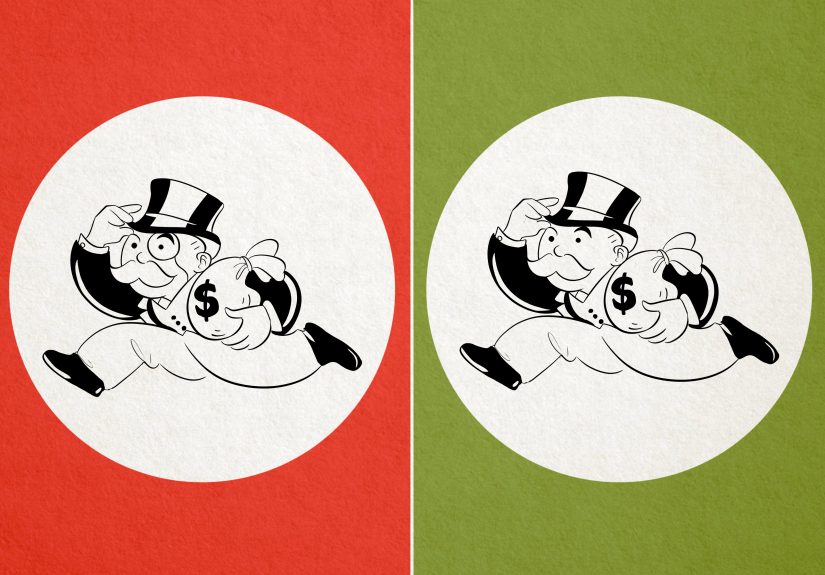
Ask a room full of people to picture the Monopoly Man, and many will describe him with absolute confidence: top hat, tuxedo, cane, curled mustache, and a fancy little monocle perched on one eye like he just overcharged rent on Park Place. There is only one problem. The Monopoly Man, officially known today as Mr. Monopoly and historically as Rich Uncle Pennybags, does not wear a monocle.
That tiny missing accessory has become one of the most famous examples of the Mandela Effect, a phenomenon where large groups of people remember the same thing incorrectly. It feels personal because the memory seems so vivid. Many people do not merely think the Monopoly Man might have had a monocle; they feel like they saw it on the box, on the money, or on a Chance card sometime between childhood cereal and family game night betrayal.
So why do so many people remember the Monopoly Man’s monocle if it was never part of the standard character design? The answer is not a secret vault hidden beneath Boardwalk. It is a fascinating mix of visual memory, cultural stereotypes, branding, internet repetition, and the brain’s charming habit of filling in details like an overconfident banker.
Who Is the Monopoly Man, Really?
Before solving the mystery of the missing monocle, it helps to know who this little capitalist cartoon actually is. The Monopoly mascot first appeared as Rich Uncle Pennybags on Chance and Community Chest cards in U.S. Monopoly editions in 1936. Today, Hasbro identifies the character as Mr. Monopoly, and the character remains one of the most recognizable mascots in board game history.
His design is simple but loaded with meaning. He is an older, wealthy-looking man with a white mustache, a top hat, a formal suit, and often a cane. He looks like the human version of a bank account that charges convenience fees. Every visual cue tells the same story: money, class, status, old-school business, and possibly a strong opinion about railroad investments.
The important detail is what is missing: no eyeglasses, no spectacles, and no monocle. Official modern Monopoly materials show Mr. Monopoly without one, and historical accounts of Rich Uncle Pennybags describe the familiar top hat and mustache, not a single-eye lens. Yet the false memory remains stubbornly popular.
Did the Monopoly Man Ever Have a Monocle?
In the standard, official version of the Monopoly mascot, the answer is no. The Monopoly Man did not wear a monocle. This is why the topic appears so often in discussions of the Mandela Effect. People collectively remember a detail that is not supported by the actual design.
However, the confusion is understandable. Mr. Monopoly belongs to a visual category many people associate with monocles: wealthy old men in formalwear. The top hat, cane, bow tie, and mustache already make him look like he is one accessory away from yelling, “Good heavens!” at a country club. The brain sees the pattern and sometimes supplies the missing piece.
There are also occasional parody images, costumes, fan art, memes, and public appearances where someone dressed as a Monopoly-style character adds a monocle for comic effect. Those later visuals can reinforce the false memory, especially online. But the mainstream Monopoly character itself is famously monocle-free.
What Is the Mandela Effect?
The Mandela Effect refers to a situation where many people share the same false memory. The term comes from Fiona Broome, who noticed in 2009 that she and others vividly remembered Nelson Mandela dying in prison in the 1980s. In reality, Mandela was released from prison in 1990, became president of South Africa, and died in 2013.
Since then, the term has been used for many pop culture memory mix-ups. People remember the children’s book series as The Berenstein Bears, even though it is The Berenstain Bears. Many quote Darth Vader as saying, “Luke, I am your father,” when the actual line is “No, I am your father.” Some remember a cornucopia in the Fruit of the Loom logo, even though the official logo does not include one.
The Monopoly Man’s monocle fits neatly into this category. It is a shared, specific, confident memory that does not match the real image. That is what makes the Mandela Effect so irresistible. It is not just forgetting where you put your keys. It is thousands of people insisting the keys used to have a tiny Victorian eyepiece.
Why People Remember the Monopoly Man With a Monocle
1. The Brain Uses Shortcuts
Human memory is not a perfect recording device. It is more like a creative editor with deadlines. When we remember something, the brain reconstructs it from fragments: visual details, associations, emotions, context, and expectations. If a detail feels like it belongs, the brain may include it even if it was never there.
With Mr. Monopoly, the association is obvious. Wealthy old-fashioned gentleman equals monocle. The character already has the top hat, formal clothes, and white mustache. The monocle feels like the last puzzle piece, so the brain quietly installs it and hopes nobody checks the box.
2. Cultural Stereotypes Do a Lot of Work
For more than a century, cartoons have used monocles as shorthand for extreme wealth, aristocracy, and upper-class snobbery. A monocle says, “I own things, and I disapprove of your shoes.” Because Monopoly is a game about property, rent, banks, and bankruptcy, the mascot seems like the type of character who would wear one.
That stereotype is powerful. Even if you never saw Mr. Monopoly with a monocle, you may have seen dozens of similar characters with one. Over time, those images can blend together. Your memory does not always keep a clean filing cabinet. Sometimes it tosses Mr. Monopoly, a Wall Street banker, and a cartoon villain into the same drawer.
3. Mr. Peanut May Be Guilty by Association
One of the most common explanations involves another famous mascot: Mr. Peanut. The Planters mascot wears a top hat, carries a cane, and does have a monocle. He also represents a refined, old-fashioned gentleman character. In other words, he looks like he could meet Mr. Monopoly for lunch and argue about tax shelters.
Because Mr. Peanut and Mr. Monopoly share several visual traits, people may accidentally transfer the monocle from one mascot to the other. This kind of memory blending is common. The brain remembers the general category correctly but misplaces the specific detail.
4. Pop Culture Reinforces the Mistake
Movies, television, memes, Halloween costumes, and internet jokes often exaggerate familiar characters. If a parody version of the Monopoly Man includes a monocle, viewers may absorb that version into memory. Once a false detail appears repeatedly, it starts to feel familiar. Familiarity then gets mistaken for truth.
This is especially true online, where one joke can be copied, remixed, screenshot, reposted, and turned into “proof” before anyone remembers to look at the original. The internet did not create false memory, but it definitely gave false memory a sports car and a full tank of gas.
The Visual Mandela Effect: Why Images Are So Tricky
Researchers have studied what is sometimes called the Visual Mandela Effect, where people share false memories for specific visual icons. A University of Chicago study found that people can confidently choose incorrect versions of famous characters and logos, including Mr. Monopoly, Pikachu, C-3PO, and the Fruit of the Loom logo.
The most interesting part is that these mistakes are not always random. Many people choose the same wrong version. That suggests certain images invite particular errors. In the Monopoly Man’s case, the wrong version includes a monocle because the character’s existing design practically whispers, “Please add one more rich-guy accessory.”
But researchers also note that no single explanation covers every Mandela Effect example. Some false memories may come from stereotypes. Others may come from exposure to altered images. Others may come from language, repetition, or memory compression. The brain is not one messy desk; it is a whole office building of messy desks.
Why the Memory Feels So Real
One reason the Monopoly Man monocle debate gets people fired up is that false memories can feel just as vivid as accurate ones. Confidence is not the same thing as accuracy. You can be completely certain and still be completely wrong, which is a humbling truth that has ruined many family arguments and at least three board game nights.
Memory often includes emotional texture. If you played Monopoly as a child, the game may be tied to nostalgia, family traditions, sibling rivalry, and the trauma of landing on a hotel-loaded Boardwalk. Those emotional connections can make the whole memory feel stronger. When someone says, “He never had a monocle,” it may feel like they are challenging part of your childhood.
But the brain does not store every childhood image in high-definition. It keeps highlights, patterns, and meanings. Mr. Monopoly meant “rich old man.” A monocle also means “rich old man.” The brain merges the two, and suddenly the false memory is wearing formalwear.
Common Mandela Effect Examples Similar to the Monopoly Monocle
The Berenstain Bears
Many people remember the book series as The Berenstein Bears. The actual spelling is Berenstain. This example likely sticks because “-stein” is a more familiar name ending to many readers.
Fruit of the Loom Cornucopia
A large number of people remember a cornucopia behind the fruit in the Fruit of the Loom logo. The official logo has fruit, but no cornucopia. Like the Monopoly monocle, this false detail seems visually plausible.
Pikachu’s Tail
Some people remember Pikachu having a black tip on his tail. The real design has brown coloring near the base of the tail, not a black tip. This is another example where memory adds a detail that feels cartoonishly natural.
Movie Quote Mix-Ups
Famous lines are often remembered in the version that makes more sense outside the movie. “Luke, I am your father” identifies the listener clearly, while “No, I am your father” is the actual line. Pop culture often chooses the clearer version, and memory follows.
Is the Mandela Effect Proof of Parallel Universes?
Some people enjoy explaining the Mandela Effect through alternate timelines or parallel universes. It is a fun idea, especially if you like science fiction and want your bad memory to feel cosmic. In that version, one universe has a monocled Monopoly Man, another has the current version, and somehow we all swapped lanes in the multiverse without getting a notification.
Psychology offers a more grounded explanation. Shared false memories can emerge from the way human memory reconstructs information, the influence of social discussion, the power of suggestion, and repeated exposure to incorrect details. The parallel-universe theory is entertaining, but the memory-science explanation has stronger evidence.
That does not make the Mandela Effect boring. In fact, the real explanation may be more interesting. It reveals how human minds can independently make the same mistake because they use similar shortcuts, cultural references, and expectations. We are not glitching between dimensions. We are running very human software.
Why the Monopoly Man’s Monocle Became So Famous
The Monopoly Man monocle is a perfect Mandela Effect example because it is simple, visual, and instantly debatable. You do not need a history degree to participate. You only need a memory, a search engine, and the willingness to question whether your brain has been adding luxury eyewear without permission.
It also involves a beloved object from childhood. Monopoly is not just a board game; it is a cultural ritual. People remember the board, the money, the tokens, the tiny houses, the thrill of owning railroads, and the slow destruction of trust among relatives. The mascot feels familiar even to people who have not played in years.
Because the character is so familiar, the error feels impossible. How could millions of people be wrong about such a simple detail? The answer is that familiarity can create overconfidence. The more familiar something feels, the less likely we are to inspect it carefully.
How to Check a Mandela Effect Memory
If you want to test a Mandela Effect memory, start with primary sources. For Monopoly, look at official game boxes, Hasbro materials, and historical Monopoly images. Avoid starting with memes or edited images, because those may be the source of the confusion.
Next, ask whether the false version feels culturally expected. Does the detail fit a stereotype? Does it appear on a similar character? Has pop culture repeated the mistaken version? If the answer is yes, you may have found the path your memory took.
Finally, be gentle with yourself. Misremembering the Monopoly Man’s monocle does not mean you are careless or gullible. It means your brain is doing what brains do: summarizing the world, connecting patterns, and occasionally adding accessories.
Experiences Related to the Monopoly Man’s Monocle and the Mandela Effect
One of the funniest things about the Monopoly Man’s monocle debate is how personal it becomes. People do not simply say, “I thought he had one.” They say, “I know he had one.” That confidence is part of the experience. The memory feels like it comes from a real place: a childhood game closet, a rainy Saturday, a stack of colorful money, or a family member acting as banker with suspicious enthusiasm.
Many people first encounter this Mandela Effect in casual conversation. Someone says, “Did you know the Monopoly Man never had a monocle?” Then the room splits into two teams: people calmly checking their phones and people emotionally preparing a closing argument. The second group usually insists they can picture it perfectly. They remember the monocle shining under the top hat. They remember it on the money. They remember it from the box. Then the images appear, and suddenly everyone is staring at a bare-eyed Mr. Monopoly like he personally betrayed them.
This experience is powerful because it reveals a gap between memory and evidence. Most daily life depends on trusting memory. We remember names, routes, passwords, stories, and whether we already added salt to dinner. When a famous memory collapses, even a harmless one, it can feel unsettling. If the Monopoly Man did not have a monocle, what else has the brain been confidently improvising?
The same thing happens with other Mandela Effect examples. Someone remembers the Fruit of the Loom cornucopia because the image feels balanced with it. Someone remembers “Berenstein” because that spelling feels more familiar. Someone remembers “Luke, I am your father” because it works better as a quote outside the movie. These are not random mistakes. They often make sense, which is exactly why they are so sticky.
In real conversations, the Monopoly monocle often becomes a playful trust exercise. Friends pull up old images. Parents swear the older boxes were different. Someone mentions Mr. Peanut. Another person blames alternate timelines. Eventually, the debate turns into laughter because the stakes are low but the feelings are oddly high. Nobody loses money, unless the argument happens during an actual Monopoly game, in which case someone was probably already losing money.
The best lesson from this experience is not “your memory is bad.” It is “your memory is creative.” The brain is constantly interpreting, simplifying, and predicting. It does not store every detail like a scanned document. It stores meaning, and sometimes the meaning of Mr. Monopoly is so strongly connected to wealth that the brain upgrades him with a monocle. In a strange way, the false memory is almost good design feedback. The character communicates “old rich gentleman” so clearly that millions of brains independently accessorized him.
That is why the Monopoly Man’s monocle remains such a beloved Mandela Effect example. It is harmless, funny, easy to understand, and surprisingly deep. It reminds us that memory is not just a warehouse of facts. It is a storyteller. Sometimes that storyteller is accurate. Sometimes it adds a monocle for dramatic effect.
Conclusion: The Case of the Missing Monocle
The Monopoly Man’s monocle is one of the most famous false memories in pop culture. Officially, Mr. Monopoly does not wear a monocle, and Rich Uncle Pennybags was not designed with one in the standard game imagery. Yet millions of people remember him that way because the detail feels natural, familiar, and culturally expected.
The Mandela Effect does not require a broken timeline to be fascinating. The real mystery is human memory itself. Our minds are brilliant, efficient, and occasionally a little too confident. They connect dots, fill gaps, and remix familiar images into something that feels true. The Monopoly Man’s missing monocle is not proof that reality changed. It is proof that memory is more playful than we think.
So the next time someone insists Mr. Monopoly wore a monocle, do not pass Go directly to judgment. Smile, show them the evidence, and remember that somewhere inside almost everyone’s brain is a tiny cartoon banker wearing an accessory he never owned.