Table of Contents >> Show >> Hide
- What Does “Looking Forward To It” Mean?
- The Grammar: Why It’s “Looking Forward to Meeting” (Not “to Meet”)
- How to Use “Looking Forward To It” Correctly (With Examples)
- Correct vs. Incorrect: A Quick Cheat Sheet
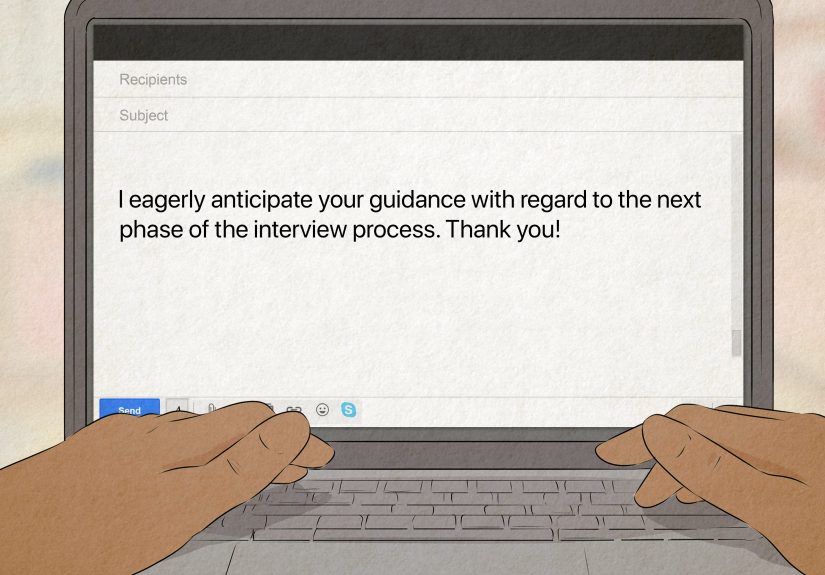
- “Looking Forward To It” in Emails: Tone, Politeness, and Tiny Tweaks
- Alternatives to “Looking Forward To It” (By Situation)
- Extra Grammar Notes People Ask About
- Mini Practice: Fix These Like a Pro
- Bonus: Real-World Experiences With “Looking Forward To It” (About )
- Conclusion
“Looking forward to it” is one of those English phrases that shows up everywhere: emails, texts, thank-you notes, job interviews, and messages to your aunt who
keeps trying to feed you “just a little more” lasagna. It’s short, polite, upbeatand (when used well) it makes you sound like a functional adult who totally
has their calendar under control.
But it also triggers a very common grammar question: Why is it “looking forward to meeting you” and not “looking forward to meet you”?
And what exactly does the “it” refer to? Let’s break down the meaning, the grammar, and a bunch of alternatives you can use when you don’t
want to sound like every other email on Earth.
What Does “Looking Forward To It” Mean?
In standard American English, to look forward to something means to anticipate it with pleasureyou expect it to happen, and
you feel positive (or at least pleasantly hopeful) about it.
So when someone says, “Looking forward to it,” they’re basically saying:
“I’m excited about that thing we just mentioned” or “I’m happy it’s happening”.
What does “it” refer to?
The pronoun “it” points back to a previously mentioned plan, event, or situation. The “it” could be:
- A meeting: “See you Tuesday at 2.” “Looking forward to it!”
- An event: “The concert is next week.” “I’m looking forward to it.”
- A future step: “I’ll send the draft tomorrow.” “Greatlooking forward to it.”
If the “it” isn’t clear, your reader may do a tiny confused pause (the worst kind of pause). In that case, name the thing:
“Looking forward to the call on Tuesday.”
The Grammar: Why It’s “Looking Forward to Meeting” (Not “to Meet”)
Here’s the core rule: in the phrase “look forward to”, the word “to” is a preposition, not part of an
infinitive.
And prepositions are typically followed by:
a noun (a person/place/thing/idea) or a gerund (an -ing verb form that acts like a noun).
Meet the gerund: the “-ing” that behaves like a noun
A gerund is the -ing form of a verb used as a noun (for example, “swimming,” “studying,” “meeting”).
That’s why the grammar works like this:
- Correct: “I’m looking forward to meeting you.”
- Correct: “I look forward to hearing from you.”
- Correct: “We’re looking forward to working together.”
In all of these, the “-ing” word is functioning as a thingan activityso it fits neatly after the preposition “to.”
The most common mistake: “looking forward to meet you”
People make this mistake because English also has the infinitive pattern to + base verb (“to meet,” “to go,” “to hear”). But that’s when
“to” is part of the infinitivenot when “to” is acting as a preposition inside a fixed expression.
A quick “sanity check” trick: try swapping the phrase with a noun.
- “I’m looking forward to meeting you.” → “I’m looking forward to the meeting.”
- “I’m looking forward to seeing it.” → “I’m looking forward to the movie.”
If a noun fits after “to,” that “to” is behaving like a preposition. And when you put a verb there, it needs to be a gerund (“meeting,” “seeing,” “hearing”).
When you should use “to + verb” instead
Use the infinitive when the verb or phrase calls for it:
- “I hope to meet you soon.”
- “I’d like to discuss the next steps.”
- “We plan to start in February.”
Notice how these are different verbs (“hope,” “like,” “plan”). They are not the fixed expression “look forward to.”
How to Use “Looking Forward To It” Correctly (With Examples)
1) “Looking forward to it.”
This is a friendly, informal-to-neutral response. It can be a complete sentence in conversation (especially in texts), even though it’s missing an explicit
subject like “I’m.”
- “We’re on for Saturday at 11.” “Looking forward to it!”
- “I’ll send the info later today.” “Perfectlooking forward to it.”
2) “I’m looking forward to it.”
Slightly more complete and a touch more formal. This is a safe choice for professional emails and messages where you want to sound polished.
- “Thanks for scheduling the interview. I’m looking forward to it.”
- “I’m looking forward to it and appreciate your time.”
3) “I look forward to…”
This is common in formal business writing. It can sound confident, but in some contexts it can also feel a little stifflike you wear a blazer even to buy milk.
- “I look forward to meeting you on Thursday.”
- “I look forward to hearing your feedback.”
4) Using a noun after “look forward to”
You don’t always need a verb at all. Nouns work beautifully:
- “I’m looking forward to our call.”
- “We’re looking forward to the conference.”
- “She’s looking forward to Friday.”
Correct vs. Incorrect: A Quick Cheat Sheet
| Goal | Correct | Common Incorrect Version |
|---|---|---|
| Meeting someone | I’m looking forward to meeting you. | I’m looking forward to meet you. |
| Getting a reply | I look forward to hearing from you. | I look forward to hear from you. |
| Referring to a plan | Looking forward to it! | Looking forward for it. |
| Referring to an event | I’m looking forward to the event. | I’m looking forward for the event. |
“Looking Forward To It” in Emails: Tone, Politeness, and Tiny Tweaks
In emails, “looking forward to it” is often used to close on a positive note. It’s friendly, forward-moving, and signals cooperation. But tone matters.
When it sounds great
- Confirming plans: “See you at 3 p.m. tomorrowI’m looking forward to it.”
- Celebrating progress: “Thanks for the update. Looking forward to the next draft.”
- Building rapport: “I enjoyed our chatlooking forward to working together.”
When it can sound a little pushy
If you’re asking someone to do something (reply, approve, send a file), “I look forward to hearing from you” can sometimes feel like a gentle shove disguised as
a smile. Not always! But if the context is sensitive, soften it.
Try one of these instead:
- “Thanks again for your time.”
- “When you have a moment, I’d appreciate your thoughts.”
- “Please let me know if you have any questions.”
Alternatives to “Looking Forward To It” (By Situation)
Professional, warm, and safe
- “I’m excited to connect.”
- “I appreciate your time and look forward to our conversation.”
- “Thank youI’m eager to learn more.”
- “I’m glad we’re moving ahead with this.”
Friendly and casual
- “Can’t wait!”
- “This is going to be great.”
- “I’m pumped.” (Use only if your audience won’t cringe.)
- “See you soon!”
More formal (without sounding like a robot)
- “I welcome the opportunity to discuss this further.”
- “I appreciate your consideration.”
- “I look forward to our meeting.”
Alternatives for “Looking forward to hearing from you”
- “I hope to hear from you soon.”
- “Thank you for your timeI appreciate any updates when available.”
- “Please keep me posted when you can.”
- “Let me know what you think.”
Extra Grammar Notes People Ask About
Is it “looking forward to it” or “looking forwards to it”?
In American English, “look forward to” is the standard form. You might see “forwards” in other varieties of English, but for US audiences and
American business writing, stick with forward.
Is it okay to write “Looking forward to it!” as a sentence fragment?
Yesespecially in emails and messages where fragments are normal. If you want a more formal version, write:
“I’m looking forward to it.”
Can “look forward to” ever be followed by “to + verb”?
Not directly. However, you can sometimes see a noun that then takes an infinitive:
“I’m looking forward to the opportunity to speak with you.”
Here, “to speak” belongs to “opportunity,” not to “look forward to.”
Mini Practice: Fix These Like a Pro
- “I’m looking forward to meet you next week.” → “I’m looking forward to meeting you next week.”
- “Looking forward hearing from you.” → “Looking forward to hearing from you.”
- “I look forward to it.” (But “it” is unclear.) → “I look forward to reviewing the proposal.”
Bonus: Real-World Experiences With “Looking Forward To It” (About )
If you’ve ever stared at an email draft thinking, “How do I end this without sounding cold?”congratulations, you’ve met the true purpose of “looking forward
to it.” In real life, this phrase is less about grammar and more about social glue: it keeps conversations friendly, it signals cooperation,
and it gently nudges things toward the next step.
One classic experience: the job interview confirmation. You get an email with a time, a video link, and a polite “See you then.” Ending your
reply with “I’m looking forward to it” does two things at once. First, it confirms you’re on board. Second, it adds warmthwithout oversharing or sounding like
you’re auditioning for “Most Enthusiastic Human 2026.” You’re excited, but in a calm, employable way.
Another common moment is the group project or work handoff. Someone says, “I’ll send the draft later,” and you reply, “Greatlooking forward
to it.” That tiny phrase is a supportive signal: “I’m ready when you are.” It’s especially helpful when you don’t have anything else to add and you don’t want
your message to end with a lonely “OK.” (Nothing says “I’m secretly annoyed” like an all-caps “OK.”)
Then there’s the calendar chaos scenario: you’ve scheduled something weeks ahead and you want to stay positive even though you’re not 100%
sure your future self will be thriving. “Looking forward to it” is delightfully flexible. It can be genuine excitement (“Vacation!”), polite enthusiasm (“Team
meeting!”), or a friendly commitment to show up and do your best (“Dentist appointment!”). English lets you be optimisticor at least socially functionaleither
way.
In everyday texting, “Looking forward to it!” often plays the role of a cheerful bridge. Someone shares a plancoffee, a movie, a study sessionand the phrase
keeps the vibe upbeat without turning into a long paragraph. It’s also a handy tool when you want to be positive but you’re busy: you can respond quickly, show
interest, and move on with your day.
And finally, there’s the follow-up email experiencethe one where you need a response, but you don’t want to sound demanding. Many people
reach for “Looking forward to hearing from you,” because it feels polite. Sometimes it is. But in delicate situations, writers learn (often the hard way) that
alternatives like “Thanks for your time” or “I’d appreciate an update when convenient” can feel more respectful. The experience teaches a subtle lesson:
“looking forward” is a great phrase, but tone is always the real boss.
Conclusion
“Looking forward to it” means you’re pleasantly anticipating something, and the grammar works because “to” is a preposition in the fixed
expression look forward to. That’s why it should be followed by a noun or a gerund (-ing)not an infinitive.
Once you know that, you can use the phrase confidently, avoid common mistakes, and choose alternatives that match your tone (professional, friendly, or somewhere
in between).