Table of Contents >> Show >> Hide
- What Does “Main Character Syndrome” Actually Mean?
- Why the Idea Feels So Real
- Social Media Put This Trend on a Rocket
- Main Character Energy vs. Main Character Syndrome
- Is Main Character Syndrome the Same as Narcissism?
- Signs the Behavior May Be a Problem
- What Causes It?
- How It Affects Relationships
- Can You Fix It Without Losing Your Spark?
- So, Is Main Character Syndrome Real?
- Experiences Related to “Main Character Syndrome: Is It Real?”
Somewhere between TikTok montages, coffee-shop epiphanies, and the universal human desire to look amazing while staring thoughtfully out a rainy window, the internet gave us a phrase: main character syndrome. It sounds dramatic. It sounds diagnosable. It sounds like something a therapist might write on a clipboard while nodding slowly.
But is it actually real?
The most accurate answer is this: main character syndrome is real as a social idea and behavior pattern, but it is not a formal mental health diagnosis. In other words, yes, people absolutely can act as though life is a movie and everyone else is supporting cast. No, you will not find “main character syndrome” listed as an official disorder in the psychiatric handbook. It is an internet-born label people use to describe a certain style of thinking and behaving, especially when someone seems overly focused on their own story, image, and importance.
That distinction matters. A lot. Because there is a huge difference between having a self-focused phase, enjoying a little spotlight, setting healthy boundaries, or posting cinematic videos of your walk to Target, and having a serious, persistent psychological condition that affects your relationships and functioning. One is a vibe. The other may require clinical care.
So let’s pull back the velvet curtain and look at what main character syndrome really means, where it came from, why social media made it explode, how it differs from narcissism, and how to keep a healthy sense of self without treating everyone else like unpaid extras in your personal indie film.
What Does “Main Character Syndrome” Actually Mean?
When people talk about main character syndrome, they usually mean a mindset in which someone sees life primarily through the lens of their own narrative. They are not just living their life; they are starring in it. Every inconvenience becomes a plot twist. Every awkward interaction becomes a scene. Every brunch becomes content.
At its best, this mindset can look empowering. It can mean taking your goals seriously, prioritizing your well-being, setting boundaries, and deciding that your life deserves your full attention. That version is often called main character energy, and frankly, it is not all bad. Sometimes people who have spent years shrinking themselves need a little “I deserve to be here” energy.
At its worst, though, the whole thing curdles into self-absorption. Other people become props. Conversations turn into monologues. Empathy takes a lunch break. The person starts acting as if their emotions, achievements, and problems matter more than everyone else’s. That is the version people criticize when they call someone “the main character.”
So no, the phrase does not describe one neat, medically recognized condition. It is more like a cultural shortcut for a cluster of habits: attention-seeking, romanticizing your life, over-identifying with your personal narrative, and forgetting that everyone else is carrying a full script too.
Why the Idea Feels So Real
Main character syndrome may not be a clinical diagnosis, but it resonates because it describes something many people recognize. Most of us know someone who turns every group chat into a documentary about themselves. Most of us have also had at least one moment where we narrated our own sadness like we were in an Oscar-worthy coming-of-age drama. Humans are storytellers. We naturally make meaning by placing ourselves inside a narrative.
That is not a flaw. It is how identity works. We remember our lives in chapters, not spreadsheets. We explain our choices through plot: what happened, why it mattered, how we changed. In that sense, every person is the main character of their own life. That is normal.
The problem begins when self-narration turns into self-importance. There is a big difference between saying, “I am trying to understand my story,” and saying, “Everyone else exists to move my story forward.” One builds self-awareness. The other quietly bulldozes relationships.
Social Media Put This Trend on a Rocket
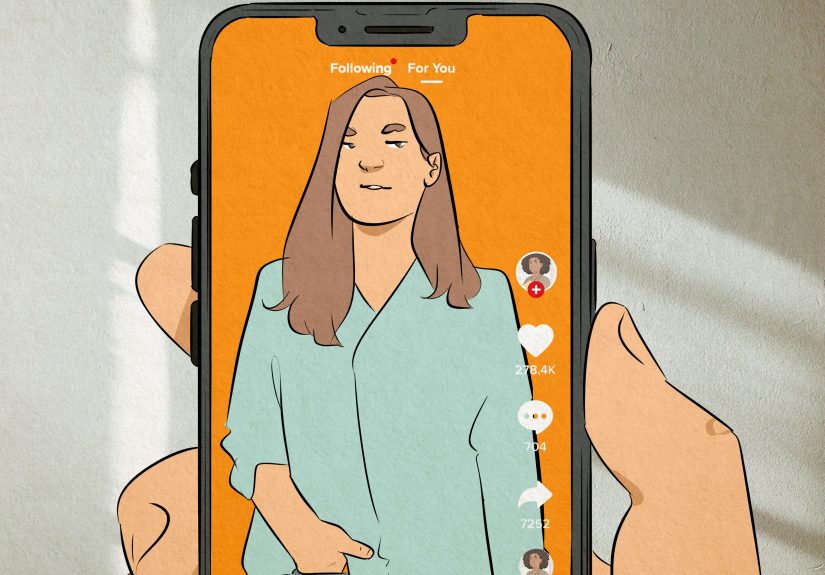
If main character syndrome had a favorite habitat, it would probably be social media. Platforms reward performance, visibility, emotional intensity, and aesthetic storytelling. The modern internet practically begs people to turn their lives into episodes. Add music, captions, filters, and a little strategic backlighting, and suddenly buying iced coffee becomes a heroic act of personal reinvention.
That does not mean social media is evil, cursed, or personally out to ruin your personality before lunch. It simply means that online spaces can magnify tendencies that already exist. If you are insecure, they can make you perform confidence. If you crave validation, they can train you to chase it faster. If you are thoughtful and creative, they can also give you a place to connect, express yourself, and build community.
That nuance matters. Social media is not just a vanity machine. It can help people feel seen, supported, and inspired. But it can also nudge people toward comparison, dramatization, and constant self-presentation. When your life starts to feel most real only when it is observed, liked, or posted, that is when the main-character mindset can get a little too method-actor.
Main Character Energy vs. Main Character Syndrome
These two phrases often get tangled together, but they are not exactly the same thing.
Main character energy can be healthy
This is the version that says:
- I matter too.
- I can take up space.
- I do not have to apologize for having needs.
- I can make choices that support my growth.
That mindset can be genuinely helpful, especially for people who are recovering from people-pleasing, low self-esteem, chronic self-doubt, or a habit of putting everyone else first. Healthy self-focus is not selfish. It is often necessary.
Main character syndrome is when it goes off the rails
This is the version that says:
- My feelings are always the most important feelings in the room.
- Everyone should care about my storyline all the time.
- Other people’s boundaries are inconvenient side quests.
- If I am not centered, something is wrong.
That is where the trouble starts. The same confidence that can look like self-respect in one context can look like entitlement in another. The line is not always dramatic. Sometimes it is simply whether you can step back and let someone else be the focus for five whole minutes without emotionally combusting.
Is Main Character Syndrome the Same as Narcissism?
No. But they can overlap.
This is one of the most important distinctions in the conversation. Plenty of people use “main character syndrome” and “narcissism” interchangeably, but that is not accurate. Narcissistic personality disorder is a real clinical condition with specific diagnostic criteria. It involves a persistent pattern of grandiosity, need for admiration, and lack of empathy across different settings and over time. It is not just being dramatic online or taking too many selfies in flattering natural light.
A person can show a few narcissistic traits without having narcissistic personality disorder. A person can also go through a self-focused season without having a personality disorder at all. That is why overusing clinical language is risky. It turns everyday behavior into armchair diagnosis and makes serious mental health terms less meaningful.
Still, experts do note similarities. When main character syndrome becomes extreme, it can resemble self-centeredness, entitlement, inflated self-importance, overconfidence, and reduced empathy. That is part of why the phrase feels psychologically familiar. It is not a diagnosis, but it can describe behaviors that echo traits found in recognized conditions.
Signs the Behavior May Be a Problem
Everybody has self-involved moments. That alone does not mean anything is deeply wrong. But the behavior may be worth examining when it becomes a pattern, especially if it hurts other people or wrecks relationships.
Common signs include:
- Dominating conversations and steering everything back to yourself.
- Feeling irritated when other people receive attention, praise, or support.
- Romanticizing your struggles while dismissing other people’s pain.
- Curating an image that feels more important than being authentic.
- Seeing people as useful, annoying, or irrelevant based on your goals.
- Reacting badly to criticism, even gentle feedback.
- Constantly comparing your life to a dramatic, polished fantasy version of itself.
- Needing outside validation to feel significant.
Notice that many of these are less about confidence and more about empathy failure. Confidence says, “I belong here.” Main character syndrome says, “Only I matter here.” Those are not cousins. They are barely on speaking terms.
What Causes It?
There is no single cause, because again, this is not a formal diagnosis with one agreed-upon origin story. But experts often connect main-character behavior to a few recurring themes: insecurity, low self-esteem, anxiety, overcompensation, a strong need for validation, and environments that reward performative identity.
That means the person acting larger-than-life is not always deeply self-confident. Sometimes the performance is armor. Sometimes the grand presentation is a defense against feeling small, ignored, rejected, or ordinary. Sometimes the constant self-focus is a coping style that developed under stress.
And sometimes, yes, it is just plain overconfidence mixed with too much attention from an algorithm that thinks every dramatic facial expression deserves a soundtrack.
How It Affects Relationships
Main character syndrome is especially damaging in close relationships because intimacy requires mutual attention. If one person constantly plays lead, the other person gets stuck as audience, crew, and emotional support intern.
Friends may start to feel unseen. Partners may feel emotionally neglected. Coworkers may feel steamrolled. Even when the self-focused person is not trying to be cruel, the effect can still be exhausting. People want to feel heard, not edited down to a reaction shot in someone else’s life story.
Over time, relationships tend to weaken when one person cannot share the spotlight. The issue is not charisma. It is imbalance. Most people can handle a dramatic friend now and then. What wears them down is the sense that their own inner world never quite makes the final cut.
Can You Fix It Without Losing Your Spark?
Absolutely. The goal is not to become bland, silent, or weirdly apologetic for existing. The goal is to keep the good parts of self-respect while dropping the self-absorption.
1. Learn “guest star” mode
You do not have to be the center of every scene. Ask follow-up questions. Listen without waiting for your turn to redirect. Let someone else’s milestone stay about them. Revolutionary, I know.
2. Check whether your behavior is authentic or performative
Would you still say it, wear it, post it, or do it if nobody were watching? If the answer is no, pause. Performance is not always bad, but constant performance can disconnect you from your real self.
3. Practice empathy on purpose
Empathy is not just being nice. It is the ability to remember that other people have rich inner lives, invisible struggles, and valid perspectives that are not organized around you.
4. Separate self-care from self-centeredness
Setting boundaries is healthy. Ignoring consequences is not. Protecting your peace is healthy. Treating every inconvenience as an attack on your destiny is a bit much.
5. Reduce the “highlight reel” effect
If social media makes you feel like you have to perform your life instead of live it, step back. Curate less. Notice more. Touch grass, as the internet so poetically says.
6. Get professional help if the pattern runs deep
If your self-focus feels compulsive, relationships keep breaking down, or you notice major distress, therapy can help. A good mental health professional can help you sort out whether this is a temporary behavior pattern, an insecurity issue, a coping mechanism, or something more complex.
So, Is Main Character Syndrome Real?
Yes, in the sense that the behavior is recognizable, common, and culturally relevant. No, in the sense that it is not an official diagnosis or a formal mental health disorder.
Think of it this way: main character syndrome is real as a metaphor, a social trend, and a behavioral pattern. It is not real as a DSM label. That does not make it meaningless. It just means we should talk about it carefully.
The healthiest version of “main character energy” is not narcissism. It is self-respect with perspective. It is knowing your life matters without assuming everyone else is background scenery. You can be the hero of your own story and still remember that other people are starring in theirs too.
That is probably the best test of all. If your confidence makes you kinder, clearer, and more grounded, great. Keep it. If it makes you less curious, less empathetic, and more addicted to the spotlight, it may be time for a rewrite.
Experiences Related to “Main Character Syndrome: Is It Real?”
In everyday life, main character syndrome rarely shows up as one huge theatrical monologue under a spotlight. It usually sneaks in through smaller moments. Picture a friend group planning dinner. One person keeps changing the restaurant because the lighting is not “their vibe,” the menu does not fit their current identity arc, and the whole evening somehow becomes about the emotional symbolism of pasta. Funny? Yes. A little exhausting? Also yes.
Another common experience happens at work. A teammate presents an idea, but someone else immediately turns the conversation into a personal TED Talk about their own brilliance, their own hustle, their own journey, and the one time they practically saved the company with a spreadsheet and sheer charisma. By the end, the original idea is gone, and everyone feels like they accidentally attended a one-person stage production called Me: The Director’s Cut.
Relationships offer even clearer examples. Imagine telling your partner you had a stressful day, only to watch them hijack the conversation within thirty seconds. Suddenly your rough meeting becomes a footnote in the epic saga of how their commute was spiritually devastating. That kind of exchange can leave people feeling invisible. It is not always cruelty. Sometimes it is habit. Sometimes it is insecurity. But the impact still lands.
Social media adds another layer. A person posts every mood, every setback, every coffee, every “healing era,” every vague caption that sounds like a movie trailer for emotional growth. On one hand, this can be creative and expressive. On the other hand, life can start to feel less like something they are experiencing and more like something they are constantly packaging for an audience. The pressure to seem meaningful at all times can be weirdly draining. Not every walk needs a soundtrack. Sometimes you are just walking. That is allowed.
There are also more sympathetic versions of the experience. Someone who spent years being ignored, overlooked, or dismissed may finally start choosing themselves. They buy clothes they actually like, say no without apologizing, stop shrinking in conversations, and begin describing their life with confidence. From the outside, that can look like “main character energy,” but in reality it may be a healthy correction. They are not making everyone else smaller. They are just finally refusing to disappear.
That is why context matters so much. The same behavior can look empowering in one person and self-absorbed in another. Dancing alone in public might be joyful confidence. Interrupting everyone else so they can admire your dancing is a different story. The line often comes down to empathy, self-awareness, and whether you can enjoy your own spotlight without stealing everyone else’s.
In real life, most people are not permanently stuck in one mode. They move in and out of it. They have insecure weeks, performative phases, confident seasons, and deeply cringey moments they will remember at 2 a.m. forever. That is part of being human. The goal is not to never have a main-character moment. The goal is to make sure your story still has room for a real cast, not just an audience.