Table of Contents >> Show >> Hide
- What “Wave Propagation” Actually Means
- The Foundation: Wave Equations (Time Domain)
- Frequency-Domain Models: Helmholtz and “Steady” Waves
- High-Frequency Approximations: Rays, Eikonals, and Fast Travel Times
- Paraxial and Parabolic Equation Models: “Mostly Forward” Waves
- Diffraction Models: When “Straight Lines” Stop Being True
- Scattering and Random Media: When the Medium Fights Back
- Computational Models: When the Only Honest Answer Is “Let’s Simulate It”
- Choosing the Right Model: A Practical Checklist
- Concrete Examples of Wave Propagation Models in Action
- Field Notes: Real-World Experiences With Wave Models (About )
- Conclusion
- SEO Tags
Waves are nature’s favorite way to move information without relocating all the matter involved. A guitar string can
tell the air “sing,” a Wi-Fi router can whisper through drywall, and an earthquake can text your whole city
at once. The tricky part is predicting what that message looks like when it arriveslouder or quieter,
delayed, distorted, scattered, or mysteriously missing like a sock in the laundry.
That’s where models of wave propagation come in. Depending on the situation, you might use a
full physics model (accurate, expensive), an approximation (fast, fragile), or a statistical description (honest
about chaos). This article walks through the major families of wave propagation modelswhat they assume, what
they’re good at, and how to choose one without flipping a coin (unless your coin is a well-calibrated Monte Carlo
simulation… then flipping is sort of the point).
What “Wave Propagation” Actually Means
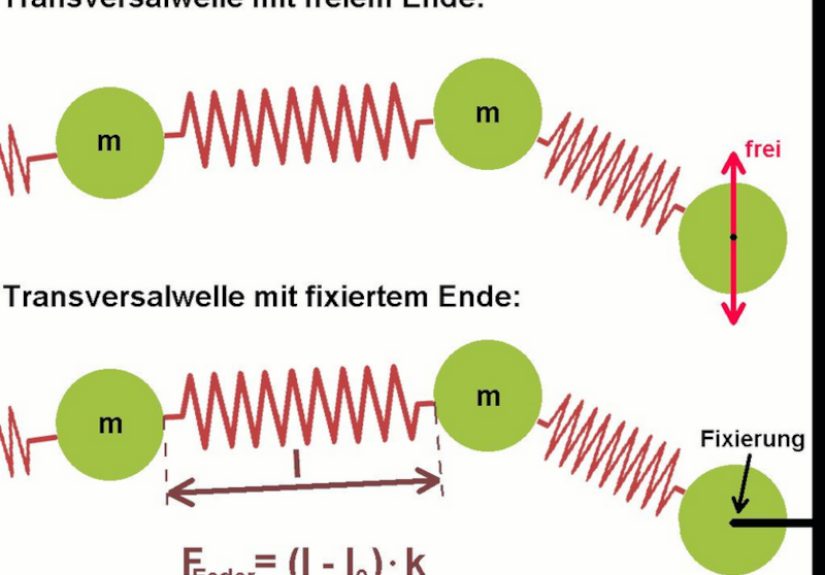
Wave propagation is the evolution of a disturbance as it travels through space and time. The disturbance might be
displacement (water waves), pressure (sound), electric and magnetic fields (electromagnetic waves), or coupled
motion in solids (seismic P- and S-waves). In many real systems, waves also experience:
- Dispersion (different frequencies travel at different speeds, stretching pulses)
- Attenuation (energy loss from absorption or conversion to heat)
- Scattering (energy redirected by roughness, clutter, or inhomogeneity)
- Boundaries (reflections, refractions, mode conversion, diffraction)
The “right” model depends on which of those effects matter at your scale. A model that ignores diffraction can be
perfectly fine for long-distance radio linksbut it will get roasted by a tiny aperture in optics.
The Foundation: Wave Equations (Time Domain)
The workhorse starting point is the classical wave equation. For a simple scalar field u (think: pressure,
displacement, or a component of a field), the idealized form in a uniform medium is:
Why this model is so popular
It captures a lot of physics with minimal drama: propagation speed c, superposition, and the existence of
traveling waves. In one dimension, solutions can be written as right- and left-moving shapes, which is why this
equation is basically the “Hello, world” of wave modelingexcept the “world” can be a bridge, a fiber optic cable,
or the Earth’s crust.
Extensions you’ll see in the wild
- Variable-speed media: c = c(x), creating refraction and focusing/defocusing.
- Damped waves: add a term like γ ∂u/∂t to model absorption.
- Forced waves: add a source term s(x,t) (a speaker, antenna, earthquake rupture).
-
Elastic waves: vector displacement fields in solids produce multiple wave types (e.g., P and S),
including mode conversion at boundaries.
If you can afford it computationally, time-domain wave equations can reproduce reflections, interference,
diffraction, and transientsmeaning you get the messy truth, not a polite summary.
Frequency-Domain Models: Helmholtz and “Steady” Waves
If the source is narrowband (single frequency or a small range), it’s often easier to use a frequency-domain
picture. Using a phasor form u(x,t) = Re{U(x)e^{-iωt}} leads to the Helmholtz equation:
Helmholtz models shine when you care about spatial patterns at a given frequency: room acoustics, antenna fields,
waveguides, resonators, and scattering from objects. They also pair naturally with boundary conditionsbecause real
waves love boundaries the way toddlers love making noise in tiled bathrooms.
Modal models: when geometry does half the work
In ducts, fibers, and layered waveguides, the field can be expressed as a sum of modes (spatial patterns that
propagate with their own phase constants). This leads to powerful “reduce the problem” strategies:
- Normal-mode acoustics for underwater sound channels and shallow-water waveguides
- Optical fiber modes for guided electromagnetic waves
- Seismic surface and guided waves in near-surface layers
Modal models can be extremely efficient: instead of tracking the whole field everywhere, you track a manageable
set of mode amplitudes and how they evolve.
High-Frequency Approximations: Rays, Eikonals, and Fast Travel Times
When wavelengths are tiny compared to the structures in the medium, waves behave “ray-like.” This is the domain of
geometric optics, seismic ray tracing, and many radio propagation link budgets. The logic is:
if the wavefront curvature is gentle relative to the wavelength, treat energy as traveling along trajectories.
Ray theory in a nutshell
- Rays follow Snell’s-law-style refraction when wave speed varies in space.
- Amplitude changes come from spreading, focusing (caustics), and attenuation.
- Phase is approximated via an eikonal equation (travel time or optical path length).
Ray models are fast, interpretable, and great for “where does it go?” questions. But they struggle with
diffraction, interference patterns, and sharp shadow boundariesbecause rays don’t “bend around”
obstacles unless you teach them extra tricks.
Paraxial and Parabolic Equation Models: “Mostly Forward” Waves
Between full wave equations and pure rays sits a useful middle ground: assume the wave propagates mainly forward
(say, along x) with limited backscatter, then simplify the mathematics accordingly. This leads to
parabolic equation (PE) models, widely used in underwater acoustics and some electromagnetic and
atmospheric propagation settings.
PE methods often capture diffraction and refraction better than rays while remaining far cheaper than full
two-way wave simulation. Think of them as “rays with manners”: still efficient, but more willing to admit that
waves spread sideways and interfere.
Diffraction Models: When “Straight Lines” Stop Being True
Diffraction is what happens when a wave encounters apertures, edges, or obstacles and refuses to behave like a
laser pointer. In optics and acoustics, diffraction explains fringes, beam spreading, and why your voice can be
heard around a corner (even though your face cannotlife is unfair like that).
Huygens–Fresnel thinking
A classic idea: each point on a wavefront acts like a secondary source, and the observed field is the
superposition of those contributions. In practice, diffraction is commonly modeled with scalar approximations when
polarization details are secondary (a reasonable assumption in many “large compared to wavelength” optical setups).
Kirchhoff/Fresnel/Fraunhofer regimes
- Fresnel diffraction: near-field patterns where curvature matters.
- Fraunhofer diffraction: far-field patterns that resemble Fourier transforms of apertures.
- Kirchhoff-type integrals: approximate boundary-surface integrals derived from wave equations.
These models are essential for lens design, imaging, antennas, acoustical shielding, and any system where “edge
effects” stop being edge cases and start being the entire plot.
Scattering and Random Media: When the Medium Fights Back
Real environments aren’t perfectly smooth. Turbulent air, ocean internal waves, rough ground surfaces, random
heterogeneity in rock, or cluttered urban structures can all scatter energy. Two major modeling attitudes show up:
-
Deterministic scattering: represent the objects/roughness and solve the wave equation (accurate,
expensive). -
Statistical scattering: model the medium as random and predict averages, variances, and
coherence loss (honest, often practical).
Born and Rytov flavors (small-perturbation approaches)
If the medium variations are “small enough,” you can treat scattering as a perturbation of a known background
solution. These approaches are common in imaging and remote sensing because they can link observations to medium
properties without fully simulating every microscopic bump in the road.
Phase screens and radiative transfer
For long paths through random media (like atmosphere or ionosphere), phase-screen models approximate cumulative
distortion by applying random phase perturbations along the path. When multiple scattering becomes strong,
radiative-transfer-style models track energy density rather than phase-coherent fieldsuseful when interference is
effectively washed out.
Computational Models: When the Only Honest Answer Is “Let’s Simulate It”
Analytical solutions are elegantbut complicated geometries, strong heterogeneity, and real boundary conditions
often demand computation. Here are the major numerical families you’ll see in modern wave propagation work.
Finite-Difference Time-Domain (FDTD)
FDTD discretizes space and time and updates fields step-by-step. It’s widely used in electromagnetics and
acoustics because it naturally handles transients, reflections, and broadband signals. The trade-off is that
stability constraints can force small time steps (the classic CFL condition), so clever variants exist to ease the
time-step limit in certain settings.
Finite Element Method (FEM)
FEM is excellent for complex geometries and material variationsespecially in structural acoustics and elastic
wave problems. It’s a favorite when boundaries are complicated and you need high geometric fidelity.
Boundary Element Method (BEM)
BEM turns some wave problems into boundary-only formulations, which can be efficient when the domain is infinite
(like exterior scattering). The “catch” is that it often produces dense matrices, so acceleration techniques may
be needed for large problems.
Spectral and spectral-element methods
Spectral approaches use high-order basis functions to achieve excellent accuracy per degree of freedom.
Spectral-element methods are popular in large-scale seismic simulation because they combine geometric flexibility
with high accuracyhandy when you’re simulating a whole basin and you’d rather not approximate it as a shoebox.
Choosing the Right Model: A Practical Checklist
Here’s a decision path that works surprisingly well in real projects:
-
Compare wavelength to geometry. If obstacles or variations are comparable to the wavelength,
you need wave effects (diffraction/interference). If wavelengths are tiny, rays may be fine. -
Ask whether phase matters. If coherence and interference are central, you need phase-resolving
models (wave/Helmholtz/FDTD/PE). If you only need average power, statistical/energy models may do. -
Check for backscatter and strong reflections. If the environment sends waves backward (cavities,
strong impedance jumps), “forward-only” approximations like PE can break down. -
Decide time vs frequency domain. Transients and broadband signals love time-domain solvers.
Resonant steady-state patterns often prefer frequency-domain formulations. -
Budget your computation. Full-wave simulation may be accurate but costly. Approximations can be
faster but must be validated carefully.
A strong workflow is often hybrid: use rays to get intuition and quick estimates, then validate
with a more complete wave model for the cases that matter.
Concrete Examples of Wave Propagation Models in Action
1) Wi-Fi in a home (electromagnetic waves)
A quick coverage estimate might use a path-loss plus wall-attenuation model (ray-ish, empirical). If you’re
designing antennas or diagnosing weird dead zones caused by reflections and multipath, a full-wave EM simulation
(often FDTD or FEM) can reveal interference patterns and coupling effects that a simple link budget will miss.
2) Ultrasound imaging (acoustic waves)
In soft tissue, waves scatter and attenuate. Imaging pipelines may use approximate wave models to relate echoes to
structure, sometimes relying on perturbation ideas when variations are modest. When precision matters (complex
geometries, strong contrasts), richer wave simulation can improve reconstruction or quantify uncertainty.
3) Earthquake ground motion (elastic waves)
Large-scale seismic simulations often require full wave physics to capture basin amplification, surface-wave
generation, and 3D structure effects. Ray methods can estimate travel times, but wave-based numerical methods are
used when interference, scattering, and complex geology shape the hazard-relevant shaking.
4) Optics through apertures (diffraction)
If you’re analyzing a lens system or a diffractive element, geometric optics may predict image location but miss
blur, fringes, and contrast losses. Diffraction integrals and Fourier-optics models bridge that gap and explain
why “perfect focus” still has a diffraction-limited spot size.
Field Notes: Real-World Experiences With Wave Models (About )
If wave propagation models sound abstract, it helps to think in “everyday lab stories”the kinds of experiences
students, engineers, and curious humans keep bumping into.
The gym echo problem. Walk into a basketball gym and clap once. The sound doesn’t just fadeit
blooms, smears, and comes back in layers. A simple “inverse-square” spreading rule explains why it gets quieter
with distance, but the lingering “wash” comes from reflections off walls, ceilings, and bleachers. In modeling
terms, a ray approach can estimate early reflection arrival times, but to predict the full reverberant tail you
often need a wave-based or statistical room-acoustics model. That’s why two rooms with the same size can sound
wildly different: materials and geometry steer energy and coherence in sneaky ways.
The hallway-around-the-corner surprise. If sound traveled only in straight lines, you’d lose a
conversation the instant someone steps behind a corner. But you don’tbecause diffraction and scattering leak
energy into the “shadow zone.” This is the moment where a pure ray model gets caught acting overconfident.
Diffraction-aware models (even simple approximations) explain why low-frequency sounds bend around obstacles more
noticeably than high frequencies. The wavelength is larger, so the wave is less “picky” about taking a perfectly
straight path.
The Wi-Fi dead spot that moves when you open a door. Many people have watched a weak signal become
strong (or vice versa) after moving a laptop a foot, changing the angle of a door, or standing in the “wrong”
place. That’s multipath interference: several reflected paths arrive with different phases and add
constructively or destructively. Empirical path-loss models can estimate overall coverage, but they can’t predict
the “one-step-left and the internet disappears” drama. Full-wave simulation can, but it may be overkill for a
typical home. In practice, hybrid thinking works: use an approximate model for planning, then treat persistent
dead zones as a clue that interference and geometry are dominating.
Watching waves “split” in a rope demo. Tie two ropes of different thickness together and send a
pulse down the line. Part reflects, part transmits, and the transmitted pulse may change shape and speed.
That’s impedance mismatch in actionone of the cleanest physical demonstrations of why boundaries matter.
Engineers see the same concept in transmission lines, acoustics, and seismic layers. A simple 1D wave model with
boundary conditions can capture this beautifully, which is a nice reminder that “simple” doesn’t mean “toy” when
the physics matches the scale.
The “why does my voice sound different on speakerphone?” puzzle. Microphone placement, device
casing, and nearby surfaces create little acoustic cavities and reflections. Some of that is captured by
frequency-domain resonance models (Helmholtz-style thinking), while time-domain models help when you care about
transient behavior like clicks, echoes, or noise suppression. The takeaway: the best model isn’t the fanciestit’s
the one that matches the question you’re asking.
Conclusion
Models of wave propagation form a spectrum. At one end are full wave equations and numerical solvers that can
reproduce rich physicsreflections, diffraction, interference, and transientsat a computational cost. At the
other end are ray and energy-based approximations that run fast and deliver intuition, but may miss critical wave
effects. Between them are frequency-domain, modal, parabolic, and scattering models that trade assumptions for
efficiency in carefully chosen regimes.
The practical skill is not memorizing every model; it’s learning how to match the model to the scale, the medium,
and the decision you need to make. If you do that well, the waves stop feeling mysterious and start feeling like
something you can reason aboutstill complex, but no longer magic. (And if they still feel like magic, don’t
worry. Waves have been humbling people since the first ripple hit the shore.)