Table of Contents >> Show >> Hide
- So, What Exactly Is Butchers Twine?
- Why People Use Butchers Twine
- Common Uses for Butchers Twine
- How to Choose the Right Butchers Twine
- How to Use Butchers Twine (Without Turning It Into a Tangled Mess)
- Is Butchers Twine Oven-Safe? Grill-Safe? Food-Safe?
- Butchers Twine vs. Kitchen String vs. Baking Twine
- Smart Alternatives (When You Don’t Have Butchers Twine)
- Storage, Cleanup, and Common Mistakes
- FAQ: Quick Answers About Butchers Twine
- Real-World Experiences With Butchers Twine (500+ Words)
- Conclusion
If you’ve ever watched someone tie up a roast like they’re wrapping a present for a very hungry
relative, you’ve seen butchers twine in action. It’s one of those humble kitchen tools that looks
suspiciously simplejust string, right?until the day your stuffed pork loin starts unraveling like a
cheap sweater and you realize: string matters.
Butchers twine (also called butcher’s twine, kitchen twine, or
cooking twine) is a food-safe stringmost commonly
100% cottonused to tie meat, poultry, and herbs so they cook evenly and hold their
shape. It’s the quiet hero behind neatly trussed chickens, tidy roasts, and bouquet garnis that don’t
explode into your soup like an herb confetti cannon.
So, What Exactly Is Butchers Twine?
Butchers twine is heat-resistant, food-grade string designed to go in the oven (and
sometimes on the grill with a little caution). Its job is simple:
hold food together during cooking. That means it needs to be strong, clean, and
free from dyes, coatings, or chemicals that could transfer to food.
What It’s Usually Made Of
- Cotton (most common): Strong, pliable, and generally oven-safe at typical roasting temperatures.
- Unbleached cotton: Often preferred by home cooks who want the simplest, most natural option.
- Other fibers (less common for cooking): Linen or hemp twines exist, but you should confirm they’re food-safe and heat-safe before using.
The main point: for cooking, you want plain, undyed, untreated twine. If the twine is
brightly colored, smells “industrial,” or feels waxy/coated, it belongs in a craft drawernot next to
your dinner.
Why People Use Butchers Twine
Food changes shape when it cooks. Fat renders, muscle tightens, skin shrinks, and fillings try to make
a dramatic escape. Butchers twine keeps things in place so your food cooks more predictablyand looks
like you meant it to look.
Key Benefits
- Even cooking: A tied roast holds a more uniform shape, helping it cook at a similar rate throughout.
- Moisture retention: Keeping meat compact can reduce exposed surface area and help prevent drying.
- Stuffing control: Twine helps keep fillings where they belonginside the food, not on the roasting pan.
- Better presentation: Slice a well-tied rolled roast and it looks like a restaurant plate, not a “kitchen science project.”
- Herb management: Tying herbs together makes it easy to infuse flavor, then remove them cleanly.
Common Uses for Butchers Twine
1) Trussing Poultry (Chicken, Turkey, Duck)
Trussing means tying a bird so the wings and legs stay close to the body. This helps it roast more
evenly and reduces the risk of skinny parts (like wing tips) overcooking before the thicker breast or
thigh is done.
Typical trussing goals:
- Keep legs tucked for even roasting
- Secure wings so they don’t burn or flop around
- Create a compact shape for consistent heat exposure
2) Tying Roasts for Shape and Slicing
Ever notice how a roast can be thick on one end and thin on the other? Twine helps you shape it into a
more even cylinder. That means more predictable doneness and prettier slicesespecially if you’re
aiming for “pink center” instead of “pink on one side, gray on the other.”
Great candidates for tying:
- Rolled pork loin or pork belly
- Beef tenderloin or rib roasts that need shaping
- Lamb leg roasts
- Stuffed roasts (anything with a filling that wants to wander)
3) Securing Stuffed Foods
Stuffed chicken breasts, stuffed pork chops, braciole, rouladesthese are delicious, but they’re also
escape-room puzzles for fillings. Twine keeps the seam closed while the proteins firm up during
cooking.
4) Making a Bouquet Garni or Herb Bundle
A bouquet garni is a bundle of herbs used to flavor soups, stews, sauces, and braises. Twine lets you
tie thyme, parsley stems, bay leaves, rosemary, and other aromatics together so you can remove them in
one easy lift instead of fishing around like you dropped your keys in a pond.
5) Holding Bacon or Prosciutto Wraps in Place
Wrapping lean meats with bacon is a classic move. Twine can help hold the wrap snugly in place until
the fat renders and the bacon “sets.” (Bonus: it also prevents your carefully wrapped masterpiece from
sliding off like a blanket on a toddler.)
How to Choose the Right Butchers Twine
Food-Safe Comes First
Look for twine labeled food-grade or safe for cooking. Avoid
craft-store twine unless it’s explicitly meant for food use. Some strings can be treated with
chemicals, dyes, or stiffeners that you do not want to roast into your dinner.
Cotton vs. “Whatever This String Is”
100% cotton butchers twine is the most common and widely trusted choice for cooking.
It’s flexible enough to tie tight knots, strong enough to hold roasts together, and generally handles
oven temperatures used for roasting and braising.
Thickness and Strength
Twine comes in different thicknesses. A thin twine works fine for herb bundles and light trussing.
For heavy roasts, a slightly thicker twine (still cotton) can be easier to handle and less likely to
snap when you pull it tight.
Pre-Cut vs. Spool
- Spool: More flexible. Cut any length you need. Great for frequent cooks.
- Pre-cut lengths: Convenient and tidy. Good for occasional cooking or quick prep.
How to Use Butchers Twine (Without Turning It Into a Tangled Mess)
You don’t need to earn a “Certified Knot Wizard” badge to use butchers twine. You just need a clean
length of twine, a plan, and ideally scissors that actually cut instead of politely mashing fibers.
Basic Steps for Tying a Roast
- Pat the meat dry so it’s easier to handle and the twine grips better.
- Shape it into an even thickness (roll and tuck as needed).
- Wrap and tie at intervals (often 1 to 2 inches apart) to keep the shape consistent.
- Use a firm knot (a double knot is usually enough) and trim excess ends.
- Remove twine after cooking and before slicing, unless a recipe says otherwise.
A Simple “Butcher’s Knot” Idea (Practical Version)
Many cooks use a variation of a slip-style knot that tightens easily as you pull. The goal is a knot
that stays tight under tension. If you’re not sure, a secure double knot works. The meat won’t judge
your knot aesthetics. (Your guests won’t see it anywayunless you forget to remove it. Then they’ll
definitely see it.)
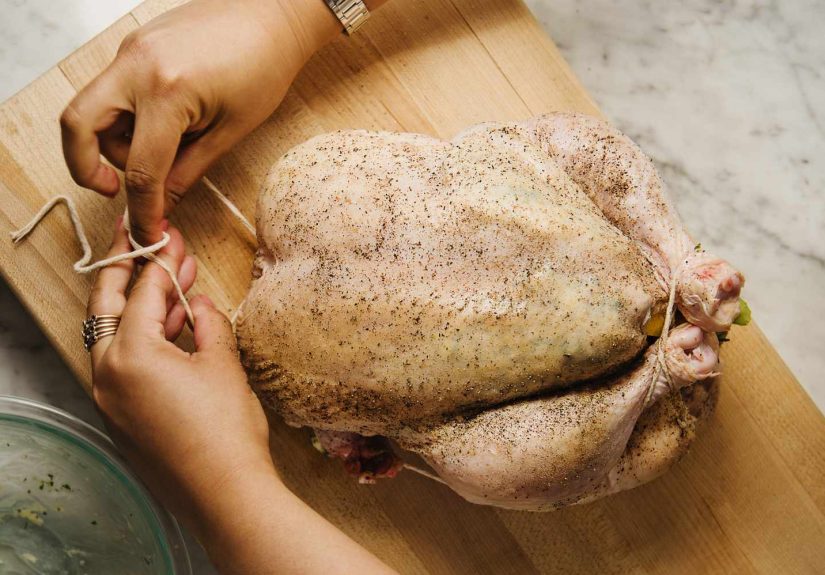
Trussing a Chicken (Beginner-Friendly Approach)
- Cut a length of twine (roughly 3 to 4 feet).
- Slide it under the bird’s tail end, centered.
- Cross ends over the legs and pull snug to bring legs together.
- Loop around the legs and tie firmly.
- Tuck wings if needed to prevent burning.
Tip: If you’re grilling, keep twine away from direct flame. Cotton twine can scorch if it’s exposed
to high direct heat. Many cooks prefer oven roasting or indirect heat grilling when twine is involved.
Is Butchers Twine Oven-Safe? Grill-Safe? Food-Safe?
Oven-Safe
Food-grade cotton butchers twine is generally oven-safe at typical roasting and
braising temperatures. It can brown or darken slightly, but it’s designed to hold up during cooking.
Avoid placing it directly against open flames or broiler elements for long periods.
Grill-Safe (With Caution)
On a grill, “safe” depends on how you grill. Indirect heat is friendlier. Direct flames can burn the
string. If you must grill, keep twine positioned so it’s not hovering over flare-ups, and consider
alternatives like metal skewers or food-safe silicone bands when appropriate.
Food-Safe
Food-safe twine is clean, plain, and intended for cooking. That’s the category you
want. Decorative twines (colored baker’s twine, craft twine, packaging string) may be dyed or treated,
which is not the vibe for dinner.
Butchers Twine vs. Kitchen String vs. Baking Twine
These terms get used interchangeably, but they don’t always mean the same thing in stores:
- Butchers twine / kitchen twine: Usually thick, strong, and made for tying meat; often cotton and food-safe.
- Baker’s twine: Often decorative (red/white, colored) and meant for packagingnot always heat-safe or dye-free.
- General-purpose string: A wildcard. Could be treated or not heat safe.
If you’re cooking, choose something clearly labeled for kitchen/food use. Save the cute striped twine
for tying gift boxes or labeling jarsunless it’s specifically marked safe for cooking.
Smart Alternatives (When You Don’t Have Butchers Twine)
Sometimes you’re mid-recipe and realize you have everything except the one thing holding your meal
togetherliterally. If you don’t have butchers twine, here are a few reasonable backups:
Short-Term Alternatives
- Toothpicks: Useful for closing seams on small stuffed items (remove before serving).
- Skewers: Great for roulades or wrapped meats; secure and heat-safe.
- Food-safe silicone bands: Some are designed for cooking and can replace twine for certain tasks.
What to avoid: unknown strings from the garage, anything scented, anything dyed, and anything that
feels like it came free with a shipping box. Your roast deserves better than “mystery rope.”
Storage, Cleanup, and Common Mistakes
How to Store It
Keep butchers twine clean and dry, ideally in a drawer or container away from
splashes and kitchen grime. If it’s on a spool, avoid leaving it near the stove where grease can
collect over time.
Common Mistakes
- Using craft twine: Not guaranteed food-safe or heat-safe.
- Tying too tightly: You want snug, not “squeezing toothpaste.” Over-tightening can distort the meat.
- Forgetting to remove it: This happens more than you’d think. Remove before slicing and serving.
- Leaving long tails: Trim ends so they don’t burn or drag in pan juices.
FAQ: Quick Answers About Butchers Twine
Can you reuse butchers twine?
For food safety and practicality, most people treat it as single-useespecially after it’s been in raw
meat juices. It’s inexpensive, and reusing it is rarely worth the hassle.
Does it affect flavor?
Plain cotton twine shouldn’t add flavor. Its job is structural. If you notice a smell or odd taste,
that’s a sign you may not be using food-grade twine.
Do you remove it before cooking?
Noleave it on during cooking so it can do its job. Remove it after cooking, before slicing and
serving.
What length do I cut?
When in doubt, cut more than you think you need. You can always trim extra, but you can’t tie a roast
with a 6-inch piece unless you’re also a magician.
Real-World Experiences With Butchers Twine (500+ Words)
Even though butchers twine is simple, people tend to remember the first time they used itmostly
because it makes you feel oddly professional. There’s something about tying up a roast that says,
“Yes, I do own scissors, and I’m not afraid to use them.” Here are some common, real-world experiences
home cooks and grillers run into when they start using butchers twineand what they learn along the
way.
The “My Chicken Looked Like It Was Doing Yoga” Moment
A lot of people try roasting a whole chicken without trussing and end up with legs splayed, wings
crisped into tiny burnt flags, and uneven cooking. Then they truss the next one and suddenly the bird
roasts in a neat, compact shape. The common takeaway: trussing doesn’t just make the chicken look
nicerit can make the cooking more predictable. People often notice the breast stays juicier and the
legs cook more evenly when everything is snug and close to the body.
The “Stuffing Escape” Disaster (And the Twine Redemption)
Stuffed pork loin sounds like an easy flexuntil the filling starts leaking out and scorching on the
pan. A typical experience is trying to secure a stuffed roast with toothpicks alone, only to discover
that toothpicks close gaps but don’t really provide even pressure across a seam. Twine changes that.
Once cooks start tying at intervals, the filling stays put, the roast holds a clean shape, and slicing
becomes dramatically less chaotic. The lesson most people learn: twine is like a seatbelt for your
stuffing. Not glamorous, but you’ll miss it if it’s not there.
The “I Bought Cute Twine and Now My Roast Smells Weird” Lesson
Some people first meet “kitchen twine” through colorful baker’s twine used for packaging cookies or
tying tags on homemade gifts. Then they assume all twine is the same and use decorative twine for a
roast. If that twine is dyed or treated, it can discolor, smell off, or just make you feel uneasy
about what’s touching your food. That experience tends to turn people into label-readers. After that,
they look specifically for food-grade, undyed cotton butchers twineand keep the cute striped stuff
for crafts where it belongs.
The “Knots Are Harder Than the Recipe” Reality Check
Plenty of folks assume tying is easy… until the twine slips, loosens, or tangles. The most common
“aha” moment is learning to pull the twine snug and double-knot it without over-tightening. Another
classic discovery: cutting twine lengths ahead of time makes the whole process calmer, especially if
you’re dealing with raw meat and don’t want to touch the spool with messy hands. Once cooks build a
little routinepre-cut a few lengths, keep scissors nearby, tie, trimthey tend to stop viewing twine
as intimidating and start treating it like any other basic tool.
The “Presentation Upgrade” Surprise
People often expect twine to be purely functional, but one of the most satisfying experiences is how
much it improves presentation. A rolled roast tied neatly becomes a clean cylinder that slices into
even medallions. A tenderloin tied at intervals looks intentional and “chef-y.” For holiday meals or
dinner guests, that visual upgrade matters. Many cooks describe it as an easy way to make a home-cooked
dish look restaurant-level without learning complicated techniques. It’s not fancyit just makes your
food behave.
In short, butchers twine becomes one of those kitchen items people don’t think about until they try
itand then they keep it around because it quietly solves problems they didn’t know they had. It’s
inexpensive, practical, and oddly empowering for something that’s basically string.
Conclusion
Butchers twine is a simple, food-safe cotton string that helps you tie, truss, bundle, and shape foods
so they cook evenly and look great when served. Whether you’re roasting a chicken, rolling a stuffed
pork loin, or building an herb bundle for a cozy stew, the right twine keeps everything togetherliterally.
Choose food-grade cotton, tie snug (not strangled), trim the tails, and remove the twine before serving.
Your future selfholding a perfectly sliced roastwill be very grateful.