Table of Contents >> Show >> Hide
- The Story Behind the Scent
- Why This Tiny Air Freshener Became a Big Idea
- Smell, Memory, and the Emotional Side of Driving
- The Broader EV Trend: Recreating What Electricity Removed
- What the Campaign Says About Kia’s EV Image
- The Irony Is the Whole Point
- A Quick Reality Check About the “Gas Smell” Fantasy
- What Comes Next for EV Marketing?
- Experiences and Reactions: Why This Story Feels So Familiar
- Conclusion
Electric cars are supposed to smell like the future: clean cabin materials, a faint whiff of new upholstery, maybe a latte somebody forgot in the cup holder. Instead, one of the strangest automotive stories in recent memory arrived with a delightfully backward twist. A Kia EV promotion in Finland offered buyers an air freshener inspired by gasoline and motor oil, turning the transition to battery power into a scented tribute to the internal combustion era. Yes, the future apparently smells like a workshop.
That odd little idea became big news because it landed right on an emotional fault line in the car world. People do not just drive cars with their hands and feet. They drive with memory, ritual, sound, vibration, and habit. The growl of an engine at startup, the slight tremor at idle, the smell of fuel at a station, even that faint garage aroma on a cold morning, all of it becomes part of how “real driving” feels. So when an EV campaign bottles that nostalgia and hangs it from the rearview mirror, it is not just weird. It is weirdly revealing.
The Story Behind the Scent
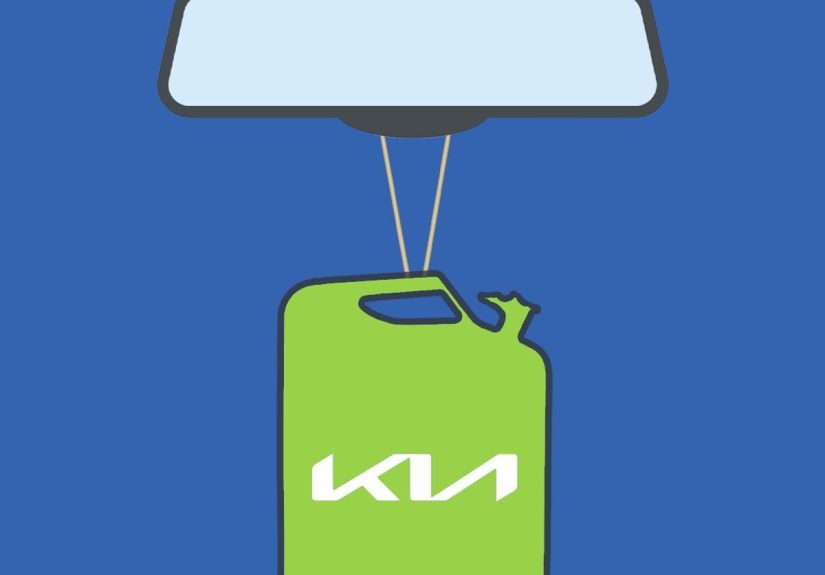
The headline-grabbing campaign was tied to the Kia EV4 in Finland, where buyers were reportedly offered a limited-edition air freshener shaped like a miniature gas can. The fragrance was described as an intentionally nostalgic blend inspired by motor oil, metallic notes, and gasoline-like character. In other words, this was not “pine forest” or “fresh linen.” This was “Saturday at the repair shop, but make it collectible.”
That is exactly why the story traveled so fast. It sounded like parody, yet it was rooted in a real transition problem facing the auto industry. Selling people on EVs is no longer only about range, charging, software, or tax credits. For many shoppers, especially drivers who have spent decades with gas-powered cars, switching to an electric vehicle can feel like losing a familiar sensory language. The Kia scent campaign turned that discomfort into a joke, but it also acknowledged that the discomfort exists.
There is an important nuance here, though. The promotion was later clarified as an initiative of Astara Auto Finland, Kia’s independent importer in that market, rather than a formal global Kia program. That clarification matters because it shifts the story from “Kia has officially decided EVs need to smell like gasoline” to something more interesting: a local marketer spotted a cultural truth, leaned into it, and accidentally created a global conversation.
Why This Tiny Air Freshener Became a Big Idea
On the surface, the whole thing is absurd. Electric vehicles are often marketed as the clean break from oil, noise, fumes, and old mechanical baggage. So why add a scent inspired by the very thing EVs are trying to replace? Because humans are gloriously inconsistent creatures, that is why.
Anyone who loves cars knows that logic and emotion rarely drive in separate lanes. Plenty of enthusiasts say they love the smell of gasoline, but what they often mean is that they love what the smell represents: road trips, first cars, track days, weekends in the garage, helping a parent change oil, hanging around gas stations before a late-night drive, or the excitement of a machine warming up before something memorable happens. The scent is not the whole memory. It is the match that lights it.
That helps explain why this campaign resonated far beyond Finland. It was not really about perfume. It was about whether EVs can replace not only the function of old-school cars, but also their emotional texture. For an industry in transition, that is a serious question wrapped in a very unserious package.
Smell, Memory, and the Emotional Side of Driving
There is a reason a scent-based campaign can punch above its weight. Smell is deeply tied to memory and emotion. A familiar odor can yank somebody backward in time faster than a photo gallery or an old playlist. That means the gasoline-and-oil concept, as silly as it sounds, is built on a real psychological insight: drivers do not leave their history behind just because they bought a battery.
In car culture, smell has always mattered more than marketers like to admit. “New car smell” is practically a product category. Leather, warm plastic, tire rubber, rain on hot asphalt, the faint aroma of a garage after a spirited drive, these sensory details tell drivers what kind of experience they are having. An EV changes that script. It removes many of the cues people unconsciously associate with power, movement, and mechanical life. That can feel modern and refreshing, or sterile and detached, depending on the driver.
So the Kia air freshener did something clever: it treated smell as interface design. It said, in effect, “You may be leaving gasoline behind, but we understand why part of you still looks over your shoulder.” That is surprisingly smart marketing, even if the execution makes you laugh hard enough to fog the windshield.
The Broader EV Trend: Recreating What Electricity Removed
This is also not happening in isolation. Across the industry, automakers have been experimenting with ways to give EVs back some of the drama that combustion naturally supplied. Some performance EVs simulate shifts. Some generate artificial engine-like sounds. Others amplify powertrain noises or create entirely new sonic personalities so the experience feels theatrical instead of silent. The point is not always realism. The point is engagement.
That puts the Kia scent stunt in a broader context. If fake shifts can make an EV feel more playful, and synthetic exhaust notes can make one feel more aggressive, then a workshop-inspired fragrance is just another sensory layer in the same conversation. The difference is that sound and gearing are easy to discuss with a straight face. Smelling faintly like gasoline in an EV? That takes the same idea and sends it through the comedy department.
Still, the underlying strategy is familiar. Modern EV makers are learning that the future sells better when it does not feel emotionally empty. Consumers may want clean technology, but many still crave character. Sometimes that character comes from instant torque and smart design. Sometimes it comes from digital theater. And apparently, sometimes it comes from a hanging air freshener that smells like your uncle’s garage.
What the Campaign Says About Kia’s EV Image
Kia has spent the past few years building a more confident electric identity, with bold styling, more ambitious design language, and a growing EV lineup that wants to be taken seriously. That is part of why this story attracted so much attention. The brand is not known for timid EV thinking. It is known for trying things, occasionally with a wink.
Even so, the later clarification from Kia headquarters showed the limits of that wink. A local-market stunt can go viral so fast that it starts to look like a global brand message, especially when it is this unusual. Once the story left its original context, it raised an awkward question: does scenting an EV like gasoline celebrate nostalgia, or does it accidentally imply that electric cars need help feeling desirable? That tension may explain why the campaign became as notable for its cleanup as for its launch.
In a way, that only made the story more fascinating. It exposed the push and pull inside modern car marketing. Brands want EVs to feel new, progressive, and self-confident. But they also know plenty of buyers still carry emotional loyalty to the old era. The trick is to honor that attachment without becoming trapped by it.
The Irony Is the Whole Point
What makes this story memorable is not just the scent itself. It is the contradiction. An EV, which exists partly to move beyond oil dependency, gets paired with a fragrance inspired by oil. A technology associated with clean simplicity gets accessorized with one of the messiest symbols in car culture. It is ridiculous, but it also works because the contradiction is honest.
The shift from combustion to electric is not purely technical. It is cultural. It asks people to give up more than a fuel source. It asks them to give up sounds, habits, and sensory cues that have been normalized for generations. That is why some drivers embrace EVs immediately while others hesitate even when the practical case is strong. The resistance is not always rational, but it is real.
This is where the campaign, despite its cartoonish surface, deserves some credit. It did not lecture people. It did not pretend nostalgia is foolish. It treated it like a passenger in the car. And sometimes the best way to help people move forward is not to shame what they liked about the past, but to joke about it while showing them the new machine is still worth driving.
A Quick Reality Check About the “Gas Smell” Fantasy
Now for the least glamorous but most responsible part of the conversation: the romanticized smell of gasoline belongs in nostalgia, not in actual air quality goals. There is a big difference between a novelty fragrance designed to suggest a memory and exposure to real fuel vapors. One is a marketing gimmick. The other is a health concern.
That distinction matters because part of EV culture is about rethinking what drivers accept as normal. For decades, car lovers have treated all kinds of smells as badges of authenticity: gasoline, oil, hot brakes, exhaust, adhesive, solvent, even a suspicious mystery odor that seems to mean “project car.” Not all of those deserve a comeback tour. Some belong in stories, not cabins.
So while the Kia campaign was funny and smart in a cultural sense, it also accidentally highlights how strange automotive nostalgia can be. We do not actually want the downsides of the old era back. We just want the emotional shorthand that came with them. That is a useful distinction for every EV brand trying to design the next decade of driving.
What Comes Next for EV Marketing?
If this story proves anything, it is that EV marketing is entering a more human phase. The early years were dominated by arguments about efficiency, emissions, acceleration, and range anxiety. Those issues still matter. But as EVs become more common, brands increasingly need to answer a softer question: how should electric driving feel?
That answer will probably not be the same for everyone. Some drivers want EVs to feel radically different from gas cars: calmer, cleaner, and quieter. Others want continuity: familiar cues, emotional drama, and a sense that the machine still has a pulse. The brands that win may be the ones that understand both impulses.
Kia’s odd little air freshener captured that dilemma in one unforgettable image. It was funny, a little ridiculous, mildly chaotic, and unexpectedly insightful. In other words, it was perfect internet bait and pretty decent marketing. It reminded the industry that the transition to electric is not just about replacing engines with motors. It is about replacing rituals without losing romance.
Experiences and Reactions: Why This Story Feels So Familiar
What makes the whole gasoline-scented EV idea stick in people’s minds is that almost everybody who has spent time around cars has some version of this memory. Maybe it is standing beside a parent at a gas station on a summer night while the canopy lights buzz overhead. Maybe it is the smell that lived in a garage where tools hung neatly on one wall and absolutely nowhere else. Maybe it is a first car that was objectively terrible but smelled like freedom, bad decisions, and a burger bag in the back seat. Car memories are messy. That is why they work.
For longtime drivers, an EV can feel a little like moving into a beautifully designed apartment that somehow does not yet smell like home. It is quiet. It is efficient. It may even be better in most measurable ways. But the old cues are missing. No idle. No faint mechanical chatter. No ritual of warming the engine. No gas station stop that turns into a snack run and a windshield squeegee performance. The experience is improved, yet changed enough that part of the brain still goes, “Wait, where did my usual stuff go?”
That is why a stunt like this lands. It recognizes that people do not switch technologies as cleanly as marketing decks assume. They carry habits with them. They carry jokes with them. They carry sensory baggage with them, sometimes literally in the form of an air freshener shaped like a tiny fuel can. The best reaction to that is probably a laugh, followed by an honest nod. Yes, it is absurd. Yes, some people will absolutely love it.
There is also something very modern about the split reaction the campaign inspired. One crowd saw it as hilarious proof that car culture can still poke fun at itself. Another saw it as a sign that EVs are still negotiating with the ghosts of combustion. Both readings are fair. The air freshener is silly merchandise, but it also acts like a mood ring for a market in transition. People looked at it and revealed their own feelings about EVs almost instantly.
And that may be the best takeaway of all. A strange little fragrance accessory managed to do what a lot of expensive advertising fails to do: get people talking honestly about what they miss, what they do not miss, and what they still need from the electric future. If the next era of driving is going to win people over, it will need more than cleaner tech and sharper screens. It will need memory, humor, and a little emotional intelligence. Preferably without actually making the cabin smell like a gas pump on a hot day.
Conclusion
The story of Kia’s gas-and-oil-inspired EV air freshener is funny because it sounds like satire, but it matters because it reveals something real. The move from combustion to electric is not only a mechanical upgrade. It is a sensory and emotional adjustment. Drivers are not just changing vehicles. They are changing habits, cues, and identities shaped over decades.
That is why this oddball campaign became more than a novelty. It turned nostalgia into a conversation about product design, customer psychology, and the future of automotive culture. Even after the clarification that the promotion came from Kia’s independent Finnish importer rather than Kia headquarters, the message still lingers: EVs may be the future, but the past still rides along. Sometimes quietly. Sometimes loudly. And sometimes hanging from the mirror, smelling faintly like old-school motoring.