Table of Contents >> Show >> Hide
- Before You Organize: The Two Rules That Make Everything Easier
- 1) Do a Fast Audit (and Evict the “Zombie” Supplies)
- 2) Build Simple Zones That Match How You Clean
- 3) Create a Portable Cleaning Caddy (Your “One-Trip” Trick)
- 4) Use the Back of the Door Like It Owes You Money
- 5) Install a Broom-and-Mop Holder to Save Your Floor
- 6) Add a Tension Rod to Hang Spray Bottles (Yes, Really)
- 7) Use Clear Bins to Stop “Small Stuff” From Becoming a Pile
- 8) Label Like a Human (Not Like a Museum Archivist)
- 9) Make Heavy Items Low and Everyday Items Eye-Level
- 10) Use a Lazy Susan or Pull-Out Bin for Bottles
- 11) Keep Cleaning Products Safe: Original Containers, Clear Labels, Smart Placement
- 12) Maintain It With a 60-Second Reset (and a “Backstock Boundary”)
- Quick Example Setup: A Cleaning Closet That Works in Real Life
- Real-World Experiences: What People Learn After Organizing a Cleaning Closet
Let’s be honest: the cleaning closet is where good intentions go to… take a nap. It starts as a tidy little home for disinfectant and a broom. Then one day you open the door and a mystery sponge falls out like it’s trying to escape the witness protection program.
The good news? You don’t need a giant house, a custom closet system, or a personality that enjoys labeling things “for fun.” With a few smart storage upgrades and a simple system, you can turn your cleaning closet into an organized, easy-to-use command centerso you spend less time hunting for glass cleaner and more time living your life.
Before You Organize: The Two Rules That Make Everything Easier
Rule #1: Store for speed, not for vibes
Your cleaning closet doesn’t need to be Instagram-worthy. It needs to be functional. The best setup is the one that helps you grab what you need in 10 seconds and put it back without performing a balancing act.
Rule #2: Vertical space is your best employee
Most closets waste the “air” between shelves, the door interior, and the side walls. Your goal is to use height and hidden surfaces so the floor stops being a sad parking lot for mops.
1) Do a Fast Audit (and Evict the “Zombie” Supplies)
Start by pulling everything out. Yes, all of it. This is the only way to see what you actually ownand what’s been quietly multiplying in the back like it pays rent.
What to remove immediately
- Empty or nearly empty bottles you never loved
- Dried-out wipes, crusty sponges, mystery rags
- Duplicates you keep “just in case” (be honest: you have three)
- Anything leaking, sticky, or unlabeled
If you’re unsure, create a “probation bin.” If you don’t touch it in 30–60 days, you’ve got your answer.
2) Build Simple Zones That Match How You Clean
Organization works when it reflects reality. Most people clean by room or by task, not by alphabetical order of chemicals.
Easy zone ideas
- Daily Grab: all-purpose spray, microfiber cloths, disposable gloves, trash bags
- Kitchen: degreaser, dishwasher tabs, stainless polish, scrub brushes
- Bathroom: toilet cleaner, grout brush, disinfectant, extra sponges
- Floors: mop pads, floor cleaner, broom, dustpan
- Backstock: refills, bulk paper towels, replacement heads
When every item has a zone, you stop “shuffling” clutter and start maintaining a system.
3) Create a Portable Cleaning Caddy (Your “One-Trip” Trick)
The most organized cleaning closet still fails if you have to make five trips to clean one bathroom. A cleaning caddy keeps your routine fast and consistent.
What to keep in a caddy
- Small all-purpose spray
- Disinfectant (as directed on the label)
- Microfiber cloths (color-coded if you want to feel powerful)
- Scrub brush + sponge
- Gloves
- A small trash bag or pouch for debris
Pro move: make two caddiesone for kitchens, one for bathroomsso you don’t accidentally “cross-contaminate” your tools.
4) Use the Back of the Door Like It Owes You Money
The back of a closet door is premium real estate. Add storage there and you instantly free up shelf space for bigger items.
Door storage that actually works
- Over-the-door pocket organizer for small bottles, brushes, and wipes
- Over-the-door hooks for dusters, lint rollers, reusable bags
- A slim rack for spray bottles (if your door clearance allows)
Keep lightweight, frequently used items here. Heavy bottles on the door can make it swing like a wrecking ball.
5) Install a Broom-and-Mop Holder to Save Your Floor
Long-handled tools are the reason cleaning closets feel messy even when they’re “technically” organized. Hanging them gets them off the ground and prevents the classic “mop collapse” event.
Options to consider
- Wall-mounted gripper rack (great for brooms, mops, dusters)
- Hooks for a dustpan, small broom, or handheld vacuum
- Door-mounted handle holders if wall mounting isn’t possible
Bonus: storing tools upright and off the floor helps them dry and reduces that funky “wet mop smell” situation.
6) Add a Tension Rod to Hang Spray Bottles (Yes, Really)
This is one of the simplest “why didn’t I do this sooner?” upgrades: install a tension rod under a shelf and hang spray bottles by their triggers.
Why it’s brilliant
- Prevents bottles from tipping and leaking
- Frees the shelf for bins and refills
- Makes labels visible at a glance
Just make sure your shelf is sturdy and the rod is secure. Keep heavier bottles on lower shelves if needed.
7) Use Clear Bins to Stop “Small Stuff” From Becoming a Pile
Sponges, brushes, magic erasers, microfiber cloths, and random attachments love to roam. Contain them like they’re tiny, useful toddlers.
Bin ideas that keep order
- One bin for cloths (clean)
- One bin for scrub tools (brushes, grout brush, pumice stick)
- One bin for disposables (wipes, gloves, trash bags)
Clear bins are helpful because you can see what you have without pulling everything out like you’re on a game show.
8) Label Like a Human (Not Like a Museum Archivist)
Labels keep systems from falling apartespecially if more than one person cleans in your home. The key is making labels obvious and simple.
Labeling tips
- Use plain language: “BATH,” “FLOORS,” “BACKUP,” “TOOLS”
- Label shelves and bins, not individual items
- If you use refills, label the bin with the product name and room
If you want to go next-level, add a small checklist inside the door for restock reminders (paper towels, trash bags, wipes).
9) Make Heavy Items Low and Everyday Items Eye-Level
This is the “save your back and your patience” tip. Store heavy jugs and bulky items on the lowest shelf, and keep your most-used supplies where you can grab them without a ladder.
A quick shelf map
- Top shelf: backstock you rarely touch (extra sponges, seasonal items)
- Middle shelves: daily zone + caddies
- Bottom shelf/floor: heavy refills, paper towels, vacuum, mop bucket
This single change prevents the common “domino effect” where you pull one thing and six others fall over in solidarity.
10) Use a Lazy Susan or Pull-Out Bin for Bottles
Closet shelves are deep, and deep shelves are where bottles go to hide. A rotating tray (lazy Susan) or a pull-out bin brings items forward, which keeps you from buying duplicates because you “couldn’t find it.”
Where this shines
- Small bottles: wood polish, stainless cleaner, specialty sprays
- First-aid style items you store nearby: bandages, lint roller, pet stain remover
- Refills you use often: soap refill, multi-surface concentrate
Choose a tray with a lip so bottles don’t slide off during the spin cycle.
11) Keep Cleaning Products Safe: Original Containers, Clear Labels, Smart Placement
An organized cleaning closet should be safer, not just prettier. Store products according to their label instructions, keep them in their original containers, and make sure anything hazardous is out of reach of kids and pets.
Safety upgrades that still look tidy
- Store chemicals on a high shelf or in a lockable bin/cabinet if needed
- Use a plastic tray or bin liner under liquids to catch drips
- Separate products that shouldn’t be used together and keep labels readable
- Never decant laundry packets or cleaners into food-like jars (it’s risky and confusing)
Also: if you keep a step stool in the closet, store it securely so it doesn’t become an accidental climbing tool.
12) Maintain It With a 60-Second Reset (and a “Backstock Boundary”)
The secret to a long-term organized cleaning closet isn’t willpowerit’s a tiny habit. After you clean, spend one minute putting items back in their zone and checking what’s running low.
Two maintenance habits that work
- Reset rule: nothing stays on the floor except intentional items (vacuum, mop bucket)
- Backstock boundary: one bin per category (one for trash bags, one for paper goods, one for refills)
When the backstock bin is full, that’s your cue to stop buying and start using. Your closet is not a warehouse. It is not taking bulk deliveries.
Quick Example Setup: A Cleaning Closet That Works in Real Life
If you want a simple layout you can copy, try this:
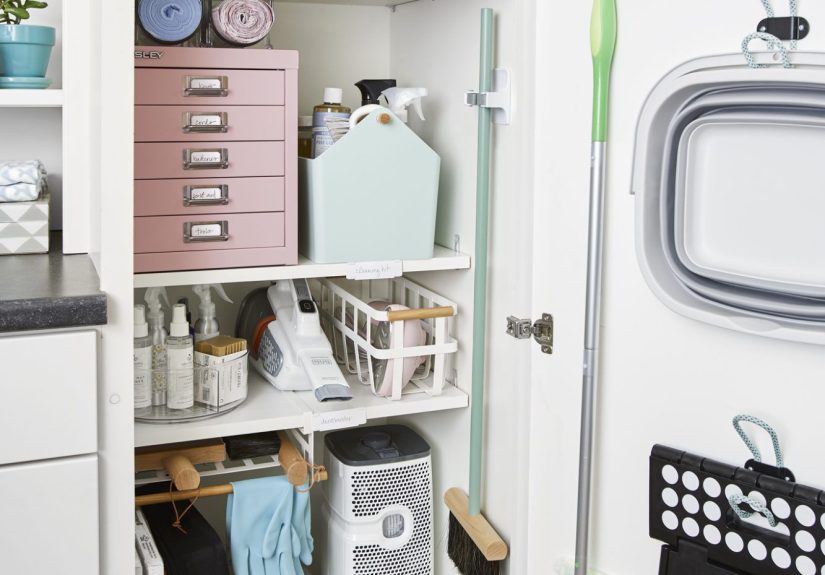
- Door: pocket organizer (wipes, gloves, small brushes) + hooks (duster, lint roller)
- Top shelf: labeled backstock bins
- Middle shelf: two caddies (kitchen, bathroom) + lazy Susan for specialty bottles
- Lower shelf: floor-cleaning supplies + bin for cloths
- Wall: broom/mop holder + hooks for dustpan and attachments
- Floor: vacuum or stick vac + mop bucket (if you use one)
This setup makes it obvious where everything goes, which is exactly what your future self deserves.
Real-World Experiences: What People Learn After Organizing a Cleaning Closet
Once a cleaning closet gets organized, the most surprising change isn’t the lookit’s the way cleaning starts to feel less annoying. In homes where the closet used to be a “stuff it and shut it” zone, people often realize that clutter was creating friction at every step. A basic task like wiping counters could turn into a scavenger hunt: the all-purpose spray was buried behind refills, the cloths were missing, and the broom was trapped under a toppled mop. After a reset, the same task becomes a smooth loop: open door, grab caddy, clean, return caddy. It’s not magic. It’s fewer obstacles.
In busy households, the biggest win is predictability. When supplies are grouped into zones (bathroom, kitchen, floors), anyone can find what they need without asking, “Where do we keep the… thing?” Parents especially tend to appreciate a system that reduces the odds of kids grabbing something unsafe. Even if the home doesn’t use a lock, placing hazardous products up high and keeping everything labeled in its original container helps reduce confusion. The closet stops being a jumble of look-alike bottles and becomes a place where you can quickly confirm, “Yes, this is the right product,” without squinting like you’re decoding a secret message.
Renters and small-space dwellers often report the biggest gains from vertical tricks. A door organizer can hold an absurd amount of small itemsbrushes, wipes, microfiber cloths, disposable glovesfreeing shelves for bulkier supplies. A tension rod for spray bottles feels like a tiny engineering flex, but it’s especially helpful in narrow closets because it keeps bottles visible and upright. The first time someone doesn’t have to pull out six items just to reach one, they usually become a door-storage evangelist.
Another common experience: people discover they were overbuying. Deep shelves hide inventory. Once bins are clear and labeled, it’s obvious when you already have three bottles of glass cleaner and enough sponges to open a small car wash. Many households end up adopting the “one backstock bin” rule simply because it prevents the closet from turning into a bulk-store overflow. When the bin is full, the system tells you to pause purchases and use what you already own. That’s organization paying you back in real dollars.
Finally, an organized cleaning closet tends to improve consistency. When supplies are easy to grab, quick cleanups happen more often: wiping up a spill, doing a five-minute bathroom refresh, or running a lint roller over a dusty lampshade. People don’t necessarily become “cleaning hobbyists,” but they do become more likely to do small maintenance tasks that prevent bigger messes later. In that sense, a well-organized closet is less about storage and more about momentum. It quietly makes your home easier to manageone labeled bin, one hook, and one caddy at a time.