Table of Contents >> Show >> Hide
- Why the 2024 private jet leaderboard landed like a thunderclap
- Why people keep using the word “hypocrisy”
- What the private jet data actually tells us
- Why Taylor Swift became the face of a much bigger issue
- Kim Kardashian, Elon Musk, and the image problem that will not go away
- The best defense celebrities have and why it only partly works
- What would make the outrage feel less empty?
- Final descent: why this story keeps taking off
- Experience: What This Story Feels Like From the Ground
Nothing sends the internet into a full-body eye roll faster than a celebrity preaching good values while a private jet is idling somewhere nearby. That is exactly why the 2024 private jet flight usage leaderboard hit such a nerve. Once the numbers started circulating, social media did what social media does best: gasp, joke, judge, meme, and ask whether anyone with a Gulfstream should ever lecture the rest of us about sustainability again.
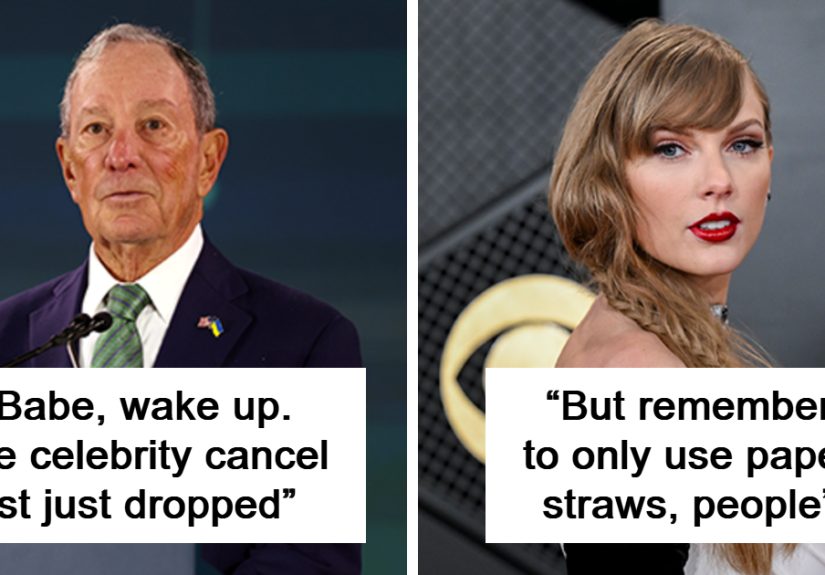
The outrage was not only about carbon. It was about optics, fairness, and the very modern feeling that ordinary people are being told to recycle yogurt cups, use paper straws, and combine errands into one trip while the rich and famous cross state lines like they are calling a rideshare. The leaderboard turned a simmering frustration into a scoreboard, and scoreboards have a way of making everything feel brutally simple.
Still, the story is bigger than one viral list. The 2024 private jet debate sits at the messy intersection of climate anxiety, celebrity branding, public accountability, privacy, and the very real security concerns that come with global fame. So yes, the jokes were fast and savage. But underneath them was a serious question: when public figures live extravagantly while promoting causes, philanthropy, or moral seriousness, when does luxury stop looking glamorous and start looking flat-out hypocritical?
Why the 2024 private jet leaderboard landed like a thunderclap
The 2024 leaderboard made headlines because it put concrete numbers next to a floating public suspicion. According to reporting on the year-end rankings, former Google CEO Eric Schmidt topped the list with roughly 495 flights and more than 612,000 miles flown in 2024. Elon Musk followed close behind, with one jet logging 320 flights and more than 461,000 miles, while additional travel on a second plane pushed his total even higher. Kim Kardashian ranked third, with 236 flights and more than 419,000 miles traveled.
That alone was enough to spark outrage, but the leaderboard got even more attention because it did not perfectly match the public’s usual villain list. Taylor Swift, for example, has become the internet’s most recognizable private-jet lightning rod, yet on this particular 2024 list she was not even in the top five. That surprised plenty of people and exposed something important: the outrage machine does not always run on the biggest numbers. It often runs on the biggest names.
The rankings also reminded readers that the private jet world is not just a celebrity playground in the old-school Hollywood sense. It is packed with billionaire executives, moguls, sports figures, and ultra-visible public personalities. In other words, the private jet problem is not just a pop culture problem. It is an elite lifestyle problem with excellent lighting and very expensive luggage.
Why people keep using the word “hypocrisy”
Because the contrast is almost cartoonish
The hypocrisy charge sticks because the contrast is so dramatic. Average people are constantly nudged to make tiny climate-conscious choices: shorter showers, reusable shopping bags, energy-efficient light bulbs, lower thermostats, and fewer disposable products. Then a leaderboard pops up showing that a single high-profile traveler can generate a mountain of emissions in a year that looks absurd next to a regular person’s carbon footprint.
That disconnect is why so many reactions sound less like environmental policy arguments and more like exasperated stand-up comedy. The unspoken line is usually something like this: So I am rinsing out hummus containers, and you are taking private flights like you are ordering takeout? Once the lifestyle gap feels ridiculous, the moral gap does too.
Because celebrity branding is built on values now
Modern celebrity culture is not just about being famous. It is about being a brand, and brands sell identity. Many public figures tie themselves to social values, philanthropy, voting campaigns, sustainability language, empowerment messaging, or general moral seriousness. That is not inherently fake. In plenty of cases, celebrities do support causes sincerely and spend real money on them.
But when a star’s public image says “care deeply” and their travel habits say “absolutely not enough to skip the jet,” critics see a mismatch. The same goes for billionaire executives who publicly discuss innovation, global responsibility, and a better future while operating in ways that look wildly carbon-intensive. The irritation is not just that these people emit a lot. It is that they often want applause for being conscientious while living in a way most people could never imagine justifying.
Because luxury emissions feel optional
A lot of climate pollution is tied to systems people cannot easily escape: housing, electricity grids, commuting patterns, supply chains, and air travel infrastructure. Private jet travel, by comparison, looks intensely discretionary. Even when there are arguments for security or time efficiency, the image still reads as luxury first. That is why critics treat it as a symbol. The jet is not just transportation. It is a flying neon sign that says convenience won.
What the private jet data actually tells us
The climate case against private jets is not just emotional. It is backed by increasingly blunt data. A 2024 study in Communications Earth & Environment found that private aviation contributed at least 15.6 million metric tons of direct carbon dioxide emissions in 2023. The same research found that emissions from private aviation rose 46% between 2019 and 2023, and nearly half of private flights were shorter than 500 kilometers.
That short-flight detail matters. Short hops are terrible for optics and bad for efficiency. Aircraft burn large amounts of fuel during takeoff and climb, so repeated shorter trips can rack up emissions fast. When people hear that private jets are being used for what look like glorified commuter runs, the criticism stops sounding like anti-rich resentment and starts sounding like common sense.
Other reporting has sharpened the point. Analysts have found that private jets can generate somewhere between five and 14 times the greenhouse gas emissions per passenger of commercial planes, and vastly more than rail travel over the same distance. One Associated Press report on private jet emissions noted that two hours of private flying can produce more carbon dioxide than the average person emits in an entire year. That is the kind of statistic that turns annoyance into disbelief.
There is nuance here. Private jets account for a relatively small share of total aviation emissions, and aviation itself is only one slice of the wider climate problem. But the fairness argument is hard to shake. Even when the total slice is small, the per-person impact is enormous, and that makes private aviation feel like the most visible form of carbon inequality in the sky.
Why Taylor Swift became the face of a much bigger issue
If the 2024 leaderboard proved anything, it is that public attention does not always track perfectly with the rankings. Taylor Swift has become the shorthand example in this debate, partly because she is one of the most famous people on Earth and partly because her schedule is so visible. In early 2024, scrutiny intensified around whether she would travel from Tokyo to Las Vegas for the Super Bowl, a route that reporting estimated could cover more than 19,000 miles in under two weeks and produce more than 200,000 pounds of carbon dioxide.
That made for irresistible headlines, but it also highlighted a double truth. On one hand, Swift’s private travel became a giant symbol of celebrity excess. On the other hand, experts interviewed in mainstream coverage pointed out that most private jet customers are not global female pop stars. They are overwhelmingly wealthy men, many over 50, who attract nowhere near the same level of meme-friendly scrutiny.
Swift’s team has argued that security is a serious concern and has also said she purchased more than double the carbon credits needed to offset tour travel. Critics remain unconvinced. Carbon offsets can help on paper, but to many people they sound like the environmental equivalent of ordering a side salad with a triple cheeseburger and calling it wellness. Offsets may be part of a strategy, but they do not erase the visual and moral impact of frequent private flying.
The controversy grew even messier when Swift’s lawyers threatened legal action against flight-tracking student Jack Sweeney, arguing that real-time flight updates could create safety risks by giving stalkers a roadmap. That concern is not frivolous. Swift has had serious stalking incidents, and personal security for stars at her level is not a game. Still, the public pushback to the legal threat showed that many people view flight tracking as a form of accountability, not harassment. That is why the jet story kept expanding beyond emissions into a larger battle about privacy, power, and who gets to control public information.
Kim Kardashian, Elon Musk, and the image problem that will not go away
Kim Kardashian’s high ranking on the 2024 leaderboard was especially potent because her brand is built on aspiration. Luxury is the product. Precision, polish, exclusivity, and abundance are the aesthetic. That kind of image can survive a lot, but it struggles in a climate conversation because excess is no longer universally aspirational. Increasingly, it can read as careless.
Elon Musk, meanwhile, occupies a different lane. He is tied to electric vehicles, space technology, and futuristic innovation, which means critics can frame his private jet use as especially ironic. If you sell the future, people expect you to act like you plan to live in it. Musk also helped turn jet tracking into a major story years ago through his disputes with Jack Sweeney, which made his aviation habits feel even more public and symbolic.
And then there is the broader Kardashian-Jenner orbit, which has already become internet shorthand for short private flights and maximum-opulence optics. Even when one specific name is not leading a specific annual chart, the family remains central to the public imagination of celebrity climate contradiction. Once that association sets in, every new ranking, every tracker post, and every paparazzi airport photo feeds it.
The result is that some celebrities are no longer judged only by what they do. They are judged by what people assume they represent: performative concern, luxury without limits, and a belief that ordinary rules are for ordinary people.
The best defense celebrities have and why it only partly works
To be fair, private jet use is not always frivolous. Ultra-famous entertainers, billionaire executives, and political figures can face legitimate security issues, impossible schedules, and logistical demands that commercial flying does not handle well. For some of them, a regular airport is not just inconvenient. It can be chaotic, unsafe, or practically unworkable.
That is the strongest argument in favor of private aviation: time, security, and flexibility. If a superstar has a concert, a press obligation, a family responsibility, and a security detail spanning multiple cities in a narrow window, a private aircraft can turn a logistical nightmare into something physically possible.
But that defense has limits. It may explain private jet use in general, yet it does not justify every short trip, every empty repositioning flight, or every instance where a cleaner alternative appears feasible. It also does not solve the perception problem. The public can accept that some people may need private aviation at times while still believing it has become wildly overused.
In other words, “security and scheduling” can explain the existence of private jets. It does not magically make the 2024 leaderboard less jaw-dropping.
What would make the outrage feel less empty?
1. Fewer short-haul private flights
If public figures want to cool this conversation down, the obvious place to start is the easiest one: stop taking ultra-short flights when a car, train, or even a regular commercial route would do the job. The public may never love private jets, but it absolutely despises the look of private jets being used like taxis.
2. Less climate theater, more measurable action
People are more forgiving when celebrities speak plainly. If a public figure flies private for safety or work reasons, they should say that directly instead of dressing every emissions-heavy habit in fluffy language about impact and awareness. Reducing avoidable flights, disclosing sustainability efforts honestly, and avoiding preachy branding would probably do more for credibility than any glossy campaign ever could.
3. Treat offsets like a supplement, not a magic trick
Buying carbon offsets is better than pretending emissions do not exist, but offsets are not the same thing as elimination. The public increasingly understands that, which is why the old “don’t worry, it’s offset” line now lands with all the persuasive power of a celebrity apology typed in Notes app font.
4. More policy, less selective outrage
There is also a bigger lesson here. Shaming individual celebrities may be emotionally satisfying, but the problem is broader than celebrity gossip. Experts and advocates have floated ideas ranging from higher fuel taxes and steeper landing fees to more transparency and tighter regulation of luxury aviation. If the public really wants change, the answer cannot just be getting mad at famous women on the internet while billionaire executives keep quietly crossing the country.
Final descent: why this story keeps taking off
The 2024 private jet leaderboard blew up because it gave the public a clean, sortable version of a feeling many people already had: the wealthy live by a radically different climate code. That feeling gets even stronger when the faces attached to the flights are people who speak the language of responsibility, activism, empathy, or social good.
Of course, there is some performative outrage mixed in. The internet loves a morality play, and celebrities make convenient villains. But the anger is not baseless. Private jets have become a symbol of carbon inequality, elite insulation, and the growing suspicion that sacrifice is always marketed downward while convenience is always preserved upward.
That is why the hypocrisy charge refuses to die. It is not really about one flight, one star, or even one leaderboard. It is about the emotional math people do every day when they are asked to live smaller while watching the rich move through the world at full size. And once that math starts, even the sleekest jet in the world cannot fly above it.
Experience: What This Story Feels Like From the Ground
One reason this topic keeps exploding online is that people do not experience it as an abstract climate debate. They experience it in the middle of regular life. They experience it while standing in a grocery store comparing prices, hearing about heat waves, getting an email about saving electricity, or being told to bring a reusable cup if they want to feel like a decent citizen. Then they open an app and see a leaderboard showing that one famous person took hundreds of flights in a year. That contrast does not feel academic. It feels personal.
There is a kind of modern emotional whiplash built into stories like this. On Monday, a person is trying to remember whether the city accepts that weird plastic lid in the recycling bin. On Tuesday, they read that a celebrity’s jet covered more miles in a month than they will travel in several years. On Wednesday, they hear another speech about making thoughtful choices. Eventually, the public stops hearing “thoughtful choices” and starts hearing “rules for thee, runway for me.”
That is why the reaction is often half anger, half exhausted laughter. People are not merely scandalized by luxury. America has always had a soft spot for excess when it is entertaining enough. What they hate is the combination of excess and sanctimony. If a famous person simply said, “Yes, I live extravagantly, and that comes with a cost,” the honesty might actually defuse some criticism. But public life rarely works that way. Instead, everything gets wrapped in soft-focus messaging, and that is where irritation becomes contempt.
There is also something uniquely visible about jets. Mansions are tucked behind gates. Investment portfolios are invisible. Tax strategies are boring unless you are an accountant or a prosecutor. But planes move. They take off, land, leave trails, show up in tracker feeds, and create neat, viral little maps. They turn inequality into a route history. In a culture obsessed with receipts, a flight log is basically a confession transcript with better branding.
For ordinary people, the experience of watching this debate unfold can be strangely clarifying. It reveals that climate anxiety is not only about science; it is also about trust. People are more willing to accept sacrifice when they believe the burden is shared. They become cynical when they think restraint is a lifestyle for everyone except the people with assistants, bodyguards, and airport hangars. That cynicism can spill outward, too. It can make people less patient with climate messaging in general, even when the underlying issue is real and urgent.
In that sense, celebrity jet discourse is not trivial. It functions like a cultural stress test. It shows how quickly public goodwill collapses when the symbolism gets ugly. It shows how much fairness matters in any conversation about responsibility. And it shows that in 2024 and beyond, people are not only measuring fame by followers, sales, or awards. They are measuring it by footprint, too.
The lived experience of this story, then, is not just outrage at celebrities. It is the uneasy feeling of looking up at a plane and wondering who gets to live without limits while everyone else is told to make do with less. That feeling is why the leaderboard went viral. And unless elite travel habits change in a visible way, it is also why this conversation is not going anywhere.