Table of Contents >> Show >> Hide
- Quick Navigation
- What Is Scleroderma?
- Types of Scleroderma: Localized vs Systemic
- Causes and Risk Factors
- Symptoms: What It Can Look Like (and Why It Varies So Much)
- How Scleroderma Is Diagnosed
- Treatment: What Helps (and What Treatment Usually Targets)
- 1) Raynaud phenomenon and digital ulcers
- 2) Skin thickening, joint pain, and inflammation
- 3) Lung involvement: systemic sclerosis–associated interstitial lung disease (SSc-ILD)
- 4) Pulmonary arterial hypertension (PAH)
- 5) Digestive tract treatment (reflux, swallowing, bowel symptoms)
- 6) Kidney protection and blood pressure monitoring
- 7) Rehabilitation, function, and pain management
- Living With Scleroderma: Practical Tips That Actually Help
- Experiences Related to Scleroderma: What It Can Feel Like in Real Life (Patient-Style Perspective)
- Conclusion
If your skin could file a complaint, “tight,” “stiff,” and “why is my hand doing that?” might be the top three grievances. Scleroderma is a rare autoimmune condition best known for skin thickening, but the real plot twist is that it can also involve blood vessels and internal organs. The good news: while there’s no single “one-and-done” cure, there are effective ways to manage symptoms, protect organs, and keep life feeling like yours againoften with a smart mix of medications, monitoring, and everyday strategies.
This guide breaks down the most important basicswhat scleroderma is, why it happens, what symptoms to watch for, how it’s diagnosed, and what treatment usually looks like. It’s written for real humans (not robots), so expect clarity, practical examples, and a few gentle metaphors. (Your immune system will be compared to an over-enthusiastic home-renovation crew. It’s earned it.)
What Is Scleroderma?
“Scleroderma” literally means “hard skin,” but it’s really a family of conditions involving three big themes: autoimmunity (the immune system misfires), blood vessel changes (small-vessel injury and spasm), and fibrosis (too much collagen, leading to thickening and scarring). In plain English: the body acts like it’s repairing an injury that isn’t there, and it can overbuild the “patch.”
Two clarifying facts that help cut through fear fast: scleroderma isn’t contagious, and it isn’t cancer. It’s also not one-size-fits-allsome people have skin-only disease that stays localized, while others have systemic involvement that needs close monitoring and specialized care.
Throughout this article, you’ll also see the term systemic sclerosis. Many clinicians use it to describe systemic forms of scleroderma (the ones that can affect internal organs), while “scleroderma” can refer to both localized and systemic types.
Types of Scleroderma: Localized vs Systemic
Localized scleroderma (skin-focused)
Localized scleroderma typically affects the skin and sometimes the tissues just beneath it. It does not usually involve internal organs. Two common forms are:
- Morphea: patches or plaques of thickened skin that may look shiny, darker, or lighter than surrounding skin.
- Linear scleroderma: band-like thickening, often on an arm/leg or on the face/scalp (sometimes called “en coup de sabre”).
Localized forms can still be significantespecially if they limit movement over joints or affect the face/scalpbut they’re generally managed differently than systemic disease.
Systemic sclerosis (systemic scleroderma)
Systemic sclerosis can affect the skin and internal organs such as the lungs, heart, kidneys, and digestive tract. It’s commonly divided into two main skin-pattern subtypes:
- Limited cutaneous systemic sclerosis (often associated with “CREST” features): skin thickening is typically more distal (hands/forearms, feet/lower legs, face).
- Diffuse cutaneous systemic sclerosis: skin thickening can be more widespread (including upper arms, thighs, trunk) and may be linked with higher early risk of certain organ complications.
You may also hear “CREST syndrome,” shorthand for a common cluster: Calcinosis (calcium deposits), Raynaud phenomenon, Esophageal dysmotility (swallowing/reflux issues), Sclerodactyly (tight skin of fingers), Telangiectasias (small visible blood vessels). Not everyone has every letter, and you don’t need a full “word score” to have limited systemic sclerosis.
Causes and Risk Factors
The short (honest) answer: the exact cause of scleroderma isn’t known. The more helpful answer: researchers have a solid understanding of the mechanisms involvedimmune activation, blood vessel injury, and collagen overproductionplus a list of risk factors that can raise the odds.
Why does the body make too much collagen?
Collagen is normally a great employee: it supports skin and connective tissue. In scleroderma, the immune system can trigger inflammation and signaling that tells fibroblasts (collagen-making cells) to work overtime. Think of it as an overzealous construction crew that keeps pouring concrete because it heard the word “repair,” even though no one filed a ticket.
Who gets scleroderma?
- Sex and age: systemic sclerosis is more common in women and often appears in adulthood (commonly cited range is roughly 30–50, but it can occur outside it).
- Genetics: family history of autoimmune disease can increase susceptibility, though most people with scleroderma have no close relative with it.
- Environmental exposures: certain occupational exposures (classically discussed examples include silica and some solvents) have been associated with increased risk in some studies.
- Immune profile: specific autoantibodies (found on blood tests) are linked with particular patterns of disease and complications.
Importantly, risk factors are not destiny. Many people with “risk” never develop scleroderma, and many people with scleroderma can’t point to a clear trigger. Autoimmune diseases often form from a complex mix of susceptibility and immune miscommunication.
Symptoms: What It Can Look Like (and Why It Varies So Much)
Scleroderma symptoms can be visible (skin changes) or invisible (organ involvement). Some show up gradually, others flare. Here are the most common symptom bucketsplus examples so it feels less abstract.
Skin changes
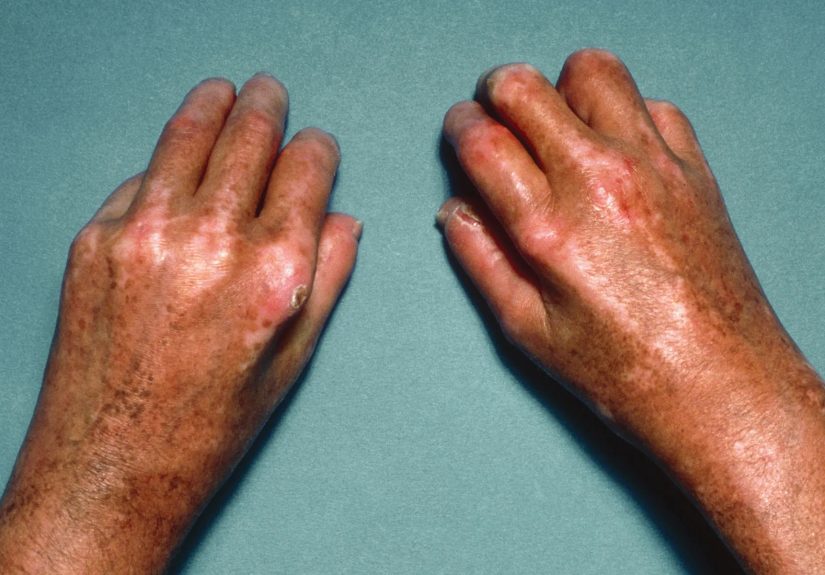
- Puffy fingers/hands early on, sometimes progressing to tighter, thicker skin.
- Shiny, tight skin on fingers, hands, face, or other areas.
- Color changes in affected areas (lighter/darker), itchiness, or reduced sweating in tight patches.
- Limited finger movement as skin tightens (opening jars becomes an Olympic event).
Raynaud phenomenon (often an early clue)
Raynaud phenomenon causes fingers (and sometimes toes) to change color with cold or stressoften white to blue/purple, then red as circulation returns. Many people describe numbness, tingling, or pain during episodes. In systemic sclerosis, Raynaud can be more severe and may lead to digital ulcers (painful sores on fingertips).
Muscles and joints
- Joint pain and stiffness (especially hands).
- Muscle weakness or fatigue.
- Tendon friction rubs (a clinician finding in some cases).
Digestive tract symptoms
The GI tract is a frequent target, especially the esophagus. Common issues include: heartburn/GERD, trouble swallowing, bloating, constipation, diarrhea, or unpredictable digestion. Example: someone who “never used to get reflux” suddenly can’t lie flat without heartburn.
Lung and heart symptoms (systemic sclerosis)
- Shortness of breath or dry cough can suggest interstitial lung disease (SSc-ILD).
- Reduced exercise tolerance or dizziness can be seen with pulmonary arterial hypertension (PAH).
- Palpitations or chest discomfort may reflect cardiac involvement (many causes existalways get this checked).
Kidney involvement (rare but urgent when it happens)
A particularly serious complication is scleroderma renal crisis, which can involve sudden severe high blood pressure and rapid kidney injury. It’s uncommon, but it’s a “drop everything” scenario that requires immediate medical care.
When to seek urgent evaluation
- New or severe shortness of breath, chest pain, fainting, or coughing up blood.
- Sudden severe headache, vision changes, or very high blood pressure readings.
- Rapidly worsening swelling, sudden decrease in urine, or confusion.
- Fingertip sores that are worsening, infected, or extremely painful.
If you’re unsure whether a symptom is “serious enough,” it’s reasonable to call a clinician. With scleroderma, earlier evaluation can make a real difference.
How Scleroderma Is Diagnosed
Diagnosis usually starts with pattern recognition: a clinician listens to symptoms (Raynaud, reflux, skin tightening), examines skin and joints, and then uses targeted testing to confirm the type and check for organ involvement.
Medical history and physical exam
Expect questions like: Do your fingers change color in cold? Any new heartburn or trouble swallowing? Skin thickening? Swollen hands? Shortness of breath? These details help identify subtype and decide which tests matter most.
Blood tests (autoantibodies)
Many people with systemic sclerosis have a positive ANA and may have more specific antibodies associated with certain patterns: anti-centromere (often linked with limited cutaneous disease and PAH risk), anti-topoisomerase I (Scl-70) (often linked with ILD risk), and anti–RNA polymerase III (often linked with diffuse skin involvement and renal crisis risk). These tests don’t predict the future with certainty, but they help risk-stratify and guide monitoring.
Nailfold capillaroscopy
This is a simple, clinic-based look at tiny blood vessels near the fingernails. In systemic sclerosis, characteristic capillary changes can support the diagnosisespecially when Raynaud is a major feature.
Organ screening and monitoring
Because systemic sclerosis can involve multiple organs, clinicians often check:
- Pulmonary function tests (PFTs) and sometimes a high-resolution CT to assess for ILD.
- Echocardiogram (and sometimes additional testing) to screen for pulmonary hypertension and cardiac function.
- Blood pressure monitoring and kidney blood/urine tests.
- GI evaluation when reflux, swallowing, or bowel symptoms are significant.
The takeaway: diagnosis isn’t just about naming the conditionit’s about mapping where it is in the body so treatment can be personalized.
Treatment: What Helps (and What Treatment Usually Targets)
Scleroderma treatment is less like “take this pill, problem solved” and more like “assemble a tailored toolkit.” The goals are to: control symptoms, slow progression where possible, and prevent or treat organ complications. Most people do best with a rheumatologist and, when needed, a team that may include pulmonology, cardiology, nephrology, gastroenterology, dermatology, and physical/occupational therapy.
Important note: This is general education, not personal medical advice. Treatment choices depend on subtype, organ involvement, other health conditions, and medication risks/benefits.
1) Raynaud phenomenon and digital ulcers
Because blood vessel spasm is central in systemic sclerosis, improving circulation is a big focus. Common strategies include:
- Cold avoidance: gloves, hand warmers, layering, and avoiding rapid temperature shifts.
- Smoking cessation: nicotine constricts blood vessels and can worsen Raynaud.
- Medications that dilate blood vessels (often blood pressure medicines used for Raynaud) when lifestyle measures aren’t enough.
- Wound care and specialist treatment for fingertip ulcers to prevent infection and improve healing.
Example: someone who keeps “failing” winter might do better with a plan that includes rechargeable hand warmers, a medication adjustment, and learning early warning signs for ulcers.
2) Skin thickening, joint pain, and inflammation
Skin symptoms may be managed with a mix of: moisturizers, gentle stretching, occupational therapy for hand function, andwhen inflammation is activemedications that calm immune activity. Some immunosuppressive therapies are used to help reduce progression of skin involvement in selected patients.
3) Lung involvement: systemic sclerosis–associated interstitial lung disease (SSc-ILD)
ILD is one of the most important drivers of health outcomes in systemic sclerosis, so clinicians often screen early and monitor over time. Treatment may involve immunosuppressive medicines used to reduce inflammatory drivers of lung injury.
In addition, two therapies have U.S. FDA indications for slowing the rate of decline in lung function in adults with SSc-ILD: nintedanib and tocilizumab. These don’t “erase” ILD, but they can help slow progression in appropriate patients. Decisions are individualized and typically involve a rheumatologist and pulmonologist.
4) Pulmonary arterial hypertension (PAH)
PAH is a specific blood vessel complication in the lungs and requires specialist evaluation. Treatment often includes medications targeting pulmonary blood vessels (for example, therapies that affect endothelin, nitric oxide pathways, or prostacyclin), plus close monitoring. Early detection matters because treatment is more effective before severe right-heart strain develops.
5) Digestive tract treatment (reflux, swallowing, bowel symptoms)
GI treatment is often highly practical:
- GERD management: acid-suppressing medicines are commonly used; lifestyle steps (smaller meals, avoiding late-night eating, elevating the head of the bed) can also help.
- Swallowing support: evaluation for esophageal motility issues when symptoms are significant.
- Bowel symptoms: a clinician may recommend specific approaches depending on constipation, diarrhea, or bacterial overgrowth concerns.
Example: someone with nightly heartburn might feel dramatically better after elevating the bed, adjusting meal timing, and finding the right reflux medication plansmall changes, big quality-of-life gains.
6) Kidney protection and blood pressure monitoring
Scleroderma renal crisis is uncommon but serious. Regular blood pressure monitoring is often recommended for people at higher risk. If renal crisis occurs, ACE inhibitors are commonly used as a key treatment approach, and urgent hospital-level care is needed. Some medications (including higher-dose corticosteroids in certain contexts) may increase risk in susceptible patients, so clinicians weigh risks carefully.
7) Rehabilitation, function, and pain management
Medications matter, but function-focused care is where many people get their life back:
- Physical therapy: maintains range of motion, posture, endurance, and safe strength.
- Occupational therapy: hand exercises, splints if needed, joint protection strategies, assistive tools for daily tasks.
- Skin care: moisturizing, gentle cleansers, sun protection, avoiding harsh irritants.
- Pain strategies: tailored approaches may include anti-inflammatory measures, nerve pain treatment when appropriate, and pacing techniques.
Living With Scleroderma: Practical Tips That Actually Help
Managing systemic sclerosis is often about consistency more than intensity. A few habits, repeated daily, can make symptoms less disruptive.
Warmth is medicine (for Raynaud)
- Keep your core warm (layers), not just your fingers.
- Use gloves when grabbing cold items from the fridge/freezer.
- Plan for cold spaces (air-conditioned rooms can be sneaky Raynaud triggers).
Hands: small exercises, big payoff
Gentle stretching and hand exercises can help reduce stiffness and preserve function. Many people benefit from a therapist-guided routine that’s realistic enough to actually do (because a perfect plan you never use is just decorative paper).
Reflux-friendly routines
- Eat smaller meals and avoid lying down soon after eating.
- Elevate the head of the bed if nighttime reflux is common.
- Track triggers (spicy foods, acidic foods, alcohol, and late meals can be repeat offenders).
Build a monitoring rhythm
Systemic sclerosis care often includes periodic lung tests, heart screening, and blood pressure checks. This can feel like “a lot,” but it’s the kind of “a lot” that catches problems earlybefore they become harder to treat.
Mental health and support count
Chronic illness can shrink your world if you let it. Support groups, counseling, and patient communities can help normalize the experience, share practical coping ideas, and remind you you’re not doing this alone.
Experiences Related to Scleroderma: What It Can Feel Like in Real Life (Patient-Style Perspective)
People often describe the early scleroderma experience as a series of “small weird things” that eventually connect into a pattern. It might start with fingers that get painfully cold and change color during a quick walk outside, or hands that feel puffy in the morning, like they slept in inflatable gloves. At first it’s easy to blame weather, stress, or “maybe I’m just getting older,” until the symptoms get consistent enough that your body starts winning every argument.
The diagnostic process can feel like both relief and whiplash. Relief, because a name explains why your skin feels tighter or why reflux showed up out of nowhere. Whiplash, because the name comes with a lot of new vocabularyautoantibodies, nailfold capillaries, pulmonary function tests, echocardiograms. Many people say the first appointments are a blur of acronyms, and the learning curve is steep. A common coping move is to keep a simple notebook (paper or phone) with: symptoms, triggers, questions for the next visit, medication changes, and “what helped this week.” It turns a scary fog into a manageable checklist.
Day-to-day living is often about adapting without letting the disease become the main character. If Raynaud is a major issue, winter becomes a strategy game: gloves in every bag, hand warmers in every coat, and a new appreciation for “room temperature.” Some people set up small routines that reduce flareswarming hands before driving, using insulated cups, or avoiding the freezer aisle like it personally insulted them. These aren’t dramatic changes, but they can reduce pain and protect fingertips over time.
Many people with systemic sclerosis also talk about the “invisible” symptoms that outsiders miss: fatigue that doesn’t match the day’s activity, reflux that interrupts sleep, stiffness that makes fine-motor tasks (buttons, zippers, typing) surprisingly difficult. That’s where occupational therapy and simple tools can be life-changing. Jar openers, adaptive grips, voice-to-text, and hand-stretch routines can turn “I can’t” back into “I can, but I’m doing it smarter.”
Treatment experiences vary because scleroderma varies. Some people feel significantly better after the right plan for reflux and circulation. Others describe treatment as a long game: regular lung monitoring, medication adjustments, and learning to pace energy like it’s a budget. The emotional side matters here too. It’s normal to feel frustrated when progress is slowor when symptoms fluctuate. Many people find that connecting with a patient community or support group helps, not because it’s “inspiring,” but because it’s practical: you get real-life tips, validation, and the comforting reminder that you’re not the only person who carries lotion like it’s a vital organ.
Over time, a common theme emerges: success looks less like “never having symptoms” and more like “having a plan.” A plan for cold, a plan for reflux, a plan for appointments, and a plan for the days when energy is limited. With the right care team and consistent monitoring, many people build a stable routine that keeps complications in check and protects quality of lifeone smart choice at a time.
Conclusion
Scleroderma (systemic sclerosis) is complex, but it’s not hopelessand it’s not something you have to “figure out alone.” Understanding the type (localized vs systemic; limited vs diffuse), recognizing common symptoms (especially Raynaud and reflux), and getting appropriate organ screening are the building blocks of good care. Treatment is individualized and often combines symptom control, immune-targeting therapies when appropriate, and protective strategies for lungs, heart, kidneys, and the GI tract.
If you suspect sclerodermaor you’ve been diagnosed and feel overwhelmedfocus on the next right step: see the right specialist, ask about organ screening, track symptoms, and build a realistic daily routine that supports circulation, mobility, and sleep. Progress in scleroderma care is real, and many people do best when they treat management like a toolkit, not a verdict.