Table of Contents >> Show >> Hide
- Why This Pumpkin Chutney Works
- Recipe Overview
- Ingredients for Spiced Roast Pumpkin Chutney
- How to Make Spiced Roast Pumpkin Chutney
- What Does Pumpkin Chutney Taste Like?
- Best Ways to Serve Pumpkin Chutney
- Tips for the Best Spiced Roast Pumpkin Chutney Recipe
- Easy Variations
- Storage and Food Safety
- Common Mistakes to Avoid
- Kitchen Experience: What It Is Really Like to Make and Serve This Chutney
- Conclusion
- SEO Tags
There are two kinds of people in fall: the ones who buy one pumpkin for decor, and the ones who look at a pumpkin and think, “You could become something gloriously sweet, tangy, spicy, and dangerously good on grilled cheese.” This spiced roast pumpkin chutney recipe is proudly for the second group.
Roasting pumpkin first gives the chutney a deeper, sweeter flavor than simply boiling everything in a pot and hoping for the best. The edges caramelize, the flesh turns silky, and suddenly your kitchen smells like autumn got dressed up for dinner. Then come the onions, ginger, vinegar, brown sugar, raisins, and warm spices. The result is a glossy condiment that lands somewhere between jam, relish, and the kind of “just one more spoonful” situation that can derail lunch in the best way.
This recipe is designed for real home cooks, not mythical people with endless time and twelve burners. It is flavorful, practical, easy to store in the refrigerator, and versatile enough to serve with roast chicken, turkey sandwiches, grain bowls, sharp cheddar, pork tenderloin, or even a humble cracker that suddenly feels very sophisticated.
Why This Pumpkin Chutney Works
A great pumpkin chutney recipe needs balance. Pumpkin brings mellow sweetness and a soft texture, but on its own it can taste a little too polite. Chutney fixes that. Vinegar adds brightness, brown sugar rounds out the tartness, onions build savory depth, raisins bring chew and concentrated sweetness, and spices make the whole thing feel warm without turning it into dessert.
Roasting is the secret weapon here. Instead of watery pumpkin collapsing into mush, the roasted cubes hold onto their flavor and develop toasty notes. That richer base makes the finished chutney taste more layered, more complex, and more intentional. In other words, it tastes like you planned this all along.
Recipe Overview
Yield: About 3 cups
Prep time: 20 minutes
Cook time: 55 to 65 minutes
Total time: About 1 hour 20 minutes
Ingredients for Spiced Roast Pumpkin Chutney
For the roasted pumpkin
- 5 cups pumpkin, peeled, seeded, and cut into 1-inch cubes
- 2 tablespoons olive oil
- 1/2 teaspoon kosher salt
- 1/4 teaspoon black pepper
For the chutney base
- 1 tablespoon olive oil
- 1 large yellow onion, finely chopped
- 3 garlic cloves, minced
- 1 tablespoon fresh ginger, grated
- 1 medium apple, peeled and diced
- 1/2 cup golden raisins
- 3/4 cup light brown sugar
- 1 cup apple cider vinegar
- 1/2 cup water
- 1 teaspoon mustard seeds
- 1 teaspoon ground cumin
- 1/2 teaspoon ground coriander
- 1/2 teaspoon cinnamon
- 1/4 teaspoon ground allspice
- 1/4 teaspoon red pepper flakes, or more to taste
- 1/2 teaspoon kosher salt, plus more if needed
- 1 tablespoon lemon juice
How to Make Spiced Roast Pumpkin Chutney
1. Roast the pumpkin
Preheat your oven to 425°F. Toss the pumpkin cubes with 2 tablespoons olive oil, 1/2 teaspoon salt, and black pepper. Spread them on a parchment-lined baking sheet in a single layer. Roast for 25 to 30 minutes, flipping once halfway through, until the pumpkin is tender and lightly caramelized at the edges.
Do not crowd the pan. If the pumpkin pieces are piled up like commuters on a delayed train, they will steam instead of roast. Roasting gives you concentrated flavor, and that matters here.
2. Build the flavor base
While the pumpkin roasts, heat 1 tablespoon olive oil in a heavy saucepan over medium heat. Add the chopped onion and cook for 6 to 8 minutes, stirring often, until softened and lightly golden. Add the garlic and ginger, then cook for 1 minute more until fragrant.
Stir in the diced apple, golden raisins, brown sugar, apple cider vinegar, water, mustard seeds, cumin, coriander, cinnamon, allspice, red pepper flakes, and 1/2 teaspoon salt. Bring the mixture to a gentle boil.
3. Simmer until glossy and jammy
Reduce the heat to medium-low and simmer for 15 minutes, stirring occasionally. Once the apples begin to soften and the liquid reduces slightly, add the roasted pumpkin. Simmer for another 15 to 20 minutes, stirring gently, until the chutney thickens and looks glossy.
You want the texture to be spoonable, chunky, and soft, not baby-food smooth. Some pieces should hold their shape. Others can collapse a little and help create that luscious chutney body. Finish with lemon juice and taste. Add another pinch of salt if it needs sharpening, or a splash of vinegar if you want more tang.
4. Cool and store
Let the chutney cool to room temperature, then transfer it to clean containers. Refrigerate and let it sit for at least a few hours before serving if you can. Like many chutneys, it tastes even better after the flavors settle down and get acquainted overnight.
What Does Pumpkin Chutney Taste Like?
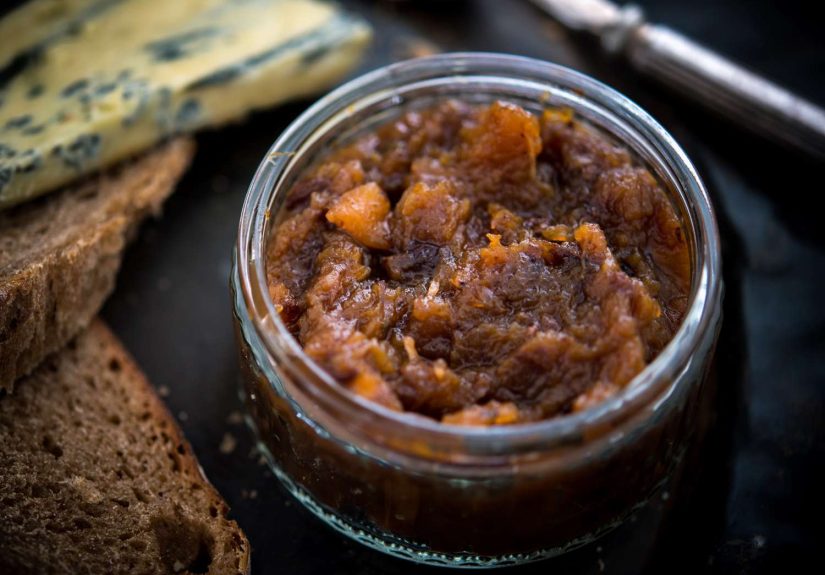
If pumpkin pie and onion jam had a smart, savory cousin who traveled well and always brought the cheese board back to life, this would be it. The flavor starts sweet and earthy, then shifts into tangy vinegar brightness, followed by warm spice and a gentle heat from the pepper flakes. The onion and apple keep it from tasting flat, while the raisins offer little pockets of sweetness.
It is not dessert-sweet. It is not hot sauce. It is a condiment with range. That is why spiced roast pumpkin chutney works so well during the holidays and beyond.
Best Ways to Serve Pumpkin Chutney
- With cheese: Pair it with sharp cheddar, aged gouda, brie, or goat cheese.
- On sandwiches: Spread it on turkey, ham, roast chicken, or grilled cheese sandwiches.
- With roasted meats: It is excellent beside pork chops, roast chicken, or a holiday turkey plate.
- On grain bowls: Add a spoonful to farro, quinoa, or wild rice bowls for instant personality.
- With leftovers: This is where it really shines. Thanksgiving leftovers, meet your upgrade.
Tips for the Best Spiced Roast Pumpkin Chutney Recipe
Choose the right pumpkin
Use a sugar pumpkin or pie pumpkin if possible. Giant carving pumpkins tend to be watery and less flavorful, and nobody needs a bland chutney with commitment issues.
Let roasting do the heavy lifting
Roasted pumpkin brings sweeter, richer flavor than raw pumpkin simmered from the start. That one extra step gives the chutney more depth.
Do not skip the acid
Apple cider vinegar is essential. It balances the sweetness and gives chutney its classic sweet-tart profile. If you reduce it too much, the result can taste flat and muddy.
Use raisins for body and contrast
Golden raisins soften into the chutney and help round out the texture. Regular raisins work too, but golden raisins keep the color brighter and the flavor slightly lighter.
Make it ahead
This is one of those rare recipes that improves after a night in the refrigerator. The spices mellow, the onion settles in, and the pumpkin stops trying to be the main character in every bite.
Easy Variations
Add more heat
Use extra red pepper flakes or add a finely chopped fresh chile with the onion.
Make it fruitier
Try chopped pear instead of apple, or add a few dried cranberries for a brighter, tangier twist.
Go deeper on spice
A tiny pinch of cloves or cardamom can add complexity, but go easy. Pumpkin chutney should taste bold, not like your spice drawer fell over.
Swap the pumpkin
Butternut squash works beautifully here and gives a similar sweet, dense texture. If your store is out of pumpkin, dinner is not canceled.
Storage and Food Safety
Store the finished chutney in the refrigerator and use it within 3 to 4 days for best quality and safety. Freeze extra portions if needed. Small containers work well because they cool faster and are easy to thaw one at a time.
If you want to preserve pumpkin for longer-term storage, freezing is the safest simple option for a chutney like this. Pumpkin and winter squash purees are not the kind of ingredient you should casually turn into a home-canned experiment without a tested process. This recipe is intended for the refrigerator or freezer, not for shelf-stable storage on the pantry rack next to your cereal.
Common Mistakes to Avoid
Making it too watery
If the chutney looks soupy, keep simmering. The liquid should reduce until the mixture coats a spoon. Remember that it will thicken a bit more as it cools.
Overcooking the pumpkin
You want tender cubes, not total collapse. Roast until soft and caramelized, but not falling apart before the simmer even begins.
Under-seasoning
Pumpkin is mild. Taste at the end and adjust with salt, vinegar, or a little extra brown sugar. Chutney lives and dies on balance.
Serving it too soon
It is good warm, but it is better after resting. Even a few hours in the refrigerator can transform the flavor from “nice” to “where has this been all my life?”
Kitchen Experience: What It Is Really Like to Make and Serve This Chutney
The first time I made a version of this spiced roast pumpkin chutney recipe, I was trying to solve a very relatable seasonal problem: too much pumpkin, not enough imagination. There was a leftover pie pumpkin on the counter, a wedge of cheddar in the fridge, and a general determination not to make another soup. Chutney sounded fancy enough to impress people and practical enough to justify itself. That combination usually wins.
What surprised me most was the smell. Not in a vague “autumn is here” kind of way, but in a layered, very specific, genuinely delicious way. First came the roasted pumpkin, sweet and nutty. Then the onions softened and turned mellow. Then the ginger, cumin, and vinegar hit the pan, and suddenly the kitchen smelled like a holiday market and a cozy dinner party had merged into one. It was the kind of recipe that makes people wander into the kitchen and ask, “What are you making?” in a tone that suggests they are already hoping for samples.
Texture turned out to be the real lesson. If you cook chutney carelessly, it can slide into mush or stay too sharp and watery. With this recipe, the sweet spot is obvious once you see it. The pumpkin should look soft but still distinct. The onions should disappear into the sauce. The raisins should plump up and quietly do their job like tiny edible overachievers. And the liquid should reduce enough that the spoon drags through it slightly before the mixture settles back into the pot.
Serving it was even more educational. On day one, it was excellent with roast chicken. On day two, it was somehow better with a turkey sandwich and arugula. On day three, it ended up on a cheese board next to crackers, almonds, and brie, where people treated it like a gourmet product with a price tag and an origin story. That is one of my favorite things about homemade chutney: it has a way of making ordinary food seem thoughtfully planned, even if your actual dinner strategy was “assemble things and hope for magic.”
I also learned that this kind of recipe rewards restraint. You do not need every warm spice in the cabinet. You do not need a gallon of sugar. You do not need to cook it for hours as though you are proving a point to your stovetop. A few well-chosen ingredients, enough acid to keep the flavor lively, and a proper simmer are what make it work. That balance is what gives the chutney its flexibility. It can sit beside a holiday roast, but it can also rescue a plain lunch on a random Tuesday.
Most of all, making pumpkin chutney changed the way I think about fall produce. Pumpkin does not have to stay trapped in pie filling or lattes. It can be savory, bright, punchy, and useful in everyday cooking. Once you have a jar in the fridge, you start finding excuses to use it. Spoon it over grain bowls. Add it to grilled cheese. Pair it with roasted vegetables. Slip it into wraps. The jar disappears faster than expected, which is both a compliment and a warning.
So yes, this recipe began as a way to use up pumpkin. It ended as one of those dependable kitchen tricks that feels just a little smarter every time you make it. And honestly, any condiment that can make leftovers exciting again deserves a permanent place in the rotation.
Conclusion
This spiced roast pumpkin chutney recipe turns a humble fall ingredient into something layered, savory-sweet, and unexpectedly versatile. Roasting deepens the pumpkin flavor, vinegar keeps things lively, and warm spices pull everything together into a condiment that works with cheese boards, roasted meats, sandwiches, and leftovers. It is easy enough for a weeknight project, special enough for holiday meals, and useful enough that you will wonder why pumpkin spends so much time only being asked to become pie.
If you want a fall recipe that tastes a little elegant without demanding a culinary identity crisis, this one is worth making. One batch, one spoon, and suddenly your fridge has a secret weapon.