Table of Contents >> Show >> Hide
- Quick Picks: Best Outdoor TV Antennas at a Glance
- How to Choose the Right Outdoor TV Antenna (Without Guessing)
- 1) Start with towers, not hype
- 2) UHF vs. VHF matters (especially for ABC/CBS in some markets)
- 3) Directional vs. multi-directional: choose your “aim style”
- 4) Amplified isn’t automatically better
- 5) Filters are underrated (LTE/4G/5G interference is real)
- 6) Don’t ignore the boring parts: coax, splitters, grounding
- 1) Winegard Elite 7550 (Best Overall Outdoor Antenna of 2025)
- 2) Televes DAT BOSS Mix LR (Best for Rural/Fringe Reception)
- 3) Channel Master CM-4228HD EXTREMEtenna 80 (Best Multi-Directional Powerhouse)
- 4) Antennas Direct ClearStream 4MAX (Best Suburban All-Rounder)
- 5) Antennas Direct DB8e 8-Element Bowtie (Best for Towers in Different Directions)
- 6) RCA ANT751E (Best Budget Outdoor/Attic Antenna)
- 7) Antop AT-800SBS HD Smart Panel (Best Flexible ‘Smart Panel’ Option)
- Setup Tips That Actually Move the Needle
- FAQ: Outdoor Antennas in 2025
- Real-World Outdoor Antenna Experiences: 7 Lessons From the Field (500+ Words)
- 1) “I mounted it higher and gained 12 channels.” Yes, that happens.
- 2) Your attic can be amazing… or a signal prison.
- 3) The “range number” is more of a vibe than a guarantee.
- 4) Over-amplification is a sneaky channel thief.
- 5) Aiming is part science, part patience, part snack breaks.
- 6) You’ll fall in love with “random” subchannels.
- 7) Once it’s dialed in, it feels like beating the system.
- Conclusion
Streaming was supposed to simplify life. Instead, it gave us seven apps, three logins, two “limited-time” bundles,
and one monthly bill that quietly grew legs and walked away with your wallet.
The good news: local channels are still out therefree, over the air, and (often) in crisp HD. A solid outdoor TV antenna
can pull in major networks, local news, live sports, and subchannels you forgot existed (hello, 24/7 classic TV and
strangely comforting weather radar).
Below are the 7 best outdoor TV antennas of 2025, picked for real-world performance, build quality, and
how well they handle the stuff that ruins reception: distance, terrain, interference, and the neighbor’s “creative”
Wi-Fi setup. I’ll also show you how to choose the right antenna for your zip codebecause “150-mile range” on a box is
basically the antenna version of “serves 12” on a recipe.
Quick Picks: Best Outdoor TV Antennas at a Glance
- Best Overall (Amplified, Easy Win): Winegard Elite 7550
- Best for Rural/Fringe Signals (High Gain + Smart Filtering): Televes DAT BOSS Mix LR
- Best Multi-Directional Powerhouse (Big Reception Footprint): Channel Master CM-4228HD EXTREMEtenna 80
- Best Balanced Performer for Suburbs (Strong UHF/VHF-Hi): Antennas Direct ClearStream 4MAX
- Best for Multiple Tower Directions (Aim Two Panels Separately): Antennas Direct DB8e 8-Element Bowtie
- Best Budget Outdoor/Attic Yagi (Small but Mighty): RCA ANT751E
- Best “Smart Panel” Option (Outdoor/Attic/Indoor Flex): Antop AT-800SBS HD Smart Panel
How to Choose the Right Outdoor TV Antenna (Without Guessing)
1) Start with towers, not hype
Before you buy anything, look up the broadcast towers near you and note three things:
distance, direction, and whether your key stations are on VHF or UHF.
Outdoor antennas shine because height and a clearer “line of sight” can turn “meh” reception into “why didn’t I do this earlier?”
2) UHF vs. VHF matters (especially for ABC/CBS in some markets)
Most modern broadcasts lean UHF, but many areas still have important stations on VHF-High (channels 7–13).
If you pick a UHF-only antenna and your must-have station is VHF, you’ll be staring at a “No Signal” screen and questioning
every life choice you’ve ever made. Most of the antennas on this list handle UHF + VHF-High.
3) Directional vs. multi-directional: choose your “aim style”
Directional antennas concentrate gain and usually perform best for distant towersbut you must aim them.
Multi-directional antennas (like bowties or some panels) can grab signals across a wider arc, which is useful
if towers are scattered around you.
4) Amplified isn’t automatically better
Amplifiers can help when signals are weak or you’re splitting to multiple TVs, but they can also amplify noiseor overload
your tuner if you’re close to strong towers. Translation: more power isn’t always more channels. “Just enough” is the sweet spot.
5) Filters are underrated (LTE/4G/5G interference is real)
In busy areas, cellular interference can mess with reception. Antennas with built-in filtering (often marketed as LTE/5G filters)
can help keep the signal cleanerespecially if you’re trying to lock in marginal channels.
6) Don’t ignore the boring parts: coax, splitters, grounding
A great antenna paired with bargain-basement coax is like buying running shoes and then sprinting in flip-flops.
Use quality coax, keep runs reasonable, and if you’re mounting outdoors, consider professional installationespecially for rooftops,
grounding, and lightning protection. Your TV hobby should not become an “exciting” story for the emergency room.
1) Winegard Elite 7550 (Best Overall Outdoor Antenna of 2025)
If you want a “plug it in, get more channels, move on with life” outdoor antenna, the Winegard Elite 7550 is the
cleanest all-around pick. It’s compact, directional, and includes amplification plus filteringso it’s ready for the messy reality
of modern RF environments.
Why it stands out
- Amplified VHF/UHF design helps in moderate-to-weaker signal areas.
- Built-in filtering can reduce interference and improve stability.
- Compact form factor is easier to mount than many long-boom antennas.
Best for
Suburban to semi-rural homes that need dependable reception and don’t want to overthink the setup.
It’s also a great option for attic installs when outdoor mounting isn’t possible.
Watch-outs
Because it’s amplified, it can be “too much of a good thing” if you’re extremely close to towers. If you’re near the city core,
you may need to reduce amplification (or choose a non-amp model) to avoid overload.
2) Televes DAT BOSS Mix LR (Best for Rural/Fringe Reception)
When distance and terrain are the villains in your storythink rolling hills, dense trees, or “the towers are basically in another time zone”
the Televes DAT BOSS Mix LR is built for the mission. It’s a long-range, high-gain antenna with smart amplification behavior
and modern filtering aimed at keeping the usable signal strong and the junk signal out.
Why it stands out
- High-gain design for pulling in weaker broadcasts.
- Smart amplification/processing can help stabilize reception as conditions change.
- 5G filtering helps reduce interference above the TV band.
Best for
Rural homes, fringe reception zones, and anyone who has tried a “regular” outdoor antenna and still lost channels in bad weather.
Watch-outs
It’s more of an investment, and it’s typically directionalso tower direction matters. The upside is that you get the focused performance
that “wide coverage” antennas often can’t match at the edge of reception.
3) Channel Master CM-4228HD EXTREMEtenna 80 (Best Multi-Directional Powerhouse)
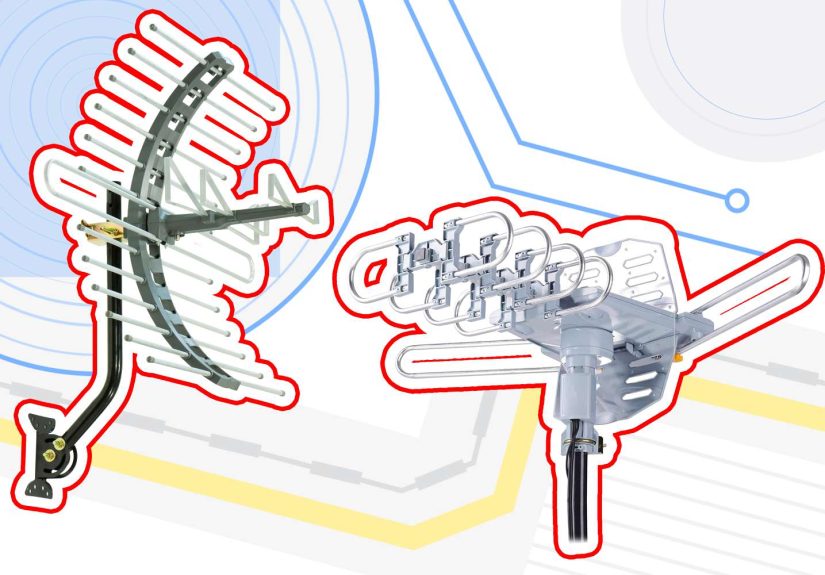
The CM-4228HD is the classic “8-bay bowtie” style antennabig, bold, and unapologetically built to collect signals.
It’s designed to cover a wide arc (great if your towers aren’t in a neat straight line) while still delivering strong gain.
Why it stands out
- Large 8-bay array with a wide reception pattern for multiple tower clusters.
- Strong UHF performance (where most broadcasts live today).
- Outdoor-ready construction from a long-established antenna brand.
Best for
Homes that need strong reception from more than one directionor anyone who wants “serious antenna” energy without
committing to a very long boom.
Watch-outs
It’s not subtle. If you want something low-profile, this isn’t it. But if your priority is performance, it’s hard not to respect it.
4) Antennas Direct ClearStream 4MAX (Best Suburban All-Rounder)
The ClearStream 4MAX is a smart pick for suburbs and mixed environments because it balances strong performance with a more compact,
modern design. It tends to do well when signals are strong-to-moderate and coming from more than one direction.
Why it stands out
- Multi-directional-friendly design for tower clusters that aren’t perfectly aligned.
- Solid UHF + VHF-High capability for most markets.
- Sturdy mounting hardware and a reputation for consistent performance.
Best for
Cord-cutters who want a high-quality outdoor/attic antenna that performs well without requiring obsessive aiming.
Watch-outs
It’s typically non-amplified by default. If your coax run is long or you’re splitting to several TVs, pairing it with a quality preamp
or distribution amplifier may help.
5) Antennas Direct DB8e 8-Element Bowtie (Best for Towers in Different Directions)
The DB8e is the antenna you choose when your towers play hard to getsome to the northeast, others to the southwest,
and your roof is just trying to stay out of the drama. Its two panels can be aimed independently, so you can “split the difference”
without sacrificing as much gain as you would with a single wide-pattern antenna.
Why it stands out
- Dual pivoting panels let you target separate tower directions.
- High UHF gain helps with distant or difficult UHF stations.
- Great for multi-market setups when you want channels from neighboring cities.
Best for
Viewers who want the “main city channels” plus the bonus stations from the next market overespecially if the towers aren’t aligned.
Watch-outs
It’s largely a UHF specialist. If a key station in your area is VHF, you may need a VHF-capable companion solution or choose a combo antenna
designed to cover both bands more evenly.
6) RCA ANT751E (Best Budget Outdoor/Attic Antenna)
The RCA ANT751E is proof you don’t need to spend a fortune to get a meaningful upgradeespecially if you’re within a reasonable distance
of towers and just want a reliable, compact outdoor/attic antenna. It’s a small Yagi-style design: straightforward, directional, and easy to live with.
Why it stands out
- Budget-friendly choice from a familiar brand.
- Compact Yagi design fits well outdoors or in an attic.
- Good starter antenna for many suburban setups.
Best for
Beginners who want a “real antenna” experience without the price tagespecially in suburbs where tower distances are moderate.
Watch-outs
Like most compact directional antennas, it’s not the top pick for extreme fringe reception. Think “great value,” not “miracle worker.”
7) Antop AT-800SBS HD Smart Panel (Best Flexible ‘Smart Panel’ Option)
The Antop AT-800SBS is a modern panel-style antenna that can be used outdoors, in an attic, or even indoors if you’re experimenting.
Its big advantage is adjustability: it’s designed to help you dial in amplification rather than blasting full power all the time.
Why it stands out
- Indoor/outdoor versatility with flexible mounting options.
- Adjustable amplification can help avoid overload near strong towers.
- Panel form factor is easier to place than long-boom antennas.
Best for
People who want a powerful antenna but don’t want a giant rooftop installationor anyone who expects to tweak placement over a few weekends
to squeeze out the best channel lineup.
Watch-outs
Like any amplified antenna, too much gain can hurt reception in strong-signal areas. The good news is: this model is built for tuning that scenario.
Setup Tips That Actually Move the Needle
Rescan like it’s a routine, not a one-time ceremony
Channels can shift frequencies and coverage can change. If reception gets weird, rescan. It’s the antenna equivalent of “turn it off and back on,”
except it’s real advice that works.
Height and placement beat “range” claims
Raising an antenna a few feet (or moving it away from obstructions) can outperform upgrading to a pricier model. Outdoor mounting often wins because it
reduces interference from walls, wiring, and building materials.
Know when to add a preampand when to skip it
If you have a long coax run or you’re splitting the signal to multiple TVs, amplification may help. But if you’re close to towers, amplification can
overload your tuner and cost you channels. When in doubt, start without a preamp and add one only if the signal is marginal.
FAQ: Outdoor Antennas in 2025
Do I need a special antenna for NextGen TV (ATSC 3.0)?
Usually, no. NextGen TV uses the same over-the-air spectrum; the difference is the broadcast standard and the tuner. If your TV (or external tuner)
supports ATSC 3.0 and your local stations broadcast it, a good outdoor antenna can receive it just like standard ATSC 1.0 channels.
Can an antenna really deliver “4K” channels?
Antennas receive signals; they don’t create resolution. If a station broadcasts in 1080i, that’s what you get. If a market offers higher-quality
NextGen streams, a strong antenna setup helps you receive them reliablybut the station decides what’s on the air.
What about bad weather?
Rain, wind, and temperature changes can affect marginal signals. That’s why fringe-area shoppers often benefit from higher-gain antennas and better
filtering. If one channel always vanishes during storms, it’s usually a sign you’re right on the edge of usable reception for that frequency.
Real-World Outdoor Antenna Experiences: 7 Lessons From the Field (500+ Words)
After you install an outdoor antenna, something funny happens: you start noticing the invisible geography of your neighborhood. The same street that
looks perfectly flat while you’re driving can behave like a mountain range to TV signals. Here are seven real-world lessons that show up again and again
once people start living with an antenna setupnot just installing it.
1) “I mounted it higher and gained 12 channels.” Yes, that happens.
One of the most common stories goes like this: someone tests an antenna at eave height, gets “okay” results, then raises it a few feet on a mast and
suddenly the channel scan looks like it ate its vegetables. Height improves line-of-sight and can reduce the number of things the signal has to punch
throughlike roofs, HVAC ductwork, or that one tree that apparently absorbs RF like a sponge.
2) Your attic can be amazing… or a signal prison.
Attic installs are popular because they’re protected from weather and feel less intimidating than climbing on a roof. Sometimes they work beautifully.
Other times the attic is full of foil-backed insulation, radiant barriers, metal vents, or wiring that turns reception into a frustrating guessing game.
People often discover their attic has “magic spots”a foot to the left is perfect; a foot to the right is nothing. It’s not you. It’s physics.
3) The “range number” is more of a vibe than a guarantee.
In real life, a “70-mile” antenna might perform brilliantly at 35 miles in heavy terrain and struggle at 55 miles behind hills. Meanwhile, someone else
at 60 miles with a clearer path might get stable reception. Experienced cord-cutters learn to treat box ranges like weather forecasts: helpful,
sometimes accurate, and occasionally wildly optimistic.
4) Over-amplification is a sneaky channel thief.
This surprises people: adding an amplifier can sometimes reduce channels. Why? In strong-signal areas, too much gain can overload the tuner, turning
clean signals into distortion. The fix is often simplelower the amplification, swap to a milder preamp, or remove it entirely. The best setups feel
boringly stable, not “maxed out.”
5) Aiming is part science, part patience, part snack breaks.
Directional antennas can be incredibly rewarding, but the final 5 degrees of aiming can be the difference between “pixelated sports” and “perfectly
smooth game day.” A common trick is to aim for the hardest-to-get station first, then see what else comes in. If you aim for the strongest station,
you might think everything is fineuntil your favorite channel is missing.
6) You’ll fall in love with “random” subchannels.
People buy antennas for major networks, then end up keeping them for the bonus channels: classic sitcom blocks, old movies, niche sports,
local-only programming, and endless reruns that feel like comfort food. It’s the unexpected perk of OTA TVyour lineup gets bigger without your bill
getting louder.
7) Once it’s dialed in, it feels like beating the system.
The best antenna experience is quietly satisfying. It’s the moment you realize your local news is crystal clear, your Sunday game is reliable, and the
only thing you “subscribed” to was a one-time purchase and a little patience. Cord-cutting isn’t just about saving moneyit’s about reclaiming the
simple joy of turning on the TV and having it just work.
Conclusion
The best outdoor TV antenna isn’t the one with the biggest number on the boxit’s the one that matches your local tower map, your home’s layout, and
your reception goals. If you want a confident, easy recommendation, the Winegard Elite 7550 is a strong all-around choice. If you’re
fighting distance and terrain, Televes DAT BOSS Mix LR is built for the tough jobs. And if your towers are scattered, big bowties like
the Channel Master CM-4228HD or the adjustable DB8e can bring in more stations without constant re-aiming.
Choose smart, mount safely, and remember: the real luxury isn’t “another streaming bundle.” It’s free local TV that shows up every month with a bill of
exactly $0.