Table of Contents >> Show >> Hide
Luxury bedrooms are funny little rooms. They are supposed to feel expensive, serene, personal, layered, and a touch glamorouswithout looking as if someone panic-bought every item from page one of a catalog at 2 a.m. That is exactly why so many designers, even when working for clients with eye-watering budgets, keep circling back to thrift stores, estate sales, flea markets, consignment shops, and antique dealers. The secret is not that thrifted pieces are “cheap.” The secret is that they look collected instead of ordered, storied instead of staged, and human instead of suspiciously showroom-perfect.
In bedroom decor, that difference matters more than almost anywhere else in the house. Kitchens can get away with being polished. Living rooms can flirt with performance. Bedrooms, though, are personal. They need softness, depth, and objects that feel like they belong to a lifenot a shipping invoice. Designers know that vintage and thrifted finds often deliver exactly that. A worn wood nightstand, an antique mirror, a slightly moody painting, a ceramic lamp with a little patina: these pieces do not just fill a room. They give it rhythm.
And no, this does not mean your bedroom has to look like a Victorian aunt moved in with her trunk collection and opinions about lace. The best thrifted bedroom decor works because it is selective. Designers are not buying everything old; they are buying the right old things. They thrift what adds character, craftsmanship, texture, scale, and visual soul, then pair those pieces with clean bedding, good lighting, and a modern layout. The result is the kind of bedroom that feels elevated without trying too hardwhich, frankly, is the whole dream.
Why Designers Thrift for High-End Bedrooms
The appeal starts with craftsmanship. Many older furnishings were built from solid wood, made with sturdier joinery, and finished with details that are expensive to reproduce today. That is why designers often hunt for vintage dressers, nightstands, benches, bed frames, and mirrors before they even look at brand-new versions. A thrifted oak dresser with strong lines can outclass a flimsy flat-pack dupe before breakfast. And unlike some fast-furniture pieces, it will probably survive three moves, two redesigns, and one overly enthusiastic houseguest who sets a coffee mug down without a coaster.
Then there is character. A luxury bedroom does not have to be loud, but it should have depth. Designers use thrifted decor because age creates nuance: a rubbed brass finish, an imperfect frame, softened wood grain, handwoven textile texture, or a mirror with just enough foxing to make it look romantic rather than haunted. Those details are what make a room feel collected. They also help keep a bedroom from looking too matched, which is one of the fastest ways to make a space feel dated.
Thrifting also supports a more thoughtful, less wasteful design process. Reusing older furniture and decor extends the life of pieces that were already made, and it often steers clients away from disposable trends. That matters in luxury interiors, where the goal is usually longevity. A room should still feel good in five years, not just for five minutes on social media.
The Bedroom Decor Designers Always Thrift
1. Statement Art That Sets the Mood
If designers had to pick one bedroom thrift find that punches above its price tag, many would start with art. A great vintage painting, print, portrait, or textile can set the emotional tone of the entire room. Instead of choosing paint first and art later, many decorators reverse the process: they find a piece that feels right, then pull colors and textures from it.
This is smart bedroom design because the room is meant to feel restful. A thrifted landscape in smoky greens, a faded floral still life, or a quietly dramatic abstract can establish a softer palette more gracefully than a trend forecast ever could. Even unsigned art can work beautifully. In fact, that is often the point. The goal is not to impress guests with provenance. The goal is to make the room feel layered, personal, and slightly unrepeatable.
Vintage frames are equally valuable. Designers often thrift frames even when they do not love the art inside. A beautifully carved or gently worn frame adds sophistication fast. It can be reused for photography, original artwork, pressed textiles, or even a mirror insert. That is not decorating on a budget. That is decorating with taste.
2. Mirrors That Add Light, Depth, and Drama
Designers love thrifted mirrors for bedrooms because mirrors work hard without making a fuss. They bounce light, visually enlarge the room, and add architectural presence where a wall might otherwise fall flat. In a bedroom, that is especially useful over a dresser, leaned near a corner, or placed to reflect a window, a lamp, or a pretty vignette instead of, say, the laundry chair you swore was temporary.
Vintage mirrors are even better because the frames tend to have more personality than newer mass-market options. Arched wood mirrors, ornate gilt mirrors, rounded midcentury shapes, and antiqued finishes all bring warmth and history. In a high-end bedroom, one thrifted mirror can do the work of several decorative accessories because it adds function and beauty at the same time.
3. Solid-Wood Dressers and Nightstands
Ask a designer what furniture is worth thrifting for a bedroom, and solid-wood case pieces will appear very quickly on the list. Dressers and nightstands are ideal secondhand buys because older versions often have better bones, better materials, and more interesting proportions. You see richer grain, better drawer construction, and finishes that have mellowed in a flattering way.
A thrifted dresser can become the anchor of the room. If the wood is gorgeous, designers let it shine. If the shape is great but the finish is tired, they repaint or refinish it. A deep blue dresser, a mossy green nightstand, or a creamy lacquered chest can add exactly the right jolt of personality in an otherwise neutral bedroom.
Nightstands are another favorite. They do not need to match perfectly to look intentional. In fact, a pair that coordinates by tone or scalenot identical twins separated at birthoften feels more designer. One vintage wood side table paired with one skirted table, or two similar but not identical thrifted nightstands, can make the room feel more layered and less catalog-correct.
4. Lighting With Personality
Bedrooms live and die by lighting. Overhead fixtures matter, yes, but bedside lighting is where thrifted charm really earns its keep. Designers regularly hunt for vintage table lamps, ceramic lamps, brass sconces, and sculptural floor lamps because these pieces add ambient glow and visual texture in one move.
The beauty of thrifted lighting is that the forms are often more distinctive. A lamp base might be hand-painted, pleated, fluted, chunky, delicate, or gloriously weird in the best possible way. That kind of silhouette can elevate a simple bedroom instantly. Pair it with a fresh shade and suddenly the room looks custom.
There is one practical note here: older lamps and sconces may need rewiring or inspection before use. Designers are completely unfazed by that. If the shape is special, the fix is usually worth it. In luxury bedrooms, lighting should feel curated, not generic, and thrift stores are full of pieces that look far more expensive than they are.
5. Textiles That Soften the Room
Not every designer wants secondhand sheets, but vintage textiles still play a major role in bedroom decor. Quilts, coverlets, throws, tapestries, and certain washable bedding finds can bring softness and history to a room in a way brand-new pieces sometimes cannot. A faded quilt at the foot of the bed, a handwoven textile hung as art, or a gently worn blanket draped over a chair adds immediate warmth.
Tapestries are especially effective in bedrooms because they soften hard surfaces and fill large expanses of wall space without feeling cold. Behind the bed, they can act almost like an upholstered headboard for the eyes. Designers also love them because they introduce color and pattern in a less rigid way than framed art does.
The key is discernment. Look for natural fibers, appealing texture, and pieces that can be cleaned properly. Thrifting textiles is less about grabbing anything old and more about choosing the item that adds mood without adding mess.
6. Small Accessories That Make a Room Feel Finished
Some of the most effective thrifted bedroom decor is tiny. Trinket dishes, ring bowls, books, busts, candleholders, trays, boxes, and ceramic objects may not sound thrilling on paper, but on a dresser or nightstand they are the difference between “room” and “story.” Designers use these smaller pieces to keep a bedroom from feeling overly new or too impersonal.
A vintage dish on a nightstand makes jewelry storage look deliberate. A stack of old books on a dresser adds height under a lamp. A thrifted tray corrals perfume bottles and keeps them from looking like they are loitering. These objects are not random clutter; they are visual punctuation. They tell the eye where to pause.
What Designers Usually Skip, Even at Great Prices
Here is where good taste earns its paycheck. Designers thrift selectively, not sentimentally. One of the biggest things they avoid is the full matching bedroom suite. Even if a thrift store offers bed, dresser, mirror, chest, and nightstands as one glorious package deal, taking all of it can make the room feel stiff and dated. Bedrooms look richer when there is some tensionold with new, polished with rustic, simple with ornate.
They also steer away from pieces that feel too theme-heavy or too bulky for the room. Overly ornate dark sets, dated floral overload, or furniture that swallows the floor plan can make a bedroom feel stale instead of storied. The goal is not “old.” The goal is “interesting.” There is a difference, and your bedroom definitely knows it.
How to Thrift Like a Designer
Start With a Plan
Before shopping, designers know the room’s measurements, palette, and gaps. They are not wandering around hoping destiny sends them a Venetian mirror and a moral lesson. They know whether they need height, storage, softness, contrast, or sparkle.
Check Construction First
Open drawers. Look at the back. Lift the piece if you can. Check for solid wood, sturdy joinery, stable legs, and hardware that can be repaired or replaced. Cosmetic flaws are usually fine. Structural problems are a different conversation.
Mix Old and New on Purpose
The most successful bedrooms do not feel frozen in one decade. Designers might pair a thrifted dresser with crisp modern bedding, or a vintage lamp with a simple contemporary headboard. This contrast keeps the room fresh.
Edit Ruthlessly
Thrifting tempts people into buying every charming thing with a little patina and a lower price tag. Designers resist that urge. They buy the piece that improves the room, not the piece that simply exists. Very different energy. One leads to elegance. The other leads to a closet full of “projects.”
Three Designer-Looking Bedroom Combinations Built on Thrifted Finds
The Warm Modern Bedroom
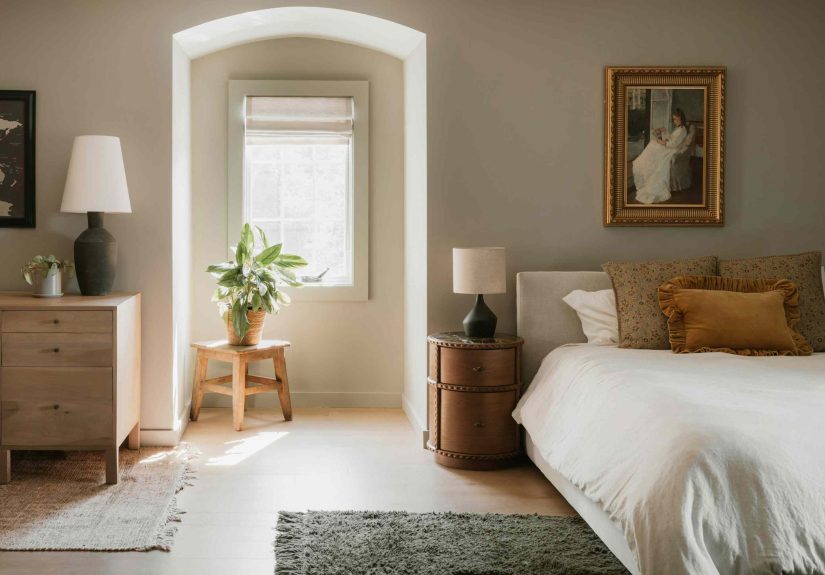
Start with a clean upholstered bed, then add a thrifted walnut dresser, antique brass lamp, oversized vintage mirror, and one moody landscape painting. Keep bedding simple in oatmeal, ivory, and camel. The thrifted pieces supply all the personality, so the room feels calm rather than crowded.
The Collected Romantic Bedroom
Use a simple painted bed frame, hang a vintage tapestry behind it, flank the bed with mismatched wood nightstands, and top them with ceramic lamps. Add a small gilded mirror, floral art in worn frames, and a folded quilt at the foot of the bed. It feels soft, layered, and deeply charming without tipping into costume drama.
The Quietly Luxurious Guest Room
Anchor the room with a thrifted chest used as a dresser, place an elegant bench at the end of the bed, lean a full-length mirror in a corner, and style a tray with books and a small bowl on top. Add vintage sconces if possible. Guests may not know why the room feels expensive, but they will absolutely notice that it does.
What Thrifting for a Fancy Bedroom Actually Feels Like
There is a particular kind of satisfaction in finding bedroom decor secondhand that no same-day shipping box can quite replicate. It starts long before the object enters the room. It begins in the hunt: the dusty back corner of an antique mall, the strange little shop with wildly inconsistent pricing, the estate sale where everyone is pretending to be casual while silently plotting over the same mirror. Designers know that this process is part of the magic. A room assembled entirely from new items can look beautiful, but a room shaped by good finds has narrative tension. It has a pulse.
Think about the experience of walking into a finished bedroom where nearly every big item is new. The space may be polished, but sometimes it feels a little too resolved, as if it sprang into existence in a single afternoon. Now compare that with a room that includes a weathered chest, a vintage lamp with a pleated shade, a small dish that clearly had another life before landing on the nightstand, and art that looks like it was chosen because someone loved it rather than because it came in the correct dimensions. That room feels inhabited in the best sense. It feels trusted.
Designers love that emotional shift. They also love how secondhand pieces make clients loosen up. A brand-new bedroom can feel intimidating, almost museum-like. People worry about scratching the nightstand, denting the bench, or touching the throw pillow in a way that displeases the gods of luxury. But thrifted and vintage bedroom decor often softens that pressure. The room still looks high-end, yet it invites real life. It says, “Please read here with tea,” not, “Do not crease the bedspread under any circumstances.”
There is also the joy of surprise. A thrifted bedroom rarely comes together in one tidy transaction. Maybe the mirror arrives first, and that leads to a darker lamp. Maybe a painted dresser suddenly makes the room need one old oil painting. Maybe a tiny brass bowl found for almost nothing becomes the little finishing note that makes the whole dresser vignette click. The room evolves. It gathers itself over time. Designers often talk about wanting homes to feel collected, and this is what that really means: allowing a space to reveal itself piece by piece.
Even for the fanciest clients, that approach has enormous appeal. Wealth does not automatically create atmosphere. In fact, unlimited budget can sometimes make it easier to buy everything except character. Thrifting introduces restraint, curiosity, and a bit of luckthree ingredients that make interiors more memorable. It forces the eye to prioritize shape, material, and feeling over labels. That is a very designer instinct.
And perhaps that is why thrifted bedroom decor continues to show up in the most elegant homes. It brings in age without heaviness, beauty without sameness, and luxury without the exhausting need to prove itself. A great thrifted find does not shout. It hums. In a bedroom, that is perfect. After all, the room is supposed to help you sleep. It should not behave like it is auditioning for a chandelier commercial.
Conclusion
The bedroom decor designers always thrift is not random, and it is definitely not just whatever looks old enough to have voted in several elections. The smartest secondhand bedroom pieces share a few qualities: strong craftsmanship, visual personality, useful function, and the ability to make a room feel layered rather than overly matched. That is why designers keep searching for vintage art, mirrors, dressers, nightstands, lamps, textiles, and small accessorieseven for clients who could easily buy everything new.
In the end, the most luxurious bedroom is rarely the one with the most expensive receipt. It is the one with the most point of view. Thrifting helps build that point of view with texture, memory, and a sense that the room came together thoughtfully over time. Which is good news for everyone. You do not need an unlimited budget to get a designer look. You just need a sharp eye, a little patience, and the confidence to walk past the matching bedroom suite like the evolved adult you are becoming.