Table of Contents >> Show >> Hide
- Why the F-16 Still Matters
- The Secret to the F-16’s Long Life: Upgrade Everything
- Block 70/72: The New-Build F-16 Is Not Yesterday’s Jet
- International Demand Keeps the F-16 Relevant
- How the F-16 Fits Beside the F-35 and Future Fighters
- Electronic Warfare: The New Survival Game
- Why 2050 Is Realistic, Not Fantasy
- The Limits of the F-16’s Future
- What the F-16 Teaches About Smart Defense Planning
- Experiences and Reflections: Why the F-16 Still Captures Attention
- Conclusion
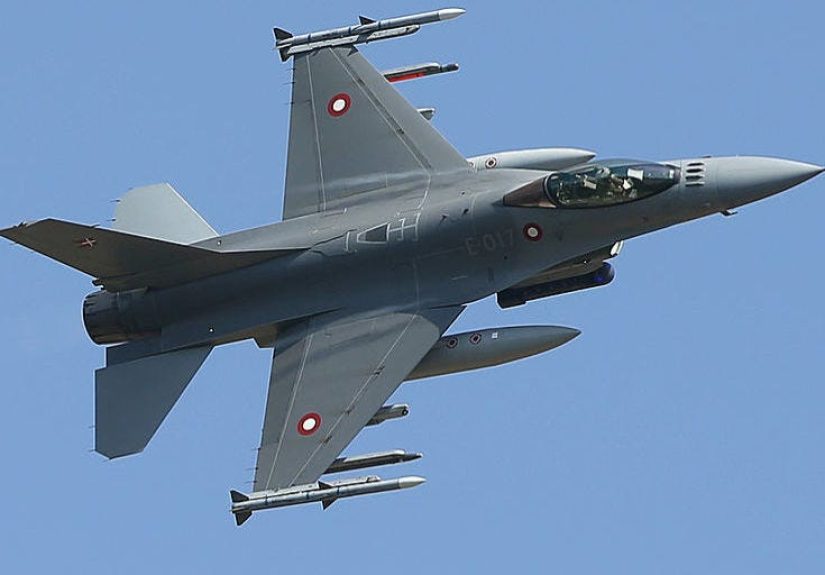
The F-16 Fighting Falcon is the aviation equivalent of that one tool in the garage that refuses to retire because, annoyingly, it still works better than most of the shiny new stuff. Born in the Cold War, sharpened through decades of combat experience, and constantly upgraded with newer brains, sharper eyes, and stronger bones, the F-16 has become one of the most enduring fighter jets in modern military history.
At first glance, the idea that the F-16 fighter could still be flying in 2050 sounds almost ridiculous. By then, the aircraft’s earliest operational versions will belong to a design family more than 70 years old. That is not a fighter jet anymore; that is a military aviation grandparent with afterburners. Yet the facts point in a surprising direction: through service life extension programs, modern avionics, advanced radar, electronic warfare upgrades, and continuing international production, the F-16 is not simply surviving. It is evolving.
The real story is not that the F-16 is old. The real story is that it has remained useful. For air forces that need a proven multirole fighter with strong performance, global support, and lower operating complexity than many stealth aircraft, the F-16 remains an extremely practical choice. And in defense planning, practical often beats fashionable.
Why the F-16 Still Matters
The F-16 was designed as a lightweight, highly maneuverable fighter that could perform air-to-air and air-to-ground missions without costing as much as larger, heavier aircraft. That formula turned out to be a masterpiece. The jet became fast, agile, adaptable, and affordable enough to be purchased in large numbers by the United States and many allied nations.
The U.S. Air Force describes the F-16 as a compact, multirole fighter with proven ability in both air combat and ground attack. That matters because modern air forces rarely need aircraft that perform only one job. They need aircraft that can patrol airspace, support troops, deliver precision weapons, intercept threats, and integrate with larger command networks. The F-16 can do all of that, and it has been doing it for decades.
Another reason the F-16 remains relevant is simple: numbers. Many countries already operate the jet, which means they have trained pilots, maintenance crews, spare parts pipelines, weapons integration experience, and base infrastructure built around it. Replacing an entire fighter ecosystem is expensive. Upgrading a familiar and trusted platform is often more realistic.
The Secret to the F-16’s Long Life: Upgrade Everything
The F-16’s future does not depend on nostalgia. No air force keeps a fighter jet around just because it looks cool on a poster, although the F-16 certainly does. Its longevity comes from continuous modernization.
Service Life Extension Programs
One of the biggest reasons the F-16 could still be flying in 2050 is structural life extension. Original F-16s were not expected to serve forever. Like all aircraft, they were designed around a certain number of flight hours. Over time, repeated takeoffs, high-G maneuvers, landings, and combat training place stress on the airframe.
To solve this, the U.S. Air Force and industry partners developed service life extension work that strengthens key parts of the aircraft. These upgrades can extend certain F-16C/D models from an original design life of around 8,000 flight hours to 12,000 hours or more. That is a major leap. It is not a cosmetic touch-up; it is the fighter-jet version of replacing the foundation, wiring, and plumbing while keeping the house standing.
For the U.S. Air Force, this means upgraded F-16s can help bridge fighter capacity needs while newer aircraft such as the F-35 and future sixth-generation fighters continue entering service. For allies, it means the F-16 remains a viable aircraft for decades instead of becoming an expensive museum piece with missiles.
Modern Radar: The APG-83 AESA Upgrade
Perhaps the most important upgrade for today’s F-16 is the APG-83 active electronically scanned array radar, often referred to as SABR. In plain English, AESA radar gives the aircraft a much sharper and more flexible set of electronic eyes. Compared with older mechanically scanned radars, AESA systems can track more targets, operate with better reliability, and support advanced air-to-air and air-to-ground missions.
This is a big deal because modern air combat is about seeing first, understanding first, and acting first. A fighter without modern sensors is like a boxer wearing a blindfold. Brave? Sure. Smart? Not especially.
The APG-83 helps bring upgraded F-16s closer to the sensor standards expected in modern combat. It does not turn the F-16 into a stealth fighter, but it gives pilots much better situational awareness. In many real-world missions, that can make the difference between being useful and being outdated.
Avionics, Cockpit Displays, and Mission Computers
Modern F-16 upgrades also include improved mission computers, new cockpit displays, better data links, updated electronic systems, and advanced weapons compatibility. These improvements help the aircraft process information faster and share data with other aircraft, ground systems, and command networks.
The modern battlefield is not just about the fastest jet. It is about the best-connected force. A fighter that can receive targeting information, share sensor data, and coordinate with stealth aircraft or ground units becomes more valuable than a jet operating alone. The F-16’s upgrade path keeps it inside that networked fight.
Block 70/72: The New-Build F-16 Is Not Yesterday’s Jet
One of the clearest signs that the F-16 has a future is the continued production of new F-16 Block 70/72 aircraft. These are not dusty leftovers from the 1980s. They are modernized F-16s built with advanced avionics, AESA radar, upgraded mission systems, modern cockpit architecture, and an extended structural life.
Lockheed Martin has promoted the Block 70/72 as the most advanced production F-16 configuration, with a structural life of 12,000 hours. That gives operators a long runway for future use. If a country receives new F-16s in the 2020s or 2030s, it is not difficult to imagine those jets still flying into the 2050s, especially if they are maintained and upgraded along the way.
New-build F-16s are also important because they keep the supply chain alive. Fighter aircraft do not survive on patriotic speeches. They survive on parts, maintenance, technicians, software updates, training systems, and contractor support. Continued production helps sustain the ecosystem that older F-16 operators also rely on.
International Demand Keeps the F-16 Relevant
The F-16’s global customer base is another reason it may remain in service for decades. Countries including Taiwan, Bulgaria, Slovakia, Bahrain, Morocco, and others have pursued new F-16s or major upgrades. Turkey has also been involved in discussions and approvals related to new F-16 Block 70 aircraft and modernization efforts for existing jets.
For many air forces, the F-16 sits in a sweet spot. It is more modern and capable than many older Soviet-era or early fourth-generation aircraft, but generally less expensive and easier to absorb than a full fleet of fifth-generation fighters. It can carry a wide variety of weapons, operate from established bases, and integrate with NATO and U.S.-aligned systems.
That matters especially for countries modernizing their air forces under budget pressure. Not every nation can afford a large fleet of stealth fighters. Even countries that do buy the F-35 may still need additional aircraft for routine missions, training, air policing, and strike roles. The F-16 is often the dependable workhorse that handles the daily grind while more specialized aircraft handle the most demanding missions.
How the F-16 Fits Beside the F-35 and Future Fighters
A common mistake is assuming that once newer aircraft arrive, older fighters instantly become useless. Military reality is messier. The F-35 is more advanced than the F-16 in stealth, sensor fusion, and networked warfare. Future sixth-generation aircraft will likely push the technology even further. But that does not mean every mission requires the most advanced aircraft in the inventory.
Think of it like using vehicles. You do not need a Formula 1 car to pick up groceries. You also do not need a stealth fighter for every patrol, training sortie, or lower-risk strike mission. The F-16 can continue serving in roles where stealth is not essential or where it works as part of a larger force package.
In a future conflict, upgraded F-16s might operate behind stealth aircraft, carry standoff weapons, perform defensive counter-air missions, support homeland air defense, or help train pilots. They could also serve as loyal partners in mixed fleets, where stealth aircraft gather and share information while F-16s add missile capacity and strike volume.
Electronic Warfare: The New Survival Game
Modern air defense systems are dangerous. Surface-to-air missiles, advanced radars, electronic jamming, cyber threats, and long-range sensors make survival much harder than it was when the F-16 first entered service. That is why electronic warfare upgrades are so important.
Systems such as Viper Shield for advanced F-16 configurations are designed to improve survivability in contested environments. Electronic warfare does not make an aircraft invisible, but it can help detect, confuse, avoid, or counter threats. In future air combat, the aircraft that manages the electromagnetic spectrum best may live longest.
For the F-16, electronic warfare upgrades are not optional decorations. They are central to keeping the aircraft credible. A fast jet with old defensive systems is like a knight wearing a shiny helmet and cardboard armor. It may look brave, but the battlefield will not be impressed.
Why 2050 Is Realistic, Not Fantasy
There are several reasons the F-16 could still be flying in 2050. First, structural upgrades can extend the life of existing aircraft. Second, new Block 70/72 jets are being produced with long service lives from the start. Third, hundreds of F-16s remain in service globally, creating demand for parts, training, upgrades, and weapons integration. Fourth, the aircraft remains flexible enough to adapt to new missions.
The year 2050 does not mean every F-16 ever built will still be flying. Many older airframes will retire long before then. Some will be replaced by F-35s, indigenous fighters, drones, or future combat aircraft. But selected upgraded jets, especially newer production models and well-maintained allied aircraft, could plausibly remain active.
In fact, aviation history supports this idea. Aircraft such as the B-52 bomber, C-130 transport, and A-10 attack aircraft have served far longer than early planners might have expected because they filled useful roles and received consistent upgrades. The F-16 could follow a similar path, though in a fighter-specific way.
The Limits of the F-16’s Future
Of course, the F-16 is not magic. It has limitations. It is not a stealth aircraft. Its single-engine design, radar signature, payload limits, and survivability challenges matter in high-end combat against advanced air defense networks. By 2050, the most dangerous battlefields may be dominated by stealth aircraft, unmanned systems, artificial intelligence support, long-range missiles, and space-enabled targeting.
That means the F-16’s role will likely narrow over time. It may not be the first aircraft sent into the most heavily defended airspace. Instead, it may serve where its strengths still shine: air defense, training, lower-threat strike missions, allied deterrence, reserve forces, and missions supported by electronic warfare and standoff weapons.
The key point is that a fighter does not need to be the newest aircraft in the sky to remain valuable. It needs to be capable enough for assigned missions, affordable enough to operate, and supported enough to stay ready. The F-16 checks those boxes better than almost any fighter of its generation.
What the F-16 Teaches About Smart Defense Planning
The F-16’s long life reveals something important about military technology: the best systems are often the ones designed with room to grow. The F-16 began as a lightweight fighter, but its basic design proved adaptable. Engineers found ways to add better radar, better weapons, better computers, better displays, better defensive systems, and stronger structures.
This is why the F-16 remains a case study in defense value. It shows that affordability, maintainability, and upgrade potential can matter as much as raw performance. A fighter that can be improved over decades may deliver better long-term value than a more exotic aircraft that is expensive to maintain or difficult to modernize.
For smaller and mid-sized air forces, that lesson is especially powerful. Buying fighter jets is not just about the aircraft. It is about training pilots, building hangars, stocking spare parts, securing weapons, updating software, and sustaining readiness year after year. The F-16’s enormous global user base makes all of that easier.
Experiences and Reflections: Why the F-16 Still Captures Attention
Anyone who follows military aviation for long enough eventually notices something unusual about the F-16: people keep trying to write its retirement speech, and the jet keeps taxiing back onto the runway. It is almost comical. Every decade seems to bring a new prediction that the F-16 is nearing the end, followed by another radar upgrade, another international order, another modernization package, and another headline proving the old Viper still has teeth.
Part of the fascination comes from how familiar the aircraft has become. The F-16 is not mysterious in the way stealth aircraft are mysterious. It is visible, widely operated, photographed constantly, and flown by many nations. Aviation fans have watched it perform at airshows, seen it in combat footage, built plastic models of it, and argued online about its best variant with the emotional intensity usually reserved for sports teams and barbecue recipes.
From a practical perspective, the F-16 also represents a very human kind of engineering success. It was not perfect because it was frozen in time. It succeeded because it could be changed. The cockpit changed. The radar changed. The weapons changed. The mission systems changed. The structure was strengthened. The aircraft kept adapting while preserving the core qualities that made pilots like it in the first place: speed, agility, visibility, responsiveness, and mission flexibility.
There is also a lesson here for anyone interested in technology beyond aviation. The newest tool is not always the most useful tool. Sometimes the winner is the platform that can be upgraded, repaired, understood, and trusted. The F-16 is a reminder that long-term relevance is not about being trendy. It is about being useful under pressure.
Imagine a pilot in the late 2040s walking out to a modernized F-16. The aircraft may carry systems that its original designers could barely have imagined: advanced radar modes, digital electronic warfare, improved data links, precision weapons, helmet-mounted cueing, and software-defined capabilities. Yet the silhouette would still be unmistakable. The bubble canopy, single engine, cropped delta wing, and compact stance would still say “F-16.” That continuity is part of the aircraft’s charm.
For maintainers, the F-16’s long service life also tells a story of experience. Generations of crews have learned how to inspect it, repair it, troubleshoot it, and keep it ready. That kind of institutional knowledge is hard to replace. A new aircraft may bring new performance, but it also brings new maintenance demands and learning curves. The F-16 benefits from decades of hard-earned know-how.
For defense planners, the aircraft offers flexibility. Need an affordable fighter for air policing? The F-16 can do it. Need a strike aircraft that can carry precision weapons? The F-16 can do that too. Need a training bridge for pilots moving into more advanced aircraft? The F-16 remains useful. Need a proven NATO-compatible platform with broad weapons integration? Once again, the Viper raises its hand like the overachiever in class.
By 2050, the F-16 will not be the star of every air force. It will not replace stealth aircraft, unmanned combat systems, or sixth-generation fighters. But it may still be present, still flying, and still performing important missions. That is not because the world forgot to retire it. It is because the aircraft continues to earn its place.
Conclusion
The F-16 fighter could still be flying in 2050 because it combines three rare qualities: proven design, upgrade flexibility, and global support. Its service life extension programs strengthen older aircraft. Its Block 70/72 versions bring new-build capability with modern systems. Its AESA radar, electronic warfare upgrades, and avionics improvements keep it relevant in a changing battlespace.
The future of air combat will include stealth fighters, advanced drones, artificial intelligence, long-range weapons, and sixth-generation aircraft. But that future may still have room for a fast, adaptable, affordable, and battle-tested fighter that refuses to fade quietly. The F-16 is not immortal, but it is unusually durable. And if it is still flying in 2050, no one should be too shocked. The Viper has made a career out of outlasting expectations.
Note: This article is written for web publication using publicly available defense and aerospace information. It avoids source-link markup in the body to keep the HTML clean for copying and publishing.