Table of Contents >> Show >> Hide
Today, the Macy’s Thanksgiving Day Parade is basically a sky parade with a marching band problem. The balloons are the stars, the celebrities wave, Santa closes the show, and somewhere in between America collectively says, “Yes, that giant Pikachu drifting past a Manhattan apartment building feels normal.” But long before the parade became a floating museum of pop culture, it had to figure out one very important question: what, exactly, should replace the live zoo animals that were stomping, growling, and generally refusing to behave like holiday decorations?
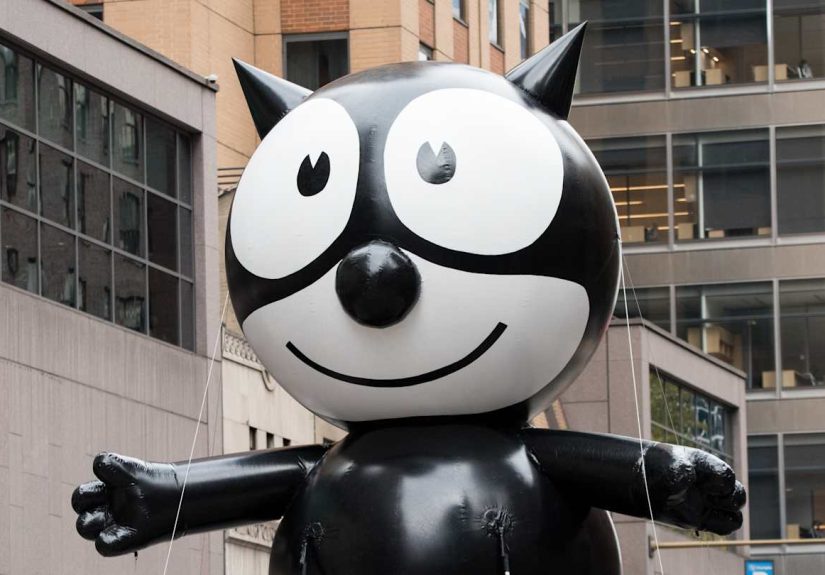
The answer was Felix the Cat. In 1927, the famous cartoon feline became the first character balloon in the Macy’s Thanksgiving Day Parade, launching a tradition that would define the event for generations. Felix didn’t just float into parade history; he kicked open the door for every oversized cartoon face that came after him. But his own story did not end in a tidy, triumphant glide into the sunset. Instead, it ended the way many early experiments do: with excitement, confusion, and a bit of chaos overhead.
If you’ve ever wondered who the first character balloon was in the Macy’s Thanksgiving Day Parade, why Felix got the honor, and what happened to that original balloon after the crowds went home, the story is even better than parade trivia usually has any right to be. It is a tale of showmanship, invention, New York spectacle, and one cat who accidentally helped invent modern Thanksgiving.
Before Felix, the Parade Was a Very Different Beast
It started as the Macy’s Christmas Parade
The first parade rolled out in 1924, and it was not yet the balloon-filled television institution we know today. In fact, it was originally called the Macy’s Christmas Parade. The event was organized in part by Macy’s employees, many of them immigrants, who wanted to celebrate the season with the kind of pageantry they remembered from Europe. The parade wound through Manhattan with floats, costumes, music, and Santa Claus arriving at the end to signal the start of Christmas shopping.
There was just one extra detail: live animals from the Central Park Zoo. Bears, camels, elephants, and other creatures joined the procession, which sounds whimsical until you picture a long route, cold weather, city noise, and children standing curbside while a large animal decides it has had enough public appearances for one lifetime.
The animals were memorable, but they were not exactly practical. Some frightened kids. Some wearied handlers. Some likely wondered what contractual mistake had led them here. Macy’s needed something big, theatrical, and easier to control. That need opened the door for one of the smartest visual ideas in American entertainment history.
Why Felix the Cat Became the First Character Balloon
Tony Sarg changed everything
The genius behind the early parade balloon concept was Tony Sarg, the puppeteer and designer often credited with transforming the event. Sarg had already built a reputation for theatrical spectacle, moving figures, and a style of visual storytelling that mixed charm with engineering. He reportedly thought of parade balloons as upside-down marionettes, which is the sort of sentence that sounds ridiculous until you realize it perfectly explains the Macy’s parade.
Felix the Cat was an ideal choice for Sarg’s experiment. By the late 1920s, Felix was already a hugely recognizable star of silent-era animation. He had a simple shape, expressive face, and broad popularity. In other words, he was built for instant recognition, even from a distance, even in a crowd, even if you were standing in November weather wondering whether your toes would ever feel warm again.
So in 1927, Macy’s introduced character balloons to the parade, and Felix led the way. He was not yet the towering helium giant people picture today. Early parade balloons were closer to hybrid creations: part puppet, part inflatable, part public experiment, and fully committed to making Broadway stop and stare.
The early balloon looked more handmade than high-tech
The original Felix was smaller and more mechanical-looking than modern character balloons. He belonged to an era when parade engineering was still being invented in public. Early balloons were supported by handlers and poles, and the materials and inflation methods were still evolving. That matters, because the first character balloon was not just a new parade attraction. It was a prototype for an entire American tradition.
That prototype worked. Spectators loved it. The idea of seeing a familiar character loom above the street was instantly magical. Felix felt like a comic strip escaping the page and taking a walk through Manhattan. Once Macy’s proved that trick could work, the future of the parade practically wrote itself.
The 1927 Debut That Changed Parade History
Felix’s arrival in the 1927 Macy’s Thanksgiving Day Parade marked the moment balloons stopped being a side note and started becoming the parade’s signature language. This was bigger than one cat. It was the birth of the visual formula that still defines the event: a beloved character, inflated to improbable size, moving through a canyon of buildings while crowds look up and grin.
That may sound obvious now, but it was novel then. The parade had already been successful, yet Felix made it feel modern in a new way. He tied together entertainment, retail theater, cartoons, engineering, and urban spectacle. Macy’s was no longer simply putting on a holiday procession. It was creating an event people would remember because it offered something they had never seen before.
In practical terms, Felix also proved that character recognition mattered. Animals were interesting, but a famous character had a different kind of power. A giant tiger is impressive. A giant Felix the Cat is a conversation starter, a headline, and a future tradition all at once. That insight shaped the parade from then on, leading eventually to Mickey Mouse, Snoopy, and the parade’s endless lineup of larger-than-life icons.
- 1924: The parade begins as the Macy’s Christmas Parade, with live zoo animals.
- 1927: Felix the Cat debuts as the first character balloon.
- Late 1920s–early 1930s: Macy’s experiments with bigger balloons, new inflation methods, and post-parade releases.
- After several mishaps: The parade refines its balloon handling and permanently changes how balloons are managed.
So, What Happened to the First Character Balloon?
Felix got a rough ending
This is the part that gives the story its extra flavor. The first character balloon in the Macy’s Thanksgiving Day Parade did not enjoy a neat retirement, a polished museum send-off, or a respectful deflation ceremony. Early parade histories agree that the original Felix met a messy fate after snagging overhead wires and catching fire.
That detail sounds dramatic because it was dramatic. Early parade organizers were still figuring out what to do with these giant inflatables once the spectacle ended. For a time, Macy’s released balloons after the parade rather than handling them with the kind of tightly controlled recovery systems used today. Sometimes the balloons popped. Sometimes they drifted away. Sometimes they landed where they absolutely should not have landed. Felix, in one of the earliest examples of parade balloon chaos, ran into the hazards of a real city full of wires, poles, and inconvenient physics.
So yes, the first character balloon was Felix the Cat, and what happened to it was not cute, tidy, or cartoonishly miraculous. It became one of the parade’s first cautionary tales. Felix helped invent the tradition, then immediately demonstrated why that tradition needed better engineering and stricter procedures.
His bad luck actually improved the parade
As strange as it sounds, Felix’s misfortune was useful. Early balloon accidents taught Macy’s how to redesign materials, improve inflation methods, and rethink release practices. In subsequent years, parade planners refined valves, recovery methods, and operating rules. For a while, released balloons carried return addresses and rewards for whoever found them. That produced a kind of accidental scavenger hunt across the region, which sounds fun until you remember at least some of these objects were enormous airborne creatures drifting wherever the wind felt like taking them.
Eventually, that practice ended after too many risky incidents. The parade learned, matured, and turned balloon handling into a disciplined craft. In that sense, Felix did more than make history. He helped force the parade to become safer, smarter, and more technically sophisticated.
Why Felix Still Matters
It would be easy to treat Felix as a historical footnote, the kind of fun fact someone blurts out between bites of pie. But his importance is bigger than a trivia answer. Felix marks the exact moment the Macy’s Thanksgiving Day Parade became the parade most people now recognize. Before him, it was a festive procession. After him, it became a floating character spectacle.
He also represents something delightfully American: the willingness to try a huge idea in public and keep refining it until it becomes tradition. The early Macy’s balloon program was not born perfect. It was invented in plain sight, with all the awkwardness, ambition, and trial-and-error that implies. Felix was the first proof that the idea could work, even if his own outing came with a rather unfortunate ending.
That legacy is why Felix has never fully disappeared from parade history. He remains the origin point, the first big leap, the cat at the beginning of the balloon genealogy chart. Every modern parade balloon owes a little something to that first odd, ambitious feline drifting through 1927 Manhattan.
And that is probably the funniest part of all. Felix the Cat did not just appear in the Macy’s Thanksgiving Day Parade. He essentially taught America how to look up on Thanksgiving morning.
The Experience of Felix, Then and Now
Why this story still feels surprisingly personal
There is also an emotional reason the story of the first character balloon keeps sticking around. It is not just about engineering or parade history. It is about the experience of wonder—the very specific kind that happens when something familiar suddenly becomes enormous.
Imagine being a spectator in 1927 and seeing Felix the Cat rise above the crowd. Not on a movie screen. Not in a newspaper comic. Not as a little toy in a store window. Above the actual street. Moving in the cold air. Surrounded by buildings. Bigger than it had any right to be. For people watching that day, the experience must have felt somewhere between magic and mischief. A cartoon had escaped.
That is part of why the Macy’s Thanksgiving Day Parade still works. The balloons are not just objects. They are scale-shifters. They take the things people know from comics, cartoons, television, and childhood and turn them into giant public companions for a morning. The emotional trick is simple but powerful: the familiar becomes monumental, and the city becomes a stage where imagination is allowed to take up real physical space.
Felix was the first character balloon to pull off that trick. His debut introduced an experience that millions of people would later associate with Thanksgiving itself. Families wake up, turn on the television, point at the screen, argue lightly about who makes the best parade balloon, and pretend not to care that they are all secretly delighted. The parade is one of those rare traditions that lets adults act unimpressed while being very impressed.
There is also something charmingly human about the roughness of the early years. Today, parade balloons are managed with precision, planning, safety thresholds, weather rules, and teams who understand every inch of fabric and every cubic foot of lift. Felix came from a time when the event still had a little glorious improvisation to it. The first balloon was not the polished end product of a century of expertise. It was the beginning. It was the sketch before the masterpiece, the test batch before the famous recipe.
That roughness makes the story better, not worse. Felix did not drift into history on perfect terms. He stumbled into it. He proved the idea, thrilled the crowd, and then became part of an early balloon mishap that sounds almost too on-brand for a pioneering public spectacle. It gives the story texture. It reminds us that traditions often begin in trial and error, not perfection.
There is a reason Felix returned to parade conversation decades later, including as a heritage-style revival for the parade’s 90th anniversary. People like origins. They like the first draft of an American ritual. They like meeting the ancestor before the family tree got crowded. Seeing Felix again, even in replica form, reconnects the modern parade to its scrappier early personality. It says: before the giant polished balloons, before the precision choreography, before the high-definition broadcast, there was this cat and one very big idea.
And maybe that is the deepest experience attached to the story. Felix symbolizes the moment a parade stopped being just an event and became a memory-making machine. Watching a balloon in the Macy’s parade is not only about seeing a character float by. It is about feeling linked to everybody else who has ever looked up and laughed at the sheer absurd joy of it. The first crowd felt that. We still feel it. The shapes have changed, the technology has improved, and the characters rotate with pop culture, but the emotional experience remains almost identical.
You look up. You grin. You wonder how on earth they got that thing down the avenue. And for a second, the holiday becomes a little bigger, a little sillier, and a lot more memorable.
Conclusion
The first character balloon in the Macy’s Thanksgiving Day Parade was Felix the Cat, and he deserves far more than a one-line trivia answer. He arrived at a turning point, when Macy’s was replacing live zoo animals with something more imaginative, more controllable, and much more iconic. Thanks to Tony Sarg’s inventive vision, Felix became the blueprint for the modern parade balloon.
What happened to him afterward is part of the reason the story endures. The original Felix did not glide neatly into retirement. He became wrapped up in the parade’s early balloon-learning curve, including a notorious wire-related fire that showed just how experimental those first years really were. In other words, Felix helped invent the tradition and immediately demonstrated why that tradition would need rules, redesigns, and better methods.
That strange combination of triumph and mishap is exactly what makes Felix unforgettable. He was first. He was bold. He was beloved. And, in a very early-parade sort of way, he was also a little bit doomed. Which is honestly a pretty memorable way to make Thanksgiving history.