Table of Contents >> Show >> Hide
- What Is the ’90s Storage Staple Everyone’s Talking About?
- Why the Display Cabinet Feels Fresh Again
- How to Style a Display Cabinet in a Modern Way
- What to Put Inside a Modern Display Cabinet
- Best Rooms for a Display Cabinet
- How to Modernize an Old China Cabinet You Already Own
- Mistakes That Make the Look Feel Dated Again
- Real-Home Experiences With the Display Cabinet Comeback
- Conclusion
If you grew up in the ’90s, there is a very good chance you remember the display cabinet in all its glory. Maybe it lived in the dining room. Maybe it held “the good dishes” nobody was allowed to touch unless a holiday required real pants. Maybe it was a towering oak hutch that felt one dramatic brass handle away from becoming a family heirloom and a dust magnet at the same time.
Well, surprise: the display cabinet is back. And this time, it is not here to bully your dining room with heavy formality. Today’s version is lighter, cleaner, more flexible, and a lot less interested in looking like it came bundled with a goose-themed wallpaper border. The modern display cabinet still offers the same thing it always didstorage with presencebut now it works in living rooms, kitchens, entryways, bedrooms, bathrooms, and even small apartments that need every square inch to earn its keep.
That is exactly why this once-dated piece has become relevant again. People want homes with personality, not rooms that look like they were designed by a very stylish cloud. A display cabinet helps you show off favorite objects, hide visual chaos, and add architecture to a room without committing to a full renovation. In other words, it is practical, pretty, and just nostalgic enough to feel fun.
What Is the ’90s Storage Staple Everyone’s Talking About?
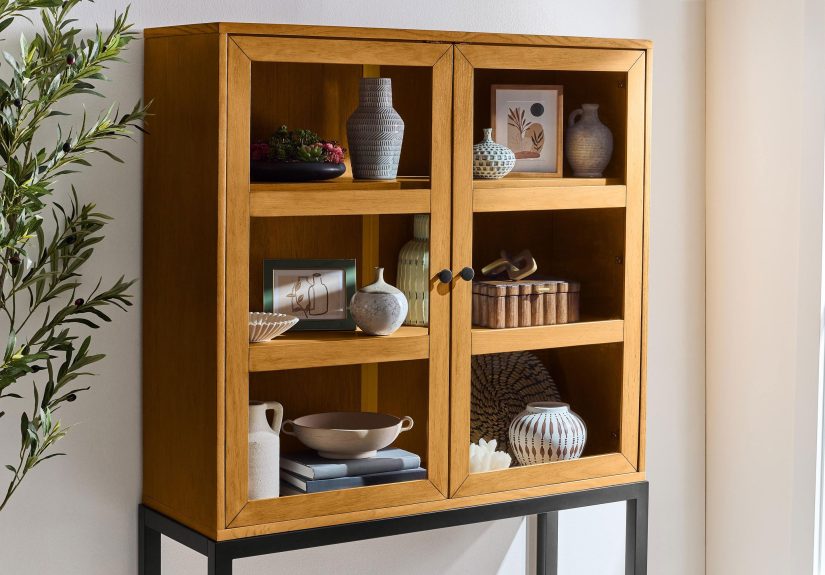
In this trend story, the “’90s storage staple” is the display cabinetalso called a china cabinet, curio cabinet, or glass-front cabinet, depending on the style. While the old-school version often meant dark wood, carved trim, and formal dining-room energy, the updated display cabinet comes in a wider range of looks. Think warm oak with a matte finish, slim black metal framing, white-painted wood, arched silhouettes, reworked vintage hutches, or mixed-material cabinets with glass doors and lighter lines.
The biggest difference is how people use it now. Instead of being limited to fine china and wedding crystal, a modern display cabinet can hold books, pottery, framed art, folded linens, barware, travel souvenirs, candles, baskets, craft supplies, and everyday dishes. It still protects items from dust better than open shelves, but it feels more relaxed and personal than a strictly decorative showpiece.
Why the Display Cabinet Feels Fresh Again
1. It matches the shift away from sterile minimalism
For years, homes leaned hard into ultra-minimal spaces with barely-there decor, open shelving, and enough empty white walls to make you whisper. Now the pendulum is swinging toward warmth, personality, and layered rooms that look lived in. A display cabinet fits that mood perfectly because it gives you a place to tell a visual story without creating total clutter.
2. It blends open display with closed storage
This is the cabinet’s secret weapon. You get the charm of visible objects, but you also get structure. Behind glass, your favorite pieces read as curated instead of chaotic. Add a few baskets or drawers below, and suddenly the cabinet is doing what all great furniture does: working overtime while looking effortless.
3. It helps small rooms feel organized, not crowded
Glass-front cabinetry can make a room feel lighter than a bulky solid case piece. Because you can see into the cabinet, it creates more visual depth. That matters in apartments, narrow dining rooms, kitchen corners, and open-concept spaces where a heavy block of furniture can feel like a parking violation.
4. Vintage furniture is having a big moment
Another reason the trend feels so current is that secondhand and inherited furniture are getting a lot more love. People are thrifting, repainting, lacquering, and restyling older case pieces instead of buying everything brand-new. A dated china cabinet can become a modern showpiece with better hardware, a fresh coat of paint, a cleaner interior palette, or simply smarter styling.
How to Style a Display Cabinet in a Modern Way
Start with less than you think you need
The fastest route to a cabinet that looks current is restraint. Do not treat every shelf like it owes you rent. Leave breathing room between objects so each item gets a moment. Modern styling is less about cramming in more things and more about choosing better things.
A good rule of thumb: remove everything first, then build shelf by shelf. This helps you see the cabinet as a composition, not a storage emergency.
Use the rule of three
Designers love odd-number groupings for a reason: they look balanced without feeling stiff. On one shelf, try a stack of books, a small ceramic bowl, and a taller vase. On another, use a framed photo, a candle, and a sculptural object. The point is not to force exactly three items every time, but to create groupings that feel relaxed and varied.
Think in triangles, not straight lines
If your cabinet styling feels flat, the fix is often height and movement. Arrange objects so the eye travels up and down rather than across one boring row. A tall vase beside a medium stack of books and a smaller box or dish creates a triangular shape that feels natural and dynamic. It is like giving your shelf a secret geometry lesson, but with prettier results.
Mix practical pieces with decorative ones
The best display cabinets do not look like museum storage. They look useful. Pair pretty pieces with functional ones: bowls with books, glassware with trays, folded linens with baskets, or everyday dishes with art. This mix keeps the cabinet grounded and prevents it from tipping into “Please admire my decorative collection of objects I never touch.”
Layer in texture
Modern interiors love texture because it adds warmth without requiring visual chaos. In a display cabinet, texture can come from woven baskets, ribbed glass, ceramic pottery, linen napkins, wood frames, matte stoneware, or aged brass details. If everything is shiny and smooth, the cabinet can feel cold. If everything is chunky and rustic, it can feel heavy. The magic is in the mix.
Keep the palette tight
A cabinet instantly looks more sophisticated when the contents share a loose color story. That does not mean everything has to match like a bridesmaid lineup. It just means the overall mix should feel intentional. Neutrals, warm wood tones, black accents, soft greens, smoky blues, or creamy whites all play well in a modern cabinet.
If your cabinet is vintage oak, consider styling it with lighter ceramics, dark-framed art, muted books, and matte metal accents. That contrast makes the wood feel fresh instead of frozen in 1994.
Add art inside the cabinet
This is one of the easiest upgrades and one of the most overlooked. Lean a small framed piece against the back panel of a shelf. Place a smaller object in front of it. Suddenly the cabinet feels layered, dimensional, and a little more collected. Art helps anchor vignettes and keeps a cabinet from reading like a row of isolated objects lined up for inspection.
Do not style every shelf the same way
Uniformity can make a cabinet feel flat. One shelf can hold stacked books. Another can feature upright glasses or ceramics. Another can hold a basket with folded napkins. Vary the heights, shapes, and density from shelf to shelf so the cabinet feels curated, not copy-pasted.
What to Put Inside a Modern Display Cabinet
Everyday dishes and glassware
This is the easiest entry point. A display cabinet is ideal for dishes you actually use and enjoy seeing every day. White plates, vintage Pyrex, colored glassware, mugs, serving bowls, and barware all look great behind glass, especially when grouped by type.
Books and magazines
Books add instant personality and help break up more delicate items. Stack a few horizontally, stand some vertically, and use a favorite book as a pedestal for a candle or small sculptural object. Magazines can work too, especially if they share strong spines or tie into your room’s color story.
Travel keepsakes and personal collections
Display cabinets shine when they showcase things that actually mean something. Pottery from a trip, shells from a favorite beach, old cameras, family heirlooms, framed postcards, or a small collection of ceramics can all become part of the room’s story. The cabinet should say something about you, not just your ability to buy decorative beads.
Linens and baskets
Folded tablecloths, cloth napkins, hand towels, or guest linens add softness and practicality. Tuck smaller items into woven baskets, lidded boxes, or glass jars. This is especially useful if your cabinet lives in a bathroom, hallway, breakfast nook, or multipurpose room.
Craft or hobby supplies
Yes, really. In a home office or creative space, a display cabinet can hold yarn, fabric, sketchbooks, beads, sewing tools, or stationery. Use clear containers and matching vessels so the contents feel inspiring instead of visually noisy.
Best Rooms for a Display Cabinet
Dining room
The classic location still works beautifully, especially if you want storage for serving pieces, dishes, linens, and entertaining essentials. The difference now is that the cabinet does not have to be formal. Pair it with contemporary art, upholstered dining chairs, or modern lighting to keep it grounded in the present.
Living room
In a living room, a display cabinet can become a focal point that stores books, decor, collectibles, and media accessories. A glass cabinet also looks great styled beside a sofa, between windows, or on a long wall that needs vertical interest.
Kitchen or breakfast nook
If your kitchen lacks upper cabinetry or needs extra storage, a display cabinet can hold dishes, pantry items, cookbooks, and pretty serving pieces. It also helps soften the hard surfaces in kitchens by bringing in warmth, texture, and a furniture-like feel.
Entryway
An entry display cabinet is a smart move if you want closed-and-contained storage that still feels decorative. Use it for baskets, seasonal items, catchalls, candles, and a few statement objects that make the house feel welcoming the second you walk in.
Bathroom or hallway
A slim cabinet with glass doors can hold towels, soaps, apothecary jars, and extra toiletries in a way that feels more boutique hotel than forgotten linen closet.
How to Modernize an Old China Cabinet You Already Own
If you inherited a heavy cabinet or found one secondhand, do not assume it is doomed to eternal formal dining-room exile. Many older cabinets become stylish again with a few strategic updates:
Swap the hardware
New knobs or pulls can do a shocking amount of work. Try aged brass, matte black, or sleek unlacquered finishes for an instant refresh.
Paint or lacquer it
Deep green, warm white, charcoal, muted blue, or even a glossy lacquer can transform a dated wood piece into a statement. If you love wood, skip the paint and simply refinish it in a softer matte tone.
Style the back panel
Paint the interior back a contrasting shade, add wallpaper, or line it with grasscloth for extra depth. It is a designer trick that gives even a basic cabinet custom energy.
Edit the top section
If the cabinet has a bulky hutch top, remove unnecessary trim, simplify what is displayed, or restyle the upper shelves with more negative space. Sometimes the problem is not the cabinet itself. It is just wearing too much jewelry.
Mistakes That Make the Look Feel Dated Again
- Overstuffing every shelf until the cabinet looks stressed.
- Displaying too many tiny items with no visual anchor.
- Using only one height, one texture, or one object type.
- Keeping the old cabinet finish but pairing it with equally dated accessories.
- Forgetting to mix beauty with function.
- Ignoring the cabinet’s surroundings instead of styling it as part of the whole room.
A modern display cabinet should feel curated, breathable, and connected to the room around it. If it feels fussy, crowded, or too theme-y, pull a few things out and simplify.
Real-Home Experiences With the Display Cabinet Comeback
One reason this trend has stuck is that people are discovering the display cabinet solves real-life problems in a surprisingly stylish way. In actual homes, the experience is often less about chasing a trend and more about finally finding a piece that can do several jobs at once.
For some homeowners, the cabinet becomes the answer to open shelving fatigue. They liked the idea of open shelves in theory, but in practice, every mug, bowl, and random snack bowl ended up visible at all times. A glass-front display cabinet offers the same sense of openness while creating enough structure to make a room feel calmer. You can still see the pretty dishes, but the cabinet gives them boundaries. That alone can make a kitchen or dining area feel more pulled together.
For people who inherit older furniture, the experience is often emotional as much as practical. A cabinet from a grandparent’s dining room may not fit a modern home in its original state, but after a refinish, new hardware, and a fresh styling approach, it suddenly feels special again. Instead of looking like a leftover, it becomes the most personal piece in the room. That kind of update gives a home character money cannot easily fake.
Small-space dwellers tend to appreciate the cabinet for another reason: it makes vertical storage look intentional. In apartments, every piece of furniture has to work hard. A display cabinet can store dishes, books, candles, linens, and office supplies while still reading as decor. Many people find that once they install one, they stop spreading storage across five smaller pieces that made the room feel choppy. One tall cabinet can create more order than a collection of little bins and side tables ever could.
Another common experience is that the cabinet changes with the seasons without requiring a total room makeover. In spring, it might hold pitchers, green glassware, and woven baskets. In fall, it can shift toward amber tones, wood bowls, and extra candles. During the holidays, it becomes the easiest place in the house to style without turning the whole room into a craft store explosion. People enjoy that flexibility because it lets the room feel fresh without forcing a major redesign.
There is also something deeply satisfying about seeing your everyday objects elevated. A stack of linen napkins, a favorite serving bowl, a collection of pottery mugs, or a few framed postcards can feel unexpectedly meaningful once arranged with care. That is part of the appeal. The display cabinet encourages you to use and appreciate what you already own instead of constantly looking for more stuff to buy.
And perhaps the most relatable experience of all is this: once a display cabinet is styled well, the rest of the room tends to behave. Clutter has fewer places to roam. Favorite objects finally have a home. The room looks finished, but not precious. That is probably why this so-called ’90s staple is connecting with modern households again. It is nostalgic, yes, but it is also genuinely usefuland furniture that looks good while making life easier never really goes out of style.
Conclusion
The return of the display cabinet proves that some “dated” pieces are not actually wrongthey were just waiting for a better styling era. Today’s version is less formal, more flexible, and far more personality-driven than its ’90s predecessor. Whether you buy a slim new glass cabinet, thrift an old hutch, or revive a family china cabinet, the modern formula is the same: keep it edited, mix form and function, vary heights and textures, and let your favorite objects do the talking.
So yes, the display cabinet is back. But now it is cooler, lighter, and a lot more fun. Honestly, it has had a glow-up. Good for her.