Table of Contents >> Show >> Hide
- What Actually Happened in the Viral Zoom Clip?
- Why So Many Fans Called the Call “Painful”
- Was the Zoom Call Real? Not in the Way People First Thought
- How the Zoom Call Fit the Marty Supreme Rollout
- Not Everyone Was Buying the Bit
- Why the Clip Worked Anyway
- What It Says About Celebrity PR Now
- Final Verdict: Shock, Cringe, and a Very Smart Stunt
- The 500-Word Experience: Why This Kind of Zoom Call Hits So Hard
There are ordinary celebrity promo clips, and then there are the ones that make the internet sit bolt upright, clutch a coffee mug, and whisper, “Oh no, what am I watching?” Timothée Chalamet’s now-viral Zoom call with the marketing team behind Marty Supreme landed squarely in the second category. The video looked like a corporate brainstorm gone rogue: awkward pauses, baffled faces, unhinged ideas, and Chalamet floating through it all with the intensity of a man who had slept exactly 17 minutes and decided that orange should become a global religion.
To some viewers, it felt downright painful. To others, it was performance art in a tank top. And to the rest of the internet, it was impossible to ignore. That is the magic trick at the center of this whole saga. On the surface, fans thought they were watching a famously talented actor spiral into unbearably weird PR territory. In reality, the clip appears to have been something much smarter: a deliberately awkward, carefully constructed piece of meta-marketing that blurred the line between satire, self-parody, and movie promotion.
So why did the Zoom call leave fans so shocked? Why did so many people call it hard to watch? And why did the stunt work anyway? Let’s break down the call, the reactions, and what it all says about celebrity publicity in the age of meme culture, niche fandom, and attention spans roughly the length of a microwave beep.
What Actually Happened in the Viral Zoom Clip?
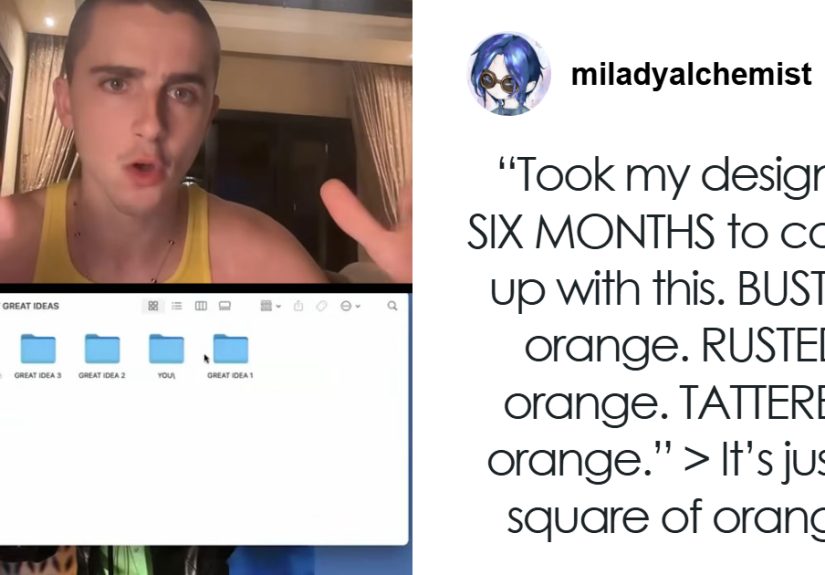
The now-famous clip appeared on Chalamet’s social accounts under the dead-simple file name video93884728.mp4, which is funny in the same way a raccoon wearing reading glasses is funny: it should not work, but somehow it does. The video ran for around 18 minutes and showed Chalamet on a Zoom call with the marketing team working on Marty Supreme, the A24 sports drama directed by Josh Safdie.
In the meeting, Chalamet pitched increasingly wild promotional ideas for the movie. He talked about using orange as the defining visual language of the campaign, much like pink dominated the Barbie rollout. He floated ideas involving cereal boxes, giant landmarks turned orange, a blimp, and even the possibility of dropping ping-pong balls on fans at Tyler, the Creator’s Camp Flog Gnaw festival. He also steered the call into a tone that felt hilariously overcommitted, like a startup founder and an avant-garde theater kid had merged into one person during a Wi-Fi outage.
That would have been plenty weird on its own. But the thing that made the clip really travel was the atmosphere. The people on the call appeared stone-faced. Their energy was flat, corporate, polite, and deeply Zoom-coded. Chalamet, meanwhile, played the whole thing with total seriousness. He was not winking. He was not breaking. He was not tossing viewers an easy clue that this was all a joke. That deadpan commitment turned the video from “odd celebrity promo” into “internet event.”
And yes, the movie itself matters here. Marty Supreme centers on Marty Mauser, a hungry dreamer chasing greatness in table tennis. The official synopsis presents him as a young man pursuing a dream nobody respects. That makes the clip feel less random and more thematic. The ego, the ambition, the hustle, the ridiculous certainty that the world must bend around one grand vision? That is not just marketing. It is character-adjacent storytelling with the volume turned all the way up.
Why So Many Fans Called the Call “Painful”
It triggered every bad Zoom memory at once
Let’s be honest: millions of people have lived through meetings that felt 87 years long while somehow lasting only 12 minutes. The awkward introductions. The one person who takes the brainstorm way too seriously. The deck that looks expensive but explains nothing. The performative enthusiasm. The empty buzzwords. Chalamet’s clip weaponized that familiar office dread and wrapped it in celebrity glitter.
That is why the reaction was so strong. Viewers were not just watching Timothée Chalamet. They were reliving every awkward remote meeting they have ever endured. The clip felt uncomfortably accurate, which made it funnier for some and more painful for others. It wasn’t merely bizarre. It was recognizable.
The uncertainty made people lean in harder
One reason the video exploded is that people were not immediately sure how to read it. Was this a real leaked meeting? Was Chalamet mocking Hollywood PR culture? Was he playing an exaggerated version of himself? Was the whole thing one long inside joke? That ambiguity was the engine of the stunt.
When audiences cannot instantly classify a clip, they share it faster. Confusion is one of the internet’s favorite fuels. You can practically hear the reposts being born: “Please tell me this is satire,” “I can’t stop watching this,” “Why is this both terrible and genius?” The uncertainty became part of the entertainment.
Secondhand embarrassment was clearly the point
The video was engineered to hover in that deliciously uncomfortable zone where comedy lives. Chalamet did not play it like a polished host. He played it like a self-important creative visionary who had mistaken every half-baked idea for a moon landing. The pauses, the stiffness, the absurd escalation of the pitches, the demand that the room take all of it seriously: that is textbook cringe comedy.
In other words, the “pain” was not a bug. It was the product.
Was the Zoom Call Real? Not in the Way People First Thought
This is where the story gets much more interesting than the original shocked reaction. Coverage from major entertainment and marketing outlets strongly pointed to the Zoom call being a staged bit, not a genuine leaked internal disaster. GQ described it as a dry satire of both corporate meeting culture and movie-star narcissism. Rolling Stone treated it as a hilarious promotional sketch. Fast Company and Adweek went even further, framing it as a sharp piece of modern marketing that understood exactly how to turn discomfort into engagement.
Then came one of the clearest signs that this was all deliberate: Chalamet later said in an interview that he had written the Zoom. That detail matters. It shifts the clip from “celebrity behaving strangely” to “actor using awkwardness as strategy.” Even better, one of the ridiculous ideas floated in the meeting, the giant orange blimp, eventually became reality as part of the broader Marty Supreme campaign. At that point, the joke became self-fulfilling. The satire escaped the screen and started renting airspace.
So yes, fans were shocked. But what shocked them most was not a meltdown. It was commitment. Chalamet and the campaign team understood that in a crowded media environment, being memorably strange beats being blandly polished almost every time.
How the Zoom Call Fit the Marty Supreme Rollout
Orange was not random
The orange obsession in the video did not stay in the video. It spilled into the campaign. Chalamet wore orange during the press run. The movie’s visuals leaned hard into the ping-pong-ball palette. Merchandise, events, and promotional imagery pushed the color until it stopped feeling like a shade and started feeling like branding with a personality disorder. That consistency helped the Zoom call feel like more than a viral one-off. It became part of a larger aesthetic system.
The campaign blurred fiction and reality
That was the genius of it. The movie is about a man chasing greatness with borderline reckless intensity. The marketing campaign adopted that same feverish energy. Instead of promoting the character from a safe distance, Chalamet seemed to let the logic of Marty Supreme infect the rollout itself. The result was a press tour that felt less like standard publicity and more like an ongoing bit.
That included unusual merch drops, immersive table tennis events, over-the-top visual stunts, and a campaign style that looked more like a pop star launching an era than an actor doing ordinary junkets. Even people who rolled their eyes had to admit one thing: they were paying attention.
Chalamet openly defended the maximalism
When criticism started bubbling up, Chalamet did not really back away from the campaign. He leaned into it. In later interviews, he framed the whole push as an all-out effort to get an original movie seen. That is an important detail, because it gave the weirdness a mission. The message was basically this: if studios say original films need help cutting through the noise, then fine, let’s cut through the noise with a flaming orange machete.
That argument gave the stunt a kind of strange credibility. Even viewers who found the Zoom call exhausting could understand the logic behind it.
Not Everyone Was Buying the Bit
Of course, no modern celebrity rollout reaches escape velocity without backlash. Some critics felt the Marty Supreme campaign crossed the line from inventive to overcooked. The issue was not talent. Almost nobody disputes Chalamet’s ability. The issue was tone. The more self-mythologizing the campaign became, the more some viewers and commentators started wondering whether the performance was too clever by half.
That criticism mattered because it revealed the central risk of meta-promo: if the audience misses the joke, the joke can start wearing you. Some people watched the Zoom clip and saw brilliant parody. Others watched it and saw a star trying way too hard to look brilliant while pretending not to care. The line between self-aware and self-satisfied is thin, and celebrity culture loves to erase it with a smile.
Still, backlash is not always failure. In fact, in the social-media economy, backlash is often just engagement wearing a fake mustache. The clip inspired debate, memes, think pieces, reaction posts, marketing breakdowns, and fan commentary. That is not a publicity miss. That is a publicity avalanche.
Why the Clip Worked Anyway
The real reason the Zoom call hit so hard is simple: it did not feel like content generated by committee. Ironically, it felt like a joke about content generated by committee. That distinction matters. Audiences are tired of celebrity promotion that is too polished, too approved, too obviously engineered to offend no one and excite no one. Chalamet’s clip was awkward, long, weirdly committed, and just alien enough to feel alive.
It also rewarded repeat viewing. The first watch produced confusion. The second produced pattern recognition. The third produced favorite moments, favorite lines, and the growing realization that the entire thing was calibrated with the precision of someone who knows exactly how the internet digests absurdity.
In other words, the clip worked because it looked like a mess while being much more controlled than it seemed. That is a very internet-native form of showmanship.
What It Says About Celebrity PR Now
Celebrity PR used to rely on access, polish, and carefully timed exclusives. Now it increasingly relies on narrative play. Stars are not just selling a project. They are selling the way they sell the project. The rollout becomes part of the entertainment. The behind-the-scenes strategy becomes front-facing content. The joke about marketing becomes the marketing.
Chalamet’s Zoom call is a nearly perfect example of that shift. It understood that fans do not just want a trailer and a magazine cover anymore. They want lore. They want the side quest. They want the atmosphere. They want to feel like the campaign itself is an unfolding story.
And for better or worse, Chalamet gave them that. He did not offer a smooth corporate promo reel. He offered what looked like a very expensive panic attack filtered through satire, ambition, and elite internet literacy.
Final Verdict: Shock, Cringe, and a Very Smart Stunt
So, did Timothée Chalamet’s “painful” Zoom call leave fans shocked? Absolutely. But not because they were seeing a real PR disaster unfold in real time. The shock came from realizing just how far the stunt was willing to go, how long it was willing to sit in discomfort, and how confidently it trusted audiences to argue about it afterward.
That is why the clip stuck. It was funny, awkward, irritating, clever, indulgent, and strangely effective all at once. It made fans cringe. It made marketers applaud. It made skeptics groan. And it made the internet do what the internet does best: turn one weird celebrity video into a full-scale cultural weather event.
Whether you loved the Zoom call or wanted to crawl under your desk while watching it, the stunt achieved the one thing every publicity team wants and very few actually pull off. It made people care. And in an age where attention is harder to win than an unmuted meeting with competent audio, that is no small feat.
The 500-Word Experience: Why This Kind of Zoom Call Hits So Hard
Watching Chalamet’s Zoom clip felt weirdly personal for a lot of people, and that may be the most revealing part of the whole phenomenon. The average fan did not respond to the video the way they respond to a glossy movie trailer. They responded to it like they had accidentally been invited to the most uncomfortable work call on Earth. That is a very specific flavor of modern horror.
There is something instantly recognizable about a digital room where one person is trying to manufacture magic and everybody else is stuck in the facial expression zone between “supportive” and “please let this end.” That dynamic exists in offices, agencies, classrooms, startups, nonprofits, and group projects everywhere. Chalamet’s bit worked because it reproduced that atmosphere with eerie precision. The famous face made people click, but the emotional realism made people stay.
It also captured a very online kind of exhaustion. For years now, remote calls have flattened human interaction into boxes, lag, eye contact approximations, and the strange spiritual violence of hearing the phrase “Let’s ideate around that.” The clip turned all of that into comedy. It took a shared social experience, one many people genuinely dislike, and exaggerated it just enough to make it art. That is why viewers described it as painful but could not stop talking about it. Pain plus recognition equals conversation.
Another reason the experience hit hard is that it poked at something deeper than Zoom fatigue. It poked at ambition. Chalamet’s character in the clip is not merely goofy. He is desperately certain that his vision matters. He is talking too much, yes, but he is also pitching with total faith in himself. That can look ridiculous. It can also look familiar. Plenty of people know what it feels like to oversell an idea, cling to a brainstorm, or act extra confident because doubt would be too expensive. The clip turns that human impulse up to cartoon level, and suddenly people are laughing at him, at the meeting, and maybe a little at themselves.
Fans also experienced the call differently depending on what they wanted from Chalamet in the first place. If they wanted polished movie-star glamour, the video was a jump scare. If they liked him as a self-aware cultural shapeshifter, the stunt felt like catnip. If they were tired of celebrity campaigns that pretend not to be campaigns, the clip probably felt like a relief. At least this one was being weird on purpose.
That is the secret emotional engine of the whole thing. The Zoom call was not just about a movie. It was about modern performance: how we act at work, online, in public, and inside our own ambition. It made fans feel secondhand embarrassment, but it also made them feel seen. And that combination, uncomfortable as it is, tends to travel very far on the internet.