Table of Contents >> Show >> Hide
- Can You Really Buy a Tiny House on Amazon?
- What “Tiny House” Means in Amazon-Land
- Types of Tiny Houses You’ll See on Amazon (and Who They’re For)
- How Much Do Tiny Houses on Amazon Cost?
- The Hidden Costs Nobody Puts in the Glamour Photos
- How to Vet an Amazon Tiny House Listing Like a Pro
- Permits, Zoning, and the “Is This Even Legal?” Moment
- Realistic “Best Uses” for Amazon Tiny Houses
- A Smart Shopping Game Plan
- Conclusion: Tiny House Dreams, With a Side of Reality
- Experiences: What It’s Like to Actually Buy a Tiny House on Amazon (The Part No One Posts)
There are two kinds of people in the world: the ones who treat Amazon like a convenience store, and the ones who treat it like a lifestyle.
If you’re in the second group, you’ve probably had this intrusive thought at 1:07 a.m.: “If I can buy a phone charger, protein powder, and a
seven-foot skeleton on Amazon… can I buy a tiny house too?”
Yes. You can. And the internet would like you to know this fact approximately every 17 minutes.
But before you hit Buy Now on what looks like a Pinterest-perfect cabin with French doors, let’s talk about what “tiny house on Amazon”
actually means, what you’re really getting, and how to shop without accidentally ordering a very expensive wooden Lego set.
Can You Really Buy a Tiny House on Amazon?
Amazon listings for “tiny houses” generally fall into three buckets:
- DIY cabin kits (often wood) that arrive as precut materials you assemble on a foundation you provide.
- Prefab/modular units (often steel or container-style) that may arrive partially finished, foldable, or expandable.
- Backyard structures marketed as studios, offices, or guest spacessometimes “tiny-house adjacent,” sometimes “glorified shed, but cute.”
The key word is listing: Amazon is a marketplace. Many “tiny homes” are sold by third-party vendors, and the range is wildfrom
charming garden cabins to expandable container homes that promise multiple bedrooms and a bathroom in a footprint that makes your living room feel insecure.
What “Tiny House” Means in Amazon-Land
In the tiny-house world, “tiny” often means under 500 square feet. On Amazon, “tiny” can mean:
- Shell-only: walls, roof structure, windows/doors, and not much else.
- Partially finished: some interior panels, basic wiring/plumbing rough-ins, maybe cabinetry.
- Move-in-ish: a more complete unit with bathroom fixtures, a kitchenette, and finished surfaces (still usually needs hookups and site prep).
So yes, you can buy a “tiny house.” But you’re not always buying a fully functioning home. Sometimes you’re buying
the world’s most aesthetically pleasing project.
Types of Tiny Houses You’ll See on Amazon (and Who They’re For)
1) DIY Wood Cabin Kits: The “IKEA, But Make It a Cottage” Option
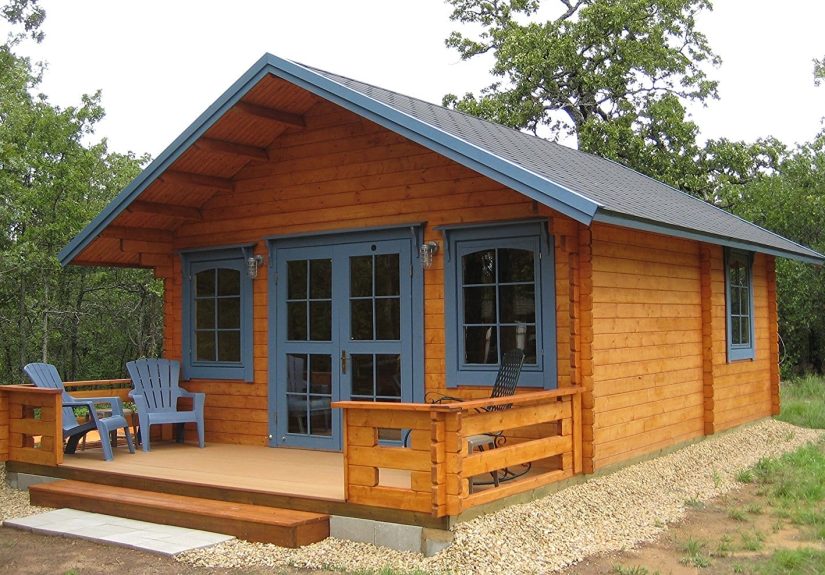
These are the viral darlings: wood cabin kits that arrive as precut boards, hardware, windows, doors, and instructions.
Brands like Allwood (often highlighted in mainstream home and lifestyle coverage) are commonly referenced in the Amazon-tiny-house conversation.
What you can expect: a cozy-looking structure, lots of natural light, and the thrilling realization that “assembly required”
can mean anything from “a weekend with a friend” to “a new personality trait.”
- Best for: backyard studios, guesthouses, hobby rooms, pool houses, office space, or short-term stays with separate bathroom access.
- Watch-outs: many kits don’t include foundation materials, roof shingles, insulation, plumbing, or electrical work.
- Reality check: a “cabin kit” can be gorgeous, but “turnkey home” is a different product category.
If you want the cabin aesthetic and you’re willing to finish the interior yourself (or hire help), these can be a smart way to create
a high-charm backyard space. Just don’t confuse “pretty shell” with “fully permitted residence.”
2) Modern Prefab Cabins: The “Minimalist Hotel Room in Your Backyard” Vibe
Amazon also lists sleek, modern prefab cabins that look like they were designed by someone who owns exactly three shirts, all in shades of oatmeal.
These listings often emphasize storage, big windows, and efficient layoutsand some claim pre-installed electric and plumbing systems.
- Best for: guest suites, ADU-style backyard additions (where allowed), creative studios, or downsizing with a strong tolerance for compact living.
- Watch-outs: confirm what “pre-installed” means (fixtures included vs. rough-ins), and what you’ll need for utility hookups.
The promise here is speed and a more finished feel. The risk is that “finish level” varies by seller, and photos can be aspirational.
Read the specs like you’re decoding a legally binding treasure map.
3) Expandable / Foldable Container-Style Homes: The Transformer Phase
If you’ve ever thought, “I wish my house could unfold like a camping chair,” Amazon has options.
Expandable container homes (often steel-framed) are heavily marketed for quick setup and compact shipping.
Some listings claim multiple bedrooms, bathrooms, and kitchensoccasionally at prices that make you suspicious in a healthy way.
- Best for: remote property projects, temporary housing needs, disaster-relief-style setups, or buyers who already understand site logistics.
- Watch-outs: delivery requirements (forklift/crane access), local code compliance, insulation quality, HVAC needs, and warranty/support.
These can work, but they’re not magic. A fold-out house still needs a legal place to live, a prepared site to sit on,
and utilities (or off-grid systems) to function.
4) “Tiny Home” Backyard Buildings: Studios, Sheds, and Guest Spaces
A lot of Amazon “tiny homes” are really backyard structures with flexible use: office, gym, art studio, reading nook,
workshop, or “I need five minutes of silence” sanctuary.
- Best for: work-from-home setups, hobby space, teenage hangouts, short-term guest overflow, rental add-ons (where legal).
- Watch-outs: livability features like insulation, weatherproofing, ventilation, and whether your local rules treat it as a shed or a dwelling.
If your goal is extra spacenot a full-time residencethis category can be the sweet spot for budget and complexity.
How Much Do Tiny Houses on Amazon Cost?
Prices span a huge range. You’ll see:
- Under $10,000: smaller cabin kits and basic backyard structures (usually shell-focused).
- $10,000–$40,000: larger cabin kits, more elaborate backyard builds, and some prefab units.
- $40,000+: bigger kits, more finished prefab cabins, and “tiny” models that start to feel like “small house with ambition.”
Here’s the part people forget: the sticker price is rarely the final price.
Think of the listing price as the starter ingredient, not the finished meal.
The Hidden Costs Nobody Puts in the Glamour Photos
If you’re budgeting, build a “real-life” cost list. Depending on the type of tiny house, you may need:
- Foundation / base: concrete slab, piers, gravel pad, or deck system.
- Roofing materials: shingles/metal roofing often aren’t included with wood kits.
- Insulation: crucial for comfort and code compliance in many climates.
- Electrical: wiring, panel, outlets, permits, and an electrician (unless it’s truly plug-and-play, which is rare).
- Plumbing: water supply, drainage, fixtures, venting, and possibly septic connections.
- HVAC: mini-split, window unit, baseboard heat, or ventilation upgrades.
- Delivery logistics: shipping, unloading, lift equipment, access road improvements.
- Permits and fees: zoning review, building permits, inspections, impact fees (varies by location).
A practical mindset: assume a shell-only kit will require significant additional spend to become a comfortable, code-compliant dwelling.
If you’re using it as a studio or office, you may still want insulation and electricity, which adds up quickly.
How to Vet an Amazon Tiny House Listing Like a Pro
If you only do one thing, do this: treat the listing like a contract, not a vibe.
Checklist: The 12 Questions That Save You From Regret
- Is it a kit, a shell, or a finished unit? Look for explicit “includes” language.
- What’s the exact size? Square footage, dimensions, ceiling height, loft height.
- What materials are used? Wood species, steel gauge, insulation type, window glazing.
- Does it include a floor system? Some kits do; others assume you’ll build on a base you provide.
- What’s excluded? Roofing, foundation, insulation, plumbing, electrical are common omissions.
- How is it shipped? Crates, flat-pack, containerplus total weight and number of pallets/crates.
- What equipment is needed to unload? Forklift, crane, multiple people, special access.
- What’s the assembly timelineand for whom? “Two adults in a few days” often assumes experience and good conditions.
- What’s the warranty? Length, coverage, and who actually honors it (seller vs. manufacturer).
- Are replacement parts available? Windows, doors, fasteners, specialty hardware.
- What do reviews say about customer support? Not just starslook for details about shipping and missing parts.
- Will it pass local rules? Zoning, minimum square footage, egress requirements, setbacks, and whether it’s allowed as an ADU.
Pro tip: if the listing photos look like a boutique hotel, but the specs read like a trade show booth, trust the specs.
Photos are the dessert. Specifications are the vegetables. Eat your vegetables.
Permits, Zoning, and the “Is This Even Legal?” Moment
Tiny houses live at the intersection of dreams and municipal paperwork.
Whether you can place and live in a tiny house depends on your location and how the structure is classified:
- ADU (Accessory Dwelling Unit): often requires permits, inspections, utility hookups, and specific code compliance.
- Shed / studio: may face fewer requirements if it’s not used as a dwelling (rules vary).
- Tiny house on wheels: may be treated as an RV in many areas, with separate rules about where it can be parked/occupied.
Translation: you might be able to buy it in two clicks, but you can’t always live in it in two clicks.
Before you order, check local zoning, setbacks, and whether the structure must meet residential building codes.
Realistic “Best Uses” for Amazon Tiny Houses
If you want to love your purchase, match the product to the job.
Backyard Office or Studio
Cabin kits and modern prefab cabins can be fantastic for remote work, art, music, or a home gymespecially if you add insulation,
electrical outlets, and climate control. You get a dedicated space without a full renovation.
Guest Space (With a Plan)
A guesthouse is doable, but bathrooms and plumbing are the make-or-break factor.
If your kit doesn’t include a bathroom, you’ll need a realistic plumbing strategy (or plan for guests to use the main house).
Rental or Airbnb Add-On (Where Legal)
Many buyers are tempted by the “tiny house as rental income” idea. It can workbut only if local rules allow it,
and only if the structure is safe, permitted, and properly serviced with utilities.
Remote Property Basecamp
Expandable container-style units can serve as a basecamp for land projects, hunting cabins, or seasonal livingespecially
if you’re prepared to handle delivery logistics and off-grid systems.
A Smart Shopping Game Plan
Want to keep this fun and not financially haunted? Here’s a simple approach:
- Pick your use case first (office, guesthouse, full-time living, rental, basecamp).
- Choose your complexity level (DIY kit vs. partially finished prefab).
- Budget for the “boring stuff” (foundation, utilities, permits, delivery, insulation).
- Compare sellers (support, warranty, reviews, parts availability).
- Confirm local feasibility (zoning, permits, inspections) before ordering.
If you do those steps, buying a tiny house on Amazon stops being a viral stunt and starts being… you know… a plan.
Conclusion: Tiny House Dreams, With a Side of Reality
Amazon tiny houses are real, and they can be genuinely usefulespecially for backyard offices, studios, guest spaces,
and creative add-ons that don’t require you to sell a kidney to afford a renovation.
The best outcomes happen when buyers understand what they’re purchasing: often a kit or structure that still needs
site prep, finishing work, and compliance with local rules.
Buy the tiny house if it fits your lifestyle, budget, and patience level. Just don’t assume “Prime delivery”
comes with “instant zoning approval.”
Experiences: What It’s Like to Actually Buy a Tiny House on Amazon (The Part No One Posts)
The most accurate way to describe the Amazon tiny-house experience is: it starts like a daydream and ends like a group project.
The daydream part is easy. You scroll, you see a cedar-toned cabin with dreamy windows, and your brain immediately moves in a throw blanket, a tiny espresso machine,
and a version of you who somehow always has fresh flowers.
Then the practical questions show up, uninvited, like a neighbor who “just wanted to check in.”
Where does it go? Is the ground level? How does it get delivered? Do you need a forklift? A crane? A team of unusually motivated friends?
Suddenly you’re learning words like setbacks and egress and wondering why your city website looks like it was designed in 2004
and never emotionally recovered.
Delivery day, if you choose a kit, is not the cozy montage you pictured. It’s usually pallets or crates, and it’s exciting in the same way
that receiving 40 boxes of “some assembly required” furniture is exciting. You do a headcount of parts. You start forming opinions about nails.
You realize you now have a favorite screwdriver.
The build itself has two moods. Mood one: confidence. The first wall panel goes up and you feel unstoppable.
Mood two: humility. The moment you discover that “square” is not a philosophical concept but a physical requirement, you become a new person.
You learn that weather matters. You learn that daylight disappears faster than you expect. You learn that your friend who said, “I’m handy”
meant “I once assembled a bookshelf with minimal crying.”
And then there’s the finishing: insulation, sealing, paint or stain, flooring, electricity, lighting, maybe a mini-split if you’d like to exist in summer.
This is where your tiny house becomes either a comfortable space you’ll use dailyor a cute box you avoid because it’s “kind of cold in there.”
Finishing is not glamorous, but it’s the difference between “Pinterest dream” and “functional building.”
The best part, honestly, is the moment it becomes yours. When the door swings smoothly, the windows actually latch, and you sit inside for the first time
with nothing but quiet and possibility. A tiny house is small, sure, but it’s also defined spacea room that says, “This is for work,”
or “This is for creating,” or “This is for not being interrupted for five minutes.”
So the experience is a mix of delight and logistics. You’ll feel proud. You’ll feel confused. You’ll probably take at least one photo that makes it look
way easier than it was. And if you go in with eyes openknowing what’s included, what’s not, and what it takes to make it livableyou can end up with
something genuinely wonderful: a tiny space that makes your life feel bigger.