Table of Contents >> Show >> Hide
- What Does “Choleric” Mean?
- Where the Choleric Temperament Comes From (A Quick History)
- Key Traits of a Choleric Personality
- Choleric Strengths (What They’re Great At)
- Choleric Weaknesses (The Usual Tripping Points)
- Choleric Personality in Relationships
- Choleric Personality at Work (Leadership, Teams, and Stress)
- Is Choleric the Same as “Angry”?
- Choleric vs. Modern Personality Psychology (What’s the “Real” Science?)
- How to Grow as a Choleric Personality (Without Losing Your Edge)
- Can You Be a “Mix” of Temperaments?
- Quick Self-Check: Do You Relate to Choleric Traits?
- Real-World Experiences With Choleric Energy (500+ Words)
- Final Thoughts
Ever been told you “take over” group projectsand you secretly thought, “Yes, because someone has to”? Or maybe you’re the person who can turn a vague idea into a plan, a spreadsheet, and a deadline before the coffee finishes brewing. If that sounds familiar, you might relate to what people call a choleric personality.
Before we go any further: “choleric” isn’t a clinical diagnosis, and it’s not a scientifically strict personality category the way modern trait models are. It comes from an old framework (the four temperaments) that’s been around for centuries. Today, many people use “choleric” as a shorthand for a style that’s driven, decisive, direct, and leadership-oriented. Think: action first, feelings later… and maybe then feelingsif there’s time.
This guide breaks down what “choleric” usually means in modern conversation, where it came from, the common strengths and blind spots, and how to work with (or be) this high-octane temperament without accidentally turning every meeting into a competitive sport.
What Does “Choleric” Mean?
In everyday use, a choleric personality describes someone who tends to be:
- Goal-driven (results matter)
- Decisive (choices beat endless debate)
- Assertive (clear opinions, strong preferences)
- Confident (comfortable leading)
- High-energy (moves fast, expects others to keep up)
Choleric types often thrive in challenge-heavy environmentsplaces where taking initiative is rewarded and where progress is visible. They like clarity, momentum, and competence. If you’ve ever thought, “We’ve discussed this for 20 minutes… can we just do the thing?”that’s choleric energy speaking.
Where the Choleric Temperament Comes From (A Quick History)
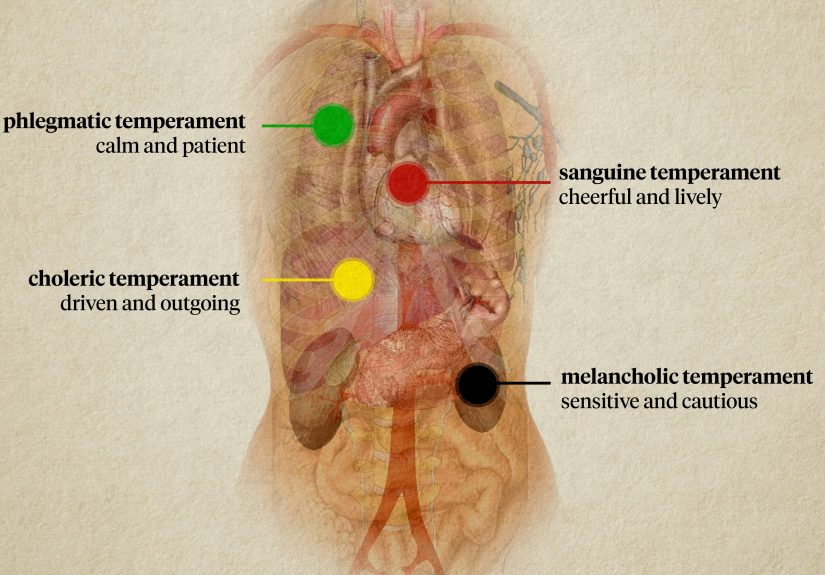
The “four temperaments” idea traces back to ancient medicine. The theory of humorism suggested that the body contained four fluidsblood, phlegm, black bile, and yellow bileand that the balance of those fluids influenced health and temperament. In that worldview, “choleric” was linked to choler (yellow bile) and a “hot and dry” disposition.
Modern medicine does not support the idea that bodily fluids determine personality. Humorism has been replaced by evidence-based biology and psychology. Still, the temperaments framework survived culturally because it’s simple, memorable, andwhen used lightlycan help people reflect on behavioral patterns without needing a PhD or a 97-question assessment.
Key Traits of a Choleric Personality
Choleric traits often show up in how someone communicates, makes decisions, and handles stress. Here are the most common patterns people associate with a choleric temperament today:
1) “Let’s Solve It” Communication
Choleric communicators tend to be direct. They often prefer clear points, quick decisions, and minimal fluff. This can be refreshingly efficient… or mildly terrifying, depending on the tone and timing.
2) Natural Leadership (Sometimes Unofficial)
Even without a title, choleric people often step into leadership by default: delegating tasks, setting deadlines, and steering the group away from analysis paralysis.
3) High Standards and High Expectations
Cholerics often expect a lot from themselves and others. When everyone performs, it’s great. When someone misses details or moves slowly, frustration can show up fast.
4) Competitive Drive
Choleric types often enjoy winningwhether that means landing the client, beating a personal record, or finding the fastest route through airport security like it’s an Olympic event.
5) Low Tolerance for Inefficiency
Repeating the same meeting every week? Vague instructions? Slow decision-making? These are classic choleric stressors.
Choleric Strengths (What They’re Great At)
When choleric traits are well-managed, they can be a serious advantage. Here are the strengths people often associate with this temperament:
Decisiveness Under Pressure
Cholerics can make calls quickly, especially when others freeze. In a crisis (or a deadline spiral), that ability to choose and move forward can keep everything from stalling out.
Motivation and Follow-Through
Many choleric people are wired for action. They don’t just dream; they execute. They set goals, track progress, and push through resistance.
Leadership and Initiative
Cholerics often lead naturally by organizing tasks, setting direction, and encouraging momentum. They’re often comfortable taking responsibilitysometimes too comfortable (more on that soon).
Problem-Solving and Strategy
Because they focus on outcomes, cholerics tend to ask: “What’s the bottleneck?” “What’s the next step?” “What decision gets us unstuck?”
Confidence and Courage
Choleric energy often includes a willingness to try, pitch, apply, and attemptespecially in situations where other people talk themselves out of action.
Choleric Weaknesses (The Usual Tripping Points)
Every strength has a shadow side. Choleric traits can create problems when speed and control start running the whole show.
Impatience
The choleric mind likes momentum. When progress is slow, impatience can turn into irritation, sarcasm, or “fine, I’ll do it myself” behavior (which is not great for teamwork or sleep).
Bluntness That Lands Like a Brick
Direct communication can be helpfuluntil it becomes harsh. Choleric types may unintentionally sound dismissive, especially when stressed.
Control and Dominance
Wanting things done well can drift into micromanaging or power struggles. The choleric impulse to “take charge” can make others feel steamrolled.
Listening to Respond (Not to Understand)
When focused on outcomes, cholerics may jump ahead to solutions before fully hearing the problem. That can make others feel unheardeven if the intention is to help.
Workaholism and Burnout Risk
If you treat every goal like an emergency, eventually your nervous system files a complaint. Choleric drive can fuel big achievementsbut it can also fuel burnout if rest is treated like a weakness.
Choleric Personality in Relationships
Choleric people can be loyal, protective, and deeply supportiveespecially when they believe in the relationship’s “mission.” But they may need to practice slowing down emotionally.
Common Relationship Challenges
- Conflict intensity: quick reactions, strong words, fast escalation
- Feeling-management gap: problem-solving when a partner wants empathy first
- Control patterns: deciding “what’s best” without checking in
- High expectations: frustration when a partner doesn’t match pace
What Helps Relationships With a Choleric Person
- Be specific: clear requests beat vague hints
- Use calm, direct language: don’t compete for dominanceaim for clarity
- Set boundaries early: “I’m open to feedback, not insults” is a fair standard
- Schedule tough talks: a planned conversation reduces “heat-of-the-moment” explosions
For choleric readers: one of the most relationship-saving skills is learning to ask, “Do you want solutions or support right now?” It’s like a cheat code for emotional connection.
Choleric Personality at Work (Leadership, Teams, and Stress)
Choleric energy often shines in environments that reward initiative: entrepreneurship, management, competitive sales, project leadership, operations, and any role where “make it happen” is the job description.
Choleric Strengths at Work
- Fast decisions when time matters
- Clear direction for teams that need structure
- Accountability and ownership of results
- Persistence when goals are difficult
Choleric Risks at Work
- Micromanaging instead of trusting the team
- Low patience with learning curves
- Conflict due to blunt feedback or power struggles
- Burnout from constant urgency
A Practical Example: Choleric Feedback Done Two Ways
Version that backfires: “This is sloppy. Fix it.”
Version that works: “We’re close. To meet the deadline, I need two changes: tighten the summary and verify the numbers. Can you have it back by 3?”
The second version keeps choleric clarity (what + why + when) without the unnecessary emotional damage. Same outcome, fewer enemies.
Is Choleric the Same as “Angry”?
Not exactly. Choleric temperament is often associated with being quick to anger, but the core theme is more like high drive + high control + high intensity. Some choleric people are calm and disciplined; others are reactive. Anger is a possible expression of choleric stress, not the definition of the temperament.
Choleric vs. Modern Personality Psychology (What’s the “Real” Science?)
The four temperaments model is historically influential, but modern psychology often prefers trait-based modelsespecially the Five-Factor Model (Big Five), which describes personality across five broad dimensions (like extraversion and conscientiousness) instead of putting people into one “type.”
If you identify as choleric, you might also score high on traits such as extraversion (energy/drive) and conscientiousness (goal focus), and possibly lower on agreeableness (more blunt/direct). But people are complex, and no single label captures the full story.
How to Grow as a Choleric Personality (Without Losing Your Edge)
Choleric growth isn’t about becoming “less you.” It’s about keeping the strengths while upgrading the parts that cause unnecessary friction.
1) Build a Pause Between Trigger and Response
Try a small “speed bump” habit: inhale, exhale, then speak. It sounds simple because it is simple. The trick is doing it when you’re annoyed.
2) Practice “Two Questions” Listening
Before offering a solution, ask:
- “What’s the main outcome you want?”
- “What’s getting in the way?”
This keeps you in problem-solving mode while showing the other person they’re being heard.
3) Replace Control With Clarity
Instead of taking over, define success. Example: “We need a one-page summary with three key metrics and a recommendation.” Clear expectations reduce your urge to micromanage.
4) Train Warmth Like It’s a Skill (Because It Is)
Warmth doesn’t mean becoming fake or fluffy. It can be as basic as saying: “Thank you,” “Good effort,” or “I see what you did there.” Recognition motivates peopleand it costs you nothing.
5) Watch for Burnout Signals
If you’re sleeping poorly, constantly irritated, or feeling like everything is “behind,” your drive might be running the show. That’s a sign to reset: rest, reduce inputs, and consider talking to a professional if anger or stress is hurting your life.
Can You Be a “Mix” of Temperaments?
Yes. In the classic framework, people often identify with a blend (like choleric-sanguine or choleric-melancholic). In real life, most people shift by context: you might be “choleric at work” and more easygoing at homeespecially if you’ve learned how to regulate intensity.
Quick Self-Check: Do You Relate to Choleric Traits?
This isn’t a diagnosisjust a reflection tool. You might lean choleric if you often:
- Prefer action over discussion
- Feel responsible for outcomes (even when you shouldn’t)
- Get impatient with slow decision-making
- Speak directly and assume others will “handle it”
- Feel energized by competition, challenge, and goals
- Struggle when you don’t have control or autonomy
Real-World Experiences With Choleric Energy (500+ Words)
Sometimes the easiest way to understand a choleric personality is to see how it plays out in everyday situations. Here are a few realistic, experience-based scenarios that capture both the superpowers and the stress pointswithout pretending everyone fits into one neat box.
Experience 1: The Group Project “Rescue Mission”
It starts with a shared document titled “Final Presentation” and exactly zero slides inside. Everyone is “thinking,” one person is “waiting for inspiration,” and another is debating whether the font should be modern or modern-modern. The choleric-leaning student doesn’t just feel mild concern; they feel the clock ticking in their bones. Within minutes, they’ve created an outline, assigned sections, set mini-deadlines, and built a slide template.
The win: the project suddenly exists in the real world. Progress happens. The group gets a good grade.
The friction: some teammates feel bossed around or criticized when the choleric person says, “That slide’s confusingredo it.” The choleric person thinks they’re being helpful and efficient; the team hears “you’re not good enough.” The growth moment usually happens when the choleric leader learns to add one sentence of context: “We’re closelet’s simplify so the audience gets it fast.” Same standard, better teamwork.
Experience 2: The Workplace Bottleneck Breaker
In many offices, there’s a familiar pattern: a process is clunky, nobody enjoys it, and everyone accepts it as “just how things are.” Choleric employees often can’t leave it alone. They ask uncomfortable but useful questions like, “Why do we need three approvals?” or “Why are we tracking this in two systems?”
The win: they streamline processes, reduce wasted time, and push decisions forward. Teams often appreciate the results even if the delivery is spicy.
The friction: choleric drive can trigger turf battles. People may feel exposed, corrected, or rushed. The choleric person might interpret resistance as incompetence (“Why are we still talking about this?”), when it’s sometimes about buy-in, fear of change, or unclear incentives. The experienced choleric operator learns a key trick: they still move fast, but they bring people with them by sharing the “why,” asking for input, and giving credit.
Experience 3: The Relationship “Fix-It” Reflex
A partner comes home upset and starts venting. The choleric person hears a problem and instantly reaches for a solution: “Okay, here’s what you should do tomorrow.” That response can be practicaland also completely wrong for the moment.
The win: cholerics are dependable in crisis. If someone needs help moving, making a plan, or handling a tough situation, choleric energy can feel like safety and stability.
The friction: emotional moments can turn into debates or action items when what’s needed is empathy. Many choleric people improve relationships dramatically by learning a simple habit: respond with validation first (“That sounds really stressful”), then ask what the other person wants (“Do you want advice or just a listening ear?”). That one question keeps their problem-solving strength while meeting emotional needs.
Experience 4: The “High Standards” Double-Edged Sword
Choleric types often set big goals and don’t mind working hard. That can look like leadership and ambitionuntil it turns into relentless self-pressure. Some choleric people don’t just want to do well; they want to do well fast, and they can get irritated when their own performance doesn’t match the timeline in their head.
The win: they achieve milestones that others only talk about.
The friction: they may struggle with rest, patience, and self-compassion. The healthiest choleric mindset shift is learning that recovery is not “wasted time.” It’s part of performancelike sharpening a knife instead of forcing it through the whole meal.
These experiences show why people often admire choleric strengths (clarity, action, leadership) while also needing choleric growth (patience, tone, empathy). You don’t have to “change your personality” to improve your lifeyou just have to steer your intensity instead of letting it drive.
Final Thoughts
A choleric personalityused in the modern, casual senseusually points to a strong, decisive, goal-focused style. It can be a huge advantage in leadership, execution, and problem-solving. The key is learning to balance speed with empathy, standards with collaboration, and ambition with recovery.
If you’re choleric, your best life probably isn’t one where you slow down to someone else’s pace. It’s one where you keep your drive and become the kind of leader (at work and at home) people trust, not just follow.