Table of Contents >> Show >> Hide
- What Is Weapons (and Why Is Everyone Talking About the Ending)?
- The Ferris Bueller Comparison: Why Viewers Made the Connection
- So Was It a Homage? The Director’s Answer: “No, That’s Not What I Was Doing”
- The Real Secret Sauce: The Chase Was Expanded to Make You Leave the Theater Smiling
- Why the Ending Feels Like Comedy Even When It’s Horrifying
- The “Ferris Bueller Effect”: How Accidental Homages Are Born
- Why This Matters: Horror’s New Superpower Is “Fun”
- Conclusion: An Unintentional Homage Is Still a Compliment
- Experiences: The Accidental Homage Phenomenon in Real Life (and Online)
There are two kinds of movie references: the ones filmmakers plant like Easter eggs, and the ones audiences discover like they’re
archaeologists with Letterboxd accounts. The wild thing about Weapons is that its most talked-about “homage” appears to belong
firmly in the second categoryspecifically, the climactic chase that many viewers immediately clocked as a dark, bloody cousin of
Ferris Bueller’s Day Off.
And then the director basically said: “Ferris who?” (Okay, not exactly, but you get the vibe.) What follows is a look at how that comparison
happened, why the movie’s ending feels so John Hughes-adjacent even when it isn’t trying to, and what this says about modern horror’s
favorite trick: making you laugh right before it drop-kicks your nervous system.
What Is Weapons (and Why Is Everyone Talking About the Ending)?
At its surface levelbefore the movie starts peeling itself like an onion with teethWeapons begins with a simple, skin-crawling
premise: in the small town of Maybrook, 17 kids from the same classroom leave their homes at exactly 2:17 a.m. and vanish. One child, Alex
Lilly, doesn’t disappear, and that detail becomes the pebble that starts the avalanche.
The film unfolds as an ensemble mystery-horror, shifting perspective between a teacher under suspicion (Justine Gandy), a father burning with
grief (Archer Graff), a volatile local cop (Paul Morgan), and other townspeople whose lives get pulled into the same undertow. The structure
feels like a sprawling “big picture” puzzledifferent angles, different emotional temperaturesuntil the story snaps into a third-act sprint
that’s equal parts terrifying, cathartic, and (somehow) absurdly funny.
That tonal gearshift is one reason the ending lives rent-free in the internet’s head. The other reason is more specific: the chase.
Not a polite little “run outside, scream, cut to black” horror chase. A full-on suburban pursuit that barrels through houses, yards, and
ordinary neighborhoods like a nightmare decided to borrow your HOA’s landscaping.
The Ferris Bueller Comparison: Why Viewers Made the Connection
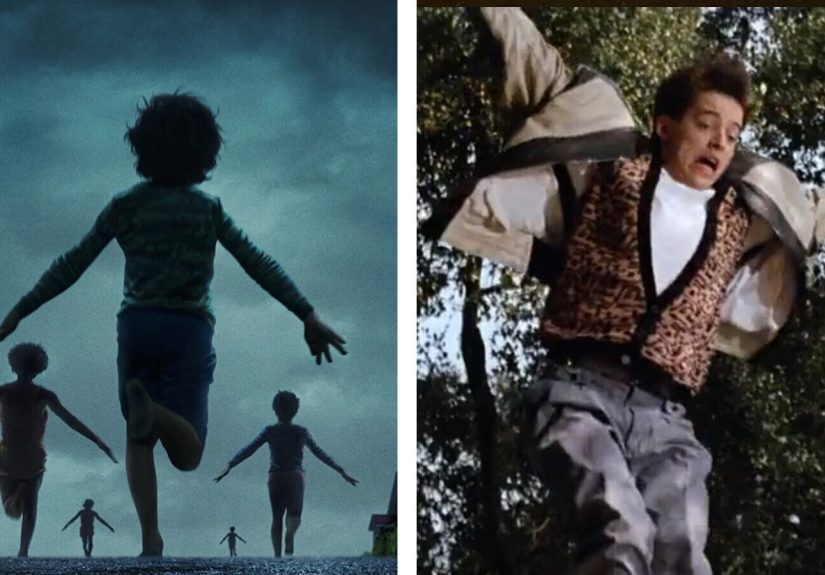
If you’ve seen Ferris Bueller’s Day Off, you remember the frantic endgame: Ferris sprinting home through backyards and side streets,
trying to beat the clock and the consequences. It’s suburban geography turned into an obstacle coursemundane spaces filmed like an action set
piece.
Weapons taps into a similar visual language. The climactic chase is staged in recognizable “everyday America” spaceslawns, fences,
houses, and the kind of neighborhood corners where nothing exciting is supposed to happen. That’s the whole point: when horror invades a place
that looks safe, your brain starts yelling, “This is wrong!” before the movie even does anything “scary.”
Add the comedic punctuation inside the chaos (the kind of cutaways that make you laugh in self-defense), and it’s easy to see why audiences
thought, “Wait… is this a twisted Ferris riff?” The sequence plays like a suburban chase scene that keeps acknowledging, with a wink,
how ridiculous it is to be sprinting through a perfectly trimmed yard while the world ends.
Fans didn’t just notice the vibethey ran with it. Online edits and jokes amplified the comparison, because nothing says “cinema discourse” like
slapping classic comedy energy on a horror chase and watching the comments section combust.
So Was It a Homage? The Director’s Answer: “No, That’s Not What I Was Doing”
Here’s where the story gets fun: when asked directly about the apparent Ferris Bueller echo, the filmmaker’s response wasn’t
“Absolutely, I’m a genius.” It was more like, “Nope.” The chase wasn’t built as a deliberate nod to John Hughes; the resemblance was, as
described in coverage of the interview, accidentaland the director pointed instead to a different ‘80s DNA strand.
The stated inspiration for the chase’s flavor leans toward the manic, off-kilter energy of the Coen brothers’ Raising Arizonathat
breakneck “everything is chaos but also kind of hilarious” tempo. The goal wasn’t to recreate Ferris’s clean comedic sprint; it was to
weaponize (sorry) the same suburban normalcy into something frantic, messy, andcruciallyfun.
In other words: audiences recognized a familiar silhouette (suburban chase through backyards) and called it a reference. The filmmaker
recognized a different silhouette (high-energy, comedic mayhem) and called it a vibe. Both can be true. Cinema is allowed to be a
multiverseespecially when it’s sprinting.
The Real Secret Sauce: The Chase Was Expanded to Make You Leave the Theater Smiling
One of the most revealing behind-the-scenes details about the finale is that the chase didn’t start as the sprawling suburban marathon viewers
ended up watching. Early versions were smallermore “she runs outside, they catch up” than “this neighborhood is now a track-and-field event
sponsored by fear.”
During prep, the finale was deliberately enlarged into a longer, more elaborate chase, with more locations, more destruction, and more comedic
beats. The intention wasn’t subtle: make the ending exhilarating enough that people walk out feeling that giddy “I can’t believe they went for
it” satisfaction. That’s how you turn a horror movie into a crowd experiencesomething people want to talk about immediately, loudly, and with
hand gestures.
This also helps explain why accidental comparisons happen. When you expand a chase into a sprawling suburban gauntlet, you’re inevitably
stepping into a cinematic tradition. Backyards have a film history. Lawns have a film history. Even the innocent act of running past someone
doing weekend chores becomes part of the “suburbia as comedy stage” language that movies like Ferris Bueller helped popularize.
Why the Ending Feels Like Comedy Even When It’s Horrifying
Horror and comedy are cousins who show up to family reunions wearing the same outfit and then pretend it’s a coincidence. Both rely on timing,
surprise, and releasing tension in a way that hits the body before it hits the brain. Weapons uses that shared DNA constantly, but the
finale is where it becomes unmistakable.
The chase works because it’s not just “scary things happening.” It’s scary things happening in a way that acknowledges how surreal the moment
is. The movie stages the suburban environment almost like a punchline: the normal world is still normalsomeone is still mowing the lawnwhile
the story’s nightmare is sprinting through it.
That contrast is the joke. Not “ha-ha, violence,” but “ha-ha, this is insane to witness in this setting.” It’s the same comedic engine that
powers classic set pieces: take something ordinary, push something extraordinary through it, and let the audience feel smart for recognizing
the absurdity. The humor becomes a pressure valve so the horror can hit harder right after.
The “Ferris Bueller Effect”: How Accidental Homages Are Born
1) Shared visual grammar
Movies speak in images. When a film uses a familiar patternlike running through backyards in a tight suburban gridit activates a memory bank
in viewers. Even if the director is thinking “Coens,” the audience might be thinking “John Hughes,” because the surface-level grammar overlaps.
2) Audience pattern-matching (a.k.a. “We are all detectives now”)
Modern movie culture encourages “spot the reference.” Between Easter egg breakdowns, theory videos, and social media edits, viewers are trained
to treat films like puzzles. Sometimes they’re right. Sometimes they’re inventing a connection that still feels emotionally correct. The
Ferris comparison is a perfect example: the feeling is real, even if the intention wasn’t.
3) Tone as a trapdoor
If the chase were played dead-serious, the Ferris comparison might not stick. But the comedic beats invite it. The moment a horror movie
starts winking, your brain reaches for comedy ancestors. That’s when accidental homages happenbecause tone is often more memorable than plot.
Why This Matters: Horror’s New Superpower Is “Fun”
For years, “elevated horror” became shorthand for serious dread, grief metaphors, and artful misery (all valid!). But Weapons is part
of a newer wave that refuses to choose between emotional weight and audience pleasure. It can be unsettling, personal, and mournfulthen pivot
and give you a finale that plays like a suburban action-comedy fever dream.
And that’s why the ending conversation keeps growing. People aren’t just debating what happenedthey’re talking about how it felt. Some viewers
read the finale as catharsis, some as pure adrenaline, some as comedy, and many as all three at once. When a horror movie creates multiple
emotional “exit ramps,” it stays alive in group chats for months.
The Ferris Bueller comparison is basically proof that the finale succeeded. A forgettable ending doesn’t get mistaken for a beloved classic.
It just… ends. But a finale that’s bold enough to trigger pop-cultural déjà vu? That’s a movie that stuck the landing.
Conclusion: An Unintentional Homage Is Still a Compliment
If a climactic horror chase makes people think of Ferris Bueller’s Day Off, it doesn’t mean the filmmaker secretly hid a John Hughes
shrine on set. It means the sequence tapped into something timeless: the comedic thrill of suburbia becoming a playground, the visceral joy of a
chase that escalates beyond reason, and the audience’s love of recognizing familiar shapes in unfamiliar stories.
Weapons didn’t need to “reference” Ferris to feel Ferris-adjacent. It just needed the right ingredientsbackyards, speed, escalating
chaos, and a wink. Sometimes a movie makes the same move as a classic not because it copied it, but because both are reaching for the same
cinematic nerve.
And if the director says it wasn’t intentional? That’s the best part. It means the sequence wasn’t built to be a referenceit was built to be
memorable. The comparison is just the audience’s way of saying: “We’ve seen this kind of magic before… and we’re happy it’s back, even if it’s
holding a knife.”
Added ~ of experiences, as requested
Experiences: The Accidental Homage Phenomenon in Real Life (and Online)
If you’ve ever watched a movie with friends and someone whispers, “This is totally like that scene,” you already understand how
accidental homages are born. The experience is less about proving intention and more about sharing recognition in real time. It’s the cinematic
equivalent of hearing three notes of a song and going, “Waithold onthis is my jam,” even if the band insists they’ve never heard it.
With Weapons, that experience often happens in the exact same moment: the chase breaks loose, the movie’s tension snaps into motion,
and suddenly the theater feels like a roller coaster that also has opinions about lawn care. You can practically sense the audience recalibrating:
people who were bracing for dread start laughing, not because the story stopped being intense, but because the intensity became outrageous in the
most watchable way. That’s when someone inevitably thinks of Ferris sprinting through suburbiabecause your brain is reaching for a familiar
emotional label: this is a chase that’s fun to watch.
Then comes the second wave of experience: the post-movie debrief. In the parking lot, in a group chat, on social media, viewers compare notes.
“Did you also think Ferris Bueller?” “No, it was totally Raising Arizona!” “I don’t care what it was, the mowing-lawn moment broke me.”
That’s the beauty of a sequence that blends genreseveryone walks out holding a different piece of it. One person talks about the suspense
mechanics. Another talks about the comedy timing. Another talks about how weirdly satisfying it is when a movie lets you release tension after
holding it for so long.
Online, the experience becomes a feedback loop. Someone makes an edit. Someone else adds the “right” music. Another person posts a side-by-side
comparison. The sequence becomes a meme, but also a kind of communal annotationpeople using pop culture references as shorthand for what they
felt. In that way, “Ferris Bueller homage” isn’t just a claim about filmmaking; it’s a shared language for describing tone. You don’t have to be
correct about the director’s intent to be correct about the audience’s reaction.
And there’s a quieter, creator-side experience too: filmmakers and craftspeople often build a scene to achieve a sensationspeed, giddiness,
panic, releasewithout thinking “This must resemble X.” Later, they discover the internet has assigned the scene a family tree. Sometimes that’s
annoying. Often, it’s flattering. Either way, it proves the scene is doing what it’s supposed to do: sparking association, conversation, and
that uniquely modern form of movie loveturning a moment into something people want to rewatch, remix, and argue about for fun.