Table of Contents >> Show >> Hide
- 10 Offbeat Stories From the Week of 6/17/18
- 1. The Moon Mystery Turned Out to Be an Astronaut Problem
- 2. More Than 2,500 Women Set a Skinny-Dipping World Record
- 3. Charlie Chaplin Accidentally Became the Grandfather of a Modern Meme
- 4. Honeybees Demonstrated a Tiny, Buzzing Grasp of Zero
- 5. A Missing Air Force Captain Was Found 35 Years Later
- 6. A Raccoon Turned a Skyscraper Into Prime-Time Television
- 7. MIT’s “Norman” Showed How Biased Data Can Warp AI
- 8. Archaeologists Found a Tiny King With a Giant Identity Problem
- 9. A Man Declared Dead Came Home Alive
- 10. A Supermassive Black Hole Turned Dinner Into a Science Spectacle
- Why These Weird News Stories Still Work
- The Experience of Following a Week of Offbeat News
Some weeks in the news feel like a nonstop parade of grim headlines, policy fights, and enough doomscrolling to make your coffee taste nervous. Then there are weeks like this one, when the world quietly slips a banana peel under seriousness and reminds us that reality can still be gloriously weird. The week of June 17, 2018, delivered exactly that kind of oddball energy.
In one corner, scientists realized that astronauts may have accidentally warmed parts of the Moon just by tromping around on it. In another, a raccoon turned a Minnesota skyscraper into its own personal action movie. Elsewhere, bees flirted with abstract math, a missing Air Force captain casually reappeared after 35 years, and the internet briefly wondered whether Charlie Chaplin had invented the “distracted boyfriend” meme before memes even had a name.
This roundup gathers the strangest, smartest, and most delightfully offbeat stories from that week into one easy read. Think of it as a time capsule packed with science curiosities, internet absurdities, and the kind of true stories that sound fake until you remember the universe enjoys improv comedy. Here are 10 offbeat stories you might have missed this week.
10 Offbeat Stories From the Week of 6/17/18
1. The Moon Mystery Turned Out to Be an Astronaut Problem
For decades, scientists had a head-scratcher on their hands: why did parts of the Moon appear to be warming slightly after Apollo-era experiments were installed? The answer, as it turns out, was wonderfully human. Researchers concluded that astronaut activity likely disturbed the lunar surface enough to expose darker soil beneath the top layer of dust. Darker material absorbs more sunlight, which helps explain the subtle temperature rise.
That is a very space-age version of learning not to track dirt through the house. The finding also says something deeper about exploration: even small human actions can leave measurable effects in extreme environments. We tend to think of the Moon as untouched and eternal, but the Apollo missions proved that even a few footprints, rover tracks, and science instruments can alter a landscape in ways that echo for years.
2. More Than 2,500 Women Set a Skinny-Dipping World Record
Yes, this really happened, and no, it was not the plot of a summer comedy. At Magheramore Beach in Ireland, more than 2,500 women took part in a record-breaking skinny dip to support a children’s cancer charity. The event was bold, chilly, heartfelt, and proof that people will absolutely combine philanthropy with a world-record attempt if given half a chance and access to a beach.
What makes the story memorable is not just the number, though 2,505 participants is the kind of figure that makes a Guinness adjudicator sit up straight. It is the spirit behind it. The event grew from a much smaller gathering into a large, empowering fundraiser. In a week packed with quirky headlines, this one stood out because it mixed bravery, community, and a level of commitment that most people do not show even when water is warm and swimsuits are involved.
3. Charlie Chaplin Accidentally Became the Grandfather of a Modern Meme
The internet loves discovering that nothing is really new, and this week it found a gem: a still from Charlie Chaplin’s 1922 film Pay Day looked uncannily like the “distracted boyfriend” meme. There it was, nearly a century early, with the same visual rhythm of temptation, disapproval, and very bad decision-making. Apparently, human weakness has always had strong meme potential.
The story was funny for obvious reasons, but it also offered a neat lesson in cultural repetition. Visual comedy has always relied on instantly recognizable relationships and emotions. A wandering eye, a scandalized partner, and a passing distraction are basically timeless ingredients. The internet may have modernized the caption game, but silent film already understood the joke. Chaplin did not invent memes in the technical sense, but he definitely wandered into the family tree and looked annoyingly comfortable there.
4. Honeybees Demonstrated a Tiny, Buzzing Grasp of Zero
If you still think insects are just decorative chaos with wings, honeybees would like a word. Researchers reported that bees could understand zero as a numerical concept, placing it at the low end of a number sequence. That may sound like a niche academic flex, but it is actually a huge deal. Zero is not just “nothing”; it is an abstract idea that took human civilizations a very long time to formalize.
The significance here is deliciously humbling. A creature with a minuscule brain, whose daily priorities include flowers and not getting eaten, appears capable of handling a concept once considered a sophisticated intellectual milestone. The finding also nudges scientists to think differently about cognition. Maybe advanced thinking does not always require a giant, dramatic brain. Sometimes it just requires efficient wiring, good experimental design, and a bee that is surprisingly better at math than the person who still uses fingers for eight plus seven.
5. A Missing Air Force Captain Was Found 35 Years Later
One of the strangest real-life mystery updates of the week involved Captain William Howard Hughes Jr., a former Air Force officer who vanished in 1983. For years, his disappearance invited speculation, especially because he had worked in a sensitive Cold War context and held high-level clearance. Then the story took a sharp turn out of spy-thriller territory: he was found alive in California, living under another name.
The reveal was jarring because it replaced decades of dramatic theories with something far more mundane and far more human. According to reporting at the time, Hughes said he left because he was depressed about being in the Air Force. That does not make the disappearance less astonishing, but it does strip the story of some cinematic glamour. Sometimes the explanation behind a mystery is not espionage, sabotage, or a grand international plot. Sometimes a person simply walks away and keeps walking for 35 years.
6. A Raccoon Turned a Skyscraper Into Prime-Time Television
Few stories captured the internet’s collective soul this week like the now-legendary St. Paul raccoon. The animal became trapped on a downtown building ledge and responded by climbing higher, eventually scaling a tall office tower while thousands of people watched in escalating panic online. For a while, the raccoon had the emotional investment of a royal baby, a moon landing, and a playoff game all rolled into one furry package.
The appeal was obvious. The raccoon was stubborn, dramatic, weirdly athletic, and somehow relatable. Anyone who has ever been overwhelmed by life could project onto that tiny climber inching upward, pausing on ledges, then pushing on because there was apparently no better plan. By the time wildlife officials safely trapped and released it, the raccoon had become a folk hero. The whole saga was absurd, suspenseful, and oddly uplifting. Sometimes viral fame goes to influencers. Sometimes it goes to a trash panda with upper-body strength.
7. MIT’s “Norman” Showed How Biased Data Can Warp AI
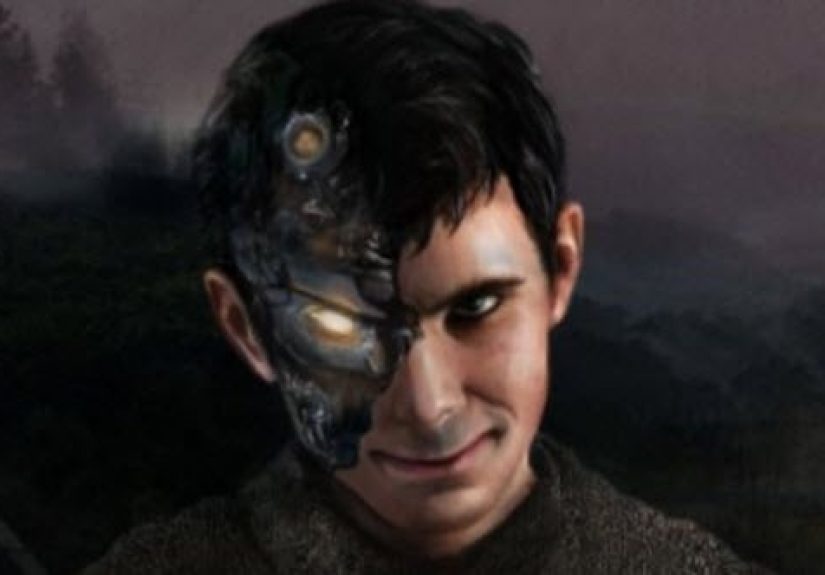
Artificial intelligence got its weird entry for the week through “Norman,” an MIT project described as a psychopathic AI. The point was not to create a robot villain for fun, although that is undeniably how it sounds. Researchers used the project to demonstrate that the data fed into machine learning systems can strongly shape how they interpret the world. Train a system on dark, distorted material and the output becomes dark and distorted too.
That message has only become more relevant with time. Back in 2018, Norman was an attention-grabbing way to make a serious point: AI is not magically neutral. It reflects the data and assumptions that build it. The project was weird enough to go viral, but useful enough to stick in people’s minds. Strip away the horror-movie nickname, and the lesson is clear: if the machine behaves badly, somebody should probably inspect what it has been taught. Silicon may be fast, but it still learns from us, which is not always reassuring.
8. Archaeologists Found a Tiny King With a Giant Identity Problem
Archaeologists working in Israel uncovered a remarkably well-preserved carved head from the ninth century BCE, and almost immediately everyone ran into the same problem: who exactly was this stylish little monarch supposed to be? The artifact was only a couple of inches tall, but it opened a giant historical debate. Scholars suggested it could represent a ruler from Israel, Aram-Damascus, or Tyre.
This is the kind of story history lovers adore because it combines hard evidence with delicious uncertainty. The object itself is real, rare, and meaningful. The identity attached to it remains open to interpretation. In other words, it is archaeology in its natural habitat: one-third science, one-third detective work, and one-third standing around a table saying, “Okay, but what if it’s this king?” The mystery matters because border regions in the ancient Near East were politically tangled, and even a tiny sculpture can reveal big things about power, trade, and cultural exchange.
9. A Man Declared Dead Came Home Alive
Reality took a hard left turn into soap-opera territory when reports emerged from Japan about a man presumed dead who later returned home alive. His family had identified a body they believed was his, and that body was cremated. Then the missing husband came back. That is the kind of sentence that makes everyone in the room stop chewing for a second.
Beyond the shock value, the story raised unsettling questions about identification procedures and the limits of visual confirmation. It also carried a strange emotional weight. For the family, the event must have swung from grief to disbelief to bewilderment in record time. Offbeat news often works because it feels harmlessly weird, but this case had a deeper edge. It reminded readers that bureaucracy can make spectacular mistakes, and that one of the most basic certainties in life, knowing whether someone is truly gone, can sometimes fail in spectacular fashion.
10. A Supermassive Black Hole Turned Dinner Into a Science Spectacle
To close the week with appropriate drama, astronomers reported something cosmic and wild: they directly imaged the formation and expansion of a fast-moving jet launched when a supermassive black hole tore apart a star. The event took place in a galaxy system known as Arp 299, where a black hole effectively shredded stellar matter and flung some of it outward at a significant fraction of the speed of light. Subtle stuff, space.
This story mattered because tidal disruption events are rare to catch in detail. Scientists were not just saying, “A black hole ate something.” They were watching the mechanics of that violent process unfold through years of observations. It was a reminder that the universe is full of destruction so magnificent it loops back around to beauty. On Earth, the week gave us meme archaeology and raccoon acrobatics. In space, it gave us a black hole belching a jet after devouring a star. News balance restored.
Why These Weird News Stories Still Work
Offbeat stories survive because they do something straight news sometimes cannot: they make people curious again. A strange headline invites a different kind of reading. You are not skimming for outrage or partisan ammunition. You are leaning in because the world has just done something improbable. That matters. Curiosity is not fluff. It is one of the healthiest reasons to open a browser.
The best weird news also carries substance under the oddness. The Moon story was really about long-term scientific data. The bee story touched on cognition and abstraction. Norman raised questions about AI bias. The raccoon story revealed how shared attention can briefly unite the internet around something harmless. Even the funniest headlines often conceal a useful idea: science is ongoing, history is incomplete, animals are chaos agents, and humans remain both ingenious and extremely strange.
That is why a roundup like this does more than entertain. It preserves a snapshot of what people were marveling at in a given week. Serious events define history, but quirky stories define texture. They tell us what made people laugh, gasp, stare, and text a friend, “You have to read this.” In that sense, offbeat stories are not side dishes. They are the seasoning that makes a news cycle taste like real life.
The Experience of Following a Week of Offbeat News
Reading through a week like this feels less like consuming a traditional news roundup and more like walking through a carnival designed by scientists, archivists, wildlife officers, and one very committed raccoon. The emotional rhythm is what makes it memorable. One minute you are learning that lunar dust can rewrite a decades-old mystery. The next, you are deeply invested in whether a mammal with questionable life choices can make it to the top of an office tower. It is impossible not to admire a news week with that kind of range.
There is also something refreshing about how offbeat stories sneak past our defenses. Most readers approach major headlines with preloaded opinions, stress, or fatigue. Weird news arrives differently. It gets in through surprise. You click because the premise sounds absurd, and then you stay because the details are real. Suddenly you are reading about ancient kings, mathematical bees, or the ethics of training AI on ugly data. The gateway may be strange, but the payoff is often genuinely informative.
That experience matters for a practical reason too: quirky stories make people remember facts better. You may forget a routine headline by lunch, but you will remember the week scientists suggested astronauts accidentally heated the Moon. You will remember the giant skinny-dipping fundraiser, the captain who disappeared for decades, and the black hole that turned a star into cosmic leftovers. Weirdness sticks. It gives information a hook, and once that hook is in your mind, the underlying science or history has a better chance of staying there.
There is a social side to it as well. Offbeat stories are unusually shareable because they invite delight rather than debate. Sending someone a link about a raccoon climbing a skyscraper is an act of generosity. You are not asking them to be angry. You are offering them five minutes of collective suspense and maybe a laugh. In a crowded media environment, that feels almost radical. These stories become tiny public campfires. For a brief stretch, strangers care about the same odd thing at the same time.
And maybe that is the real charm of a roundup like this one. It reminds us that the world is not only heavy; it is also unruly, inventive, mysterious, and occasionally hilarious. News does not have to be trivial to be fun, and fun does not make a story meaningless. Sometimes the weirdest headlines are the ones that best capture reality as it actually feels: not tidy, not linear, and definitely not boring. If this week proved anything, it is that truth still has excellent comedic timing.