Table of Contents >> Show >> Hide
- The 60-Second “What Even Is DMT?” Version
- Why Do So Many DMT Reports Sound Weirdly Similar?
- The 19 “Crazy Stories” (Really: Commonly Reported DMT Motifs)
- 1) The Geometry That Feels Alive
- 2) The “Waiting Room” Before the Launch
- 3) The Entities With Customer-Service Energy
- 4) The Entities With “Absolutely Not” Energy
- 5) The Telepathic Download
- 6) The “Operating Room” or “Repair Shop”
- 7) The Cartoon Universe With Serious Vibes
- 8) The Hyper-Real “More Real Than Real” Room
- 9) The Infinite Hallway of Doors
- 10) The “Reality Is a Stage Set” Reveal
- 11) The “You’re Dead” False Alarm
- 12) The Life Review (Without the Scroll Bar)
- 13) The Encounter With “Ultimate Reality”
- 14) The Alien Museum
- 15) The Trickster Show
- 16) The Language Made of Shapes
- 17) Time Turns Into a Rubber Band
- 18) The Emotional Whiplash: Terror to Love in One Breath
- 19) The Afterglow (or the Aftershock)
- What These Stories Might Mean (Without Pretending We Have a Final Answer)
- Risks, Reality Checks, and When to Get Help
- Bonus: 500 More Words on DMT-Related Experiences (The Part People Rarely Describe Well)
- Conclusion
Quick note before we dive in: DMT (N,N-dimethyltryptamine) is an illegal, Schedule I substance in the United States. This article is for education and harm-awarenessnot encouragement or instructions. Also, people’s reports are subjective, unpredictable, and sometimes terrifying, not “funny trip content.”
The 60-Second “What Even Is DMT?” Version
DMT is a powerful psychedelic in the tryptamine family. Compared with many other psychedelics, its effects are often described as extremely intense and short-livedmore like being launched out of your mental atmosphere than taking a scenic stroll. Researchers and clinicians generally describe psychedelics as altering perception, emotion, and thought, sometimes producing vivid hallucinations and a sense of disconnection from the body or environment.
That’s the textbook framing. The internet framing is: “I met something that felt more real than my math homework.”
Why Do So Many DMT Reports Sound Weirdly Similar?
Here’s the part that makes skeptics and mystics both lean forward: people who’ve never met each other often describe overlapping motifshyper-detailed geometry, “rooms” or “realms,” and encounters with seemingly independent “entities.” One large survey published in a peer-reviewed journal (led by researchers affiliated with major U.S. universities) collected thousands of accounts focused specifically on these entity-encounter experiences and found recurring features: intense visuals, “telepathic” or extrasensory-feeling communication, and strong emotions ranging from fear to awe.
There are a few non-magical reasons this might happen:
- Shared brain wiring: human visual and emotion systems are built similarly, so extreme disruption can produce “family resemblance” experiences.
- Prediction engine overload: your brain constantly guesses what’s happening and updates those guesses. Psychedelics may scramble the “confidence settings,” making inner imagery feel external and undeniable.
- Cultural cross-pollination: if you’ve heard the phrase “machine elves,” your brain has already been handed a paint-by-numbers kitwhether you like it or not.
The 19 “Crazy Stories” (Really: Commonly Reported DMT Motifs)
Below are 19 recurring “story types” drawn from patterns documented in research and commonly described in first-person reports. Think of them as the greatest hits of an experience that nobody can reliably predict.
-
1) The Geometry That Feels Alive
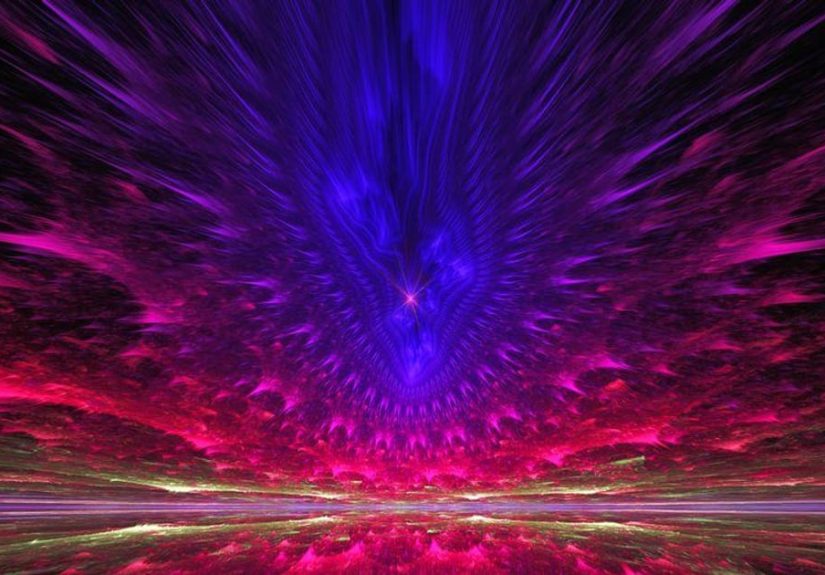
People describe kaleidoscopic patterns so crisp they seem “engineered,” like sacred origami made of neon math. The twist: it doesn’t feel like a wallpaper. It feels like it’s watching back, reacting, almost collaborating with the observer.
-
2) The “Waiting Room” Before the Launch
A surprising number of reports include a transitional “lobby” phasean in-between space where sensations rev up, reality loosens, and there’s a sense of “someone” preparing you for the next room. Some find it comforting. Others call it the moment they realized they brought zero snacks for the apocalypse.
-
3) The Entities With Customer-Service Energy
Many accounts feature “helpers” or “guides” that feel benevolentlike cosmic flight attendants. People report receiving reassurance, wordless instructions, or a message that boils down to: “Relax. You’re doing the human thing again.”
-
4) The Entities With “Absolutely Not” Energy
Not all encounters are warm. Some people report intimidating presencesstern, chaotic, or alien. A frequent theme: a sense of being judged, tested, or “scanned,” like you’re a suspicious package at an interdimensional airport.
-
5) The Telepathic Download
Instead of hearing spoken words, people describe instant meaninglike an entire paragraph arriving at once, without a voice. In survey research, a large share of respondents report “receiving a message,” which is one reason these experiences can feel deeply significant afterward.
-
6) The “Operating Room” or “Repair Shop”
Some report being placed on a metaphorical table while entities “work” on themrepairing, cleaning, adjusting. Whether you see it as symbolism or something stranger, the emotional aftertaste is often: “I feel… recalibrated. Also: what just happened?”
-
7) The Cartoon Universe With Serious Vibes
Bright, playful visualsclownish faces, animated architecture, toy-like physicspaired with feelings of profound meaning. The contrast is hilarious and unsettling: it’s like receiving a life-changing prophecy from a sticker book.
-
8) The Hyper-Real “More Real Than Real” Room
People describe environments that feel sharper than ordinary realitycolors more saturated, edges more defined, time more “high resolution.” This realism is part of what makes DMT reports so convincing to the person having them.
-
9) The Infinite Hallway of Doors
A repeated motif: corridors, portals, frames, or doorssometimes opening rapidly like a flipbook of universes. The story often includes a choice: follow one door, or get swept along by the current like a leaf in a hurricane of options.
-
10) The “Reality Is a Stage Set” Reveal
Some people report the feeling that ordinary reality is a constructed layerlike scenery pulled back to reveal backstage mechanics. Whether that’s existential insight or brain fireworks, it can be emotionally intense and destabilizing.
-
11) The “You’re Dead” False Alarm
One of the scarier narratives: a sudden conviction that you died, or that your old life ended. Even when it passes, it can leave people shaken. This is one reason clinicians emphasize that psychedelics can trigger panic and confusion.
-
12) The Life Review (Without the Scroll Bar)
People sometimes describe rapid autobiographical imagerymemories, regrets, relationshipscompressed into a felt “review.” It may not be a literal highlight reel, more like your brain dumping emotional files onto the desktop at once.
-
13) The Encounter With “Ultimate Reality”
Some experiences are interpreted as contact with “God,” “the Source,” or an ultimate layer of existence. Johns Hopkins researchers have published survey work on profound “ultimate reality” experiences (not only DMT-specific) showing many people rate them as deeply meaningful and worldview-shifting.
-
14) The Alien Museum
Reports sometimes feature displays of impossible objectsfloating artifacts, living symbols, cosmic diagramspresented as if to teach or demonstrate. The vibe is often: “Welcome to the exhibit. Please do not touch the laws of physics.”
-
15) The Trickster Show
Some entities are described as mischievousperforming visual pranks, shape-shifting, or “showing off” reality-bending tricks. The emotional tone can be delighted laughter or pure unease, depending on how safe the person feels.
-
16) The Language Made of Shapes
People report “glyphs” or symbolic scripts that feel meaningful but aren’t readable like normal languagemore like the sensation of understanding than actual translation. It’s a brain-meets-pattern-recognition moment turned up to eleven.
-
17) Time Turns Into a Rubber Band
Some accounts describe time freezing, looping, or becoming irrelevant. Minutes can feel like eternities, or the experience can feel “outside time.” Distorted time perception is a common feature of intense altered states.
-
18) The Emotional Whiplash: Terror to Love in One Breath
Survey data on DMT entity encounters found many people report fear during the experienceyet also report powerful positive emotions like love and kindness. That emotional volatility is part of why the aftermath can be confusing: “Was I traumatized or transformed?”
-
19) The Afterglow (or the Aftershock)
People often report lingering effectsnew perspectives, emotional sensitivity, or unsettled feelings. Some describe improved appreciation for life; others describe anxiety or disorientation. The same intensity that makes the stories “crazy” can make integration hard.
What These Stories Might Mean (Without Pretending We Have a Final Answer)
It’s tempting to declare a winner: “It’s all brain chemistry” versus “It’s a real other realm.” The honest take is messier. Research can document what people report, how common certain motifs are, and how people interpret them afterward. It can also connect psychedelics to known brain systems (like serotonin signaling) and to predictable effects: altered perception, intense emotion, and disrupted sense of self.
But interpretation depends on worldview. The same “entity” can be framed as a psychological archetype, a hallucinated social agent, a metaphor for trauma processing, or something spiritual. What’s consistent is that many people experience it as meaningfuland meaning is a powerful force, whether it arrives via neurons, narratives, or both.
Risks, Reality Checks, and When to Get Help
Medical and public health sources consistently warn that hallucinogens can produce unpleasant or dangerous effects: panic, confusion, risky behavior, and physical symptoms like increased heart rate, blood pressure changes, nausea, or vomiting. For some peopleespecially those with underlying mental health vulnerabilitieshallucinogens can worsen anxiety, trigger paranoia, or contribute to persistent perceptual disturbances.
If someone has taken a substance and is experiencing severe symptoms (confusion, chest pain, seizures, trouble breathing, extreme agitation, loss of consciousness), treat it as a medical emergency and seek immediate help.
Bonus: 500 More Words on DMT-Related Experiences (The Part People Rarely Describe Well)
Most “DMT story” lists focus on the headline: the visuals, the beings, the cosmic IMAX theater in your skull. But the less viral part is what the experience feels like around the peakbefore, after, and in the days when you’re back in normal life pretending you didn’t just mentally visit a place that looked like a cathedral designed by lightning.
First there’s the emotional setup: people often report that whatever they were carryingstress, grief, curiosity, lonelinessdoesn’t politely wait outside. It comes in with them like an uninvited plus-one. That’s why two people can describe wildly different journeys even if they both use the same word, “entity.” For one person, the entity is a gentle guide. For another, it’s a mirror held too close to the face. Same label, totally different emotional weather.
Then there’s the “meaning magnet” effect. Humans are meaning-making machines, and DMT reports frequently include a sense that everything is symbolic: a color feels like a lesson, a shape feels like a sentence, a moment feels like a verdict. Some people come back with a clearer sense of priorities“Call your grandma,” “Stop treating your life like a waiting room,” “Be kinder.” Others come back with confusing metaphysical riddles“I was shown the blueprint of reality and it was… triangles?” That doesn’t mean the experience is fake; it means the brain can produce intense conviction without providing a tidy interpretation.
A lot of people also report a strange “emotional afterimage.” Think of it like stepping out of a loud concert: the music stops, but your ears still ring. After an overwhelming altered state, normal life can feel flat for a bitcolors less bright, conversations oddly small, time strangely slow. Sometimes that fades into gratitude; sometimes it turns into restlessness or anxiety. The same intensity that can produce awe can also produce vulnerability, especially if someone tries to “solve” the experience like it’s a puzzle that must have one correct answer.
Another common post-peak theme is the social problem: how do you explain this to anyone? If you say “I met a being made of hyper-dimensional origami,” your friend might nod politely while deciding you need a nap and a sandwich. So people compress the story into memes, or they over-spiritualize it, or they dismiss it as “just chemicals,” because all three options are easier than saying, “I’m not sure what happened, but it rearranged me.”
Finally, there’s integrationthe unglamorous adulting part. The most helpful “takeaway” people describe isn’t a perfect description of the visuals. It’s a grounded change: making amends, seeking therapy, setting boundaries, taking mental health seriously, or simply learning to sit with uncertainty. In other words, the lasting impact often isn’t the craziest thing someone saw. It’s the quiet decision to live differently after seeing how weird the mind can be.
Conclusion
The stories people tell about DMT are wild partly because the brain is wild. Across research surveys and countless personal accounts, the same themes keep resurfacing: intricate geometry, altered time, intense emotion, and entity-like encounters that feel startlingly real. Whether you interpret those motifs as neuroscience, symbolism, spirituality, or some combination, the most responsible takeaway is the same: these experiences can be powerful, unpredictable, and riskyespecially for teens and anyone with mental health vulnerability. Curiosity is human. Staying safe is non-negotiable.