Table of Contents >> Show >> Hide
- Why Dry Shade Is So Tricky (and Why It’s Not Your Fault)
- How to Win at Dry Shade Without Moving Houses
- 20 Tough Plants for Dry Shade
- 1) Epimedium (Barrenwort / Fairy Wings) Epimedium spp.
- 2) Hellebore (Lenten Rose) Helleborus spp.
- 3) Bigroot Geranium Geranium macrorrhizum
- 4) Bergenia (Pigsqueak) Bergenia spp.
- 5) Coral Bells Heuchera spp.
- 6) Brunnera (Siberian Bugloss) Brunnera macrophylla
- 7) Solomon’s Seal Polygonatum spp.
- 8) Lady’s Mantle Alchemilla mollis
- 9) Spotted Deadnettle Lamium maculatum
- 10) Bugleweed Ajuga reptans
- 11) Periwinkle Vinca minor
- 12) Allegheny Spurge Pachysandra procumbens
- 13) Sweet Woodruff Galium odoratum
- 14) Lilyturf Liriope spp.
- 15) Pennsylvania Sedge Carex pensylvanica
- 16) Christmas Fern Polystichum acrostichoides
- 17) Marginal Wood Fern Dryopteris marginalis
- 18) Wood Spurge Euphorbia amygdaloides var. robbiae
- 19) Creeping Oregon Grape Mahonia repens
- 20) Japanese Aucuba Aucuba japonica
- Simple Pairings That Actually Work in Dry Shade
- Maintenance Checklist for Low-Water Shade Gardens
- Conclusion
- Dry Shade Diaries: of Real-World Experience
- SEO Tags
Dry shade is the gardening equivalent of trying to host a dinner party in a broom closet… during a water restriction… while a tree steals all the appetizers. It’s dim. It’s thirsty. The soil is usually compacted. And yet, you still want it to look like a cozy woodland retreat instead of “sad dirt under a maple.” Totally fair.
The good news: there are tough plants for dry shadereal ones, not mythical unicorn shrubs whispered about on the internet. The trick is picking species that can handle low light, root competition, and inconsistent moisture once established. Below you’ll find 20 drought-tolerant shade plants (plus practical tactics) to turn that stubborn spot into something you’ll actually enjoy looking at.
Why Dry Shade Is So Tricky (and Why It’s Not Your Fault)
- Tree roots drink first. Mature trees can outcompete new plants for water and nutrients.
- Rain doesn’t always reach the soil. Canopies and building overhangs create “rain shadows.”
- Soil is often compacted. Less oxygen, slower root growth, and poor infiltration.
- Low light reduces plant energy. Shade plants grow slowerso they need smarter placement and patience.
How to Win at Dry Shade Without Moving Houses
1) Plant in “pockets,” not trenches
Instead of excavating a massive bed (and severing half the tree’s roots), dig small planting pockets between major roots. Mix in compost, leaf mold, or finely shredded bark to loosen the soil and improve water holdingwithout turning the area into a swamp.
2) Water like a pro… for the first season
Even drought-tolerant shade plants need consistent moisture while they establish. Deep watering once or twice a week (depending on heat and soil type) beats daily sprinkles that barely wet the surface.
3) Mulch is your secret weapon
Add a 2–3 inch layer of mulch (keep it off stems and crowns). Mulch slows evaporation, moderates soil temperature, and makes you look like you have your life together.
4) Embrace “dry shade design”
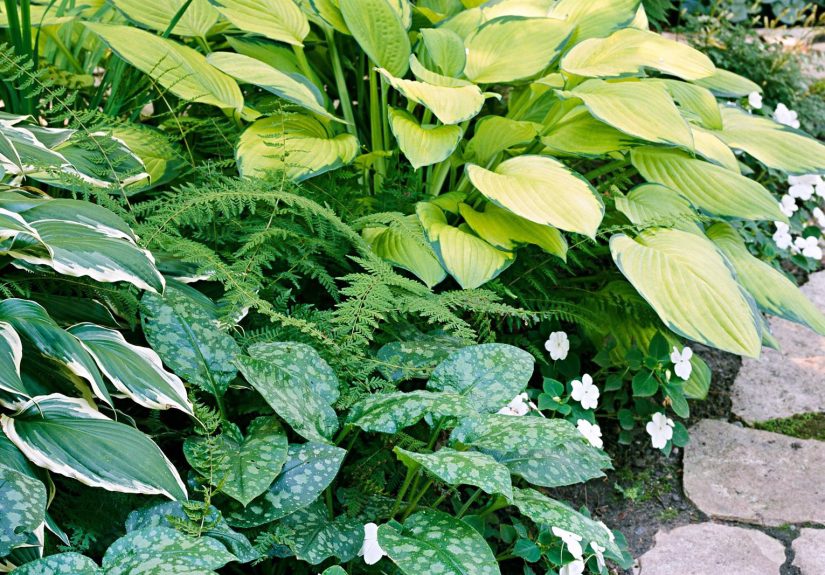
In these spots, foliage is often the star. Think texture, contrast, and seasonal interest: evergreen fronds, glossy leaves, silver variegation, and winter blooms.
20 Tough Plants for Dry Shade
These picks are popular across the U.S. because they’re resilient, widely available, and genuinely useful in plants for dry shade under trees scenarios. Always match the plant to your region (USDA zone, humidity, and summer heat), and you’ll get much better results.
1) Epimedium (Barrenwort / Fairy Wings) Epimedium spp.
If dry shade had a mascot, this would be it. Epimedium forms tidy clumps, tolerates root competition, and offers delicate spring flowers plus tough, often semi-evergreen foliage. Give it decent soil at planting, then let it do its quiet, heroic thing.
2) Hellebore (Lenten Rose) Helleborus spp.
Winter-to-early-spring blooms in the shade? Yes, please. Hellebores are famously low-maintenance and drought tolerant once established. They prefer well-drained soil and appreciate mulch. Bonus: deer often leave them alone.
3) Bigroot Geranium Geranium macrorrhizum
This hardy geranium is a dry-shade workhorse: aromatic leaves, spreading habit, and cheerful blooms. It’s especially helpful as a weed-suppressing groundcover that still looks intentionallike you planned it, not like it “just happened.”
4) Bergenia (Pigsqueak) Bergenia spp.
Glossy, thick leaves that hold up in tough conditions and often turn reddish in cold weather. Bergenia tolerates shade and can handle drier soil once established. Spring flowers are the cherry on top.
5) Coral Bells Heuchera spp.
For color in shade, coral bells bring the drama: caramel, purple, lime, near-black. Many cultivars tolerate part shade and moderate dryness once established (especially with mulch). Plant for foliage contrast and let them “wow” quietly all year.
6) Brunnera (Siberian Bugloss) Brunnera macrophylla
Heart-shaped leavesoften silveredbrighten gloomy corners. Brunnera prefers more consistent moisture than some plants here, but with improved soil, mulch, and a little help during drought, it can perform surprisingly well in dry-ish shade.
7) Solomon’s Seal Polygonatum spp.
Arching stems with dangling blooms look instantly woodland-chic. Solomon’s seal is tougher than it looks and can adapt to drier shade once established. It’s great for “understory” layering behind groundcovers.
8) Lady’s Mantle Alchemilla mollis
Soft, scalloped leaves catch dew like tiny jeweled cups. Lady’s mantle can handle part shade and drier soils once established, especially in cooler regions. It’s also excellent at smoothing the transition between bolder plants.
9) Spotted Deadnettle Lamium maculatum
One of the easiest shade ground covers for brightening dry shade with silver-patterned foliage and small flowers. It spreads, but in most gardens it’s “enthusiastic” rather than truly unrulyespecially with occasional trimming.
10) Bugleweed Ajuga reptans
Ajuga forms a dense mat and can tolerate shade with average-to-drier soil. It’s useful on slopes and as a living mulch, but give it airflow and avoid overly wet spots to reduce crown rot issues.
11) Periwinkle Vinca minor
Classic evergreen groundcover that handles shade and can cope with dry conditions once established. Important note: in some regions, periwinkle can be invasive. If it’s listed as a problem plant where you live, skip it and choose a native alternative like sedges or Allegheny spurge.
12) Allegheny Spurge Pachysandra procumbens
A native-ish upgrade to the more aggressive Japanese pachysandra. Allegheny spurge has attractive mottled leaves and spreads at a friendlier pace. Once established, it’s notably tolerant of shade and drier conditions.
13) Sweet Woodruff Galium odoratum
Whorled leaves, tiny white flowers, and a soft, storybook vibe. Sweet woodruff prefers moisture, but with mulch and decent soil structure, it can handle dry shade better than many delicate-looking groundcoversespecially in cooler climates.
14) Lilyturf Liriope spp.
Need something grassy, tidy, and durable? Liriope is a go-to edging plant for shade to part shade. Many types tolerate drought once established and help stitch together mixed plantings with a clean, fountain-like form.
15) Pennsylvania Sedge Carex pensylvanica
One of the best low-water “green carpet” options for shade. Pennsylvania sedge tolerates shade and can grow in dry to average soils. Think of it as a no-fuss, no-mow vibe that still looks intentional and soft.
16) Christmas Fern Polystichum acrostichoides
A fern that doesn’t faint at the first hint of dryness. Christmas fern is evergreen in many climates and naturally occurs on wooded slopes. It’s excellent for dry shade texture and pairs beautifully with sedges and hellebores.
17) Marginal Wood Fern Dryopteris marginalis
Leathery, blue-green fronds and a tougher constitution than many ferns. Marginal wood fern naturally grows in rocky woods and slopes, making it a strong candidate for well-drained dry shade where other ferns sulk.
18) Wood Spurge Euphorbia amygdaloides var. robbiae
Evergreen, bold, and remarkably tolerant once established. Wood spurge thrives in shade to part shade and handles dry soil better than most flowering perennials. Wear gloves when cuttingits sap can irritate skin.
19) Creeping Oregon Grape Mahonia repens
Evergreen foliage, yellow flowers, and berries for wildlifeplus real grit. Creeping Oregon grape works well in dry shade and is often recommended for tough woodland edges. It’s a great “shrubby groundcover” for structure.
20) Japanese Aucuba Aucuba japonica
Glossy leaves (often speckled) that brighten deep shade like someone turned on a lamp. Aucuba is a reliable evergreen shrub for shade and can tolerate drought once established. It’s especially handy near foundations and under eaves where rain rarely hits.
Simple Pairings That Actually Work in Dry Shade
- “Winter MVP” combo: Hellebores + Christmas fern + Allegheny spurge (winter interest, evergreen backbone, low maintenance).
- “Silver brightener” combo: Brunnera + lamium + Pennsylvania sedge (light-reflecting foliage that makes shade feel bigger).
- “Under-tree tough” combo: Epimedium + bigroot geranium + marginal wood fern (root-competition champs with layered texture).
Maintenance Checklist for Low-Water Shade Gardens
- Year 1: Water deeply to establish; don’t “test” drought tolerance on brand-new roots.
- Mulch yearly: Refresh to maintain ~2–3 inches.
- Weed early: Once groundcovers knit together, weeds drop dramatically.
- Prune with purpose: Cut back tired foliage in late winter for epimedium and hellebores; tidy liriope in early spring if needed.
- Watch invasives: Avoid known problem plants in your state; choose native sedges or less aggressive spreads when in doubt.
Conclusion
Dry shade doesn’t need to be a dead zone. With the right mix of drought-tolerant shade plantsespecially groundcovers like sedges, tough perennials like epimedium and bigroot geranium, and evergreen anchors like aucubayou can build a planting that looks good without constant babysitting. Improve the soil where you plant, mulch like you mean it, and give new additions a solid first season of watering. After that, the garden starts doing more of the work for you (which is the whole dream, honestly).
Dry Shade Diaries: of Real-World Experience
The first time I tried to “garden” in dry shade, I used optimism as my soil amendment. Spoiler: optimism has terrible water-holding capacity.
It was under a mature treebeautiful canopy, nice breeze, birds chirping… and soil that was basically a crunchy granola bar. I planted a few shade perennials, gave them a polite sprinkle, and expected a lush woodland border by the weekend. What I got was a slow-motion lesson in root competition. The tree didn’t just compete; it dominated. The plants weren’t dying dramaticallythey were doing something worse: surviving in a way that looked vaguely disappointed in me.
Here’s what actually worked. First, I stopped trying to “dig a bed” and started looking for openings between roots like I was solving a gentle puzzle. I’d dig a pocket, mix in compost and leaf mold, and plant small. It felt weirdly surgical, but it kept me from hacking through important tree roots. Second, I got serious about watering for the first season. Not daily mistingdeep soaking. It’s amazing how many “drought-tolerant” plants become drought-tolerant only after they’ve had time to grow the roots that make them drought-tolerant. Revolutionary concept, I know.
The biggest transformation came from mulch. Once I committed to a 2–3 inch layer, the soil stopped flipping from “dust” to “brick” every time the weather changed. Mulch also made the area look finished even while plants were filling inlike I had a plan instead of a series of hopeful impulses.
Plant choice mattered, too. Epimedium was my first real win: it didn’t ask for much, didn’t flop, and quietly expanded. Bigroot geranium followedpleasant foliage, great coverage, and it shrugged off dry spells with the calm of someone who has snacks in their bag. Pennsylvania sedge was the surprise hero. I expected “fine grass-like plant,” but what I got was a soft, cohesive carpet that made everything around it look more intentional. It’s the kind of plant that doesn’t scream for attentionyet somehow makes the whole planting feel designed.
I did learn one cautionary tale: periwinkle. In one spot it behaved; in another it decided it was auditioning for a takeover documentary. If a plant is known to be invasive where you live, believe the warning labels. Your future self will thank you while sipping lemonade instead of pulling vines out of places vines should not be.
Now my dry shade strategy is simple: improve soil in pockets, water deeply the first year, mulch consistently, and pick plants that are built for the job. Dry shade still isn’t “easy,” but it’s no longer a gardening grudge match. It’s more like a negotiated peace treatywith epimedium as the very reasonable mediator.