Table of Contents >> Show >> Hide
- Before You Hide a Water Heater, Follow These Golden Rules
- 1) Use a Louvered Door or Bifold Closet
- 2) Build a Faux Cabinet or Utility Wall
- 3) Add a Decorative Screen or Sliding Panel
- What Not to Do When Hiding a Water Heater
- How to Choose the Right Option for Your Home
- Final Thoughts
- Practical Experiences: What Homeowners Usually Learn After Hiding a Water Heater
- SEO Tags
Note: A hidden water heater should still be easy to inspect, easy to service, and able to breathe. Pretty matters. Safe matters more.
A water heater is one of the least glamorous roommates in any home. It stands there in a basement, garage, laundry room, or utility closet looking like a giant beige marshmallow with plumbing. It does important work, sure, but it does not exactly scream “interior design goals.” The good news is that you can hide a water heater without making your home look like a mechanical room or creating a maintenance nightmare.
The trick is to think in layers: function first, style second, and clever camouflage third. In other words, do not build a gorgeous Pinterest-worthy cover that makes your plumber sigh dramatically and charge extra. The best ideas blend the heater into the room while still leaving room for airflow, venting, leak checks, and future repairs.
Below are three smart ways to hide a water heater, plus the safety rules, design tips, and real-world lessons that make the difference between a polished upgrade and a very expensive “what were we thinking?” moment.
Before You Hide a Water Heater, Follow These Golden Rules
Before we get to the fun part, let’s talk about the boring part that keeps the fun part from becoming a home-repair disaster. Whether you have a gas, electric, tankless, or heat pump water heater, the concealment method has to respect how the unit operates.
1. Keep it accessible
Your water heater should never be boxed in so tightly that basic inspection or service becomes a puzzle. You or a pro should still be able to reach shutoff valves, drain connections, pressure-relief components, filters, and service panels without performing acrobatics.
2. Do not block airflow or venting
This is especially important for gas and heat pump models. A gas water heater may need combustion air and venting clearance. A heat pump water heater needs room to pull air in and move air out. Hide it too aggressively, and you may hurt performance or create a safety issue.
3. Leave room to spot leaks
Water heaters love to look innocent right up until they do not. A slow drip can turn into floor damage, mold, ruined trim, and a very bad weekend. Any cover should still let you notice moisture, corrosion, or puddling early.
4. Do not store flammables nearby
If you have a gas unit, keep paint, solvents, gasoline, adhesives, and similar products far away. This is not the place to create a secret closet for every chemical in the house.
5. Check the manufacturer instructions and local code
One heater may tolerate a certain enclosure style, while another may need a totally different setup. That is why the smartest design choice is always the one that works with your specific unit, not just the prettiest idea on social media.
1) Use a Louvered Door or Bifold Closet
If you want the easiest, cleanest, most practical solution, this is usually it. A louvered door or bifold closet hides the water heater, improves the look of the room, and still helps preserve airflow. It is basically the overachiever of concealment ideas.
Why this method works
Louvered doors have slats that allow air to move through. That makes them a strong option for utility spaces, laundry areas, basement nooks, and small closets where a plain solid door might trap heat, moisture, or stale air. Bifold versions are also useful because they take up less swing space when opened, which is ideal in tight areas.
From a design perspective, louvered and bifold doors look intentional. They do not scream “I am hiding a giant tank behind me.” Instead, they read like part of the room’s architecture, especially when painted to match trim, walls, or cabinetry.
Best uses for this idea
- Water heaters already sitting in a recessed nook
- Utility closets in hallways or mudrooms
- Basement storage areas
- Laundry rooms where you want a cleaner visual line
- Small spaces where a full swinging door would be annoying
Design tips that make it look better
Choose a door style that matches the age and look of your home. A simple white bifold works in a builder-grade utility room. A solid-core plantation-style louvered door looks more refined in a finished basement. In a cottage-style home, a paneled louver door can make the utility area feel like part of the architecture rather than an afterthought.
Paint matters, too. Matching the door color to surrounding trim creates a built-in look. Matching it to the wall color makes it visually disappear. If you want it to feel decorative instead of purely functional, add upgraded knobs, matte black hardware, or a clean shaker-style casing.
What to watch out for
Do not assume every water heater can be treated the same way. Heat pump water heaters, for example, often need more surrounding air than people expect, so a small closet may require a louvered setup, a ducted plan, or more space than a traditional tank would. Gas units also need special attention to venting and combustion air. A louvered door is smart, but only if the overall installation remains appropriate for the model.
Still, when people ask for the most code-friendly, low-drama answer to “How do I hide this thing?” this is often the winner.
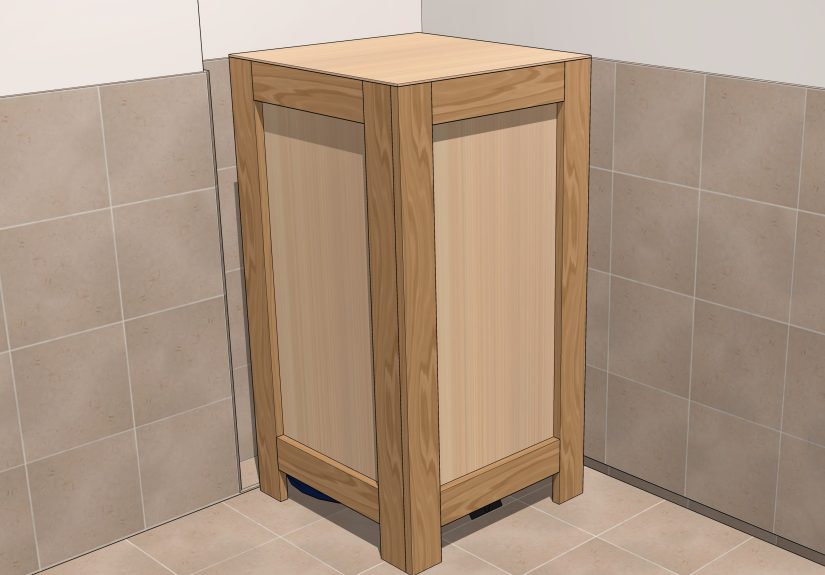
2) Build a Faux Cabinet or Utility Wall
This option is for homeowners who want the water heater to vanish into the room design. Done well, a faux cabinet or utility wall can make a tank disappear behind what looks like pantry storage, built-in millwork, or a tall cabinet bank. Done badly, it becomes a custom-built regret box. Let’s aim higher.
Why this method works
A faux cabinet gives you a polished, intentional finish. Instead of seeing pipes and a tank, you see what appears to be a standard built-in element. In a laundry room, it can mimic tall storage cabinetry. In a basement kitchenette, it can resemble a pantry tower. In a garage conversion or finished utility room, it can be part of a larger feature wall.
This method is especially attractive when the water heater is in a visible area near shelves, cabinets, or appliances. It turns “mechanical equipment” into “part of the room.” That is a big visual upgrade.
How to do it the smart way
The best faux cabinet is not a sealed wooden coffin. It is a cabinet-style enclosure designed with access in mind. Think removable front panels, vented sections, easy-open doors, and enough space around the unit so maintenance is not a knuckle-busting event.
You can also use design tricks instead of fully enclosing the heater. For example, build matching tall side panels and a header so the water heater sits in a framed niche that looks custom. Or use shallow false cabinetry around the area so the tank visually blends into the room without being boxed in too tightly.
Good style directions
- Pantry look: Tall shaker doors that match nearby cabinetry
- Mudroom look: Vertical paneling with a utility cupboard feel
- Modern look: Flat panels with clean reveals and concealed hardware
- Warm rustic look: Slatted wood fronts that disguise the heater while softening the mechanical vibe
Where this idea shines
Faux cabinetry works beautifully in finished basements, upgraded laundry rooms, utility corridors, or open garage-adjacent spaces where the water heater is visible from living areas. It is ideal when aesthetics matter and you want the result to feel expensive, custom, and built for the house.
Where people go wrong
The classic mistake is prioritizing symmetry over service. Homeowners love a seamless wall of cabinetry. Plumbers love not having to dismantle a wall of cabinetry just to inspect a valve. If you choose this route, build for future access from day one. Removable screws beat permanent trim. Vented inserts beat sealed panels. Slightly less “perfect” today beats tearing everything apart tomorrow.
Also, remember that cabinetry can hide visual clutter, but it should not hide warning signs. You still want an easy way to check for dampness, corrosion, staining, or drip-pan issues.
3) Add a Decorative Screen or Sliding Panel
Sometimes the simplest answer is the best one. A decorative screen or sliding panel can hide a water heater quickly, attractively, and with far less construction than a new closet or cabinet build. This approach is especially useful in garages, unfinished basements, workshop zones, and multi-use utility rooms.
Why this method works
A screen softens the visual impact of the water heater without fully enclosing it. That means you can improve the room’s appearance while keeping access relatively easy. It is the “put a jacket on it” solution instead of the “build it a tiny studio apartment” solution.
Sliding panels offer a similar benefit with a cleaner built-in look. A slatted barn-style panel, for example, can move aside when service is needed, then slide shut the rest of the time. In the right room, it looks intentional and stylish rather than improvised.
Best screen and panel ideas
- Wood slat screens for airflow and a warm modern look
- Folding privacy screens in utility corners
- Barn-style sliding panels in a laundry room or basement
- Partial-height partitions that hide the heater from view lines without closing it in
- Custom framed screens that coordinate with shelving or storage benches
Who should consider this option
This is excellent for renters who can use freestanding screens, homeowners who want a lower-cost visual fix, and anyone who needs access often but still wants the room to feel more finished. It is also a smart compromise when the heater sits in a place where full cabinetry would feel heavy or awkward.
What to avoid
Do not drape fabric around a gas water heater and call it a day. That is not charming. That is suspenseful, and not in a good way. Avoid anything flimsy, overly tight, or flammable near a gas unit. A decorative screen should create visual separation, not become part of the hazard list.
Choose sturdy materials, keep the setup stable, and make sure you can move it easily for inspections and repairs.
What Not to Do When Hiding a Water Heater
- Do not seal the unit inside an airtight box.
- Do not block venting, louvers, or intake areas.
- Do not cover controls, shutoffs, or drain points.
- Do not jam storage bins, paint cans, or holiday decorations around the heater.
- Do not use a concealment idea that makes leak detection harder.
- Do not copy a design blindly without checking the heater type.
If there is one theme here, it is this: a water heater is not decor. It is equipment. The design should respect that reality, even while improving the room around it.
How to Choose the Right Option for Your Home
Choose a louvered door or bifold closet if…
You want the safest all-around visual upgrade, your heater already sits in a nook or closet-ready location, and you prefer a practical fix that does not require custom carpentry.
Choose a faux cabinet or utility wall if…
You are remodeling the room, want a high-end finished look, and can plan the enclosure carefully so access and ventilation are built in from the start.
Choose a decorative screen or sliding panel if…
You want a fast, flexible, attractive cover with easier access and less construction. It is especially helpful in garages, basements, and multi-use rooms.
Final Thoughts
Hiding a water heater is one of those home upgrades that seems small until you do it well. Then suddenly the whole room looks calmer, neater, and more intentional. The best part is that you do not need a huge renovation budget to get there. Often, a better door, a slatted screen, or a thoughtfully designed cabinet face is enough to turn “utility eyesore” into “barely noticed.”
Just remember the golden rule: the prettiest cover is never the smartest cover if it fights the way the appliance needs to function. Give your water heater air, access, and respect, and then feel free to make it disappear like the underappreciated workhorse it is.
Practical Experiences: What Homeowners Usually Learn After Hiding a Water Heater
Once people finish hiding a water heater, they almost always say the same thing: “Why didn’t we do this sooner?” A visible tank can make an otherwise tidy room feel unfinished, especially in a laundry room, basement hallway, or garage entry. Even a simple bifold door or slatted screen makes the space look more deliberate. The room suddenly feels less like a utility zone and more like part of the home.
But homeowners also tend to learn a second lesson pretty quickly: concealment only works when it stays convenient. The people happiest with the result are usually the ones who chose an option they can open in seconds. A louvered bifold door, a removable panel, or a sliding screen tends to age well because it is easy to live with. When the water heater needs flushing, inspection, or repair, nobody has to unscrew trim, remove shelves, or take apart half the room just to reach it.
Another common experience is discovering that the “best-looking” design on paper is not always the best in real life. For example, a fully built-in cabinet may sound perfect during the planning stage. Then a plumber arrives, asks for more working room, and the dream of a seamless built-in starts to wobble. That is why homeowners who are most satisfied long term usually build in a little humility. They leave access panels. They allow visual gaps. They make sure the concealment looks good, but not at the expense of serviceability.
People with heat pump water heaters often learn this faster than anyone else. Those units are efficient and increasingly popular, but they are not thrilled when shoved into a tiny sealed closet. Homeowners who research first and use louvered doors or proper venting strategies tend to be much happier than those who try to hide the unit too aggressively. It is one of those situations where the water heater quietly reminds you that it has needs and will not be bullied by decorative ambition.
There is also a strong lifestyle angle to this project. In homes where the water heater sits near daily traffic, even a modest cover changes how the space feels. A hallway utility nook becomes visually calm. A laundry room looks less cluttered in photos. A basement rec room stops feeling like a space interrupted by mechanical equipment. These are not dramatic structural changes, but they have an outsized effect on how finished the home feels.
Perhaps the most useful real-world takeaway is this: the best water heater cover is the one you forget about. Not because it fails, but because it blends so naturally into the space that your eye stops landing on the appliance. When a door, screen, or cabinet face does that while still letting you inspect for leaks and call for service without chaos, you know the project worked. That is the sweet spot homeowners remember most: cleaner look, easier living, zero unnecessary drama.