Table of Contents >> Show >> Hide
- Why Open Floor Plans Are Tricky in the First Place
- Hack #1: Use Rugs to Create Invisible Rooms
- Hack #2: Let Lighting Define the Function of Each Zone
- Hack #3: Use Furniture as a Soft Room Divider
- Hack #4: Repeat Colors and Textures to Tie Everything Together
- How to Combine All 4 Hacks in One Real-Life Layout
- Common Open Floor Plan Mistakes to Avoid
- Experience: What These Hacks Feel Like in Real Life
- Conclusion
Open floor plans are a little like puppies: adorable, exciting, and occasionally responsible for a shocking amount of chaos. On paper, one big connected space sounds dreamy. In real life, it can feel like your living room is flirting with your dining area while the kitchen barges in uninvited. The good news is that you do not need to build walls, hire a contractor, or suddenly become the kind of person who says things like “Let’s discuss spatial hierarchy” over coffee.
You just need a smarter plan.
The best designers know that an open concept home works when every zone has a job, a visual anchor, and a little breathing room. That is where Amazon comes in. Not because it can magically make your floor plan behave, but because it is packed with affordable pieces that help define space, improve flow, and make the whole room feel polished instead of accidental. Think rugs, lamps, shelving, console tables, pillow covers, curtains, and a few well-chosen texture repeats that whisper, “Yes, this was intentional,” rather than screaming, “We moved in fast and hoped for the best.”
Below are four designer-approved Amazon hacks for open floor plans that actually make a difference. They are practical, budget-flexible, and easy to adapt whether your style leans modern, cozy, farmhouse, minimal, or somewhere in the wild territory known as “whatever looked good at 1:14 a.m. in my cart.”
Why Open Floor Plans Are Tricky in the First Place
Before we get to the hacks, let’s diagnose the drama. Open floor plans are popular for a reason: they bring in light, improve sight lines, and make it easier for people to cook, eat, work, and hang out in one connected area. But that same openness creates a design challenge. Without walls, rooms lose their natural boundaries. Furniture can look like it is floating in space. Sound bounces everywhere. And if every surface, color, and shape is doing its own thing, the whole room starts to feel visually noisy.
In other words, an open floor plan does not need more stuff. It needs more structure. The secret is to create subtle zones without breaking the airy feeling that made you love the layout in the first place.
Hack #1: Use Rugs to Create Invisible Rooms
If open floor plans had an MVP, it would be the area rug. Rugs are the easiest way to tell the eye, “This is the living zone,” “That is the dining zone,” and “Yes, that little corner by the window is now a reading nook and not just a place where unopened packages go to reflect on their purpose.”
Why this works
Rugs anchor furniture and create clear visual boundaries without adding bulk. In a large shared space, they act like invisible walls. They also soften acoustics, which matters more than people realize in open layouts where every laugh, blender, and dropped fork gets a little extra stage time.
How to do it with Amazon finds
Instead of buying one giant rug and hoping for the best, shop Amazon by zone. A large rectangular rug can ground the main seating area. A round jute rug can define the dining space. A smaller patterned or textured rug can carve out a game corner, desk area, or reading spot. Washable rugs are especially useful if your open floor plan includes kids, pets, snacks, or all three in a chaotic alliance.
The trick is not to make every rug identical. That often feels flat and overly matched. Go for rugs that coordinate rather than clone each other. You might mix a neutral jute look in the dining area with a soft vintage-style rug in the living room and a smaller textured rug in an accent nook. They should feel like cousins, not identical twins wearing name tags.
Smart styling tips
Size matters here. A rug that is too small makes a zone look stingy and awkward. In the living area, aim for at least the front legs of your sofa and chairs to sit on the rug. In the dining area, choose a rug large enough that chairs stay on it when pulled out. Your floor plan deserves confidence, not furniture doing balance-beam routines on the edge of a rug.
One of the biggest open-concept mistakes is pushing all furniture to the walls and leaving a dead, echoey void in the middle. Rugs help you float furniture in a way that feels deliberate. Suddenly the room is not one giant rectangle. It is a series of functional, comfortable destinations.
Hack #2: Let Lighting Define the Function of Each Zone
If rugs define a space from the ground up, lighting defines it from the top down. Good lighting does not just help you see. In an open floor plan, it tells people how to use a space. A pendant over the dining table says, “Eat here.” An arc lamp over a chair says, “Read here.” A table lamp beside the sofa says, “Relax here and maybe pretend you are finally finishing that novel.”
Why this works
Open spaces need visual cues. Without separate rooms, lighting becomes part of the architecture. Different fixtures create different moods and subtly divide one area from another. That means your dining zone can feel intimate, your living zone can feel warm, and your work nook can feel focused, even though all three areas are technically sharing the same giant room.
How to do it with Amazon finds
Amazon is full of lighting options that can fake a custom look without custom pricing. Start by identifying what each zone needs. A dining area might benefit from a pendant or chandelier. A living room often feels more layered with a floor lamp and one or two table lamps. A reading corner can come alive with an adjustable task lamp. Plug-in sconces are another sneaky-good option if you want definition without calling an electrician and entering a committed relationship with drywall dust.
If overhead wiring is limited, no panic. You can still create separation with portable lighting. An arc lamp behind a sectional, a pair of lamps on a console table, or a small lamp on a side table can create enough contrast to make one section of the room feel distinct from another.
What makes it feel designer-approved
The magic is in the layering. Do not rely on one ceiling light to do the work of an entire floor plan. That is how you end up with a room that feels like a sad conference center. Mix ambient lighting, task lighting, and accent lighting. Keep finishes related, such as black metal, warm brass, or natural textures, so the zones feel connected even when the fixtures differ in shape.
Think of lighting as punctuation. A pendant can put a period at the end of your dining area. A floor lamp can add a graceful comma to a reading corner. And a pair of table lamps can give your sofa area the kind of visual emphasis normally reserved for people who use the phrase “statement piece” with a straight face.
Hack #3: Use Furniture as a Soft Room Divider
Walls are dramatic. Furniture is subtle. In open floor plans, subtle usually wins.
One of the smartest ways to organize a large open space is to use furniture as a divider. This creates structure without blocking light or killing flow. It also lets your layout multitask, which is deeply satisfying. A bookcase can divide a room and hold storage. A console table can separate the sofa from the walkway and give you a spot for lamps, baskets, or decor. A bench, cabinet, or even a cluster of tall plants can quietly say, “This side is for lounging, that side is for living your productive fantasy.”
Best Amazon-friendly divider ideas
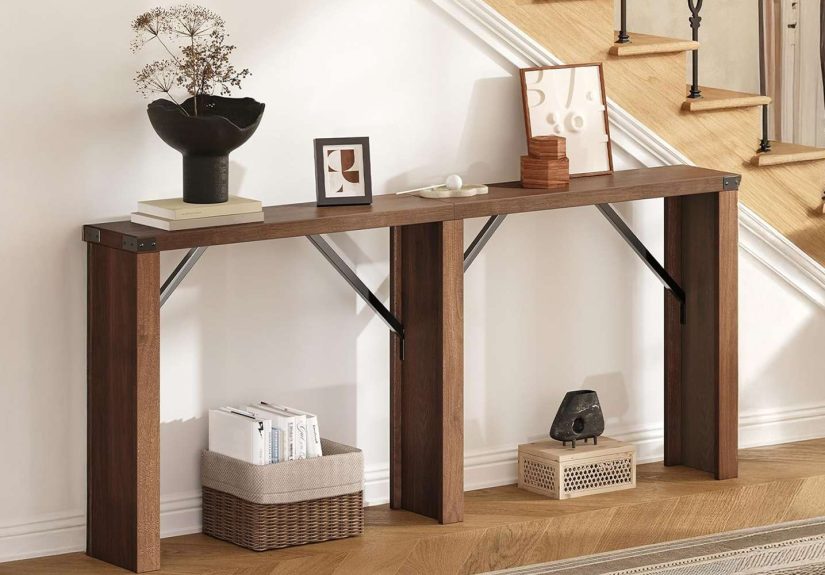
An open-back cube bookcase is one of the easiest options because it provides separation while still allowing sight lines through the space. It works beautifully between a living room and dining area, near an entry zone, or beside a work nook. A slim behind-the-sofa console table is another favorite because it adds a visual boundary without making the room feel crowded. You can style it with a pair of lamps, stacked books, trays, or woven bins.
If you need a little more privacy, look on Amazon for folding screens, slatted dividers, or lightweight curtain panels mounted from the ceiling. These are especially helpful when part of your open plan has to moonlight as an office, play space, or guest zone. The beauty is flexibility. You can create separation without making the home feel boxed in.
How to keep it from looking bulky
Choose pieces with legs, open shelving, or a narrow profile. Heavy solid furniture can make an open space feel chopped up. The goal is to suggest a boundary, not install a visual roadblock. Also, leave a comfortable walkway between zones. A layout breathes better when furniture does not sit shoulder-to-shoulder like strangers forced together on an airport shuttle.
One especially effective move is placing a console table directly behind a sofa. It tells the room where the living area ends, adds styling surface, and gives the sofa a more finished look. This single change can make a floating seating arrangement look grounded, polished, and far more expensive than it has any right to.
Hack #4: Repeat Colors and Textures to Tie Everything Together
This is the hack that saves open floor plans from looking like three separate online shopping carts collided at high speed.
Defining zones is important, but so is cohesion. If every area has a different color story, different vibe, and different materials, the room starts to feel fragmented. Designers solve that problem by repeating key colors, finishes, and textures throughout the space.
Why this works
Repetition creates rhythm. It tells the eye that the living area, dining area, and kitchen are part of one larger story. This does not mean everything needs to match exactly. In fact, matching too hard can make a room feel stiff and showroom-ish. The goal is to echo elements across zones so the space feels collected and calm.
How to use Amazon for cohesion
This is where affordable accessories shine. If your dining chairs have warm wood tones, repeat that warmth with wooden picture frames, trays, or accent tables in the living zone. If your rug includes olive, rust, navy, or black, pull that shade into pillow covers, curtains, vases, or lampshades elsewhere in the room. If you love natural texture, repeat rattan, linen, jute, bouclé, or matte ceramic across multiple areas.
Amazon makes it easy to do this without overspending. You can search for pillow covers instead of new pillows, curtain panels instead of custom drapery, decorative baskets for hidden storage, matching lamp bases, or a pair of accent pieces that echo the same finish across the room. Tiny repeats do big work.
The easiest formula to follow
Pick one dominant color family, one or two accent colors, and two or three repeated textures. For example, a room might revolve around warm neutrals, then bring in olive green and black as accents, while repeating linen, wood, and woven fibers. That gives the entire open floor plan a visual spine.
Suddenly, your dining area and living area are not competing. They are collaborating. Like a good band. Or at least like coworkers who have finally stopped replying all.
How to Combine All 4 Hacks in One Real-Life Layout
Let’s say your open floor plan includes a kitchen, dining area, living room, and a weird little corner near the window that currently stores exactly one lonely chair and a pile of ambition.
Start with rugs. Use an 8×10 rug to define the main living area and a round natural-fiber rug under the dining table. Then add lighting: a pendant over the dining table, a floor lamp near the sectional, and a smaller lamp in that window corner. Next, place a narrow console behind the sofa or a cube bookcase between the living and dining spaces. Finally, repeat your materials. Maybe you bring black metal across the lamps and shelf frame, warm wood in trays and table legs, and soft green through pillow covers, curtains, and a ceramic vase.
Now the room has zones, function, and flow. It still feels open, but it no longer feels unfinished. That is the sweet spot.
Common Open Floor Plan Mistakes to Avoid
Buying undersized pieces
Tiny rugs, tiny lamps, and tiny furniture get swallowed by open layouts. A larger room often needs bolder scale to feel balanced.
Relying on one overhead light
This makes the entire room feel flat. Layered lighting adds warmth, dimension, and function.
Forgetting walkways
Every zone needs a clear path around it. If movement feels cramped, the whole room feels wrong, even when every individual item is pretty.
Mixing too many unrelated styles
Eclectic is great. Random is exhausting. Repeat a few colors and textures so the room feels curated.
Skipping storage
Open plans show everything. Baskets, shelves, cabinets, and console tables help keep the chaos from becoming part of the decor.
Experience: What These Hacks Feel Like in Real Life
Here is the part design articles do not always say out loud: the best open floor plan is not the one that photographs best. It is the one that feels easiest to live in on an ordinary Tuesday.
That is why these four Amazon hacks matter so much. They are not just styling tricks. They change the daily experience of the room.
When you add rugs and define zones, people naturally know where to go. Guests drift toward the seating area instead of hovering in the kitchen like confused interns at a networking event. Kids spread out in their own corner instead of colonizing the dining table. You stop feeling like every activity in the house is happening in one giant undefined field.
Lighting makes an even bigger emotional difference than most people expect. A room with only overhead lighting can feel harsh and restless. But once you add a floor lamp by a chair, a soft lamp behind the sofa, and a warm fixture over the table, the space begins to slow down. The dining area feels more intentional. The living room feels cozier. That odd corner by the window suddenly becomes somewhere you actually want to sit with coffee, a laptop, or a book you swear you are about to finish.
Furniture dividers also change how a room functions. A console table behind the sofa is not just decorative. It subtly stops the living room from visually spilling into the rest of the house. A bookcase creates enough separation to make a workspace feel real, even if it is still technically in the same room as your television and snack cabinet. That kind of soft boundary is incredibly helpful in homes where one large space has to do everything.
And then there is the cohesion piece, which sounds a little abstract until you see it happen. Repeating colors and textures gives the whole home a calmer personality. Instead of one side of the room feeling modern, another side feeling farmhouse, and the middle feeling like an accidental storage unit, everything begins to connect. A woven basket echoes the dining chairs. A green pillow picks up the color in the curtains. A black lamp relates to the shelving. The room starts telling one story instead of five different side quests.
In real homes, that unity matters because open floor plans rarely stay magazine-perfect. There are backpacks, charging cords, dog beds, cereal bowls, and at least one object no one can explain. When the larger design framework is strong, the room still feels pulled together even when life is being gloriously life-like inside it.
That is why designer-approved Amazon hacks are so appealing. They offer a realistic path to improving your space without a renovation budget or a six-month decorating timeline. You can order a rug, a lamp, a console table, and a few accessories, then see a genuine shift in how your home works. Not just how it looks, but how it feels to move through it, relax in it, host in it, and recover from the chaos of regular human existence in it.
The best part is that none of this requires perfection. Open floor plans do not need to be rigid or overly styled to succeed. They just need thoughtful anchors, a little consistency, and enough design confidence to let every zone do its job. Once that happens, the whole space starts feeling less like a giant question mark and more like a home that finally understands itself.
Conclusion
Open floor plans work best when you stop treating them like one massive room and start treating them like a collection of connected zones. That is the entire game. Rugs define where each area begins. Lighting tells each zone what it is supposed to do. Furniture creates boundaries without blocking flow. Repeated colors and textures tie everything together so the room feels cohesive and calm.
And the beauty of Amazon is that you can pull off all four of these designer-approved moves without turning the project into a full renovation or a financial thriller. A few smart, well-scaled pieces can completely change the way your space looks and lives. Which is good news, because your open floor plan deserves better than being one giant room where the sofa, dining chairs, and kitchen island all seem to be having an awkward first date.