Table of Contents >> Show >> Hide
Stretching is the broccoli of fitness: almost everyone agrees it is good for you, yet plenty of people keep pushing it to the side of the plate. That is a mistake. A smart stretching routine can improve flexibility, support better posture, reduce stiffness, help your joints move more comfortably, and make the rest of your workouts feel less like a wrestling match with your own body. In other words, stretching is not just something athletes do while looking serious on the sidelines. It is for desk workers, walkers, weekend warriors, parents, runners, lifters, and anyone whose hips have ever filed a formal complaint after a long day.
Done correctly, stretching helps maintain range of motion and keeps muscles from feeling short, tight, and grumpy. It also plays a practical role in daily life. Reaching into the back seat, getting down to tie your shoes, standing up from the floor, climbing stairs, and turning your head without moving your entire torso like a cautious robot all depend on mobility. That is where flexibility work earns its keep.
This guide breaks down nine useful stretching exercises, the benefits of each, and how to add them into a routine that actually fits real life. No fancy equipment. No circus-level mobility required. Just effective moves that can help you feel better and move more freely.
Why Stretching Matters
Stretching is one part of a balanced fitness plan, not a magical cure-all. It will not replace strength training or cardio, but it supports both. When your muscles and joints move through a healthier range of motion, exercise often feels smoother and daily movement feels easier. Flexibility training may also help improve posture, reduce everyday tension, support balance, and keep you more comfortable as you age.
There is also a timing issue that matters. Dynamic stretches, which involve controlled movement, are usually better before workouts because they help prepare the body for action. Static stretches, where you hold a position for a period of time, tend to fit better after exercise or during a dedicated flexibility session. Translation: save the long toe-touching drama for after your workout, not while your body is still waking up.
How to Stretch Safely
1. Warm up first
Do not stretch ice-cold muscles and expect applause from your hamstrings. Walk, cycle, or move lightly for five to ten minutes first so your muscles are warm.
2. Aim for gentle tension, not pain
You should feel a mild pull, never a sharp or stabbing sensation. Pain is not proof of productivity.
3. Hold static stretches long enough
For many adults, holding a stretch for about 15 to 30 seconds works well. Repeat two to four times if needed.
4. Breathe normally
If you are holding your breath, your body is probably bracing instead of relaxing. Slow breathing helps the stretch feel more controlled.
5. Be consistent
Stretching once in a dramatic burst of motivation is fine for your conscience, but consistency is what improves flexibility. A few times per week is a much better plan than one heroic session every other month.
9 Stretching Exercises and Their Benefits
1. Neck Side Stretch
How to do it: Sit or stand tall. Gently tilt your right ear toward your right shoulder without lifting the shoulder. Hold, then switch sides.
Benefits: This stretch can ease tension in the sides of the neck, especially if you spend hours looking at screens or hunched over a phone. It may also help reduce that “my shoulders are trying to become earrings” feeling that shows up during stressful days.
Best for: Office workers, students, drivers, and anyone who has stared at a laptop long enough to forget they have a spine.
2. Shoulder Cross-Body Stretch
How to do it: Bring one arm across your chest. Use the opposite hand to gently pull it closer to your body. Keep your shoulders relaxed. Repeat on the other side.
Benefits: This stretch targets the back of the shoulder and upper arm. It can help with shoulder mobility, which matters for lifting, reaching overhead, carrying groceries, and trying to grab the one container on the top shelf that is somehow always the one you need.
Best for: People who lift weights, swim, carry bags on one shoulder, or feel stiff through the upper body.
3. Doorway Chest Stretch
How to do it: Stand in a doorway with your forearms on the frame and elbows bent about 90 degrees. Step one foot forward and gently lean your chest through the doorway.
Benefits: This stretch opens the chest and front of the shoulders, areas that often get tight from desk posture. It can support better posture by counteracting the rounded-shoulder position many people settle into during work, gaming, or doom-scrolling.
Best for: Anyone who sits a lot, types often, or feels rounded through the upper back and chest.
4. Cat-Cow Stretch
How to do it: Start on hands and knees. Slowly arch your back and lift your chest for cow pose, then round your spine and tuck your chin for cat pose. Move with control and breath.
Benefits: Cat-cow improves mobility through the spine and can help reduce stiffness in the back and torso. It is not just a yoga-class favorite; it is also a gentle way to wake up the body after sleeping, sitting, or pretending that “good posture” is a personality trait.
Best for: Morning routines, desk breaks, and people with mild back stiffness who want a gentle mobility move.
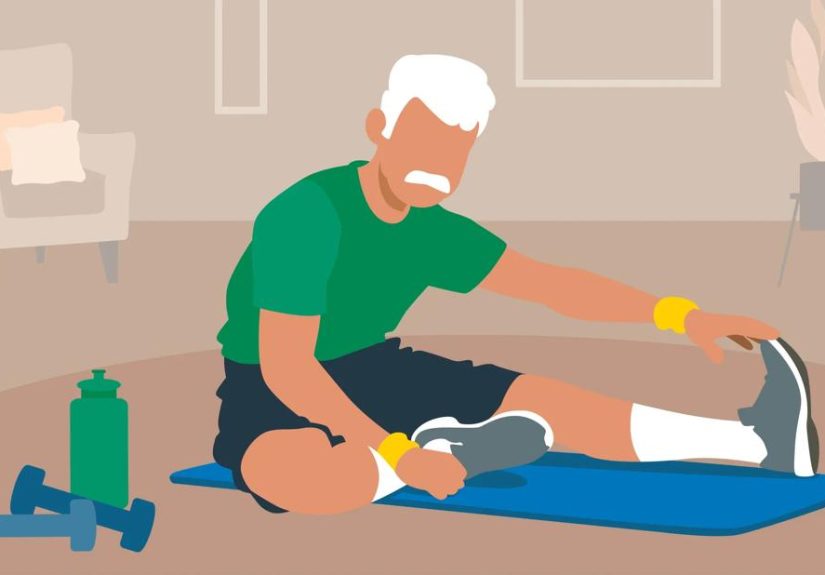
5. Seated Hamstring Stretch
How to do it: Sit on the floor or edge of a bench with one leg extended and the other bent. Keeping your back long, lean forward from the hips until you feel a gentle stretch in the back of the thigh.
Benefits: Hamstrings often tighten from long periods of sitting and from activities like running or cycling. Stretching them may help improve flexibility in the back of the legs, support smoother movement, and reduce that stiff, tugging feeling when you bend forward.
Best for: Runners, cyclists, desk workers, and anyone who says, “I used to be more flexible,” with a nostalgic sigh.
6. Kneeling Hip Flexor Stretch
How to do it: Kneel on one knee with the other foot in front. Keep your torso upright and gently shift your hips forward until you feel a stretch in the front of the kneeling hip. Add a slight glute squeeze for more control.
Benefits: Tight hip flexors are common in people who sit for long stretches. This move helps open the front of the hips, which may improve stride length, posture, and comfort during walking, running, and standing upright without feeling like your pelvis is staging a rebellion.
Best for: People with sedentary jobs, runners, and anyone whose hips feel locked after a long day.
7. Figure-Four Glute Stretch
How to do it: Lie on your back with knees bent. Cross one ankle over the opposite knee, then gently pull the uncrossed leg toward your chest.
Benefits: This stretch targets the glutes and outer hip muscles. It can relieve tension around the hips and may be especially helpful for people who sit a lot or feel tightness in the backside after workouts. It is one of those stretches that often produces an immediate “oh wow, I needed that” reaction.
Best for: Desk workers, walkers, runners, and gym-goers who squat, lunge, or sit for long periods.
8. Standing Quad Stretch
How to do it: Stand near a wall or chair for balance. Bend one knee and bring your heel toward your glutes, holding your ankle or foot. Keep knees close together and avoid overarching the low back.
Benefits: The quadriceps can become tight from running, cycling, strength training, and even just a lot of stair climbing. Stretching the front of the thigh may improve knee comfort, support better movement, and balance out lower-body training.
Best for: Runners, cyclists, hikers, and people who do lower-body workouts.
9. Wall Calf Stretch
How to do it: Face a wall and place your hands on it. Step one leg back, keep the heel down, and bend the front knee until you feel a stretch in the back calf. Switch sides.
Benefits: Flexible calves support ankle mobility, which matters more than most people realize. Better ankle movement can help with walking, squatting, climbing stairs, and balance. Tight calves can also make the whole lower leg feel cranky, especially after running or long periods on your feet.
Best for: Walkers, runners, people who wear supportive shoes all day, and anyone whose calves feel permanently set to “tense.”
The Big Benefits of a Regular Stretching Routine
Improved flexibility and range of motion
This is the headline benefit, and for good reason. Flexible muscles help joints move more freely, which can make exercise and daily life feel smoother and more comfortable.
Better posture
Stretching tight muscles in the chest, shoulders, neck, and hips can support better alignment, especially when paired with strength work for the upper back and core.
Less stiffness from sitting
If your job involves a chair, a car seat, or both, stretching can help counter some of the tightness that builds up during long periods of sitting.
Support for exercise performance
Dynamic stretching before activity can help the body feel more prepared, while regular flexibility work may support smoother movement patterns during workouts.
Healthier aging and easier daily movement
Maintaining flexibility becomes more important over time. Being able to reach, turn, bend, and walk comfortably supports independence and function as you get older.
Stress relief
Slow stretching paired with steady breathing can calm the body and mind. It is not therapy, but it can feel surprisingly close after a long, tense day.
A Simple Way to Build Stretching Into Your Week
You do not need an hour-long ritual with candles and a playlist titled “Mobility Journey.” Start small. Try five to ten minutes after a walk, strength workout, or shower when your muscles are warm. Pick four or five stretches that match your needs and repeat them consistently. If your neck and shoulders are tight, focus there. If you run, prioritize calves, quads, hamstrings, and hips. If you sit all day, give extra attention to the chest, spine, glutes, and hip flexors.
A practical weekly routine might include dynamic stretches before workouts and static stretches afterward, plus one or two short mobility sessions on rest days. That approach is realistic, effective, and much easier to sustain than waiting for the perfect “fitness reset Monday” that never quite arrives.
Real-World Experiences With Stretching: What People Often Notice Over Time
One of the most interesting things about stretching is that the benefits often show up in ordinary moments before they show up in dramatic ones. A person may not finish a week of calf stretches and suddenly feel like a professional dancer, but they might notice the stairs feel easier. Someone who adds hip flexor and hamstring stretches after work may not announce a spiritual awakening, yet they may realize getting out of the car no longer feels like unfolding a lawn chair.
Desk workers often describe the first few weeks of stretching as surprisingly revealing. They start with a neck stretch and discover that one side feels tighter than the other. They do a doorway chest stretch and notice how rounded their posture has become after years of keyboard time. Then something subtle happens: their shoulders sit lower, they stop shifting around in the chair as much, and by late afternoon they feel less stiff. The body does not become brand-new, but it often becomes less irritated.
Runners and walkers tend to notice a different set of changes. The ankles loosen up. The calves stop feeling like overworked ropes. Stride length may feel smoother. Some people say that regular stretching after activity helps them feel less beat up the next day, especially when they combine it with a proper warm-up, sleep, and recovery habits. Stretching alone is not magic, but it can be part of the reason the body feels more cooperative.
People who lift weights often discover that stretching helps them move better during the exercises themselves. A lifter with tight hips may find squats more comfortable after spending time on the hip flexors and glutes. Someone with a stiff upper body may notice overhead pressing feels less awkward after chest and shoulder mobility work. It is not about becoming hyper-flexible. It is about having enough mobility to perform movements well and avoid compensating with weird mechanics that make other areas work harder than they should.
Older adults frequently report the most practical benefits. Reaching overhead, turning to look behind them, stepping up more confidently, or getting up from the floor can feel easier with regular flexibility work. These are not flashy improvements, but they matter. They support independence, balance, and confidence in daily life. In many cases, stretching becomes less about “fitness” and more about keeping life convenient.
There is also a mental side. Many people use a short stretching routine as a transition point in the day. A few minutes in the morning can help shake off sleep stiffness. A few minutes in the evening can act like a physical exhale after long hours of work, school, or stress. The routine becomes familiar and grounding. Over time, that consistency can matter just as much as the stretches themselves.
The common thread in these experiences is not perfection. It is repetition. People who benefit most from stretching are usually not the ones doing extreme flexibility challenges online. They are the ones doing a handful of sensible stretches regularly, paying attention to how their body responds, and making mobility part of everyday life. That is where stretching stops being an afterthought and starts becoming genuinely useful.
Conclusion
Stretching is not the flashiest part of fitness, but it may be one of the most useful. A consistent routine can improve flexibility, support joint health, ease everyday stiffness, and help you move with more comfort and confidence. The best part is that stretching does not require expensive gear, elite athletic ability, or a complete lifestyle overhaul. It just requires a little time, a little patience, and the wisdom to stop pretending your body enjoys sitting all day without consequences.
Start with the nine exercises above, be consistent, and adjust based on your body’s needs. Over time, those small efforts can make a noticeable difference in how you feel during workouts, at work, and in daily life.
Note: This article is for general educational purposes only and is not a substitute for personalized medical advice. Stop any stretch that causes sharp pain, numbness, or dizziness, and check with a healthcare professional if you have an injury, recent surgery, or a chronic condition.