Table of Contents >> Show >> Hide
- Introduction: The F-35 Just Got a Much Bigger Job
- What Does “F-35 Nuclear Bomb” Actually Mean?
- Why the Pentagon Wants the F-35 in the Nuclear Mission
- The B61-12: Why This Bomb Matters
- Why the F-35A, Not Every F-35?
- Strategic Reasons Behind the Pentagon’s Decision
- The Controversy: Why Critics Are Worried
- How the F-35 Nuclear Role Fits Into U.S. Defense Strategy
- Specific Example: The Netherlands and NATO Transition
- Common Misconceptions About the F-35 Nuclear Bomb
- SEO Analysis: Why This Topic Is Getting Attention
- Experience-Based Perspective: What This Topic Feels Like From the Defense-Watching World
- Conclusion: Why the Pentagon Is Equipping the F-35
Note: This article is written for public-policy and defense-analysis purposes. It discusses the F-35 nuclear role at a high level and does not include operational instructions, targeting guidance, or technical weapon-use details.
Introduction: The F-35 Just Got a Much Bigger Job
The F-35 Lightning II was already famous for being stealthy, expensive, sensor-packed, controversial, and possibly the only aircraft program that can make accountants sweat through a PowerPoint deck. But now the F-35A has stepped into an even more serious role: nuclear deterrence.
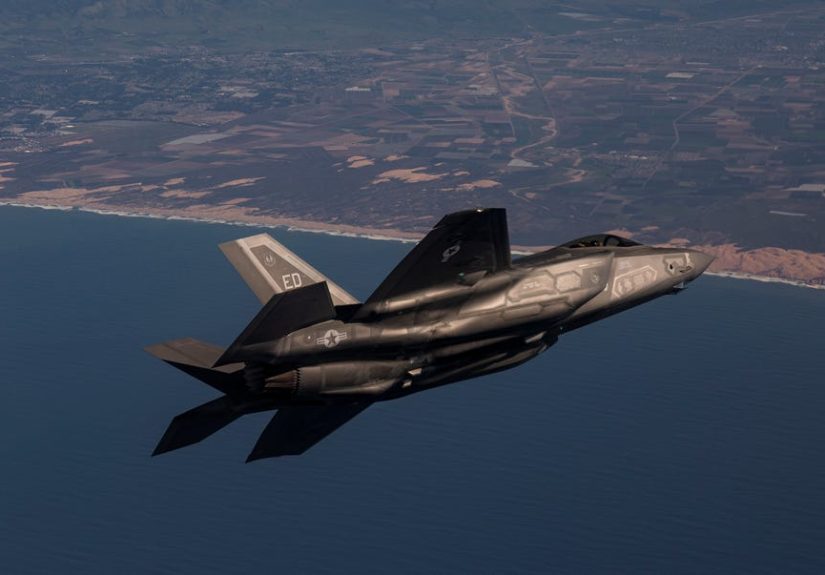
When people hear the phrase “F-35 nuclear bomb,” it sounds like something from a summer blockbuster where the hero whispers dramatically into a headset while running across a flight deck. In reality, the story is less Hollywood and more Pentagon strategy memo. The U.S. Department of Defense has been preparing the F-35A, the conventional takeoff-and-landing version used by the U.S. Air Force and many allies, to operate as a dual-capable aircraft. That means it can perform conventional missions while also being certified for a nuclear deterrence role involving the modernized B61-12 gravity bomb.
So why is the Pentagon equipping the F-35 with this capability? The short answer is deterrence. The longer answer involves NATO, aging aircraft, Russia’s nuclear signaling, modernization of the U.S. nuclear stockpile, alliance reassurance, stealth technology, and the uncomfortable fact that nuclear policy is not going away just because everyone would prefer a calmer planet.
What Does “F-35 Nuclear Bomb” Actually Mean?
The phrase does not mean every F-35 is suddenly flying around with nuclear weapons. It also does not mean all three versions of the F-35 are nuclear-certified. The key aircraft is the F-35A, the standard runway-based model operated by the U.S. Air Force and several NATO allies.
The nuclear weapon usually discussed in this context is the B61-12, a modernized version of the long-serving B61 family of U.S. nuclear gravity bombs. The B61-12 Life Extension Program was designed to replace several older B61 variants while improving safety, security, reliability, and accuracy. In plain English: the United States is not simply adding a new weapon to a new jet; it is updating an older air-delivered deterrent system for a new era.
The F-35A’s nuclear certification gives the United States and NATO a fifth-generation aircraft option for the dual-capable aircraft mission. That matters because older aircraft such as F-16s and Tornados cannot remain in service forever. Airframes age. Maintenance costs rise. Spare parts become harder to love. Eventually, even a legendary fighter jet deserves retirement instead of being held together by nostalgia and procurement paperwork.
Why the Pentagon Wants the F-35 in the Nuclear Mission
1. Modernizing the Air-Delivered Nuclear Deterrent
The Pentagon’s biggest reason is modernization. The United States maintains a nuclear triad: land-based missiles, submarine-launched missiles, and aircraft-delivered weapons. The aircraft leg offers flexibility because aircraft can be deployed, recalled, signaled, exercised, or held back in ways that missiles cannot.
The F-35A fits into this modernization effort because it is designed to survive in more contested airspace than older fourth-generation fighters. Its stealth features, advanced sensors, and data-sharing systems are meant to help pilots operate in environments where modern air defenses would make life extremely unpleasant for older aircraft. In defense-speak, the F-35 improves the credibility of the mission. In normal-person speak, it is harder to deter anyone with aircraft that adversaries believe cannot get close enough to matter.
2. Replacing Aging Dual-Capable Aircraft
NATO’s nuclear sharing mission has relied for decades on dual-capable aircraft contributed by certain allies. Some of those older platforms are nearing the end of their practical service lives. Germany, Belgium, the Netherlands, Italy, and other allied air forces have moved toward the F-35A partly because it can take over missions previously assigned to older aircraft.
This is not just about shiny new jets. It is about continuity. A deterrence posture loses credibility if the aircraft assigned to it become too old, too expensive to maintain, or too vulnerable to modern defenses. The F-35A gives NATO a path to keep the air-delivered nuclear mission alive without relying indefinitely on aircraft designed in a very different era.
3. Strengthening NATO Nuclear Sharing
NATO’s nuclear sharing arrangement is one of the alliance’s most politically sensitive security commitments. The United States keeps control and custody of its nuclear weapons, while participating allies provide aircraft, infrastructure, training, and support for the mission. The purpose is not casual warfighting; it is alliance deterrence.
Equipping the F-35A for the nuclear role signals that the United States is still committed to extended deterrence in Europe. That phrase sounds like something invented to keep graduate students awake, but it means something simple: allies under the U.S. security umbrella should believe Washington will help defend them against major threats.
For NATO countries near Russia, that reassurance matters. Since Russia’s invasion of Ukraine and its repeated nuclear messaging, European defense planning has become more urgent. The F-35A’s nuclear role is therefore not just a hardware upgrade; it is a political signal wrapped in a stealth aircraft.
The B61-12: Why This Bomb Matters
The B61-12 is central to the story because it is the weapon being integrated into the F-35A nuclear mission. It is part of a life-extension program intended to consolidate and replace older B61 variants. The program focuses on sustaining the U.S. air-delivered nuclear deterrent while improving safety, security, and reliability.
One of the most important changes is the modern tail assembly, which improves accuracy compared with older gravity bomb designs. That does not make nuclear weapons less serious; it makes nuclear planning more controlled in theory. Supporters argue that improved accuracy can support deterrence with reduced yield options compared with older systems. Critics argue that making nuclear weapons more usable-looking can make escalation risks worse. Both arguments exist, and both are part of the debate.
The Pentagon’s view is that a modern deterrent must be credible. Arms-control advocates worry that credibility can become a slippery word. After all, “credible deterrence” sounds tidy in a briefing room, but nuclear escalation is not tidy. It is the geopolitical equivalent of juggling chainsaws during an earthquake.
Why the F-35A, Not Every F-35?
The F-35 family has three main variants. The F-35A is the conventional takeoff-and-landing version used by the U.S. Air Force and many allies. The F-35B is designed for short takeoff and vertical landing, while the F-35C is built for aircraft carrier operations.
The nuclear certification focus is the F-35A. Its design, mission profile, and adoption by multiple NATO air forces make it the logical replacement for older dual-capable aircraft. The F-35B and F-35C serve different operational communities and are not the main platforms for this NATO nuclear sharing role.
This distinction matters for SEO and accuracy alike. Saying “the F-35 carries nuclear bombs” is too broad. Saying “the F-35A has been certified for the B61-12 nuclear deterrence mission” is much more accurate. Search engines appreciate precision, and so do defense analysts who have had enough coffee to notice the difference.
Strategic Reasons Behind the Pentagon’s Decision
Deterrence Against Advanced Air Defenses
The F-35A was designed to operate in environments filled with radar, surface-to-air missile systems, electronic warfare, and other modern threats. While no aircraft is invisible or invincible, stealth and sensor fusion make the F-35A more survivable than legacy fighters in many high-threat scenarios.
For deterrence, perception matters. If adversaries believe NATO’s dual-capable aircraft cannot penetrate defended airspace, the deterrent value weakens. The F-35A helps solve that perception problem by giving the mission a more modern and survivable platform.
Alliance Burden Sharing
The nuclear role also supports NATO burden sharing. The United States provides the weapons and ultimate control, while allies contribute aircraft and operational support. By buying F-35As, allied nations can participate in the mission with aircraft that are also useful for conventional defense.
That dual-use value is important. A country is not buying a jet that sits around waiting for a nuclear crisis. The F-35A can conduct air defense, strike, intelligence gathering, electronic warfare support, and coalition operations. Its nuclear role is one mission among many, not its daily personality.
Signaling Resolve Without Immediate Escalation
Aircraft have a signaling function that missiles do not. They can be deployed, exercised, dispersed, or visibly integrated into alliance drills. NATO’s annual nuclear exercise, Steadfast Noon, is one example of how the alliance practices nuclear deterrence procedures without using live nuclear weapons.
This kind of signaling is meant to communicate readiness while avoiding panic. It is a delicate balance. Too little signaling can invite doubt. Too much can raise tension. Nuclear policy is basically the world’s most stressful group chat, except every message is reviewed by lawyers, generals, diplomats, and people who use the word “posture” a lot.
The Controversy: Why Critics Are Worried
Not everyone agrees that equipping the F-35A for the nuclear mission makes the world safer. Critics raise several concerns.
First, they argue that modernizing tactical or theater nuclear capabilities may fuel arms racing. If one side improves its nuclear delivery systems, rivals may respond with their own upgrades. That cycle can make everyone feel less secure, even while each government insists it is acting defensively.
Second, some arms-control experts worry about the blurred line between conventional and nuclear aircraft. Since the F-35A can fly conventional missions and has a nuclear role, an adversary may not know how to interpret certain deployments during a crisis. Ambiguity can deter, but it can also confuse. In nuclear affairs, confusion is not exactly a spa day.
Third, there are political debates inside NATO countries. Hosting or supporting nuclear missions can be controversial among voters, lawmakers, and civil society groups. Some see the mission as essential protection. Others see it as a dangerous Cold War leftover wearing a fifth-generation flight suit.
How the F-35 Nuclear Role Fits Into U.S. Defense Strategy
The F-35A nuclear certification is part of a broader U.S. effort to modernize nuclear forces while maintaining alliance commitments. It does not replace strategic bombers, submarines, or intercontinental missiles. Instead, it updates the regional air-delivered component of deterrence.
From the Pentagon’s perspective, the goal is to convince adversaries that aggression against NATO would be too costly. The aircraft does not need to be used to matter. In deterrence theory, the point is to prevent war by making the consequences of escalation clear enough that no rational actor wants to test them.
That is the theory. The challenge is that real-world crises involve fear, miscalculation, domestic politics, military timelines, and leaders who may not behave like textbook models. This is why nuclear modernization is always both a military and diplomatic issue.
Specific Example: The Netherlands and NATO Transition
The Netherlands has been one of the clearest examples of NATO’s transition toward the F-35A as a dual-capable aircraft. Dutch F-35As have participated in NATO nuclear exercises, showing how allied air forces are moving from older aircraft into the fifth-generation era.
This matters because NATO is not simply buying aircraft one country at a time. It is trying to maintain a shared deterrence architecture across multiple allies. That architecture includes training, certification, consultation, command arrangements, political oversight, and conventional support. The jet is the visible symbol, but the system behind it is much larger.
Common Misconceptions About the F-35 Nuclear Bomb
Misconception 1: Every F-35 Is Nuclear-Armed
No. The nuclear role applies to certified F-35A aircraft under specific military and political arrangements. Most F-35 missions are conventional.
Misconception 2: Certification Means Immediate Use
Certification means the aircraft has met requirements for the deterrence mission. It does not mean nuclear weapons are routinely carried on normal flights.
Misconception 3: The F-35 Replaces the Entire Nuclear Triad
No. The F-35A adds a modern option to the air-delivered nuclear mission, but submarines, strategic bombers, and land-based missiles remain major parts of U.S. nuclear strategy.
Misconception 4: This Is Only About the Aircraft
The aircraft matters, but the bigger picture includes NATO politics, deterrence credibility, nuclear modernization, arms-control debates, and European security.
SEO Analysis: Why This Topic Is Getting Attention
The keyword “F-35 nuclear bomb” attracts attention because it combines three high-interest subjects: stealth fighters, nuclear weapons, and Pentagon strategy. Readers want to know whether this is a dramatic escalation or a planned modernization step. The answer is closer to modernization, but the strategic consequences are still significant.
Related search terms such as “F-35A B61-12,” “Pentagon equipping F-35,” “dual-capable aircraft,” “NATO nuclear sharing,” and “F-35 nuclear certification” all point to the same core question: why put a nuclear role on a stealth fighter?
The best answer is that the Pentagon wants a survivable, modern, alliance-compatible aircraft for a mission that has existed for decades. The F-35A does not create NATO’s nuclear sharing policy; it updates the aircraft assigned to support it.
Experience-Based Perspective: What This Topic Feels Like From the Defense-Watching World
For anyone who has followed defense policy for years, the F-35 nuclear bomb debate feels familiar and new at the same time. It is familiar because nuclear deterrence has always involved a strange mix of engineering, politics, psychology, and alliance management. It is new because the F-35 brings the mission into the age of stealth, software, sensor fusion, and networked warfare.
One practical experience from watching this topic is that public debates often focus on the most dramatic phrase possible. “F-35 nuclear bomb” sounds explosive, literally and algorithmically. But the real story is more layered. Defense planners are thinking about aircraft replacement cycles, certification standards, NATO reassurance, and whether older platforms can still do the job in a world of advanced radar and missile systems.
Another experience is that nuclear modernization almost always produces two conversations at once. The first conversation happens inside defense institutions. It uses words like readiness, survivability, burden sharing, credibility, and extended deterrence. The second conversation happens in public. It asks: Are we safer, or are we making the world more dangerous? Both conversations matter, and neither should dismiss the other.
When analysts look at the F-35A’s nuclear role, they often see it as a continuity move rather than a sudden revolution. The United States has maintained air-delivered nuclear weapons for decades. NATO has maintained nuclear sharing for decades. The B61 has been part of that story for a very long time. What changes is the aircraft and the modernized bomb variant, not the basic idea that NATO wants an air-delivered deterrent option.
Still, the emotional reaction is understandable. Nuclear weapons are not normal weapons. They sit in a category of their own. Even a technical certification announcement can feel unsettling because the stakes are so high. A new radar, engine upgrade, or software package may interest aviation fans. A nuclear certification makes people sit up straighter.
There is also a lesson in how defense technology ages. Aircraft that once seemed cutting-edge eventually become legacy systems. The F-16 was revolutionary in its day. The Tornado was a major European strike aircraft. But defense planning is ruthless about time. If a mission is going to exist, planners eventually ask what platform can perform it in the future. The F-35A is the answer the Pentagon and several NATO allies have chosen.
From a communications standpoint, the Pentagon faces a difficult task. If it says too little, critics accuse it of secrecy. If it says too much, it risks increasing tension or revealing sensitive details. That is why official language around nuclear missions can sound dry enough to dehydrate a cactus. The careful wording is intentional.
For readers, the healthiest approach is to avoid both panic and cheerleading. The F-35A nuclear role is not a comic-book doomsday button. It is also not just another routine upgrade like adding cup holders to a sedan. It is a serious modernization of a serious mission, and it deserves serious public understanding.
The most important takeaway is this: the Pentagon is equipping the F-35A for the nuclear mission because deterrence depends on credibility, allies depend on reassurance, and older aircraft cannot carry the burden forever. Whether that makes the world safer depends on execution, diplomacy, arms-control efforts, crisis management, and the choices of rival powers. In other words, the jet matters, but the politics matter just as much.
Conclusion: Why the Pentagon Is Equipping the F-35
The Pentagon is equipping the F-35A for the nuclear mission to modernize the air-delivered part of U.S. and NATO deterrence. The move connects the F-35A’s stealth and advanced sensors with the B61-12’s modernized design, creating a fifth-generation platform for a mission previously handled by older aircraft.
Supporters see the decision as necessary for deterrence, NATO reassurance, and modernization. Critics see risks in escalation, ambiguity, and renewed nuclear competition. Both sides are responding to a real shift: nuclear strategy is no longer background noise from the Cold War. It is back in the center of security debates, wearing a stealth coating and carrying a very large policy headache.
The F-35 nuclear bomb story is ultimately not just about a jet or a bomb. It is about how the United States and its allies think deterrence should work in a dangerous century. And like most serious defense topics, the answer is not simple, shiny, or slogan-sized.