Table of Contents >> Show >> Hide
- Who Is Ganesh, and Why Do People Pray to Him First?
- What “Puja” Actually Means (No, You Don’t Need a PhD in Sanskrit)
- Set Up a Simple Home Space for Ganesh Worship
- A Beginner-Friendly Ganesh Puja You Can Do in 10–20 Minutes
- How to Pray to Ganesh When You’re Short on Time
- Offerings for Ganesh: What’s Common (and What Matters Most)
- Ganesh Chaturthi at Home: A Respectful, Eco-Friendly Approach
- Common Mistakes (and How to Avoid Them Without Panic)
- FAQ: Real Questions People Ask (Quietly, in Their Heads)
- Conclusion: A Simple Way to Keep Ganesh Close
- Experiences: What Devotion to Ganesh Can Feel Like (500+ Words)
If you’ve ever started a “new beginning” and immediately tripped over a metaphorical shoelacenew job, new move,
new relationship, new diet that lasted exactly 11 minutesthen you already understand the vibe behind worshiping
Ganesh (also spelled Ganesha). He’s widely honored as the remover of obstacles and the patron of beginnings,
which is basically the spiritual equivalent of having a friend who shows up early with snacks and a toolkit.
This guide is practical, respectful, and beginner-friendly. It’s written for anyone who wants to learn how
devotees traditionally approach Ganesh through home worship (puja), prayer, and mindful daily habitswhether
you grew up with these practices or you’re just meeting the elephant-headed deity for the first time.
Who Is Ganesh, and Why Do People Pray to Him First?
Ganesh is commonly described as the elephant-headed son of Shiva and Parvati, beloved across many Hindu traditions.
He is associated with wisdom, prosperity, good fortune, and clearing the wayespecially at the start of an undertaking.
That’s why you’ll often hear devotees say, “Start with Ganesh,” whether they’re beginning a ceremony, a project,
or a fresh chapter in life.
In sacred art, Ganesh is often shown with a mouse (or rat/bandicoot) as his vehicle. That contrasta huge deity
on a tiny mountgets interpreted in different ways: humility, mastering restless desires, or the idea that even
small things can carry big spiritual meaning. However you read it, the message is consistent: obstacles can be handled,
and you don’t need to be the loudest person in the room to be powerful.
Quick takeaway
- Pray to Ganesh for: clarity, courage, wisdom, smooth beginnings, and help navigating obstacles.
- Pray to Ganesh before: exams, interviews, travel, business launches, weddings, moves, and major decisions.
- Most important ingredient: sincerity. Everything else is helpful, but not the point.
What “Puja” Actually Means (No, You Don’t Need a PhD in Sanskrit)
Puja is a devotional way of welcoming the Divineoften through a murti (a sacred image), lamp, water, flowers,
incense, and food offerings. Many teachers describe it like hospitality: you receive God as an honored guest.
At home, puja is a personal version of temple worship. It varies widely by region, lineage, and family tradition,
but there’s a shared backbone: offering attention, respect, and love through simple actions.
Traditional puja is sometimes described as a sequence of “offerings” (often listed as sixteen), but you do not
have to do all sixteen to worship meaningfully. Think of the list as a buffet, not a pop quiz.
Set Up a Simple Home Space for Ganesh Worship
You can worship Ganesh with a full shrine room or a clean shelf. The difference is not holinessit’s storage.
Here’s a beginner setup that works in most homes (and apartments where the “shrine room” is also the “laundry corner”).
What you need (simple version)
- A small image or statue of Ganesh (or even a printed photo)
- A clean cloth or small mat for the altar surface
- A candle or oil lamp (a diya) and matches/lighter
- Incense (optional, especially if you have pets/smoke sensitivity)
- A cup of clean water
- Flowers (fresh or even a few petals), or a small offering like fruit
- A small bowl/plate for food offering
Cleanliness & mindset (the underrated “ritual tech”)
Traditional guides emphasize preparing the space, gathering items before you begin, and approaching worship with a calm
and respectful mood. If your day is chaotic, start with two minutes of breathingbecause it’s hard to offer peace
while mentally arguing with an email from three hours ago.
Note: Different traditions have different “purity” customs (what’s appropriate during certain life events or physical
states). If you have a family tradition, follow it. If you don’t, keep it simple and respectful. When in doubt,
ask a local temple priest or experienced practitioner.
A Beginner-Friendly Ganesh Puja You Can Do in 10–20 Minutes
Below is a practical, abbreviated puja flow inspired by traditional home-worship structure. The goal isn’t perfection.
The goal is presence.
-
Start by centering.
Wash your hands. Take a few slow breaths. If you like, mentally dedicate the time:
“May this worship bring clarity, gratitude, and good conduct.” -
Light the lamp (and your attention).
Light the diya or candle. If using incense, light it now. A common intention is:
“May light remove darkness; may wisdom guide my choices.” -
Offer water.
Place a small cup of water on the altar. You can sprinkle a few drops near the image as a symbolic cleansing. -
Offer flowers (or something beautiful).
Place flowers or petals near Ganesh. If you don’t have flowers, offer a leaf, a piece of fruit, or simply fold your hands.
(Yes, hands count. They’re portable and usually available.) -
Offer food (naivedya).
Offer a sweet (such as a small sweet dumpling or laddoo if available), or fruit.
Traditional festival worship often features sweets as offerings, which later become prasadam (blessed food) shared with everyone. -
Chant a Ganesh mantra.
The most widely used mantra in many communities is:Om Gam Ganapataye Namaha
A simple, respectful sense of the mantra is: “Salutations to Ganesh, the remover of obstacles.”
You can chant it 11, 21, or 108 timesor just a few times slowly if you’re new. -
Speak from your own life.
Prayer doesn’t have to be fancy. Try:“Ganesh, please remove the obstacles in my thinkingfear, pride, distraction.
Help me act with wisdom, patience, and integrity. Guide this beginning.” -
Close with gratitude and share prasadam.
Sit quietly for a minute. Then (if you offered food), share it with family or eat a portion yourself
as prasadamreceiving the offering as a blessing.
How to Pray to Ganesh When You’re Short on Time
Some days, a “full puja” is not happening. Maybe you’re traveling. Maybe your toddler just discovered the concept of
gravity and wants to test it on every object in your house. Here are three quick practices that still count.
1-minute Ganesh prayer
- Fold hands, inhale slowly, exhale slowly.
- Chant Om Gam Ganapataye Namaha three times.
- Ask for one specific form of help: focus, calm, courage, or clarity.
Before a new beginning (meeting, exam, interview)
- Quietly say: “Ganesh, clear my mind and guide my words.”
- Touch your forehead (a reminder to lead with wisdom).
- Begin with your best effortbecause prayer and effort are meant to be friends, not rivals.
Offerings for Ganesh: What’s Common (and What Matters Most)
Offerings vary by community and family. The guiding idea is simple: offer what is pure, appropriate, and given with devotion.
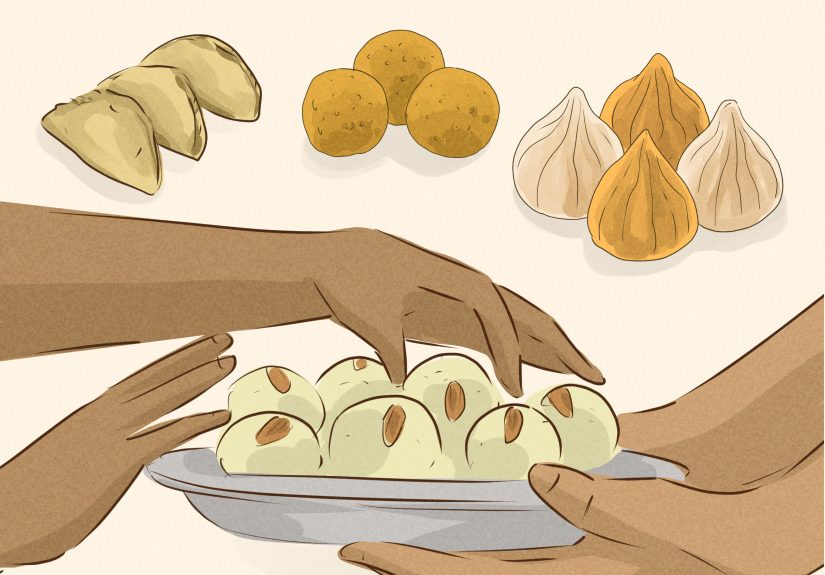
Many devotees offer sweetsespecially during Ganesh Chaturthibecause sweets are associated with celebration and blessing.
After offering, the food is treated as prasadam and shared.
Common offerings
- Sweets: modak-style sweet dumplings, laddoos, or any simple sweet offering you can respectfully provide
- Fruit: bananas, apples, orangessimple, clean, and easy
- Flowers: fresh flowers or petals (when available)
- Incense & lamp: fragrance and light as symbols of attention and purification
- Water: offered as a gesture of respect and welcome
If you’re not sure what to offer, remember: the “best offering” in most devotional traditions is your conduct afterward.
If you pray for wisdom and then immediately ghost your responsibilities… Ganesh may still love you, but your calendar will not.
Ganesh Chaturthi at Home: A Respectful, Eco-Friendly Approach
Ganesh Chaturthi is a major festival celebrating Ganesh and is often observed over multiple days (commonly up to ten),
with worship to a murti and offerings of sweets such as modak and laddoos. In many places, the festival culminates with
immersion of the murti in water. Modern guidance increasingly encourages eco-friendly choices, such as clay murtis and
natural dyes, because some materials can pollute waterways.
Simple home celebration ideas
- Choose a small clay murti or image.
- Do a short daily puja (10 minutes is enough).
- Offer a sweet or fruit, then share as prasadam.
- If you do immersion, consider a small at-home immersion method or an approved community solution that reduces environmental harm.
Common Mistakes (and How to Avoid Them Without Panic)
1) Treating worship like a performance
Puja isn’t a talent show. If you forget a step or mispronounce a word, simply continue with sincerity.
Traditional worship often includes a humble acknowledgment of human error anywaybecause humans are excellent at being human.
2) Overbuying “stuff” and underdoing devotion
You don’t need an entire store aisle to worship. A clean space, a lamp, a simple offering, and steady practice
can be more meaningful than a mountain of supplies used once a year.
3) Using Ganesh as a “luck vending machine”
Many devotees do pray for success, but Ganesh worship is also about becoming the kind of person who can handle success:
thoughtful, ethical, disciplined, and humble.
FAQ: Real Questions People Ask (Quietly, in Their Heads)
Do I have to be Hindu to pray to Ganesh?
Hindu communities differ in how they frame this, but many teachers emphasize that simple, respectful prayer and
sincere intention are welcome. If you’re new, approach with humility: learn, avoid stereotyping, and ask questions
at a local temple if possible.
Do I need to know Sanskrit?
No. Sanskrit chanting is valued, but devotion is not limited by language. If you want to learn pronunciation,
use trusted temple or educational resourcesbut don’t let “perfect” block “present.”
How often should I do Ganesh puja?
Some do it daily, some weekly, some on special days. Choose a rhythm you can sustain. Consistency is a devotional superpower.
Conclusion: A Simple Way to Keep Ganesh Close
Worshiping Ganesh is less about complicated ritual and more about a steady relationship: honoring wisdom, asking for help
with obstacles, and beginning things with humility. A lamp, a mantra, and a sincere heart can take you very farespecially
when paired with real effort and ethical choices.
If you’re starting small, start today: light a candle, offer a piece of fruit, chant a simple mantra, and ask for the kind
of obstacle-removal that matters mostfear, confusion, distraction, and the urge to quit when things get real.
Experiences: What Devotion to Ganesh Can Feel Like (500+ Words)
People often expect a spiritual practice to feel like fireworksdramatic signs, instant results, a cosmic “ding!” that
announces you have been officially blessed. Devotion to Ganesh, for many practitioners, is usually quieter than that.
It can feel like a steady hand on your shoulder that says, “Okayone step at a time.” It’s the inner shift from
panic to plan.
One common experience devotees describe is the “mental obstacle” clearing first. You might pray for a job offer,
but what changes immediately is your ability to focus on preparing for the interview. You still feel nervous,
but the nervousness stops driving the car. You review your notes. You show up on time. You speak more honestly.
In other words: the obstacle being removed isn’t always the external circumstanceit’s the inner fog that keeps
you from acting wisely.
Students often talk about Ganesh worship as a pre-study ritual: a quick chant, a candle, a few minutes of quiet,
and then the work begins. The result isn’t necessarily a magical score boost. The more consistent “win” is the sense of
steadiness. You stop doom-scrolling. You finish the practice problems. You ask the teacher the question you’ve been
avoiding because you didn’t want to look silly. Ganesh devotion, in that lens, supports couragethe courage to do
the next right thing.
Families sometimes experience Ganesh puja as a “home reset button.” In many households, a short morning worship gathers
people in one placephones down, voices softer, attention steadier. Even when life is busy, the ritual creates a familiar
rhythm: light, offering, prayer, gratitude. Over time, that rhythm can feel like spiritual housekeeping. It doesn’t erase
conflict, but it can reduce the heat. It reminds people to speak with respect, to forgive faster, to be a little less
dramatic about the fact that someone finished the last of the mangoes.
For those starting a business or a new creative project, praying to Ganesh often becomes a practice of aligning intention.
Many devotees describe asking not only for success, but for discernment: “Help me choose the right partners.
Help me keep my promises. Help me notice when pride is driving decisions.” When things go well, the worship can become
gratitude instead of entitlement. When things go badly, it can become endurance without bitterness. The obstacle removed
is the tendency to collapse into either arrogance or despairtwo classic productivity killers dressed in fancy outfits.
Newcomers to Ganesh worship sometimes report something surprisingly practical: a sense of permission to begin again.
That matters for people who feel stuck. You might not be able to fix everything today. But you can start something
a healthier habit, an apology, a difficult conversation, a disciplined planwithout waiting for life to be perfect first.
Devotion can feel like the spiritual version of clearing clutter off a desk: the work isn’t finished, but now you have
space to work.
Experiences vary widely, and nobody should feel pressured to “feel something” on schedule. But many devotees say the
most meaningful moments arrive in ordinary places: before a meeting, during a tough season, at a family altar with a
single lamp flickering, while repeating a mantra that steadies the breath. Over time, that steadiness can become the real
blessingbecause once your mind is steadier, your choices get wiser. And that’s how obstacles start moving.