Table of Contents >> Show >> Hide
- Start With the “Mission Statement” (Yes, Really)
- Measure Once, Regret Never
- Pick a Theme That Doesn’t Trap You in a Time Capsule
- Color That Looks Good and Survives Real Life
- The Bed: Your Biggest Space (and Style) Decision
- Storage That Kids Will Actually Use (AKA: The Makeover MVP)
- Lighting: The Glow-Up That Changes Everything
- Wall Decor That Feels Personal (Not Purchased in a Panic)
- Create a Homework Setup That Doesn’t Feel Like Homework
- Comfort Details That Make the Room Feel Finished
- Safety and Health: The Unsexy Part That Matters a Lot
- Three Makeover Examples You Can Copy
- Finishing Checklist: The “Looks Done” Moves
- Real-World Makeover Lessons (Experiences Section ~)
- Conclusion
A boys’ bedroom makeover is basically a tiny renovation + a personality upgrade + a storage intervention… all inside one room.
The good news: you don’t need a celebrity designer, a wrecking ball, or a second mortgage. You need a plan, a few smart choices
that survive growth spurts, and a layout that doesn’t feel like an obstacle course at 2 a.m.
This guide walks you through a practical, good-looking bedroom transformation for boysfrom little kids to teensusing real-world
design principles: flow, function, durability, and flexibility. We’ll cover color, furniture, storage, lighting, safety, and a few
“why didn’t I do that sooner?” upgrades that make everyday life smoother.
Start With the “Mission Statement” (Yes, Really)
Before you buy anything, write one sentence that defines what the room must do. Examples:
- “Sleep + homework + LEGO + calm down time.”
- “Shared room that feels fair for two kids.”
- “Teen hangout that still functions as a bedroom.”
This sentence becomes your decision filter. If a trendy item doesn’t support the mission, it’s not “cool,” it’s clutter wearing a hat.
Set a realistic budget (and spend where it matters)
Prioritize money on: a comfortable mattress, a durable bed frame, good lighting, and storage that’s easy to use. You can save on:
wall art, decor, baskets, and “theme” detailsthose are easy to swap later when dinosaurs become space, and space becomes “I only like black.”
Measure Once, Regret Never
Grab a tape measure and note the room’s length, width, ceiling height, window location, door swing, and closet layout. Sketch a quick
floor plan (paper is fine). The goal is to avoid buying a desk that blocks a drawer, or a bed that turns your kid into a wall-hugging crab walk.
Design zones (even in a small room)
Most boys’ rooms work best with three zones:
- Sleep zone: bed + nightstand + reading light
- Work zone: desk + task lighting + supplies
- Play/Chill zone: floor space, beanbag, small lounge chair, or a reading nook
Zoning isn’t just “Pinterest talk.” It reduces mess migrationwhen each activity has a home, stuff is less likely to reproduce across the room.
Pick a Theme That Doesn’t Trap You in a Time Capsule
Here’s the secret: the best “boys bedroom themes” are actually foundations, not costumes. Instead of committing to “race car EVERYTHING,”
choose a flexible concept that can evolve:
Flexible theme ideas
- Adventure/Outdoors: maps, wood tones, greens/blues, camping-style textures
- Space/Science: star decals (removable), rocket art, sleek storage, accent lighting
- Sports (without the stadium look): one statement wall, a framed jersey, subtle color palette
- Modern “Gamer” (not neon chaos): clean desk setup, cable management, LED accents used sparingly
- Classic + Collectibles: neutral base, open shelves for favorite items that change over time
Translation: keep big items timeless (bed, dresser, rug), make the “theme” live in easy swaps (bedding, posters, peel-and-stick decals).
Color That Looks Good and Survives Real Life
Color sets the mood. Bright can be energizing, but too much can feel chaoticespecially if the room is already full of brightly colored toys.
A popular strategy is the “calm base + fun accents” method:
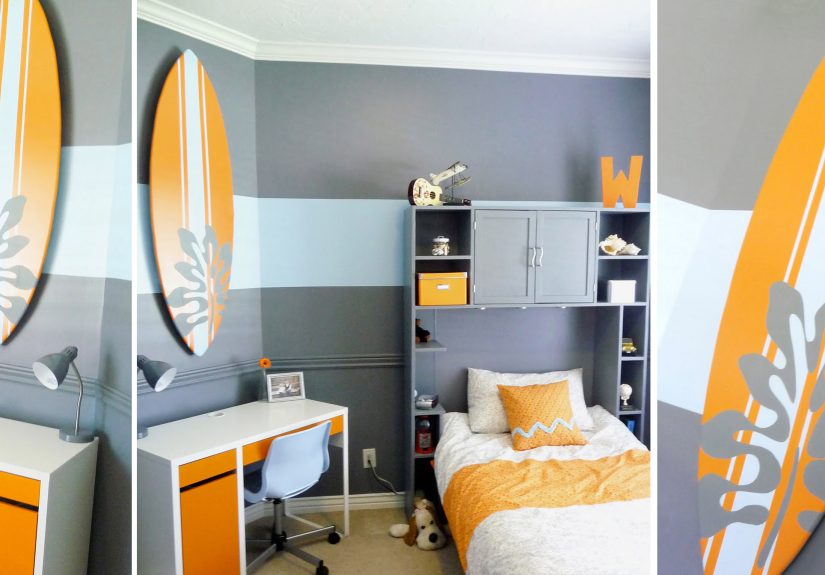
- Base (walls + big furniture): warm whites, soft grays, greige, light tan, or muted blue/green
- Accents (bedding + art + accessories): mustard, navy, forest green, orange, or black
Make one wall do the heavy lifting
If you want bold color, consider an accent wall behind the bed or desk. It gives the room personality without making every corner shout.
Removable wallpaper can create impact with less commitmentgreat for kids who change interests faster than you can find the Allen wrench.
Paint finish matters (especially for kids)
For most boys’ bedrooms, a washable finish like eggshell or satin is practical because it’s easier to wipe down than flat paint.
Also: ventilate well during painting and avoid storing open paint supplies in the roomfresh air is your friend.
The Bed: Your Biggest Space (and Style) Decision
The bed dominates the room visually and physically, so choose wisely. Three smart directions:
1) A classic twin or full bed with storage underneath
Under-bed drawers or bins are perfect for off-season clothes, extra bedding, or toy overflow. It’s not glamorous, but neither is stepping on
an action figure in the dark. Pick your battles.
2) A loft bed for small rooms
Lofting the bed opens floor space for a desk or a hangout spot. If your room is tight, this is one of the biggest “instant makeover” moves.
3) Bunk beds for shared rooms
Bunks can be a space saver, but safety and sturdiness are non-negotiable. Use the manufacturer’s guidelines, ensure guardrails are in place on
the top bunk, and choose the correct mattress height so guardrails work as intended.
Storage That Kids Will Actually Use (AKA: The Makeover MVP)
A room can look amazing for exactly 11 minutesuntil someone needs to find socks. The trick is “easy-put-away” storage:
open bins, shelves at kid-height, hooks for backpacks, and a clear home for the most-used stuff.
High-impact storage upgrades
- Cube shelves + labeled bins: quick cleanup, visual organization, flexible as interests change
- Under-bed storage: a second closet you didn’t have to build
- Wall hooks or a peg rail: backpacks, hoodies, headphones, sports gear
- Floating shelves: books, collectibles, trophiesdisplay without eating floor space
- Closet refresh: add a second rod, shelf dividers, or baskets to stop the “clothes avalanche”
The “toy rotation” trick
If clutter is constant, try storing a portion of toys elsewhere and rotating them. The room stays calmer, and old toys feel new again.
(It’s basically a free streaming service, but for action figures.)
Lighting: The Glow-Up That Changes Everything
Good lighting makes a room feel bigger, cleaner, and more functional. Aim for three layers:
- Ambient: overhead ceiling light
- Task: desk lamp for homework and hobbies
- Accent: wall sconces, LED strip behind a headboard, or a reading light
LED is a practical win
LED bulbs are energy efficient and long-lasting, which is great for a room where lights “accidentally” get left on while someone goes to
“quickly get a snack” and returns 45 minutes later with a full life update.
Wall Decor That Feels Personal (Not Purchased in a Panic)
Walls are where you can go playful without committing forever. Try a mix of:
- One statement element: mural wallpaper, a painted stripe, or a bold color block
- Framed art/posters: makes the room feel intentional (and easier to update later)
- Display ledges: rotate books, model cars, LEGO builds, or trophies
- Pinboard or magnetic board: schedules, photos, and the important stuff (like the “Top 10 Video Game Bosses” list)
Make a “proud shelf”
Designate one small shelf for current favoritesart projects, medals, collectibles, or a cool rock that is apparently extremely important.
This keeps special items from spreading across every surface.
Create a Homework Setup That Doesn’t Feel Like Homework
A functional study corner can be small. What matters is comfort, light, and organization. Try:
- A desk that fits the space: even a floating desk can work in a tight room
- A supportive chair: comfort = longer focus (and fewer dramatic flops onto the bed)
- Task lighting: a desk lamp reduces eye strain
- Supply control: cups, drawers, or organizers for pencils, chargers, and notebooks
Cable management is not optional anymore
If the room has gaming or devices, plan for cord routing. Use clips, a cable box, or a power strip mounted safely where it won’t become a
“cord spaghetti exhibit.” A clean setup looks better and feels calmer.
Comfort Details That Make the Room Feel Finished
Bedding
Keep bedding easy to wash and simple to remake. A neutral comforter plus patterned sheets (or vice versa) looks polished without being fussy.
Add one throw blanket for texture and warmth.
Rug
A rug anchors the room, adds comfort, and softens sound. In play-heavy rooms, it’s basically a landing pad for knees and imagination.
Choose something durable and easy to clean.
Window treatments
Blackout or room-darkening curtains can be helpful for sleep, especially if there’s early morning light. Bonus: they make the room feel cozier
and more “designed.”
Safety and Health: The Unsexy Part That Matters a Lot
A makeover isn’t just styleit’s safety. Bedrooms often include dressers, shelves, and TVs that can tip if climbed. Anchor heavy furniture
securely. Also consider indoor air quality: ventilate during painting and choose products that support a healthier space.
Sleep-friendly environment
For better sleep, a cool, dark, quiet room tends to work best. If your child runs hot at night, breathable bedding and a slightly cooler room
temperature can help support comfort.
Three Makeover Examples You Can Copy
Example 1: The Small Room “Space Saver” (Ages 6–10)
- Layout: loft bed + desk underneath + small reading beanbag
- Color: soft gray walls, navy accents
- Storage: cube shelf with bins + under-bed drawer (if not lofted) + wall hooks
- Decor: removable star decals + framed rocket prints
Why it works: the floor becomes usable space again, and the “space theme” is mostly accessorieseasy to evolve later.
Example 2: The Shared Brothers Room (Ages 7–12)
- Layout: bunk bed + shared dresser + two small labeled storage zones
- Color: warm white base, green/blue accents split across bedding
- Storage: built-in style cubbies or a tall bookshelf, with “my stuff” bins per kid
- Decor: one shared wall (map mural) + two individual pinboards
Why it works: shared space stays fair, while each kid still gets a “this is mine” zoneless bickering, more peace.
Example 3: The Teen Upgrade (Ages 13–17)
- Layout: full bed + real desk setup + lounge chair
- Color: neutral walls with one darker accent (charcoal, deep blue, or forest green)
- Storage: closed storage for clutter control + display shelves for collectibles
- Lighting: layered lighting + subtle LED backlight (not nightclub mode)
Why it works: it feels mature without being boring, and it supports studying, hobbies, and downtime.
Finishing Checklist: The “Looks Done” Moves
- Swap basic switch plates and add a nicer bedside lamp
- Hang curtains higher and wider to make windows look bigger
- Use matching bins to reduce visual clutter
- Limit open-shelf items to “display-worthy” things
- Add one personal element: name sign, photo wall, or achievement board
Real-World Makeover Lessons (Experiences Section ~)
If you ask families what surprised them most during a boys’ bedroom makeover, it’s rarely “Wow, paint is expensive.” It’s usually how quickly
small decisions affect daily life. One common lesson: the room doesn’t need more stuffit needs better systems. When storage is
awkward (tiny drawers, tall shelves, lids that require two hands and a miracle), kids stop using it. But when you switch to open bins,
clear labels, and hooks at the right height, you’ll see a weird phenomenon: cleanup becomes possible without negotiating like you’re at a
hostage exchange. It’s not because the child changed personalities overnight. It’s because the room finally matches how kids actually live.
Another “experience-based” truth: themes work best when they’re removable. Families often start with a big ideasuperheroes,
dinosaurs, race carsand it looks adorable… until a year later when the child’s interest shifts. The smartest makeovers treat the theme like
an outfit, not a tattoo. A neutral wall color plus themed bedding, posters, and peel-and-stick decals lets you pivot easily. You can turn
“Dino Headquarters” into “Adventure Basecamp” with a new quilt and a few frames, without repainting the entire room or pretending you didn’t
spend three hours aligning wall decals at midnight.
People also underestimate how emotional a bedroom can be for kids and teens. It’s their territory. When they’re involvedchoosing between
two paint colors, picking the rug, deciding what gets displayedthe room becomes something they feel proud of, not something that happened
to them. A lot of parents notice that even a small choice, like letting their child pick the accent color for bins or the art above the bed,
boosts buy-in. And buy-in is the secret ingredient for maintenance. A room that feels “mine” is more likely to stay functional.
One more lesson that shows up over and over: lighting is the underrated hero. Families may focus on beds and decor, but the
moment you add a proper desk lamp and a warm reading light, the room feels more finishedand more comfortable to actually use. Kids read
more in cozy corners. Teens study longer when the desk area doesn’t feel like a dim cave. And calmer evening lighting can make bedtime feel
less like an abrupt shutdown and more like a natural wind-down.
Finally, there’s the “after photo” reality check. A makeover isn’t a museum exhibit; it’s a working space. The best experiences come from
designing for the daily routine: where the backpack lands, where laundry goes, where chargers live, where tomorrow’s outfit gets staged, and
how the floor stays clear enough to walk through without performing a circus act. When those flows are solved, the room stays nicer longer
and it feels like a win every day, not just on reveal day.
Conclusion
A boys’ bedroom interior design makeover works best when it balances personality with practicality: a flexible theme, durable finishes,
smart storage, layered lighting, and a layout that supports sleep, study, and play. Start with the mission, build a timeless foundation,
then add fun through easy-to-swap details. You’ll end up with a room that looks great in photosand, more importantly, functions beautifully
on an ordinary Tuesday night.