Table of Contents >> Show >> Hide
- The Cookie That Accidentally Took Over the World
- What “Perfect” Means (Because Your Perfect Isn’t Mine)
- Ingredient Science (In Plain English)
- Butter: softened, melted, or browned?
- Sugar: why brown sugar makes cookies chewier
- Eggs: binders, moisturizers, and texture managers
- Flour: structure, chew, and “why is my cookie dry?”
- Baking soda vs. baking powder
- Salt and vanilla: the “don’t skip this” duo
- Chocolate: chips, chunks, wafers, or chopped bars?
- Technique That Changes Everything
- A Classic “Master” Chocolate Chip Cookie Blueprint
- Troubleshooting: Why Your Cookies Did That
- Flavor Upgrades That Don’t Feel Like Homework
- Make-Ahead, Storage, and the “Why Are They Stale Already?” Situation
- Food Safety: The Cookie Dough PSA (Sorry, I Don’t Make the Rules)
- Real-Life Chocolate Chip Cookie Experiences (Extra )
Chocolate chip cookies are the unofficial national anthem of “just one more.” One minute you’re being a responsible adult,
the next you’re negotiating with yourself like a tiny, sugar-powered lawyer: “Technically this is self-care.”
And honestly? You’re not wrong.
This guide pulls together the best, most reliable cookie wisdom from a bunch of well-respected U.S. baking authorities and test kitchens,
then rewrites it into one place you can actually use. We’ll talk texture (chewy vs. crispy), ingredient science (without the boring),
and the small technique tweaks that separate “meh” cookies from “hide-the-container-from-your-family” cookies.
The Cookie That Accidentally Took Over the World
The classic origin story goes like this: a Massachusetts innkeeper, a chopped chocolate bar, and a “this will totally melt” assumption
that did not, in fact, melt. Instead, the chocolate held its shape in little pockets, creating a new cookie category: the kind that makes
people “stop by” your kitchen with suspicious frequency.
The takeaway isn’t just the historyit’s the lesson: chocolate chip cookies reward experiments. The “best” cookie isn’t one recipe.
It’s a set of choices that match how you like your cookie life: thick or thin, gooey or crisp, classic or fancy.
What “Perfect” Means (Because Your Perfect Isn’t Mine)
Cookie perfection lives on a spectrum. Instead of chasing one mythical unicorn cookie, decide what you want in three categories:
texture, flavor, and chocolate distribution. Yes, distribution matters. We’re adults.
We can discuss serious issues.
Texture goals
- Crisp-edge + chewy-center: The crowd-pleaser. The “everyone at the potluck asks for the recipe” cookie.
- Thick + gooey: Underbaked in the center on purpose. Like a brownie’s friend who owns a sweater vest.
- Thin + snappy: Caramelized, buttery, crisp. Great for dunking or for people who claim they “don’t like sweets” (liars).
Flavor goals
- Classic vanilla-butter: Clean, nostalgic, lunchbox vibes.
- Toasty-caramel: Brown butter, darker brown sugar, deeper flavor.
- Salted-sweet: A little flaky salt on top makes chocolate taste more chocolatey. It’s science and magic.
Ingredient Science (In Plain English)
Butter: softened, melted, or browned?
Butter is the cookie’s personality. Softened butter, creamed with sugar, tends to trap air and build structuregreat for balanced cookies
with some lift. Melted butter often makes a denser, chewier cookie (and can encourage spread if you don’t chill).
Brown butter adds nutty, toasted notes that make people say things like, “Wait… what is in this?” and then take a third cookie.
Tip: if your cookies spread like they’re auditioning to become pancakes, your butter (or dough) may be too warm, your baking sheet may be hot,
or your flour may be under-measured. More on that in troubleshooting.
Sugar: why brown sugar makes cookies chewier
White sugar helps cookies spread and crisp. Brown sugar contains molasses, which brings moisture and chew, plus that cozy caramel flavor.
Many “best chocolate chip cookie recipe” versions lean heavier on brown sugar for a softer center.
Want a chewier cookie? Use more brown sugar than white. Want more crisp? Increase white sugar, bake a touch longer, and go thinner.
Eggs: binders, moisturizers, and texture managers
Eggs add moisture, provide structure, and help bind the dough. More egg (or an extra yolk) can increase chewiness and richness.
One common move in chewy chocolate chip cookies is using one whole egg plus an extra yolkmore fat, less extra liquid.
Flour: structure, chew, and “why is my cookie dry?”
Flour builds the cookie’s framework. Too little and you get cookie puddles; too much and you get dry, cakey sadness.
Measuring matters. If you scoop flour directly with the measuring cup, you can pack in extra flour without realizing it.
A spoon-and-level method (or better: weighing in grams) helps consistency.
Want extra chew and a sturdier cookie? Try a small swap of bread flour (higher protein) for part of the all-purpose flour.
Want softer and more tender? Stick with all-purpose, and avoid overmixing once flour goes in.
Baking soda vs. baking powder
Baking soda encourages spread and browning, especially with brown sugar’s acidity helping it do its thing.
Baking powder can add lift and a slightly cakier feel. Many classic chocolate chip cookies use mostly baking soda,
sometimes with a pinch of baking powder for a little extra puff.
Salt and vanilla: the “don’t skip this” duo
Salt is not optional unless you enjoy cookies that taste like sweet cardboard. It sharpens flavor and makes chocolate pop.
Vanilla adds warmth and roundness. Use real vanilla extract if you can. Your cookie deserves it.
Chocolate: chips, chunks, wafers, or chopped bars?
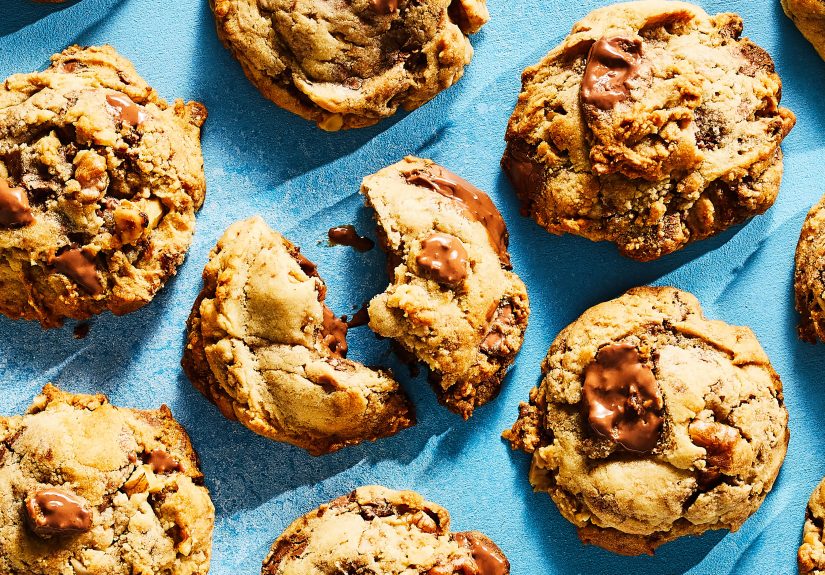
Chocolate chips are designed to hold their shape. Chopped chocolate bars create irregular piecestiny shards melt into the dough,
big chunks form glorious pools. Wafers/discs melt into dramatic puddles. If you want bakery-style looks, chopped chocolate is your best friend.
Pro move: save a handful of chocolate and press a few pieces into the top of each dough ball before baking. It screams “professional”
and whispers “I planned this,” even if you absolutely did not.
Technique That Changes Everything
Creaming: how to get structure without turning cookies into cake
Creaming butter and sugar isn’t just mixingit’s creating tiny air pockets that affect spread and texture.
Cream until lighter and fluffy, but don’t treat it like cardio. Then add eggs and vanilla. Once flour goes in,
mix only until you stop seeing streaks of flour. Overmixing builds too much gluten and makes cookies tougher.
Resting/chilling dough: the easiest “upgrade” with the biggest payoff
If you only adopt one habit, make it this: chill the dough. Even 1 hour helps the flour hydrate and the flavors meld.
Overnight (or up to a couple of days) can deepen caramel notes, improve texture, and reduce dramatic spreading.
In other words: it makes your cookies taste like you know what you’re doing.
Short on time? Chill the dough in a flattened layer so it cools faster, or portion into balls and freeze briefly.
Cold dough also gives you thicker cookies with better-defined edges.
Portioning and shaping: yes, your cookie shape matters
Uniform size means uniform baking. A cookie scoop is basically a cheat code.
For thicker cookies: shape dough into tall, slightly lumpy mounds (not perfect spheres). Tall dough spreads outward but stays thick.
For thinner cookies: flatten slightly before baking.
Baking setup: temperature, pans, and the myth of “my oven is fine”
- Use parchment paper: promotes even browning and easy release.
- Cool your baking sheet between batches: warm pans melt the dough early and cause extra spread.
- Rotate pans halfway through: most ovens have hot spots (yes, even the expensive ones).
- Middle rack is your friend: balanced heat for even baking.
Pulling early: the secret to chewy centers
If you want soft and chewy chocolate chip cookies, pull them when the edges look set and lightly golden,
but the centers still look a little underdone. Residual heat finishes the job as they cool on the baking sheet.
This is not laziness. This is strategy.
A Classic “Master” Chocolate Chip Cookie Blueprint
Not a copy of any single famous recipemore like a proven, flexible template. Use it to build your perfect cookie.
(And to quietly judge recipes that don’t include salt. Kidding. Mostly.)
Base dough (makes ~24 medium cookies)
- 225 g unsalted butter (softened for classic texture, or browned for deeper flavor)
- 150 g packed brown sugar
- 120 g granulated sugar
- 2 large eggs (or 1 egg + 1 yolk for extra chew)
- 2 tsp vanilla extract
- 300 g all-purpose flour (option: replace 50–75 g with bread flour for more chew)
- 1 tsp baking soda
- 3/4 tsp fine salt (more if using unsalted butter and you like salt-forward cookies)
- 300–340 g chocolate chips/chunks (plus extra for topping)
- Optional: 1–2 tsp cornstarch for extra tenderness, 60–90 g toasted nuts, flaky salt to finish
Method (the version you’ll actually follow)
- Cream butter and sugars until lighter and fluffy (or cool browned butter until it’s not hot, then mix with sugars).
- Mix in eggs and vanilla.
- Whisk flour, baking soda, and salt separately; add to wet mix and stir just until combined.
- Fold in chocolate. Cover and chill at least 1 hour (overnight is even better).
- Scoop dough onto parchment-lined sheets, leaving space. Top with a few extra chocolate pieces.
- Bake at 350°F–375°F until edges are golden and centers look slightly underdone.
- Cool on the sheet 5 minutes, then move to a rack (or eat one immediately and pretend it “doesn’t count”).
Troubleshooting: Why Your Cookies Did That
Problem: Cookies spread too much (thin, greasy)
- Dough too warm → chill longer; avoid warm kitchen mixing near the oven.
- Hot baking sheet → cool the pan between batches.
- Too little flour → measure carefully or weigh ingredients.
- Butter too soft or melted without chilling → chill dough balls before baking.
Problem: Cookies are cakey
- Too much flour → measure correctly or weigh.
- Too much baking powder or too much mixing → reduce leavener, mix less after flour.
- Not enough sugar/fat ratio → ensure butter and sugar aren’t reduced unless you rebalance the formula.
Problem: Cookies are dry or crumbly
- Overbaked → pull earlier; cookies continue to set as they cool.
- Too much flour → again: weigh if you can.
- Not enough brown sugar → add more brown sugar for moisture and chew.
Problem: Cookies are pale and bland
- Under-salted → add salt (and consider a pinch of flaky salt on top).
- Not enough browning → slightly higher temp or longer bake; use browned butter; rest dough longer.
- Vanilla is weak → upgrade vanilla extract.
Flavor Upgrades That Don’t Feel Like Homework
Brown butter + flaky salt
Brown butter brings nutty, toffee-like depth. Flaky salt on top balances sweetness and makes chocolate taste richer.
This combo is the cookie equivalent of putting on a blazer: same person, suddenly more impressive.
Toffee bits or chopped pretzels
For crunch and caramel flavor, add toffee bits. For salty-snack chaos in the best way, try chopped pretzels.
(Yes, it sounds like a snack aisle accident. Yes, it’s delicious.)
Espresso powder or instant coffee
A small pinch won’t make cookies taste like coffee. It makes chocolate taste more chocolatey.
Like turning up the contrast on a photo, but edible.
Switch up the chocolate
Mix semisweet chunks with bittersweet pieces, or add a small portion of milk chocolate for extra sweetness.
The goal: layers of flavor, not a single-note sugar punch.
Make-Ahead, Storage, and the “Why Are They Stale Already?” Situation
Chocolate chip cookie dough freezes beautifully. Portion into balls, freeze on a tray, then store in a sealed bag.
Bake from frozen with a slightly longer bake time. This turns your freezer into a personal cookie ATM.
To keep baked cookies soft, store airtight once fully cool. If they start to firm up, a few seconds in the microwave can revive
that warm-and-gooey feeling. (Just don’t microwave them into lava and then blame the cookie.)
Food Safety: The Cookie Dough PSA (Sorry, I Don’t Make the Rules)
Raw cookie dough can be risky because uncooked flour and raw eggs can contain harmful bacteria. Baking makes it safe.
If you love “edible cookie dough,” look for versions made with heat-treated flour and pasteurized eggs (or no eggs).
Also: wash hands and clean surfaces after working with raw flour and eggs. Your future self will thank you.
Real-Life Chocolate Chip Cookie Experiences (Extra )
Chocolate chip cookies aren’t just a dessertthey’re an event. They’re the smell that makes someone wander into the kitchen and ask,
“Whatcha making?” as if their nose didn’t already file a full report. They’re the universal peace offering,
the “sorry I’m late,” the “congrats on the new job,” and the “I don’t know what to say, but I brought baked goods” gesture.
If you’ve ever baked cookies with kids, you know it’s less “cooking class” and more “tiny flour-based weather system.”
There’s flour on the counter, flour on the floor, flour somehow on the dog, and one child holding a chocolate chip like a precious gem
while the other is attempting to “stir” by launching a spoon into orbit. And yetwhen the cookies come out
everyone forgets the mess. Warm cookies have a way of rewriting the last hour of chaos into a highlight reel.
Then there’s the late-night batch, the one you make when the day has been long and your brain is running on fumes.
The kitchen is quiet, and the mixing bowl feels like a small act of control in a world that refuses to stop emailing you.
You cream butter and sugar like you’re kneading stress into submission. The dough tastes amazing (and yes, you’re not supposed to eat it raw,
but the temptation is real), and when the oven light clicks on, it’s like watching comfort take shape.
That first cookiestill too hot, chocolate molten, edges crispdoesn’t fix everything. But it definitely improves the plot.
Cookies also have this magical ability to turn strangers into friends. Bring a container to the office, and suddenly you’re popular.
Not “famous,” but “people who never talked to you before now know your name.” Someone will ask for the recipe.
Someone else will say, “These remind me of my grandma,” and you’ll watch an adult person time-travel via butter and vanilla.
Another coworker will hover near the container pretending to “just pass by” six times, because cookies erase dignity in the nicest way.
And let’s not ignore the very real experience of cookie preferences causing polite household drama. One person wants them thin and crisp,
another wants them thick and gooey, and a third insists the cookie should be “not too sweet” (which is suspicious behavior in a cookie conversation).
The good news is that chocolate chip cookies are flexible: chill the dough longer for thicker cookies, bake longer for crispness,
change sugar ratios for chew, and swap chips for chopped chocolate for those fancy puddles.
A single dough can become multiple personalitieskind of like us, but with fewer meetings.
In the end, chocolate chip cookies are a memory machine. They show up at birthdays, road trips, bake sales, breakups, celebrations,
and random Tuesdays that needed rescuing. You don’t just bake themyou build a moment around them.
And if you happen to “accidentally” make a double batch, that’s not a mistake. That’s future happiness. Frozen, portioned, and ready on demand.