Table of Contents >> Show >> Hide
- Why Cloud Gaming Felt Different at CES
- Laptops Got BetterNot Just Faster
- The CES Sweet Spot: Local + Cloud as a Single Game Plan
- What to Look For in a “Cloud-Friendly” Laptop
- The Fine Print: Cloud Gaming Still Has Rules
- So… Is This the Year Cloud Gaming Goes Mainstream?
- Cloud Gaming and CES Laptops: Real-World Experience Notes (Extra)
- Conclusion
CES has always been the place where the future shows up wearing a shiny jacket and insisting it’s “totally practical now.”
This year, though, two parts of that pitch felt unusually… believable: cloud gaming and laptops.
Not because someone slapped “AI” on a sticker (though, sure, there was plenty of that), but because the underlying stuff that actually
makes games feel goodlatency, screens, thermals, battery life, and platform supporttook real steps forward.
Put simply: CES helped make a compelling new combo more realistic for everyday people.
You can buy a thinner, quieter laptop that lasts longer, and still play big gameseither locally with smarter mobile GPUs,
or by borrowing a monster GPU from the cloud when you need it. Your backpack doesn’t need to double as a deadlift anymore.
Why Cloud Gaming Felt Different at CES
Cloud gaming has been “almost there” for years. The idea is perfect: let a remote server do the heavy lifting,
stream the video to your device, and keep your laptop cool enough to rest on your knees without turning into a space heater.
The problem has always been the same trio: latency, platform gaps, and real-world friction
(sign-ins, controller quirks, network weirdness, and that one roommate who starts a 4K movie right when you enter a boss fight).
More Native Apps, Fewer “Web Version” Compromises
One of the biggest quality-of-life upgrades is simply where cloud gaming runs. When services rely on a browser,
you often get limitationscodec support, resolution caps, input oddities, and extra latency from a less optimized stack.
CES coverage highlighted a clear push toward native apps and broader device support, which matters because
“cloud gaming” is only convenient if it’s available on the devices people actually use.
A standout example is NVIDIA GeForce NOW expanding with a native Linux app and support for select
Amazon Fire TV devicestwo places where the “it should just work” bar matters a lot. Linux users have long been
stuck in workarounds, and living-room gaming lives or dies by how easy it is to launch, pair a controller, and start playing.
Adding these endpoints makes cloud gaming feel less like a tech demo and more like an option.
Cloud Performance Got Less Hypothetical
Cloud gaming also got more credible because providers are talking about performance in concrete terms:
higher resolutions, higher refresh rates, and more consistent responsiveness. That doesn’t magically delete latency
(physics still runs the world), but it does mean you’re less likely to feel like you’re gaming through a keyhole.
A practical takeaway: if a service can reliably stream at settings that would normally demand a beefy GPU,
then your “gaming device” can be something you already ownan ultralight laptop, a small desktop, a handheld,
or even a streaming stick on a TV. That flexibility is the entire promise of cloud gaming, and CES signaled that the ecosystem
is finally sanding down the rough edges.
Sign-In and Setup Started Acting Like It’s 2026
Cloud gaming fails in the least glamorous ways: the launcher wants another password, your account needs relinking,
your controller mapping is off, or your game library is split across three storefronts that refuse to get along.
CES announcements leaned into fixing that boring stuffthings like smoother access and streamlined authentication
because the market is realizing something important:
the best “performance” upgrade is removing the steps that stop people from playing at all.
Laptops Got BetterNot Just Faster
The laptop story at CES wasn’t only about brute force. It was about balance: performance per watt, quieter cooling,
better screens, smarter designs, and more variety so buyers can actually pick what fits their life.
You saw premium lines return to form, bolder concepts that hint at where form factors are headed,
and gaming laptops that aim for power without turning into desk-bound bricks.
New CPU Generations Focused on Efficiency (and AI Whether You Asked or Not)
Major PC silicon launches at CES tend to set the tone for the year, and this cycle is heavy on chips designed for
efficient performance and on-device AI workloads. Whether you care about “AI PCs” or not, there’s a benefit you will
care about: these chips are pushing better responsiveness and battery life without needing
a giant thermal budget.
That’s why it matters when new laptop platforms roll out across mainstream lines:
thin laptops can stay thin, fans can stay quieter, and sustained performance becomes less of a “two-minute sprint”
and more of an “all-day pace.”
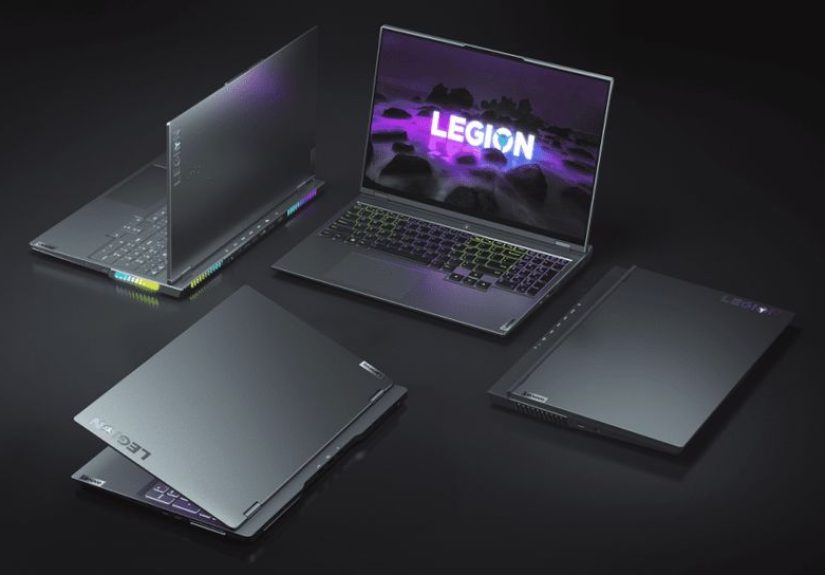
Gaming Laptops Got Smarter About Power Budgets
The old gaming laptop formula was simple: more watts, more heat, more fan noise, more regret.
CES coverage showed manufacturers pushing higher total system power where it counts, but also improving cooling designs,
optimizing component layouts, and making performance more predictable under load.
In other words, it’s not just “fast in a benchmark”it’s “fast while you actually play.”
You also saw clearer segmentation: some models chase maximum performance with high-end mobile GPUs,
while others aim for “good enough locally” plus cloud support for peak moments.
That second category is where cloud gaming and better laptops really start to click.
Displays: OLED Everywhere, and Finally Some Anti-Glare Love
Laptop screens keep improving in ways gamers and creators both feel immediately: deeper contrast,
higher refresh rates, and better color. CES also highlighted a more practical trend:
reducing glare. OLED can look gorgeous, but glare can turn your premium display into a mirror
the second you move near a window.
Anti-glare OLED announcements are a big deal for real life: playing or working in bright rooms,
traveling, or just sitting in a coffee shop without seeing your own face judging your K/D ratio.
Design Got More Interesting (and Sometimes More Useful)
CES always has at least one laptop concept that exists mainly to make you say “Wait… it does what?”
This year, expandable and rollable displays showed up as a serious idea, not just a sci-fi flex.
Whether these designs become mainstream is a separate questionbut they point to a future where a “gaming laptop”
can adapt to different tasks: competitive play, editing, multitasking, and wide-aspect immersion.
Meanwhile, mainstream premium laptops focused on something less flashy but more important:
better interfaces, more comfortable keyboards, improved portability, and stronger battery life.
These are the upgrades that make you like your laptop more on day 200, not just day 2.
The CES Sweet Spot: Local + Cloud as a Single Game Plan
Here’s the strategy CES implicitly endorsed: treat gaming like a spectrum, not a single mode.
- Local gaming for esports titles, older games, and anything you want to run offline with low input delay.
- Cloud gaming for brand-new AAA games, ultra settings, and “I don’t want my fans to sound like a drone” sessions.
-
Hybrid play where you switch based on where you are: home Wi-Fi and big screen? Cloud.
On a plane or spotty hotel internet? Local.
That flexibility is what makes the recent improvements so meaningful. If cloud platforms are expanding to more devices
and smoothing setup, and if laptops are getting more efficient with better screens and cooling,
you can build a setup around your life instead of rearranging your life around your setup.
What to Look For in a “Cloud-Friendly” Laptop
If CES taught us anything, it’s that you don’t need the most expensive GPU to have a great gaming year.
But you do need the right foundations.
1) A Great Screen (Because You’re Staring at It)
For cloud gaming, the display is the experience. Look for:
high refresh (120Hz+ if you can), good response time,
and strong brightness if you play in bright rooms. OLED is fantastic for contrast; anti-glare treatments help it stay fantastic outside a dark bedroom.
2) Strong Wi-Fi (Yes, It Matters More Than Another CPU Core)
Cloud gaming cares about consistency: stable latency, fewer spikes, and resilient connections.
Wi-Fi 7 features like Multi-Link Operation are designed to improve reliability and reduce latency by using multiple links more intelligently.
Even if your router isn’t brand new, a modern Wi-Fi card and solid antenna design can make your connection feel less “moody.”
3) Quiet, Capable Cooling
You can’t enjoy a game if your laptop sounds like it’s trying to take off.
Better cooling matters for local performance, but it also matters for cloud gaming because your device still decodes high-bitrate video.
Efficient thermals help maintain stable clocks and keep the whole experience smooth.
4) Battery Life That Matches Reality
Cloud gaming can be surprisingly battery-hungry (screen brightness + video decoding + network activity),
but modern laptop platforms are getting better at managing that load. If you travel or play away from outlets,
prioritize laptops known for strong real-world endurancenot just “up to” numbers.
The Fine Print: Cloud Gaming Still Has Rules
Cloud gaming is better, but it isn’t magic. A few truths remain:
-
Latency is unavoidableyou can reduce it with good networking, but you can’t delete distance.
Fast-paced competitive gaming is still usually best locally. - Your internet plan mattersdata caps and unstable connections can turn “smooth” into “why is my character moonwalking?”
-
Subscriptions can add upcloud services, game libraries, and platform memberships may stack.
The value is real, but only if you actually use it.
The good news: CES trends suggest the industry is focusing on smoothing the experiencemore native apps,
more living-room endpoints, better sign-in flows, and hardware/network ecosystems that treat low latency as a priority.
So… Is This the Year Cloud Gaming Goes Mainstream?
“Mainstream” is a big word, but CES made a strong case that we’re entering a more practical phase.
Cloud gaming is expanding across platforms and improving the boring parts that used to block adoption.
Laptops are evolving toward better screens, better efficiency, and designs that support both work and play
without forcing you into an oversized machine.
The real win is choice. You can buy a premium thin-and-light and still play demanding games in the cloud.
You can buy a gaming laptop and use cloud streaming to keep temps down or access games when you’re away from your main setup.
And as next-gen networking (Wi-Fi 7 now, Wi-Fi 8 concepts on the horizon) keeps chasing lower latency and better reliability,
the “it feels good” threshold becomes easier to reach.
Cloud Gaming and CES Laptops: Real-World Experience Notes (Extra)
Imagine a normal weekbecause that’s where all this CES progress either shines or falls apart.
On Monday, you’re on a slim laptop in a bright room. A glossy screen would usually betray you with reflections,
but anti-glare OLED (the kind showcased at CES) makes it easier to see dark scenes without turning the brightness into a flashlight.
You open a cloud gaming app, grab a controller, and you’re inno “update your browser,” no “your codec isn’t supported,”
no wrestling match with a web tab that decides it’s a good time to refresh.
On Tuesday, you try the same thing on a different devicemaybe a Linux laptop you use for school or coding.
Historically, that’s where game plans go to die: launcher friction, compatibility gaps, or just a lack of official support.
The shift toward native apps feels like someone finally acknowledged that real people have real setups.
You don’t suddenly become a system administrator just to play a game after dinner.
Wednesday is the living-room test. A lot of households don’t want a big consoleor they already have one and don’t want a second.
Cloud gaming on a streaming stick changes the vibe: it’s closer to “press play” than “rearrange your furniture.”
When it works well, it’s weirdly freeing. You can jump into a PC game library on the TV without dedicating a full gaming rig to the space.
It feels less like owning a machine and more like owning access.
Thursday is when reality checks you. Someone else is on a video call. Another person is streaming. Your router is doing router things.
This is where newer Wi-Fi features matternot because you’re obsessed with acronyms, but because fewer latency spikes means fewer moments where
your timing feels off. It’s the difference between “I lost” and “I lost because my connection decided to become interpretive art.”
Even small improvements in stability can make cloud gaming feel fair instead of flimsy.
Friday night is “big game” time. You could run it locally, but you’d rather not crank your laptop fans into jet-engine territory.
Cloud gaming becomes a strategic choice: keep the device cool, keep performance high, and treat your laptop more like a great screen plus a great keyboard.
Meanwhile, your local hardware still matters for competitive titles or offline playso you aren’t locked into one mode.
That’s the new comfort: you can decide what’s best per moment, not commit to a single expensive setup for every scenario.
And that’s why CES mattered for this topic. It didn’t “invent” cloud gaming or laptops. It showed the parts getting refined:
more device support, fewer setup hassles, better screens, smarter chips, and networking that’s clearly aiming at low-latency life.
The experience is still only as good as your connectionbut compared to a few years ago, the idea of gaming anywhere feels less like a promise
and more like something you can actually build into your routine.
Conclusion
CES didn’t just tell us that cloud gaming and laptops are improvingit showed how: broader platform access,
smoother sign-in and usability, real performance targets in the cloud, and laptops that prioritize efficiency, displays, and practical design.
If you want the simplest takeaway, it’s this: the gap between “owning horsepower” and “renting horsepower” is shrinking,
and the best 2026 setups will mix both.