Table of Contents >> Show >> Hide
- What Are Finn Juhl Turning Trays?
- Why This Tray Still Matters in a World Full of Trays
- Finn Juhl’s Design Language Is All Over It
- The Beauty of the Details
- How Finn Juhl Turning Trays Work in Real Interiors
- How to Choose the Right Turning Tray
- Is a Finn Juhl Turning Tray Worth It?
- Care Tips for Long-Term Enjoyment
- Living With Finn Juhl Turning Trays: The Experience
- Final Thoughts
If you have ever looked at a serving tray and thought, “Nice, but could it be a little more sculptural, a little more intelligent, and a lot less boring?” then welcome to the elegant universe of Finn Juhl Turning Trays. These trays are the sort of household objects that make you question why so many other objects in your home seem determined to live average lives. A tray, after all, can simply carry coffee. Or it can carry coffee while quietly reminding everyone in the room that good design is not just for museums, collectors, and the one friend who says the word patina way too casually.
Finn Juhl’s Turning Tray sits at the crossroads of function, craftsmanship, and mid-century modern beauty. It is one of those rare designs that feels as useful today as it likely did when it was first created in the 1950s. Clean but not cold, refined but not fragile-looking, it represents the kind of Danish modern design that manages to feel timeless without becoming stale. That is a neat trick. Many objects try. Very few succeed.
In this guide, we will take a close look at what makes Finn Juhl Turning Trays special, why design lovers still care about them, how they fit into modern interiors, and what the experience of actually living with one is like. If you are shopping for one, styling one, or simply wondering why people get a little dreamy about a tray, this article is for you.
What Are Finn Juhl Turning Trays?
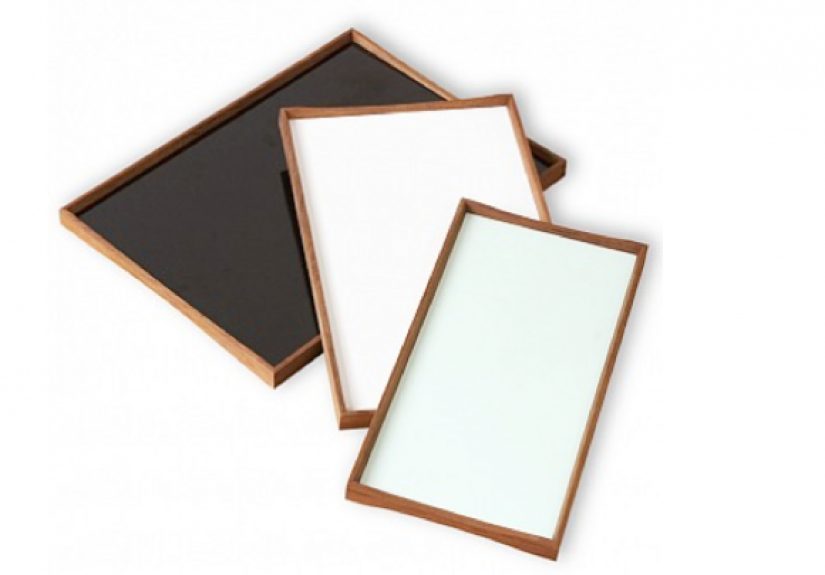
Finn Juhl Turning Trays are reversible serving trays originally designed in 1956. At first glance, they look simple: a softly curved wooden frame surrounding a glossy surface. Look a little longer, though, and the tray begins to reveal the subtle moves that make good design feel inevitable. The frame is gently sculpted, the corners are precise, and the lack of traditional handles is not an omission but a decision. Instead of sticking awkward grips onto the sides, Juhl let the tray’s curved edge create the space your fingers need to lift it.
That move is classic Finn Juhl. He had a gift for taking a practical problem and solving it in a way that also improved the visual language of the object. In other words, he did not just make things work. He made them make sense.
The Turning Tray is also dual-sided, which gives it a little extra personality. One side typically presents a color, while the reverse is dark, allowing the user to “turn” the tray depending on mood, setting, or whatever drama is unfolding on the coffee table that day. Official and retail listings describe the trays as teak wood and laminate, and they are generally offered in three sizes and several color combinations. That flexibility is part of the appeal: the tray can shift from breakfast service to cocktail hour to decorative display duty without looking like it is trying too hard.
Why This Tray Still Matters in a World Full of Trays
Let us be honest: the market is not exactly suffering from a tray shortage. There are trays in marble, trays in acrylic, trays in rattan, trays in metal, trays that look rustic, trays that look futuristic, trays that look like they were designed by someone who had a profound relationship with beige. So why does the Finn Juhl Turning Tray continue to stand out?
The answer starts with proportion. Juhl understood that the success of an object often lives in its smallest decisions. The Turning Tray is not trying to become a centerpiece through sheer size or decorative excess. It relies on line, curvature, contrast, and precision. That makes it visually quiet, but not forgettable.
Then there is the material contrast. The warm teak frame softens the crisp surface of the laminate. The glossy plane gives the wood a sharper outline; the wood gives the glossy plane warmth and humanity. It is the kind of balancing act that keeps the tray from feeling either overly precious or overly industrial.
And finally, there is the intelligence of the form. The tray is handle-free, reversible, and easy to incorporate into real life. It looks like design, but it behaves like a useful object. That distinction matters. Great design should not require a speech before it can be used.
Finn Juhl’s Design Language Is All Over It
To understand the Turning Tray, it helps to understand Finn Juhl himself. Juhl was one of the major figures in Danish modern design, but he never fit neatly into the strictest versions of modernism. Where some designers pursued severe geometry and visible structure, Juhl favored more organic forms. He often spoke through curves, visual lightness, and shapes that seemed to move even when standing still.
His furniture and interiors frequently carried a sense of life and softness. Official material about Juhl emphasizes that he aimed for furniture with movement and natural form, and that he studied how the body interacts with objects rather than treating design as an abstract exercise. That attitude matters when you look at the Turning Tray. It is not only streamlined; it is inviting. It does not look engineered for show. It looks made to be touched, lifted, used, and lived with.
Juhl also played a major role in bringing Danish modern design to American attention in the mid-20th century. His visibility in MoMA-related contexts, his relationship with American design circles, his work with Baker Furniture in Michigan, and his celebrated design for the United Nations Trusteeship Council Chamber in New York all helped place him on an international stage. So even though the Turning Tray is a relatively small object, it carries the DNA of a designer whose influence was anything but small.
The Beauty of the Details
The Curved Frame
The first thing most people notice is the frame. It has that unmistakable Finn Juhl softness: controlled, elegant, and just organic enough to keep the object from feeling stiff. The curve is not decoration pasted onto a rectangle. It is the rectangle, refined.
The Corner Joints
Corner joints are one of those details that casual shoppers may not immediately notice, but design lovers absolutely do. On the Turning Tray, the joints contribute to the sense that this is a crafted object, not a mass of anonymous materials clipped together in a factory somewhere under fluorescent despair. The joins create visual rhythm and reinforce the tray’s architectural clarity.
The Reversible Surface
The tray’s double-sided construction is clever because it gives you options without making the object fussy. One side can feel bright, fresh, and a bit playful; the dark reverse adds graphic contrast and formality. It is a small design decision with outsized practical value.
No Handles, No Problem
Traditional side handles can make a tray look bulky or expected. Juhl’s solution was more elegant. By shaping the frame so your fingers can naturally grasp underneath, he preserved a clean silhouette while improving usability. It is one of those details that makes you think, “Of course that is how it should be,” which is usually a sign that a designer did something very smart.
How Finn Juhl Turning Trays Work in Real Interiors
One reason these trays remain popular is that they are unusually flexible. They can live in a lot of different rooms without losing their identity.
In the Living Room
On a coffee table or ottoman, a Turning Tray brings structure to everyday clutter. A candle, a small stack of books, a coaster, and a glass suddenly look composed instead of abandoned. It adds order, but stylishly, as though it knows the difference between “organized” and “aggressively corrected.”
In the Kitchen or Dining Area
Used for coffee service, pastries, fruit, or evening drinks, the tray does what a serving tray is supposed to do while looking far better than the average guest-star platter. Because the design is restrained, it works with both minimalist and warmer, layered interiors.
In the Bedroom
On a dresser or bench, it can hold perfume, jewelry, a watch, or reading glasses. The mix of polished surface and wood frame brings a boutique-hotel quality to the space without making it feel staged.
In a Home Office
As desk catch-all, the tray can corral notebooks, pens, charging cables, and whatever else tends to migrate into a small personal mountain. It is a practical way to add design value to a work zone that might otherwise look like a tax season support group.
How to Choose the Right Turning Tray
If you are deciding whether to buy one, size and color are the two biggest considerations.
Choose Small for Accent Duty
The small size works well for bedside tables, entry consoles, compact coffee tables, or desks. It is ideal when you want the tray to function almost like a decorative organizer.
Choose Medium for Everyday Use
The medium size is the sweet spot for many homes. It is large enough for serving or styling, but not so large that it dominates a surface. If you only plan to own one, this is often the most versatile choice.
Choose Large for Statement and Service
The large version has stronger presence and works especially well on bigger tables or when used for drinks and shared snacks. It feels more dramatic, though it also asks for more room to breathe.
Choose Color Based on Mood
Lighter combinations tend to feel crisp, airy, and architectural. Blue can read cool and sophisticated. Green often feels earthy and grounded. Red brings energy and a little mid-century swagger. The black reverse side helps every version maintain some graphic seriousness, so even the bolder options still feel tailored.
Is a Finn Juhl Turning Tray Worth It?
If you only need a tray to carry two mugs from point A to point B and have no particular emotional relationship with objects, then maybe not. There are cheaper options. Many of them are perfectly serviceable. Some are even trying their best.
But if you care about design history, craftsmanship, proportion, and objects that improve a room even when not in active use, then yes, a Finn Juhl Turning Tray makes a strong case for itself. It gives you more than utility. It gives you a daily-use object with a clear point of view.
That is what people are often paying for with good design: not luxury for its own sake, but coherence. The tray looks resolved. Nothing about it feels accidental. It belongs to a tradition of design where beauty and use are expected to cooperate instead of competing for attention.
Care Tips for Long-Term Enjoyment
Like most well-made wood and laminate pieces, the Turning Tray benefits from basic respect rather than heroic intervention. Wipe it with a soft cloth, clean spills promptly, and avoid treating it like a cutting board, a step stool, or a platform for experimental indoor gardening. The wood frame should be kept dry and handled with normal care, while the laminate surface is generally easier to clean and live with than more fragile natural stone or raw finishes.
The good news is that this is not a design object that demands white gloves and a private conservator. It is a tray. A very beautiful tray, yes, but still one intended for life.
Living With Finn Juhl Turning Trays: The Experience
Here is where the Turning Tray becomes more than a catalog description. The real pleasure of owning one is not just visual. It is experiential. You notice it in little moments. The way the edge meets your fingers. The way the tray feels balanced when you pick it up. The way the glossy side catches morning light. The way it turns a simple cup of coffee and a croissant into a tiny domestic event that feels oddly civilized.
A lot of home accessories look good in photos and disappear in daily life. The Finn Juhl Turning Tray tends to do the opposite. At first, you admire the design. Then you begin to appreciate how often it quietly earns its keep. It becomes the tray you use for weekend breakfast, the one you reach for when guests are over, the one that sits on the coffee table making the room look more finished even when all it is holding is a candle, a remote, and your best intentions.
There is also a tactile satisfaction to it that many contemporary accessories lack. The curve of the wood frame gives the tray a friendliness that square, rigid objects do not have. You can feel that it was designed by someone who cared about the hand as much as the eye. That matters more than people expect. It is the difference between using an object and enjoying using an object.
The reversible design adds another layer to the experience. You may start by thinking of it as a novelty, then realize it actually changes how the tray behaves in a room. The lighter side can brighten a dark setting; the black side can add contrast on a pale table. Instead of feeling locked into one expression, the tray adapts. It is subtle, but that subtlety is part of the charm.
Many owners also discover that the Turning Tray has a strange ability to make ordinary habits feel a little more intentional. A glass of water beside the bed looks less accidental. Afternoon tea feels slightly more composed. Even a work-from-home setup can feel cleaner and more deliberate when the random objects on a desk are gathered onto something this considered. The tray does not shout for attention, but it upgrades whatever routine lands on top of it.
And then there is the emotional side of living with a design object that has genuine history behind it. Knowing that the tray comes from Finn Juhl’s mid-century design language gives it depth. It does not feel trend-driven. It feels connected to a broader tradition of craftsmanship, proportion, and modern living. That gives the object a different kind of staying power. You are less likely to tire of it because it was never chasing novelty in the first place.
In a world filled with disposable décor and short-lived “must-have” accessories, the experience of living with a Finn Juhl Turning Tray is refreshing. It feels calm. Useful. Beautiful. Intelligent. It is not trying to entertain you with gimmicks. It is simply doing its job exceptionally well, and that quiet confidence is exactly what makes it memorable. Some objects decorate a room. This one contributes to the rhythm of daily life. That may sound dramatic for a tray, but spend a little time with one and the drama starts to feel justified.
Final Thoughts
Finn Juhl Turning Trays prove that even a modest household object can carry serious design value. They are practical enough for everyday service, refined enough for design-minded interiors, and thoughtful enough to remain relevant decades after their original debut. The curved teak frame, reversible surface, careful proportions, and handle-free silhouette all reflect the mind of a designer who believed beauty and utility should move together.
If you love Danish modern design, appreciate craftsmanship, or simply want one household object that does not feel generic, the Turning Tray is easy to admire and even easier to use. It is not flashy. It is better than flashy. It is confident, considered, and quietly brilliant.